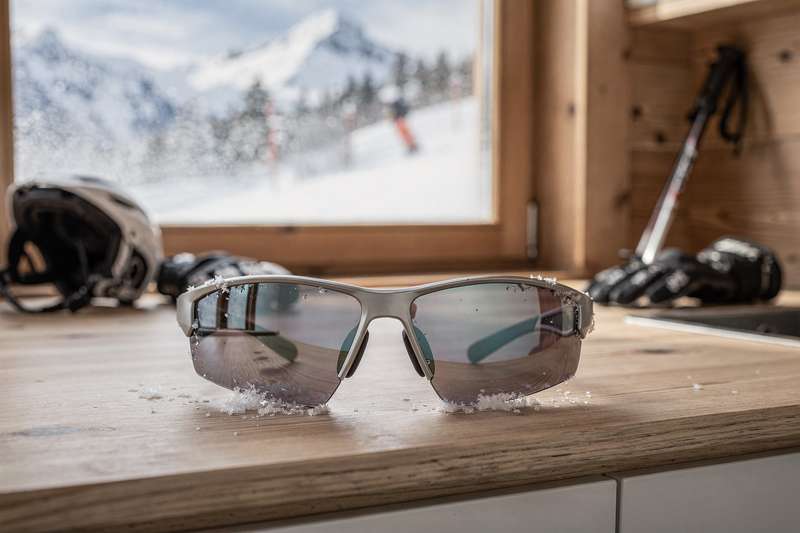
Picture the scene: you’re at the top of a long red run, the January sun blazing off fresh snow, and you’re squinting so hard your temples ache before you’ve even pushed off. Your regular sunglasses slid down your nose on the first chair lift ride and are offering about as much peripheral protection as a pair of reading glasses. A friend lent you their ski goggles for one run, but they fogged up the second you stopped for a breather. You want something in between — sunglasses that actually stay on your face, cut the UV hammering off the snow at altitude, and don’t turn every bright patch of piste into a blinding white wall.
The problem is that “ski sunglasses” covers an enormous range of products, from budget multi-packs to specialist sport frames with specialist price tags. Getting it wrong means sore eyes by midday and a throbbing headache by après-ski — and, in a worst-case scenario, real UV damage from hours spent on highly reflective snow without adequate protection. Snow reflects a very high proportion of UV radiation, considerably more than sand or water, which means the lenses you need on a ski slope are categorically different from the ones you’d grab for a sunny afternoon in the park. This guide cuts through the noise and identifies the best options available on Amazon UK right now, telling you exactly what each pick is suited to and where its limits lie.
How These Were Evaluated
To build this shortlist, I applied criteria that directly reflect what matters when you’re moving at speed in cold, bright conditions. UV400 certification was the absolute baseline — anything that can’t demonstrate full-spectrum UV coverage was ruled out, since lower-rated lenses don’t adequately protect at altitude. Lens category (CAT 2, 3, or 4) was the second filter: on bright snow you want at minimum CAT 3 for adequate light reduction, with CAT 4 reserved for extreme brightness or photosensitive users. Polarisation was assessed separately because it addresses reflective glare from icy and wet snow surfaces — a distinct optical challenge from raw UV transmission. Frame design was evaluated for wrap-around coverage and rubberised grip features that keep sunglasses in place through fast turns and wind.
Where buyer review data was available, I looked for consistent patterns across a meaningful volume of real-world feedback — mentions of fit, durability, and performance in active outdoor conditions. Several products in this guide have no buyer reviews available at the time of writing; I’ve stated that honestly in each relevant section so you can weight your decision accordingly.
Best Budget Pick
The 2 PCS Cycling Glasses, Sports Sunglasses, Polarized Cycling Sunglasses for Men Women, Polarised Sun Glasses UV400 Protection Protection Ski makes an immediately practical case for itself: you get two pairs of polarised UV400 sports frames in a single purchase. For anyone stepping up from fashion sunglasses into proper slope eyewear without committing to a large outlay, that twin-pack format is a logical starting point.
What you’re actually buying is a pair of wrap-style sports frames with polarised lenses, and that polarisation is the feature that most directly matters on a ski slope. On packed snow and ice, unpolarised lenses let reflected light hit your eyes at full intensity — uncomfortable on a gentle blue run, and a real distraction when you’re picking a line through moguls or reading wind-scoured ice. The UV400 certification confirms the lenses block the full UV spectrum, which becomes increasingly important at altitude where UV intensity rises with every few hundred metres of elevation gain.
The two-pair format has clear practical value on a ski trip. It means a partner, sibling, or older child can have a pair, or you have a working backup if one set gets scratched, sat on, or dropped into a snowbank. With 238 buyer reviews averaging 4.2 out of 5, there’s enough real-world feedback here to suggest these deliver consistent results for active outdoor use. That said, at this price tier you’re not getting edge-to-edge optical clarity or scratch coatings that will survive multiple seasons. If crisp optics are your priority, step up to a mid-range single pair.
One practical note before you travel: check the fit at home. Wrap sports frames suit many adult face shapes but aren’t universally adjustable. Spend a few minutes wearing them around the house before relying on them for a full day on the mountain. If they sit securely without sliding at the nosepads and don’t pinch at the temples under a beanie, you’re in good shape. For casual skiers who want functional glare control and the reassurance of a spare pair in the jacket pocket, this set delivers well against its remit.
Best Twin Pack for Families and Groups
The JSTHHTT 2 Pcs Cycling Glasses, Sports Sunglasses, Cycling Sunglasses for Men Women, Sun Glasses UV400 Protection Ski Goggles Outdoor Bicycle is the most-reviewed product on this entire shortlist, with 393 ratings averaging 4.3 out of 5. At budget price points, review volume matters considerably: a rating based on nearly 400 real purchases is a far more reliable signal than the same average from a handful of opinions, and 4.3 sustained across that many reviewers is encouraging for an accessory in this category.
Like the budget pick, this comes as a two-pack — making it the natural default for a family ski trip where two people need functional eye protection without buying individual pairs. The UV400 certification and outdoor sports construction confirm these are designed for active conditions rather than static wear. The “ski goggles” reference in the product title describes the coverage style and generous lens size rather than a full-seal sealed goggle; these are conventional sports sunglasses, just with wrap-around coverage that sits close to the face and provides a broader protective envelope than fashion frames.
What sets the JSTHHTT set apart from comparable budget packs is the depth of its feedback base. A rating that has held up across nearly 400 purchases is considerably more meaningful than a newer listing with a dozen reviews. For a family ski trip where the priority is two wearable, UV-protective pairs at a reasonable outlay, this is the most evidence-backed budget buy on this list. If you need only one pair and want to invest more into a higher-spec single frame, look at the mid-range or all-rounder picks instead.
The outdoor and bicycle framing in the product title is broad multi-sport positioning — the specs that count for skiing are UV400 protection, polarised lenses, and a wrap-around frame that stays put during movement. The strong review base suggests buyers across different active uses have found these fit that brief. Bring a soft microfibre cloth: wrap frames pick up smears from gloves and helmet rims quickly, and clean lenses make a noticeable difference to visibility on bright snow.
Best for Intense Glare and Light-Sensitive Eyes
If you struggle with glare — because you have naturally light-sensitive eyes, ski at higher altitude where the brightness is relentless, or find that bright snow conditions leave you with a headache well before lunchtime — the Wrap Around Sunglasses Polarized Sun Glasses Super Dark Lens with Strong Magnetic Clip High Definition UV400 for Light Sensitivity for Runni is the pick on this list most specifically tailored to that scenario.
With 262 reviews averaging 4.2 out of 5, this has a solid body of real-world feedback. The “super dark lens” positioning indicates a darker tint category than standard sports frames, and the effect across a bright ski day is noticeable. Polarisation filters out horizontally reflected light bouncing off icy and wet snow surfaces; the deep tint reduces overall light transmission across the board. Used together, they attack glare from two angles simultaneously, and the accumulated eye-fatigue reduction over a long morning on reflective snow is substantial.
The wrap-around frame design is particularly relevant for skiing because it minimises stray light entering from the sides and periphery — light that gets under a standard fashion frame and causes the same squinting you were trying to avoid. The magnetic clip feature noted in the title provides a practical way to secure the glasses or retain them when you push them up onto your helmet between runs, which proves useful across a long ski day more often than you’d expect.
The meaningful trade-off with very dark lenses is adaptability across changing conditions. If the weather closes in and light drops on a grey afternoon, or you’re skiing beneath a tree-lined run, super-dark lenses can actively make it harder to read snow texture and spot icy patches. This pick works best as a dedicated bright-day tool rather than an all-conditions solution. If you regularly ski in overcast or flat-light conditions, a lighter tint or an interchangeable-lens set is more practical. But on those blinding, sun-on-fresh-snow mornings when your eyes ache within minutes of leaving the lift, this is the strongest performer on the list for managing intense glare.
Best All-Rounder for Recreational Skiers
The Cycling Sunglasses, Sports Polarized Sunglasses for Men and Women, UV 400 Protection Polarised Sun Glasses for Baseball Running Golf Driving slots into this guide as a multi-sport polarised pair that performs competently in ski conditions, despite its broadly positioned activity listing.
Sitting at 4.4 out of 5 across 39 reviews, this has the highest average rating of any reviewed product on this shortlist. The sample size is smaller than the JSTHHTT or the dark-lens picks, but consistently high scores across 39 real buyers is a credible signal, particularly when the overall average hasn’t been pulled down by early outliers. UV400 protection and polarisation are both confirmed, covering the two primary requirements for on-slope eye safety. A sports-oriented frame implies these are built for faces in motion: wrap-around coverage, lightweight construction, and contact points designed to stay in position rather than migrate when you sweat under a helmet.
The key strength of a general sports tint over a fixed super-dark lens is adaptability across a full ski day. A mid-toned sports lens can comfortably handle bright morning sun and a cloudy afternoon run without working against you in either scenario. You won’t get the specialist lens tuning for snow contrast that dedicated ski optics deliver at premium price points — those lenses are specifically engineered to sharpen icy features and shadow detail in a way that general sports lenses are not — but for most recreational resort skiing, the versatility here is a genuine practical advantage over a single fixed tint.
These work particularly well for skiers who also run, cycle, or play outdoor sports and want one pair of polarised frames that handles multiple activities competently throughout the year. If skiing is your sole sport and purpose-built optics matter to you, the premium market is worth exploring. For the recreational skier who heads to the slopes once or twice a season and wants reliable, versatile polarised protection that does other things too, this all-rounder is a very sensible buy.
Best for All-Day Comfort on Skis
The ZILLERATE Polarised Sports Sunglasses for Men & Women, Driving Cycling Golf Fishing Running Sailing Skiing, UV400 Protection, Wrap Around Li explicitly lists skiing in its intended activity range — a detail that suggests the manufacturer has factored on-slope demands into the design rather than simply appending skiing to a generic sports sunglasses listing for search coverage.
ZILLERATE is a recognised name in UK sports accessories, and the brand’s focus in this category is comfortable extended wear — a real consideration when you’re wearing sunglasses across five or six hours of active skiing. Wrap-around coverage minimises the peripheral glare and cold air that become far more intrusive during chair lift rides and faster descents than most people anticipate when shopping from home. UV400 protection and polarisation are confirmed in the product specification, addressing the two fundamental requirements for time spent on reflective snow.
The wrap-around design and lightweight build suit skiers who find goggles too bulky or restrictive but still want substantial eye coverage. For beginners or those sticking to easier runs, a well-fitted lightweight wrap-around frame often provides a more comfortable experience across a long morning than a full-seal goggle — these sit in the useful middle ground between fashion sunglasses and full sport goggles, with much of the protective benefit of a goggle-style fit without the fog-prone sealed enclosure.
The honest caveat is that this product has no verified buyer reviews in the data available at the time of writing. That means there is no pattern of accumulated real-world feedback to draw on in support of the manufacturer’s performance claims. The specifications align with what you need for slope use, and the ZILLERATE brand has an established UK market presence, but you are taking more on faith than with the reviewed picks on this list. If you prefer to buy based on accumulated buyer experience, the JSTHHTT twin pack or the dark-lens wrap-around are the more evidence-backed options. If the specifications and all-day comfort positioning suit your needs, however, this is a credible choice to shortlist — particularly if you find that sunglasses become uncomfortable partway through a long ski day.
Best for Extreme Alpine Brightness (CAT 4 Lenses)
The Bloomoak Super Dark Lens Black Polarized Sunglasses|Wrap Around Sport Sunglasses|UV400|CAT 4|For Photophobia(Sensitive Eyes) fills a specific niche on this shortlist that none of the other picks quite covers: it’s designed for people who need the most aggressive light reduction available in a sunglasses format, delivered through Category 4 lenses.
CAT 4 is the darkest lens classification widely available in sport eyewear. While CAT 3 covers the majority of bright mountain ski conditions effectively, CAT 4 goes further — blocking a larger proportion of visible light — which is specifically appropriate for skiers with photosensitivity, or those at very high altitudes where UV intensity and reflected brightness reach their most demanding levels. The Bloomoak’s wrap-around frame reduces stray peripheral light, the polarisation layer targets reflective glare from snow and ice, and UV400 certification handles the full ultraviolet spectrum. That is a thorough specification for the most demanding bright-day alpine conditions you’re likely to encounter.
The Bloomoak brand explicitly targets people with photophobia — light sensitivity that goes well beyond normal sun-squinting and can cause real discomfort and headaches in bright outdoor environments. That focus means the product development has centred on light-control performance as its primary objective rather than general sport versatility. If you have light-sensitive eyes and ski frequently in strong alpine sun, this is the most purposefully built pick on this list for that specific combination of needs.
The trade-offs are significant and must be stated plainly. CAT 4 lenses are not suitable for driving — they reduce light transmission to a level that is unsafe for road use and prohibited under UK and most European driving regulations, so keep these strictly for the mountain. On overcast or flat-light ski days, CAT 4 lenses will actively impair your ability to read snow texture and pick out terrain changes; these are a specialist tool for specifically bright, high-UV conditions, not an all-weather everyday pair. Like the ZILLERATE pick, the Bloomoak has no buyer reviews available in the current data, so performance verification rests on the product’s specifications and stated design intent rather than accumulated real-world experience. For those with light-sensitive eyes skiing in bright conditions, this is worth serious consideration; for general recreational skiers wanting one versatile pair, one of the reviewed picks is a safer default.
What to Look for in Skiing Sunglasses
- UV400 certification: This is the non-negotiable baseline. UV400 means the lenses block all ultraviolet radiation up to 400 nanometres, covering both UVA and UVB. At ski resort altitude, UV exposure is substantially higher than at sea level — you can damage your eyes on a clear alpine day even when the air feels cold. Always confirm UV400 is specifically stated; vague labelling like “UV protection” without a category number tells you nothing about actual performance.
- Lens category (CAT 2, 3, or 4): Lens categories describe how much visible light the lens transmits. CAT 2 (roughly 31–43% transmission) is fine for overcast conditions but too light for bright snow reflections. CAT 3 (roughly 8–18% transmission) is the standard recommendation for most alpine ski conditions. CAT 4 (roughly 3–8% transmission) suits extreme brightness or photosensitive users, but must not be worn while driving. Match the category to your typical ski day rather than buying the darkest option by default.
- Polarisation: Snow and ice are highly reflective. Polarised lenses use a filter to block the horizontally polarised light bouncing off these surfaces, reducing the flat, blinding glare that a tinted but unpolarised lens still lets through. Polarisation is especially valuable on groomed pistes in direct sunshine. Note that polarisation and UV400 are separate properties — you need both, not one or the other.
- Wrap-around frame coverage: A close-fitting wrap-around frame blocks peripheral glare, wind, and cold air that become considerably more pronounced at speed and during chair lift rides. Fashion sunglasses with flat lenses and open sides offer inadequate coverage for skiing. Look for frames where the lens curves close to the face at the sides, leaving minimal gap between frame and temple.
- Grip and retention: Rubberised nosepads and ear contact points keep sunglasses from sliding down your face during sustained effort or when sweating under a helmet. If the frame lacks textured or rubberised grip at these points, it will migrate at inconvenient moments. A glasses retention strap — a simple, inexpensive addition — also prevents losing your sunglasses in a fall and is worth packing for any ski trip.
- Helmet compatibility: If you ski with a helmet (recommended for most skiers), check that the frame’s temple arms sit comfortably inside the helmet’s foam and strap system without creating pressure points. Oversized sport frames sometimes create discomfort after a couple of hours. Slim, low-profile frames generally accommodate helmets more easily than wider-armed designs.
- Lens interchangeability: Mountain light changes significantly across a ski day — bright morning sun can shift to grey flat light by mid-afternoon. Frames that allow lens swapping let you adapt your tint to conditions. At budget price points, most frames offer a fixed tint; interchangeable lens systems appear more commonly at mid-range and premium price points and are worth prioritising if you ski in genuinely variable weather.
Verdict
For most UK recreational skiers — a week or two in a European resort each year, primarily groomed pistes, conditions that shift across the day — the JSTHHTT twin pack is the most sensible all-round choice on this shortlist. It has the largest review base of any product here, a consistent 4.3 average, UV400 protection, wrap-around coverage, and the practical advantage of two pairs for a budget outlay. The optics are adequate rather than refined, but the combination of evidence and value is a strong proposition for occasional slope use where peace of mind matters as much as peak optical performance.
If you ski in particularly bright, high-altitude conditions or find standard lenses leave you squinting by midday regardless, step up to the super dark wrap-around polarised set — it carries a meaningful review base and specifically targets the intense glare scenario that affects a significant number of alpine skiers. For those with documented light sensitivity, the Bloomoak CAT 4 pair is the most purpose-built option on this list for that specific need, though it comes without buyer reviews to draw on for reassurance.
If you want a single pair that crosses over into running, cycling, and other outdoor sports throughout the year, the all-rounder sports polarised pair with the highest average rating on this list — 4.4 stars from 39 reviews — gives you versatility and solid everyday value in one package. Whatever you choose, make sure UV400 and a proper wrap-around fit are confirmed before you buy; those two factors will do more for your eye health on the mountain than any other specification on the listing.
We were not paid to feature any specific product in this guide. All opinions are independent and based on publicly available specifications, verified buyer feedback patterns, and category research.
Quick Comparison Table



FAQ
Do I really need specialist skiing sunglasses, or will any sunglasses do?
Regular fashion sunglasses rarely offer the wrap-around coverage, lens tint depth, or UV rating needed for prolonged skiing. Snow reflects a very high proportion of UV radiation and that intensity increases with altitude. Polarised wrap-around frames with UV400 certification make a noticeable difference to both eye comfort and long-term eye safety compared to standard sunglasses worn on the slopes.
What is the difference between ski sunglasses and ski goggles?
Ski goggles create a sealed system around the eye area, giving better protection in heavy snowfall, blizzard conditions, and very cold temperatures. Ski sunglasses offer more ventilation and a lighter feel, making them preferable in milder conditions or for skiers who find goggles claustrophobic and prone to fogging when they stop moving. Many experienced skiers carry both and switch based on the day’s weather and the type of terrain they’re skiing.
Are polarised lenses good for skiing?
Polarised lenses are particularly useful on groomed pistes where sunlight reflects strongly off flat, icy surfaces. They reduce horizontal reflective glare effectively, cutting the eye fatigue that builds across a long ski day. The one trade-off to be aware of is that the glare reduction can occasionally mask the sheen that exposed ice gives off — so on very icy runs, be alert to this. On balance, polarisation is a net benefit for most recreational skiing conditions.
What lens category should I choose for skiing?
CAT 3 is the standard recommendation for bright alpine skiing — it reduces light transmission substantially while still allowing clear enough visibility to read terrain accurately. CAT 4 is appropriate only for very high altitudes, exceptional brightness, or users with photosensitivity, and must not be worn while driving. On overcast or flat-light days, a CAT 2 lens is actually more suitable, which is why lens interchangeability is a worthwhile feature if you ski in variable conditions.
Can I wear sunglasses under a ski helmet?
Yes — most sport wrap-around frames are designed with this use in mind. The key check is whether the temple arms sit comfortably inside your helmet’s strap and foam system without creating pressure points that become painful after an hour. Slim, lightweight frames accommodate helmets more easily than wider-armed designs. Try the combination at home before your trip rather than discovering a fit problem at the top of a run.
Is UV400 the same as 100% UV protection?
Essentially yes. UV400 means the lenses block all ultraviolet radiation up to 400 nanometres, covering both UVA and UVB — the full range that causes cumulative eye damage. On reputable products, “100% UV protection” refers to the same standard. What you should avoid is vague labelling like “UV protection” without a specific numerical category, as this gives no reliable information about actual lens performance and should not be trusted for ski use.