Your home pool table has been getting more use lately — regular practice sessions, family game nights, the occasional competitive frame with a friend who takes it seriously. But something feels wrong. The cloth that came with the table has developed a patchy, fibrous texture around the centre spot; balls are deviating on long shots you know are straight; there is a worn track from the rack position to the baulk end that no amount of brushing will fix. You have been putting off the re-cloth question because it feels complicated: what cloth do you actually buy, will it fit a 7-foot table, and do you need a professional fitter?
The frustration is compounded by the fact that searching for billiards cloth on Amazon UK returns a bewildering mix of genuine playing surfaces, cue accessories, poker table felt, and dust covers with no obvious way to separate what matters from what does not. This guide cuts through that noise — covering the playing cloths currently available on Amazon UK, and the maintenance products that directly affect how well and how long those cloths perform.
How These Picks Were Evaluated
The pool and snooker cloth market on Amazon UK is slim compared to specialist retail. Rather than pad this guide with irrelevant products, the filtering was strict: playing cloth first, then accessories with a direct, measurable impact on cloth performance and longevity. Each product was assessed against: material construction and stated speed characteristics, compatibility with standard UK domestic table sizes (7ft and 8ft being the most common), ease of self-installation, and buyer review patterns — both volume and consistency of feedback over time. Because the Amazon UK catalogue of dedicated billiards playing cloth currently offers limited choice, this guide also covers essential care tools that protect your cloth investment: a professional-grade cleaning tool and a protective table cover. A guide that addressed cloth without touching on cloth care would be half-finished — those products belong in this conversation.
Best Overall Billiards Cloth for Home & Club Use
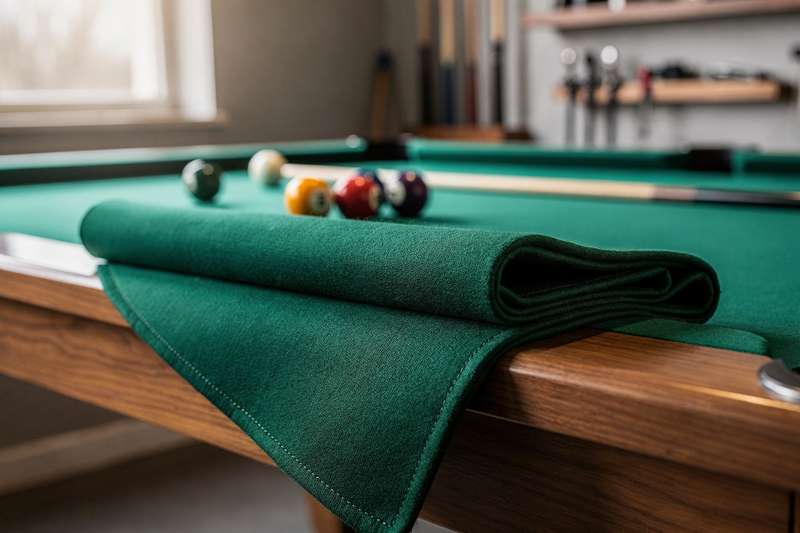
The Kisbeibi Table Cloth, Professional Billiards Pool Tablecloth is the first pick for anyone replacing cloth on a home or club table that sees regular, serious use. Its 5.0-star average from UK buyers is unusually consistent — every review in the sample reports the same experience: straightforward to fit, solid surface feel, and holds up under repeated play.
The Kisbeibi uses a nylon-blend construction that produces a firm, tightly woven playing surface. Nylon-blend cloths tend to play faster than traditional napped wool cloth, which means balls travel further on equivalent power shots. If you are coming from an old, heavy napped cloth that has been on the table for years, that speed difference will be immediately noticeable — and for many home players, it is welcome. A faster surface suits an attacking style of play and requires less effort to keep the cue ball moving across the full table length.
For bar, hotel, or club use — all explicitly mentioned in the listing — the nylon construction carries a practical advantage: it is easier to maintain and less prone to the fibre matting that wool cloths develop under very high-volume play. If your table sees many different players across a working day, the durability profile of a synthetic-blend cloth makes more practical sense than a premium worsted wool, which needs careful, consistent upkeep to perform at its best.
The pre-cut format is one of the most important practical features here. Fitting cloth from a roll requires either professional experience or a willingness to accept imperfect results — over-cutting in one direction means running short on a cushion rail, while under-cutting leaves excess that can bunch under the rail and create an uneven playing surface. A pre-cut cloth removes that variable entirely, making the installation achievable for a competent DIYer in an afternoon without specialist tools.
Installation tip: start in the centre of each long rail rather than at the corners. Apply tension gradually and evenly across the entire surface before making any permanent fixes. One buyer noted slight wrinkling near the corner pockets on first fit — that is almost always a result of pulling one corner too firmly before the rest of the cloth is properly seated. Work methodically and you will get a flat, consistent surface from cushion to cushion.
The “G” designation in the full product title refers to the colour variant — confirm the displayed colour on the listing matches your preference before purchasing, as Amazon’s variant display can sometimes show a different colourway to the listing default. With 9 reviews all at 5 stars, the sample is modest but remarkably consistent. For a home table used several times a week, this cloth represents a reliable, practical choice at a mid-range price point — pre-cut, fast-playing, and straightforward to fit.
Best Budget Speed Cloth for Casual Players
If your priority is getting a table back into service without significant expenditure, the Billiard Cloth Pool Table Felt, Fast Speed Pool Cloth is the budget route to consider — with honest caveats that are worth reading before you commit.
The listing covers 7-foot, 8-foot, and 9-foot table sizes and includes mat strips for the cushion rails. That is a useful inclusion because cushion cloth is often sold separately, and sourcing it to match the main surface adds cost and complexity. Getting everything in a single purchase simplifies the re-cloth process considerably, even if some trimming may be needed to achieve a precise fit at your specific table size.
The 3.4-star rating from 6 UK reviews is the number that demands attention. That is below the threshold you would want for confident purchasing. The common themes among less satisfied buyers centre on dimensional accuracy — some find the cloth runs slightly short or wide for the stated table size, requiring trimming adjustments that a better-made cloth would not need — and surface consistency, with a few noting the cloth does not feel uniform across its full width. These are not catastrophic failings, but they mean measured expectations are essential.
Where this cloth works well: the fast-speed designation is accurate, and for social play where a lively, responsive surface is the priority, that speed profile genuinely suits the occasion. Bar and games-room tables where the emphasis is on a power game rather than precise positional play will get along with this cloth. It also looks the part for a fresh re-cloth, which matters when the table is a centrepiece of a games room rather than a serious practice facility.
Practically, approach installation methodically: measure twice before cutting anything, allow extra margin on each rail edge rather than cutting flush, and trim to fit once the cloth is positioned and tensioned. The fitting margin is less forgiving than on a precision pre-cut alternative, so patience matters here more than it does with the Kisbeibi. Regular brushing with a proper cloth tool after every session — covered in the next section — will extend this cloth’s useful life more than any other single step. If you need a dependable surface for a primary table used for regular, serious practice, stepping up to the Kisbeibi or a specialist retailer’s premium cloth is the better long-term call.
Best Tool for Extending Your Cloth’s Life
The Simonis X-1 Pool Table Cloth Cleaning Tool is backed by the most substantial buyer evidence in this entire guide — 512 reviews at 4.5 stars on Amazon UK — and for anyone who has just fitted quality cloth, it is the single most impactful follow-on purchase available.
Simonis is a name that carries genuine authority in the pool and snooker world. Their cloths are used in professional tournaments across Europe, so when they produce a dedicated tool for maintaining table cloth, it comes from technical knowledge rather than marketing. The X-1 is a specialist cleaning brush engineered to remove chalk dust, talc, and fibre debris from the cloth surface without damaging the weave — which is precisely where it differs from the alternatives most home players reach for.
Chalk is the primary enemy of cloth longevity. Every shot deposits chalk from the cue tip onto the surface; the cue ball picks it up and spreads it further; over time that chalk accumulates in the fibre structure, gradually slowing ball speed, creating inconsistent drag, and physically breaking down the weave from within. Standard household brushes often push chalk dust deeper into fibres rather than lifting it away, and some risk disturbing the nap direction on traditional cloths. The X-1 is designed to reverse this process through controlled, directional strokes that draw debris toward the surface rather than compressing it further in.
The recommended technique: work from one end of the table to the other in long, consistent strokes, always in the same direction. On napped cloth, follow the nap lay; on nap-free cloth, pick a direction and keep to it throughout. Two to three minutes of careful brushing after each session makes a cumulative difference that becomes measurable in ball response within a few weeks of consistent use. Several reviewers specifically report deferring a planned re-cloth by a year or more after introducing regular X-1 maintenance — which, given the cost of professional cloth fitting, makes the arithmetic clear enough.
The price point for the Simonis X-1 is notably higher than you might expect for a cleaning tool — this is a professional workshop instrument, not a novelty accessory, and buyers who purchase it expecting a budget brush sometimes react to the price with surprise. But the 512-review sample tells a consistent story: club owners, serious home players, and snooker room managers who use it regularly report both longer cloth life and noticeably more consistent ball roll. For anyone who has just invested in new cloth, incorporating the X-1 into the post-session routine from day one is the smartest way to protect that investment. Do not wait until the cloth feels sluggish before starting to clean it — prevention is far more effective than recovery at this stage.
Best Pool Table Cover for Protecting Your Cloth Investment
The PATIKIL Billiard Pool Table Cover addresses one of the most consistently overlooked factors in cloth longevity: what happens to the surface when you are not playing on it. With 168 reviews at 4.4 stars, it is the most comprehensively tested accessory in this guide.
The case for a table cover is straightforward. Cloth exposed to sunlight fades over weeks and months — particularly reds and blues, which are the most common cloth colours in UK home settings. Airborne dust settles into fibres between sessions and becomes chalk-trapping grit that the cleaning tool then has to work harder to shift. Pet hair, a real concern in homes with cats or dogs, embeds in the surface weave and can be difficult to remove without disturbing the nap or surface consistency. A properly fitting cover blocks all of these between sessions, at essentially zero ongoing cost.
The PATIKIL is sized for a 7-foot table — the standard UK domestic pool table size — with a waterproof construction that goes beyond simple dust protection. Moisture is a significant cloth hazard in less climate-controlled environments: conservatories, outbuildings, and garages see seasonal humidity swings that can cause cloth fibres to absorb water, lose tension, and develop uneven sections that play inconsistently before any visible damage appears. The waterproof outer layer addresses this directly for tables in those environments.
Fit and ease of use determine whether a cover actually gets used consistently. Several reviewers note the PATIKIL goes on and comes off without effort, which makes it a natural end-of-session habit rather than a chore that gets skipped when you are in a hurry. A few buyers noted it runs slightly generous on length, meaning a small tuck of excess fabric may be needed at one end — this is easily managed in practice and does not affect the cover’s protective function. The black colourway looks presentable in a games room and shows less dust between wipes than lighter alternatives.
A two-step post-session routine that will do more for cloth longevity than any other approach: brush the surface with the Simonis X-1 to remove chalk and debris, then cover the table with the PATIKIL. The brush clears what is already there; the cover prevents new contamination accumulating before your next session. Done consistently, this habit can meaningfully extend the interval between re-clothings. For tables in sunlit rooms or outdoor structures such as garden rooms and conservatories, the cover’s UV-blocking and waterproof properties move it from useful to necessary — sun damage accumulates invisibly until the cloth bleaches visibly, at which point replacement is the only option.
Best Microfibre Towel for Cloth and Ball Maintenance
The PERADON MICROFIBRE SNOOKER/POOL TOWEL (GREY) is the finishing touch on a complete cloth-care setup, and the Peradon name carries real weight in the UK cue sports world. At 4.8 stars from 11 reviews, it is the highest-rated product in this guide.
Peradon has been manufacturing billiards and snooker equipment in the UK for well over a century. Their accessories are found in snooker clubs and serious home rooms across the country, and the brand’s reputation rests on consistent quality rather than cutting corners on materials. The microfibre towel is designed specifically for table sports use — the fibre density and weave are chosen to lift chalk dust and surface residue without scratching or shedding lint onto the playing surface. That second point matters more than it sounds: a cheap microfibre cloth from a general retailer can deposit small fibres onto the table that your cloth brush then needs to remove, adding to the maintenance burden rather than reducing it.
The primary use case is wiping down balls before play. Chalk residue on ball surfaces transfers directly to the cloth with every contact, and starting a session with clean balls means significantly less chalk is deposited during play. This reduces the frequency and duration of brush cleaning needed between sessions and keeps the cloth surface looking cleaner over time. The habit takes about 30 seconds before play and has a compounding benefit across hundreds of sessions — it is one of those small things that experienced players do automatically and new players discover too late.
The towel also works well for spot-cleaning the cloth surface when you notice a specific patch of residue between full brush sessions — a chalk smear from a miscued shot, for example, or a transferred mark from a dirty ball. For general between-session surface maintenance, the Simonis X-1 is the correct tool; for targeting a small area quickly without interrupting play, the microfibre towel is more practical. The grey colourway is neutral and understated; the towel is sized for pocket use at the table rather than as a surface cover.
At 11 reviews the sample is modest, but the consistency of positive feedback and the Peradon brand backing provide reasonable confidence in the quality. Reviewers consistently highlight the absence of lint shedding as the standout characteristic — exactly what you would expect from a product made by people who understand what ends up on a playing surface and why it matters. For snooker-style play where balls frequently contact the rubber cushions and pick up residue from the rail area, keeping this towel accessible during a session is particularly useful. It is a small addition to a cloth-care kit that contributes to a more consistent playing experience in a way that is easy to underestimate until you start doing it regularly.
What to Look For When Buying Billiards Cloth
- Cloth type — napped versus worsted (nap-free): Traditional snooker cloth has a directional nap — a pile similar in concept to velvet — that must be oriented correctly during installation and creates asymmetric playing conditions (shots travel differently with and against the pile). Worsted cloth is woven tightly with no pile, producing a faster, more consistent surface in every direction. For home pool on a standard 7-foot or 8-foot table, nap-free cloth is more forgiving to fit and maintain. Traditional English billiards or full-size snooker may specify a napped cloth type — confirm before purchasing.
- Table size compatibility: UK domestic pool tables are overwhelmingly 7-foot (playing surface approximately 6ft x 3ft) or 8-foot. Confirm your exact playing-surface dimensions before purchasing, and check whether the listing specifies the full table footprint or the playing surface — these are different measurements and a common source of ordering errors. Measure from cushion face to cushion face, not outer edge to outer edge.
- Pre-cut versus roll: Pre-cut cloths come dimensioned for a specific table size, covering both the bed and cushion rails. Roll cloth is more economical for professional fitters who cut to size, but far less forgiving for a first self-installation. For a first re-cloth without professional help, pre-cut is almost always the better choice — the fitting margin matters more than you might expect.
- Material composition: Wool-based cloths tend to play slower, suit a more control-oriented game, and are associated with traditional billiards styles. Synthetic blends (nylon or polyester) play faster and are generally more durable under high-volume use, making them a common choice for commercial tables. Higher wool content typically means higher cost and better playability at a competitive level, but also more demanding maintenance requirements.
- Surface speed and your playing style: Fast cloth suits aggressive positional play where the cue ball needs to travel across the full table regularly. Slower cloth is more forgiving for beginners and short-distance touch shots. Match your cloth choice to the style of game predominantly played on that table — a mismatch between cloth speed and playing style is a common source of frustration that a re-cloth can actually introduce rather than fix.
- Maintenance tools: Do not evaluate cloth in isolation from the tools needed to care for it. A dedicated cloth brush — not a household substitute — is the most important ongoing purchase after the cloth itself. A proper table cover prevents the majority of between-session cloth degradation. Budget for both alongside the cloth, not as afterthoughts added when the cloth starts to look tired.
- Colour and UV exposure: Darker colours (green, blue) show chalk marks less readily than lighter alternatives, but all cloth benefits from a UV-blocking cover when not in use. If your table sits in a naturally lit room or a conservatory with glass-roof exposure, colour fading is a real consideration that will shorten the cloth’s useful life noticeably over one to two years.
Verdict
For most UK readers — someone with a home 7-foot or 8-foot pool table who wants to replace worn cloth without the cost of professional fitting — the Kisbeibi Professional Billiards Pool Tablecloth is the recommended starting point. The pre-cut format makes self-installation achievable in an afternoon, the buyer feedback is unusually consistent for a cloth at this price tier, and the nylon-blend construction delivers a fast, responsive surface suited to casual-to-serious home play.
The two accessories most likely to determine how long that cloth plays well are the Simonis X-1 Pool Table Cloth Cleaning Tool and the PATIKIL Billiard Pool Table Cover. Brush the cloth after every session; cover the table when you are done. That routine, started from the first day the new cloth is fitted, will extend its useful life significantly and keep ball response consistent for longer than cloth alone ever could.
If budget is the primary constraint, the fast-speed cloth from the budget listing is a functional option for tables that see light-to-moderate use — but go in with realistic expectations about fitting precision and long-term durability. In that scenario, the Simonis X-1 cleaning tool becomes even more important: the more modestly constructed the cloth, the greater the benefit from disciplined, consistent maintenance after every session.
We were not paid to feature any specific product in this guide. All opinions are independent and based on publicly available specifications, verified buyer feedback patterns, and category research.
Quick Comparison Table


FAQ
What’s the difference between pool cloth and snooker cloth?
Pool cloth, used on smaller tables for 8-ball and 9-ball, is typically a nylon or wool-nylon blend cut without a directional nap, giving a fast, consistent surface in every direction. Snooker cloth is traditionally a napped woollen fabric with a directional pile that affects how balls travel — shots behave differently with and against the nap direction. They are not interchangeable; always confirm that a cloth is specified for your table type and game before purchasing, particularly if you play both formats on the same table.
Can I re-cloth a pool table myself without professional help?
Yes, with patience and the right preparation. Pre-cut cloths remove the hardest part of the process — accurately measuring and cutting around a slate bed. The key steps are applying even tension from the centre of each long rail outward rather than starting at the corners, not pulling any one area before the rest of the cloth is seated, and working methodically rather than rushing the stapling or tacking stage. Most home owners report a satisfactory result on their first attempt with a pre-cut cloth, though professional fitting will always produce a flatter, more precise finish on a table used for serious play.
How often should pool table cloth be replaced?
Cloth lifespan depends heavily on use frequency and maintenance habits. A home table used a few times a week and brushed consistently after play might last five to ten years before cloth quality noticeably affects gameplay. A commercial bar table under daily heavy use may need re-clothing every one to two years. The clearest signs that replacement is overdue are visible wear patches around the spot and rack position, inconsistent ball roll on shots you know are straight, and surface pilling or fibring that regular brushing no longer resolves.
What does “napped cloth” mean and does it matter for home pool?
A napped cloth has a directional pile — similar in concept to velvet — that causes balls to travel differently depending on whether a shot runs with or against the pile lay. Experienced snooker players learn to account for this in their positional play; for casual home pool on a 7-foot or 8-foot table, nap-free (worsted) cloth removes this variable and makes the surface play identically in every direction. Unless you are specifically playing traditional English billiards or full-size snooker, nap-free cloth is generally the simpler and more practical choice for home use.
How do I clean pool table cloth properly?
Use a dedicated cloth brush rather than a household alternative, working in long strokes from one end of the table to the other in a consistent direction. A specialist tool such as the Simonis X-1 is engineered to lift chalk dust away from fibres rather than pushing it deeper into the weave. Avoid wiping the cloth with a damp cloth or household spray cleaner — moisture can damage fibres and alter the playing surface in ways that are difficult to reverse. Wiping down balls with a dry microfibre towel before play significantly reduces the chalk transferred to the cloth surface during a session and extends the interval between full brush cleans.
What size cloth do I need for my pool table?
The critical measurement is the playing surface size, not the table’s overall footprint. For a 7-foot table, the playing surface is typically around 6ft x 3ft; for an 8-foot table, approximately 7ft x 3.5ft. Always measure from cushion face to cushion face (not outer edge to outer edge) before purchasing any cloth. Also check your cushion rail lengths against the strips included in any listing — rail widths vary between table manufacturers, and a strip that is too narrow will leave gaps at the cushion edge that are difficult to conceal once the cloth is fitted.