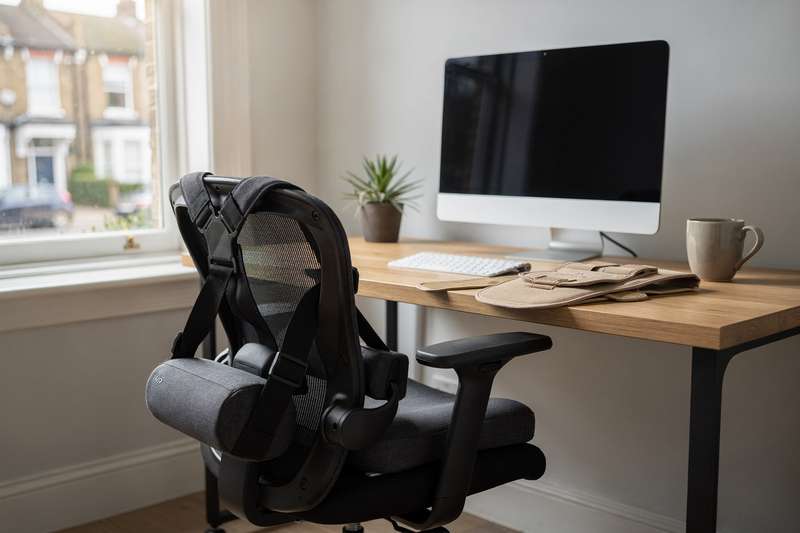
It’s mid-afternoon, you’ve been at your desk since nine, and there’s that familiar tightness spreading from your upper back into your neck. You shift forward, then back, briefly adopt the ergonomic position your physio described — and three minutes later you’ve quietly drifted back into your default forward-head, rounded-shoulder slouch. You know it’s happening; you just can’t seem to stop it. You’ve tried scheduling stretch breaks that get skipped when deadlines loom, adjusted your monitor height twice, and bought a lumbar cushion that helps your lower back but does nothing for the hunch developing at your shoulders.
Posture correctors address exactly this gap — between knowing what good posture looks like and actually sustaining it hour after hour. Rather than adding one more item to your mental checklist, a well-fitted brace gives your body a constant physical prompt, gently pulling your shoulders back and reminding your thoracic spine to extend while you focus on your work. Done consistently, that prompt gradually builds the muscle memory that makes upright posture increasingly automatic. This guide works through the current options on Amazon.co.uk, separating the ones with genuine merit from those that look promising but fall short in practice.
How We Evaluated These Picks
Selecting a posture corrector well requires looking past the marketing photography. For this guide, six core criteria drove the assessment: adjustability across realistic body sizes (sizing vagueness is among the most common complaints in this category); material breathability, since a brace that makes your back sweat becomes unwearable within an hour; the nature of the structural support — elastic straps, flexible boning, or a rigid steel bar each suit a different correction need; the spinal area addressed; discretion under everyday clothing; and ease of solo fitting. One honest caveat upfront: several products in this selection are recently listed on Amazon.co.uk and carry limited verified buyer feedback. Where review data was sparse, assessment draws on specification analysis and design logic. The NativoDex is the clear exception — it carries the most substantive buyer feedback in this group and consequently the highest evidence-based confidence of any pick here.
Best Budget Pick
The NativoDex Posture Corrector for Men & Women is the most extensively reviewed product in this category on Amazon.co.uk at present, with 26 verified buyers having weighed in at an average of 3.7 stars. In a segment where many newly listed products carry no public feedback whatsoever, that track record makes it the most evidence-backed starting point for most UK buyers considering their first posture corrector.
The feature that sets it apart from lighter elastic competitors is a built-in steel support bar running along the thoracic spine. For someone whose posture problem involves an actual spinal curve — rather than habitual shoulder rounding you’d correct with a gentle nudge — that rigid element provides structural backing that straps alone simply cannot replicate. It’s not the same as a medically prescribed orthosis, but it does create a firm reference point for the spine to rest against, which is qualitatively different from pure strap tension and genuinely useful for anyone with a more pronounced thoracic rounding.
The padded shoulder straps are another practical detail worth noting. The standard failure point for shoulder-loop braces is the pressure they create at the underarm crease and across the front of the shoulder. Padding at these contact points reduces skin irritation during longer sessions, and buyers in the review pool flag this positively. Where critical feedback emerges, it centres on sizing — broader or more muscular shoulder builds finding the straps don’t accommodate their proportions comfortably. Measure your chest circumference before ordering and cross-reference with the size guide rather than guessing from general S/M/L labels.
Practically, the NativoDex sits between a dedicated corrective session device and a passive all-day brace. The steel bar adds visible bulk under close-fitting tops — you’ll notice the outline under a slim work shirt, though it disappears completely under a loose jumper or structured jacket. Many posture practitioners actually favour short-session wearing (thirty to sixty minutes of focused, active use) over passive all-day wearing, and this brace suits that approach well. The muscles being corrected need to do some work during the session, not simply be held in position for eight hours.
For the budget tier, this is a credible and functionally honest posture corrector with genuine user feedback behind it. It won’t suit every build — particularly broader shoulders or those needing near-invisible discretion under fitted clothing — but for the majority of desk workers wanting a starting point with structural backing and a real review record, it’s the most rational first choice in this selection.
Best for Upper Shoulder Correction
The Vicorrect Posture Corrector for Women and Men uses a strap-geometry approach to correction rather than a rigid internal bar, focusing specifically on the clavicle-shoulder junction — the area where desk-based posture problems typically originate. The crisscross back panel distributes corrective tension across a broader contact surface than a simple loop-over-shoulder configuration, which makes it a more appropriate fit for someone whose primary issue is forward-rolling shoulders rather than a pronounced thoracic kyphosis.
It’s worth stating plainly: this product is recently listed and carries no verified buyer reviews at time of writing. The displayed rating reflects initial product categorisation rather than verified consumer consensus. You’re therefore purchasing based on specification logic and design features rather than crowd-validated experience — a reasonable approach for a modest-risk product in this price range, but worth factoring into your decision. Monitor how feedback accumulates before drawing firm conclusions about real-world performance.
The standout design detail is the underarm adjustment system. This carries disproportionate practical importance. The most common reason people abandon posture correctors early is not that they stop believing in the concept — it’s that the straps dig uncomfortably into the armpit area, creating a pinching sensation that becomes intolerable after twenty minutes. A dedicated adjustment mechanism at this pressure point means you can dial in the tension independently, significantly improving the chances of wearing the brace long enough to produce corrective benefit. Designing this feature in suggests the product team considered real wear patterns rather than optimising purely for the product listing photograph.
The Vicorrect is available in Small, Medium, and a base configuration — size accuracy matters here. An upper-back brace that’s too loose provides minimal corrective effect; one that’s too tight becomes uncomfortable enough to remove. Measure your chest circumference and cross-reference it against the published sizing chart before ordering. The breathable fabric is appropriate for extended sessions, and the slim profile means it sits under most everyday tops without creating a visible outline — a practical advantage over the more structured NativoDex for office environments where discretion matters.
If your primary posture concern is forward shoulder rolling rather than thoracic curvature, this strap-centric approach addresses that target precisely. It provides a gentle corrective cue rather than the firmer structural correction of a steel-bar design — which is often the right starting point for someone building shoulder awareness for the first time. Start with fifteen to twenty minutes per session and increase gradually over two to three weeks as your shoulder muscles adapt to the corrective position.
Best Lightweight Option for Women
The Nebility Posture Corrector for Women is designed specifically around female anatomy rather than offering a generic unisex fit, and the practical significance of that distinction is often underestimated. Most posture braces are patterned around a broader, squarer shoulder geometry that corresponds to male anatomy, and when worn by women with narrower or more sloped shoulders the straps tend to migrate outward, corrective tension distributes unevenly, and the brace never settles into a stable and effective position regardless of how much you adjust it.
With a 4.0-star rating from one verified buyer at time of writing, the review sample here is minimal — treat this as a design specification assessment rather than a crowd-validated recommendation. The available feedback is positive, citing good fit and comfort, but a single review provides very little insight into consistency across different body types. The women-specific geometry has sound structural logic behind it, and if you’ve previously tried a unisex brace that slid around on your shoulders without ever feeling properly placed, a design built for a different shoulder profile is worth considering.
The Nebility targets the upper back, shoulder, and neck region — the interconnected cluster that generates most of the daily discomfort for people who spend extended periods at a screen. It’s lightweight and slim-profiled, making it practical for office settings: under a blouse or a fitted top it sits flat without creating an obvious outline. The breathable construction suits extended sessions, though individual sensitivity to material and heat retention varies between wearers, so pay attention during the first few uses before committing to longer sessions.
The hunchback correction focus in the product description points to thoracic kyphosis — the forward curve of the upper spine that often develops alongside rounded shoulders during years of desk work. A lightweight brace of this type provides an effective gentle corrective cue for mild to moderate curvature. For significant spinal deviation or a diagnosed structural condition, a physiotherapy assessment and clinically recommended device is the appropriate route — no over-the-counter posture corrector should replace professional evaluation of a structural spinal problem.
For women looking for a properly fitting, lightweight brace that stays in the correct position throughout a working day without showing through clothing, the Nebility offers a well-reasoned design. As the review pool grows, purchasing confidence in this pick should increase considerably. If you need evidence before committing today, the NativoDex’s 26-review record provides a more grounded decision.
Best for All-Day Comfort
The Schiara Posture Corrector for Men and Women leads with comfort as its defining quality — the word appears directly in the product title, which reads as a deliberate design statement. In a category where discomfort is the principal reason people stop using an otherwise functional product, a comfort-first philosophy addresses the real attrition problem rather than just maximising corrective force on paper while producing a device nobody actually wears for longer than a week.
This product carries no verified buyer reviews at the time of writing — another recently listed entry in a category where new products appear regularly. As with the other lower-feedback picks in this guide, evaluation is necessarily specification-based. The Schiara covers both upper and lower back simultaneously, a broader coverage area than the shoulder-specific braces. For someone whose posture issue isn’t limited to the thoracic region but extends to lower back positioning as well, a brace addressing the full spinal chain offers a more comprehensive approach in a single product rather than needing to layer multiple solutions.
Strap adjustability highlighted in the product description matters practically. The tension required to feel genuinely supported varies considerably between body types and even between different times of day as your muscles fatigue. A fixed-tension design that works well for one person may feel either slack or oppressive for another. Independent adjustment of shoulder and back tension — and, where the mechanism allows, underarm pressure — gives you the control needed to find the balance between corrective effect and comfortable sustained wear.
All-day comfort depends significantly on thermal performance. Your upper and mid back generate meaningful heat even during sedentary activity, and any material that traps that heat creates a clammy, increasingly irritating wearing experience within the first couple of hours. The Schiara’s construction suggests consideration of breathability, though without sustained wearer feedback across a full working day, real-world thermal performance remains to be confirmed at scale. If you run warm or have found previous back supports cause sweating, monitor this carefully in the first few sessions and adjust your wearing schedule accordingly.
This pick is best suited to someone who has tried a posture corrector before, abandoned it because it was too uncomfortable to tolerate consistently, and wants to try again with a design that prioritises the wearing experience from the outset. Pair it with a gradual wear-in schedule — starting at around twenty minutes and building by fifteen minutes every few days — and you give both your skin and your postural muscles the time they need to adapt without generating the irritation that typically derails first-time users.
Best for Spine-Focused Support
The HLGO Posture Corrector for Women and Men references spinal alignment directly in its product name — the “Spine Align” description differentiates it from shoulder-first braces and signals a design focus on the thoracic curve rather than exclusively the shoulder joint. With three verified reviews at a 3.3-star average, there’s genuine buyer feedback here, though the sample is small enough that individual variation likely accounts for significant spread in the ratings.
The distinction between a shoulder-targeting and a spine-targeting brace matters when you’re trying to identify which product actually matches your problem. For many desk workers, the most visible symptom is forward shoulder rolling — but the underlying structural issue is an exaggerated thoracic kyphosis (the upper-back curve becoming more pronounced over time). A brace that works on the curve itself rather than only retracting the shoulder blades addresses the causal mechanism more directly. If you’ve used shoulder-loop braces previously and found they help temporarily while worn but don’t seem to produce lasting change, a more substantive thoracic engagement may offer a qualitatively different kind of benefit.
The 3.3-star average warrants straightforward engagement. This is not a product enjoying uniform praise — it suggests the device works well for some buyers and less effectively for others. In structural back braces, the most plausible explanation for variable satisfaction is sizing: a brace that doesn’t sit correctly due to a size mismatch will be both uncomfortable and ineffective, regardless of its design quality. The “M” size designation in the listing indicates a medium variant; confirm your measurements against the published size guide before purchasing, because the consequences of a size error in a structurally supportive brace are more significant than in a lightweight elastic option.
The review feedback offers a useful pattern: positive assessments note genuine structural support during active sessions, while critical reviews mention an initial discomfort period. That adjustment period is expected with any brace generating real corrective tension — if a posture corrector feels entirely unobtrusive from day one, it’s often a sign it isn’t doing substantive corrective work. Budget two to three weeks of gradual daily build-up before drawing conclusions about effectiveness, and resist the urge to abandon it after the first uncomfortable session, which is usually the peak discomfort point.
The HLGO is most appropriate for buyers who have identified thoracic curve as their primary posture concern rather than shoulder-only rounding, are prepared for a genuine adjustment period, and have taken care to size correctly before ordering. Given the mixed and limited feedback, it’s the pick in this selection that requires the most cautious approach — but for the specific need it addresses, the design rationale is sound and worth consideration at its price point.
What to Look For When Buying a Posture Corrector
Before choosing a posture corrector, identifying your specific posture problem saves you from buying a product designed for a different issue entirely. The factors below are the ones that genuinely determine whether a brace will work for your situation:
- Sizing accuracy: Poor fit is the single biggest cause of posture corrector failure. Always measure your chest circumference and cross-reference it against the brand’s specific size chart — not a generic S/M/L label alone, as sizing varies considerably between manufacturers. If you’re between sizes, most users find sizing up more comfortable than down, since you can tighten adjustable straps but can’t loosen a frame that’s fundamentally too small for your frame.
- Breathable materials: Look for mesh panels or moisture-wicking fabrics at the back contact points. Even light activity generates significant heat at the upper back, and a non-breathable material creates sweating and skin irritation within an hour — at which point the brace comes off and provides no further benefit. Breathability is non-negotiable for any brace you intend to wear consistently.
- Support structure type: Elastic straps alone offer a gentle corrective prompt suitable for mild postural habits and early-stage correction. Flexible internal boning or stays add more consistent shaping. A steel support bar provides the most structural corrective force and is appropriate for more pronounced thoracic curve, but adds bulk and a visible outline under close-fitting clothing. Match the support level to your actual need.
- Coverage area: Upper-back-only braces target shoulder rounding and thoracic kyphosis. Full-back or lumbar-inclusive designs additionally address lower back positioning. Buying a broader-coverage brace when you only need upper back correction adds unnecessary bulk; buying an upper-only brace when your lower back is also involved leaves part of the problem unaddressed.
- Underarm design: The armpit contact point is where most posture braces cause early discomfort. Look for padding at this junction, or a dedicated adjustment mechanism that lets you control the underarm pressure independently from the shoulder strap tension. This single design feature can make the difference between a brace you wear consistently and one you abandon after the first week.
- Wearability under clothing: If office discretion matters, a slim elastic design sits nearly flat under most tops. Steel-bar designs create a visible ridge under close-fitting shirts and blouses. Check this in the type of clothing you’ll actually wear it with before committing to long daily sessions.
- Recommended wear schedule: Products that suggest a gradual build-up from short initial sessions — rather than immediate all-day wear — are more likely to have been designed with real user experience in mind. They’re also more likely to produce results without causing the skin irritation or muscle over-reliance that makes many people abandon posture correctors before giving them a fair chance.
Verdict
For most UK buyers approaching posture correctors for the first time, the NativoDex Posture Corrector for Men & Women is the most defensible starting point. It’s the only pick in this selection with a meaningful number of verified buyer reviews, giving it a level of real-world validation that the other products here — while thoughtfully designed — simply cannot match yet. The steel support bar provides structural backing beyond what elastic straps alone offer, the padded shoulder straps address the most common comfort complaint in this category, and the budget price point limits the financial risk of discovering the fit doesn’t suit your particular frame.
If the NativoDex’s profile under fitted clothing is a concern — or if forward shoulder rolling rather than thoracic curve is your primary problem — the Vicorrect’s strap-based design with underarm adjustment is a thoughtful alternative worth considering. Women with narrower shoulder frames should look seriously at the Nebility, whose women-specific cut addresses the geometric mismatch that causes most unisex braces to slide rather than hold position. Both the Vicorrect and the Nebility carry limited buyer feedback at present; check their current review counts before purchasing to see whether the picture has developed since this guide was written.
Whichever product you choose, the most important variable is consistent use. A good posture corrector worn occasionally will accomplish very little. A reasonable corrector worn daily in structured short sessions — ideally alongside targeted shoulder and upper back strengthening exercises — will produce noticeable improvement for most people within four to six weeks.
We were not paid to feature any specific product in this guide. All opinions are independent and based on publicly available specifications, verified buyer feedback patterns, and category research.
Quick Comparison Table


FAQ
How long should you wear a posture corrector each day?
Most posture specialists recommend starting with fifteen to twenty minutes per session and building gradually over two to three weeks toward thirty to sixty minutes daily. Wearing a brace for too long too soon can cause the supporting muscles to rely on external support rather than developing their own strength, which slows genuine progress. Treat it as a training aid rather than a passive support device — short, focused sessions produce better results than passive all-day wearing.
Can a posture corrector permanently fix bad posture?
Not on its own. A posture corrector works as a corrective cue and training tool, not a standalone solution. The most effective approach combines brace use with targeted exercises to strengthen the muscles responsible for maintaining good posture independently — particularly the thoracic extensors, rhomboids, and deep neck flexors. Over six to twelve weeks of consistent use alongside appropriate exercise, many people find they need the brace less frequently as muscle memory improves.
Are posture correctors suitable for people with back conditions?
Over-the-counter posture correctors are designed for adults with mild to moderate postural deviation caused by lifestyle habits such as prolonged desk work and screen use. They are not appropriate as a substitute for medical treatment if you have a diagnosed spinal condition such as scoliosis, significant kyphosis, or osteoporosis. If you have persistent back or neck pain, a GP or physiotherapist assessment before purchasing is the sensible first step — to rule out an underlying structural cause that a brace won’t address and could potentially aggravate.
How do I measure myself for the right size posture corrector?
Measure your chest circumference at its widest point — for an upper back brace, this is typically across the shoulder blades — and cross-reference that measurement against the brand’s specific size chart rather than relying on generic S/M/L labels alone. Sizing varies significantly between manufacturers, so the same label can mean different things across different products. If you’re between sizes, most posture specialists suggest sizing up to allow comfortable strap adjustment rather than a tight initial fit that restricts movement or causes chafing.
Can I wear a posture corrector while exercising?
Lighter elastic braces are generally suitable for low-intensity activity such as walking or gentle stretching, and wearing one during these activities can reinforce correct positioning during movement. They are not designed for high-intensity exercise, running, or resistance training — activities where natural, dynamic spinal movement matters and an external brace could restrict it inappropriately. Always check the manufacturer’s guidance for the specific product you choose, and err on the side of caution with new purchases until you know how your body responds.
Will a posture corrector help with neck pain?
Upper back posture correctors can indirectly reduce neck pain caused by forward head posture — the position where the head sits forward of the shoulders rather than stacked directly above them. Pulling the shoulders back and opening the chest naturally encourages the head to move toward a more neutral alignment, reducing strain on the cervical spine muscles. If your neck pain has a specific structural cause rather than a postural one, however, a posture brace alone is unlikely to resolve it, and a physiotherapy assessment is the more appropriate first step.