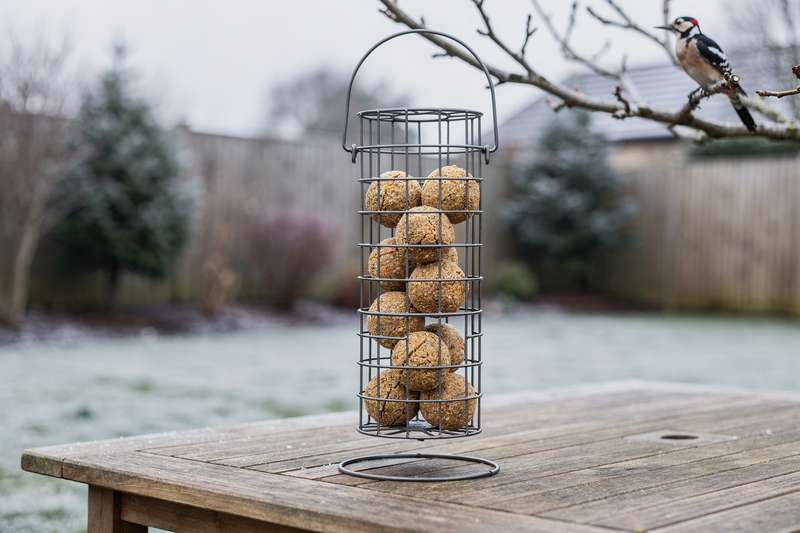
Picture this: it’s a grey January morning, frost still clinging to the lawn, and you’re watching a great spotted woodpecker work its way down the apple tree at the end of the garden. You put out suet balls last autumn but after a week they’d vanished — not to woodpeckers, but to starlings that descended in a mob and stripped the feeder in under an hour. You tried a narrow-mesh feeder next, but the gaps were too tight for the woodpecker to get a decent grip, and it stopped visiting. Now you’re staring at an empty garden, wondering what kind of feeder would actually hold a suet ball securely enough for a woodpecker to cling to, stay full long enough to be worth hanging out, and survive a British winter without rusting into an orange mess by March.
If that scenario sounds familiar, this guide is written for you. Woodpeckers are not casual visitors — they’re intelligent, persistent birds with specific feeding habits. They need a feeder that gives them something structural to hold onto, positioned somewhere they feel safe, and stocked with high-fat suet that replaces the insects they can’t find when bark is frozen solid. Getting the feeder right makes the difference between a woodpecker that becomes a regular and one that investigates once and never returns.
How We Evaluated These Feeders
To build this guide, we looked at eight feeders currently available on amazon.co.uk, cross-referenced verified buyer feedback patterns, examined construction materials and mesh specifications, and assessed which designs genuinely suit the way woodpeckers feed. The key criteria were: mesh or basket opening size (woodpeckers need room to cling and peck, not just perch), structural rigidity (a feeder that swings wildly deters them), weather resistance across a UK winter (galvanised or powder-coated steel beats plain wire), capacity (how many suet balls fit, and how often you’ll need to refill), squirrel resistance (relevant if grey squirrels are common in your garden), and ease of cleaning (fat residue builds up fast and becomes a disease risk for birds). We weighted genuine review counts heavily — products with hundreds of real-world ratings tell us far more than a handful of early reviews. Designs with trays or perch rails scored higher for woodpecker compatibility, since these birds rarely hover but instead brace their stiff tails against a surface while feeding.
Best Overall Pick for Woodpeckers
The Supa Fat Ball Feeder & Tray stands out as the most woodpecker-friendly design in this lineup. That tray is the key feature: woodpeckers — especially great spotted woodpeckers — are much more comfortable feeding when they can brace their tail against a solid surface, exactly as they do on a tree trunk. A flat tray beneath the basket lets them adopt that natural braced posture rather than dangling awkwardly from a swinging wire mesh. The combination of basket-style fat ball holder and integrated tray also catches fragments of suet as birds peck, reducing waste and keeping your patio cleaner.
The feeder is designed to handle both netted and un-netted fat balls, which is worth noting because netted balls (the ones in green or red plastic netting) can actually trap birds’ feet and claws — a known welfare risk flagged by the RSPB. Being able to use un-netted balls safely makes this a more responsible choice, and it means you can buy bulk un-netted suet balls without worrying about compatibility.
Where it’s less impressive: the tray, while genuinely useful, does collect rainwater in a wet UK winter. You’ll want to check it after heavy rain and tip it out to prevent the fat balls becoming waterlogged and mouldy. The feeder also doesn’t have any squirrel-deterrent features, so if grey squirrels regularly patrol your garden, expect losses. That said, for a garden where the primary goal is attracting woodpeckers — and where squirrels aren’t an overwhelming nuisance — this is the most thoughtfully designed option in the group. It rated 4.5 stars, which is strong for this product category.
Hang it on a tree branch or a sturdy bracket at roughly 1.5–2 metres from the ground, ideally near a tree with rough bark so the woodpecker has somewhere to retreat between visits. Avoid hanging it where it will spin freely in the wind — the tray adds stability, but a sheltered spot between branches is better than an exposed post.
Best Budget Pick
The Supa 9 inch Wild Bird Fat Ball Feeder is a straightforward, no-frills wire basket that holds four standard fat balls and costs very little — making it an easy starting point if you’re new to suet feeding and not yet certain which birds will visit your garden regularly. It’s rated 4.4 stars from 178 reviews, which suggests it holds up well in everyday use despite its modest price point.
The nine-inch length gives it enough vertical extent to accommodate a perching woodpecker with room to shift position as it pecks its way around the ball. This matters more than you might expect: a shorter feeder forces the bird to contort awkwardly, and great spotted woodpeckers in particular will give up quickly if feeding feels unstable. The wire mesh spacing on standard fat ball feeders is generally wide enough for woodpeckers to access the suet directly rather than being forced to pick fragments through a fine mesh.
The honest tradeoffs here are durability and refinement. At this price point, the wire coating varies in quality across production batches — some buyers report rust appearing after a single wet winter, while others have had the same feeder for two or three years. If you can inspect the wire before purchase (or order early in the season before the coating gets damp in transit), look for a smooth, even galvanised or powder-coated finish with no exposed raw metal at cut edges. The feeder holds only four balls, so you’ll be refilling more often than with larger options — in a hard frost when woodpeckers are feeding heavily, that can mean every two or three days.
There’s no tray and no squirrel deterrent, which puts it firmly in the basic category. But for testing whether woodpeckers will visit your specific garden before spending more on a premium feeder, it’s a sensible starting point. Pair it with high-quality suet balls containing insects or mealworms — woodpeckers respond to protein-rich fat more readily than plain lard-based balls — and you’ll give yourself the best chance of attracting them.
Best for Squirrel-Prone Gardens
If grey squirrels are a persistent problem in your garden, the Fatball Bird Feeder Squirrel Proof Feeding Station addresses that directly. With 566 verified reviews and a 4.1-star rating, this is the most-reviewed feeder in this guide, which means the feedback base is large enough to trust. Reviewers consistently confirm that it does deter squirrels effectively — the cage mechanism prevents them from directly accessing the fat balls, while the cage openings remain large enough for medium-sized birds to reach through and feed.
For woodpeckers specifically, this design works reasonably well because great spotted woodpeckers are bold enough to feed through a cage, unlike some more timid small birds. They’ll cling to the outer cage and reach through to the suet ball — it’s not as natural a posture as feeding from an open basket, but they adapt quickly if the food reward is strong enough. Lesser spotted woodpeckers (much rarer and smaller) may find the cage intimidating initially, though they’ve been observed using caged feeders in gardens where they’re regular visitors.
The squirrel-proofing also has a secondary benefit that’s often overlooked: it deters large flock birds like starlings and pigeons, which can empty a fat ball feeder in minutes and prevent woodpeckers from getting a look-in. If your garden regularly hosts a starling flock in winter, a caged feeder isn’t just about squirrels — it’s about giving smaller, more deliberate feeders like woodpeckers a fair chance. The cage spacing is wide enough that sparrows, tits and nuthatches (common woodpecker companions) can also access the food without trouble.
The limitation is that the cage adds bulk and weight, making this a more imposing structure to mount. It needs a solid hanging point — a thin branch that sways freely in the wind will destabilise it enough to deter woodpeckers, who prefer something firm. A tree bracket or a purpose-built feeding station pole is ideal. Cleaning is also more involved than with a simple basket: the cage needs to be disassembled or at least opened fully to scrub fat residue from both the inner basket and the outer cage bars every few weeks.
Best Caged Design with Squirrel Guard
The Green Jem BF16 Dome Caged Fat Ball Wild Bird Feeder takes a different approach to deterrence: instead of a full surrounding cage, it uses a dome-and-cage structure specifically designed to exclude larger birds (pigeons, doves, jackdaws) and squirrels while allowing access from below for smaller to medium birds. With 770 reviews and a 4.1-star rating, it has the largest feedback base in this guide — useful for understanding how it performs across different garden setups and seasons.
For woodpeckers, the dome design is interesting. The hanging dome above the basket protects the suet balls from rain (which can cause fat balls to become rancid faster than expected), extending their usable life in wet UK winters. The cage below the dome creates natural perch points that a woodpecker can grip while feeding — they’ll often wrap a foot around one of the cage wires and lean in to peck at the suet ball. This is more natural behaviour than many buyers expect from a caged feeder.
The honest limitation here is that the cage aperture size is calibrated primarily to exclude pigeons and squirrels, and it does this well. However, the spacing can occasionally be tight enough that a particularly large male great spotted woodpecker has less comfortable access than with a fully open basket design. Female and juvenile woodpeckers — which are slightly smaller — seem to have no difficulty. If you’re specifically targeting great spotted woodpeckers and they’re a large, established bird in your garden, it’s worth bearing this in mind.
Reviewers also note that the dome, while effective at keeping rain off the suet, can make refilling slightly fiddly — you need to lift the dome clear of the cage before accessing the basket. Once you’ve done it a few times it becomes routine, but it’s not as quick as a simple top-opening basket. Overall this is a solid, well-built feeder with genuine weather protection and a strong track record; the dome construction looks good in a garden setting too, which matters if the feeder is going to be visible from a kitchen window all winter.
Best Unique Design for Reducing Waste
The Oakdale Donut Fat Ball Bird Feeder takes a genuinely different approach to the standard basket format. Its donut shape means the fat ball sits in a ring rather than a vertical stack, giving birds 360-degree access from any angle. Rated 4.5 stars from 221 reviews, it’s one of the highest-rated feeders in this comparison and clearly resonates with buyers who’ve tried conventional basket designs and found them limiting.
For woodpeckers, the 360-degree access is a real benefit. Woodpeckers are territorial and cautious about their feeding position — they like to be able to see approaching threats from all sides while they eat. A ring-shaped feeder that they can move around as they feed, rather than being locked into one position on a vertical basket, suits this instinct well. The open architecture also means fragments of suet fall away rather than building up inside a closed basket, which reduces the risk of mould and the need for deep cleaning.
The donut design holds one fat ball at a time, which is a significant capacity limitation. If you have active woodpeckers visiting regularly — or multiple birds — you’ll be refilling daily in cold weather. That said, it also means fresher suet more often, which is genuinely better for bird health than a large basket of fat balls sitting out for a week in damp conditions. The metal construction is described as weather resistant, which is important for a feeder that will be exposed to UK winter rain and frost.
One thing to be aware of: the open ring design gives smaller birds like blue tits and great tits very easy access, so you won’t be feeding woodpeckers exclusively. Whether that’s a benefit or a nuisance depends on your garden. If you want to attract a broader range of birds alongside woodpeckers, this feeder is excellent. If you’re specifically trying to maintain a dedicated woodpecker station, you might prefer it as a secondary feeder alongside one of the caged options rather than as your sole fat ball source.
Best Premium Feeder with Suet Balls Included
The Fat Ball Feeder with Fat Balls – Jacobi Jayne® Basketball™ Bird Feeder with Chunky Dumplings™ suet balls is the most recent addition to this comparison, launched by a brand with a strong reputation in the UK garden bird feeding market. It arrives as a kit — feeder plus suet balls — which is convenient if you’re setting up a new feeding station and don’t already have a supply. The five-star rating from its initial reviews is promising, though with only three reviews so far it’s too early to draw firm conclusions about long-term durability.
The Basketball™ design (a name that reflects the spherical, cage-style construction) creates a full surround of accessible feeding points, which is particularly well-suited to woodpeckers because it mimics the way they feed on a round object — moving around it, bracing their tail, and working from multiple angles. The Chunky Dumplings™ suet balls included are marketed as high-protein, which matters for woodpeckers in winter: they need calorie-dense food to maintain body temperature and can burn through fat reserves surprisingly quickly in sustained cold snaps.
The honest caveat is the review count. Premium feeders with only three reviews — even five-star ones — may be early-stage listings where only enthusiastic early buyers have reviewed. Before investing in this as your primary feeder, it’s worth checking the review count has grown and that longer-term buyers report no issues with rust or structural integrity after a full season. Jacobi Jayne as a brand has an established presence in the UK market, which provides some reassurance, but the specific model is too new to assess durability with confidence.
If you’re happy to take that measured risk, this feeder is worth considering as a mid-range option that arrives ready to use. The included suet balls are a practical bonus that gets you feeding immediately without a separate purchase, and the design is genuinely innovative for this category.
Best Versatile Basket Feeder
The Fat Ball Feeder – Jacobi Jayne® Suet Ball Basket holds five fat balls and sits in the mid-range of this comparison in terms of both capacity and price. It has 229 reviews and a 4.3-star rating — a solid middle ground that suggests it performs reliably without any standout weaknesses or strengths. The five-ball capacity hits a practical sweet spot: large enough to last two to three days in a busy winter garden without being so large that the bottom balls sit forgotten while top ones get eaten first.
The basket format — essentially a metal cage open enough for birds to access the suet balls from any position — is a proven design that woodpeckers use comfortably. Jacobi Jayne’s build quality is generally reliable, and the materials specification suggests adequate weather resistance for UK conditions. The hanging design is straightforward: a hook at the top, no base tray, so it swings freely. That free movement can occasionally deter woodpeckers who prefer something more stable, so if you’re hanging this one, try to position it where it’s sheltered from prevailing wind or attach a weight to the bottom ring to reduce swinging.
The five-ball format also means you can mix suet ball types — for example, three insect-flavoured balls at the bottom and two berry-flavoured at the top — which some gardeners use to attract a broader range of species simultaneously. For woodpeckers specifically, insect-based suet is the most attractive option in winter, closely mimicking their natural diet of beetle larvae and other invertebrates found under bark. Plain lard balls are less attractive to woodpeckers than to general garden birds like starlings and tits.
Cleaning this feeder is simple — the basket opens at one end for easy removal of old or mouldy suet, and the metal construction tolerates scrubbing with a stiff brush and hot water. It’s not the most exciting design in this comparison, but for reliable everyday performance it’s a strong contender.
Best with Squirrel Guard
The Natures Market BF008FB Squirrel Guard Hanging Fat Ball Feeder combines a standard fat ball basket with a dedicated squirrel guard — a baffle or cage element designed to prevent squirrels from accessing the suet. Natures Market is a well-established name in UK garden bird accessories, and the BF008FB has been available long enough to have built a track record among gardeners who’ve tried multiple feeders.
The squirrel guard approach here is slightly different from the full cage designs covered earlier. Rather than enclosing the entire feeder in a cage, it uses a guard element that makes it difficult for squirrels to approach from above or the sides while leaving the feeding access points relatively open for birds. This balance means woodpeckers encounter less obstruction when approaching the suet than they would with a full surrounding cage — they can come in from a wider angle and adopt their natural clinging posture more easily.
The tradeoff compared to a fully caged design is that determined squirrels may eventually find a way in — squirrel guards are most effective against average-sized grey squirrels and less so against particularly persistent or large individuals. If you have a garden with heavy squirrel pressure, a full cage design will be more reliable. For gardens where squirrels are present but not overwhelming — where a basic deterrent is enough rather than complete exclusion — this feeder offers a reasonable compromise between access and protection.
One practical note: Natures Market feeders vary in their wire coating quality across production batches, and this model has been around long enough that coating consistency may vary slightly between units. Check on arrival that the wire is smooth and evenly coated, particularly at the cut ends where rust most commonly starts. A quick coat of clear lacquer spray on any exposed metal edges at the point of purchase extends the useful life significantly.
What to Look For When Buying a Suet Ball Feeder for Woodpeckers
- Mesh and basket opening size: Woodpeckers need enough space to grip the feeder and bring their beak directly into contact with the suet ball. Fine-mesh feeders designed for niger seed or peanuts are too restrictive. Look for a basket-style or wide-mesh cage design where the gaps are at least 4–5cm across, allowing the bird to brace properly.
- Structural rigidity and hanging stability: Woodpeckers are more likely to persist with a feeder that doesn’t swing wildly when they land. A heavier feeder, one with a base tray adding ballast, or one hung from a rigid bracket rather than a swinging hook will see more consistent visits. Free-swinging feeders frustrate birds that rely on bracing their tail against a fixed surface.
- Weather resistance: UK winters involve sustained rain, frost and occasional snow. Bare steel wire rusts within one season. Prioritise galvanised, powder-coated or stainless steel construction. Avoid feeders where the wire ends look cut rather than sealed — these are the first points to rust. A dome top is a bonus, as it keeps rain off the suet balls and extends their freshness.
- Suet ball type compatibility: Make sure the feeder accepts un-netted fat balls. The green and red plastic netting on supermarket suet balls is a foot-entanglement risk for birds. All the feeders in this guide are compatible with un-netted balls, but always check before buying.
- Squirrel resistance: If grey squirrels are active in your garden, an open basket feeder will be emptied in minutes. A caged or guarded design is worth the additional investment — not just to protect the food, but because squirrel activity at a feeder will deter woodpeckers, who avoid busy, chaotic feeding situations.
- Capacity vs. freshness: A larger feeder means fewer refills, but suet balls exposed to damp UK air go rancid faster than you might expect. In very wet winters, a smaller capacity feeder that you refill more frequently is actually better for bird health than a large feeder where the bottom balls sit for a fortnight. Consider a four to five ball capacity as a practical maximum unless your feeder is well sheltered.
- Ease of cleaning: Fat residue and mould build up faster in cold, damp conditions. A feeder that comes apart easily — or has a wide enough opening for a brush to reach every surface — will get cleaned more regularly, which matters for the health of visiting birds. Look for designs that avoid tight corners or enclosed bases where wet suet collects and stagnates.
Verdict
For most UK gardeners whose primary goal is attracting great spotted woodpeckers through winter, the Supa Fat Ball Feeder & Tray is the pick we’d hang first. The integrated tray gives woodpeckers the tail-bracing surface they instinctively look for, replicating the way they feed on a tree trunk. It accepts un-netted fat balls safely, it’s rated 4.5 stars, and the design is specifically more sympathetic to woodpecker feeding habits than a standard hanging basket.
If grey squirrels or starling flocks are a serious problem in your garden, add the Fatball Bird Feeder Squirrel Proof Feeding Station alongside it or replace it entirely — 566 real-world reviews confirm the squirrel exclusion actually works. For a budget starting point before committing to a more specialised design, the Supa 9 inch Wild Bird Fat Ball Feeder is a reasonable first step. Whatever you choose, use high-protein insect-based suet balls rather than plain lard, position the feeder near a tree with rough bark, and give the woodpecker a week or two to discover its new food source before concluding they won’t visit — patience is part of the process.
We were not paid to feature any specific product in this guide. All opinions are independent and based on publicly available specifications, verified buyer feedback patterns, and category research.
Quick Comparison Table


FAQ
Will great spotted woodpeckers actually use a hanging suet ball feeder?
Yes — great spotted woodpeckers are regular visitors to suet ball feeders throughout the UK, particularly in winter when natural food sources under bark are scarce. They’re bolder than many garden birds and will visit feeders close to houses once they’ve identified a reliable food source. The key is choosing a feeder with enough structural grip points for them to brace against, ideally near a tree or large shrub for cover.
What type of suet balls do woodpeckers prefer?
Woodpeckers respond best to high-protein suet balls containing insect material — beetle larvae, mealworms, or similar invertebrate content. This mimics their natural winter diet of insects found under tree bark. Plain lard-based fat balls are less attractive to woodpeckers than to general garden birds like tits and starlings. Look for suet balls marketed specifically as high-protein or insect-based rather than standard fat balls.
Do I need a squirrel-proof feeder for suet balls?
It depends on your garden. If grey squirrels are frequent visitors, an unprotected fat ball feeder will be emptied very quickly — sometimes within minutes of being hung. A caged or guarded feeder is worth the extra cost in squirrel-heavy gardens. Beyond the food loss itself, squirrel activity at a feeder deters woodpeckers, who prefer quieter, more predictable feeding situations and will avoid a spot where there’s frequent disturbance.
Why are netted fat balls a problem, and should I avoid them?
The plastic netting on many supermarket fat balls is a genuine welfare risk: birds’ feet, claws, and occasionally beaks can become entangled in loose netting, causing injury or death. The RSPB specifically advises against netted fat balls and recommends either removing the netting before use or buying un-netted balls. Most good quality fat ball feeders are designed to work with un-netted balls, and buying in bulk un-netted is generally better value anyway.
How often should I clean a suet ball feeder in winter?
In wet UK winters, a fat ball feeder should be checked and wiped down at least every two weeks, and fully cleaned with hot water and a stiff brush monthly. Fat residue turns rancid in damp conditions, and mould builds up in corners and on wire surfaces faster than most people expect. A dirty feeder can spread disease between birds — salmonella outbreaks at garden feeders are a real and documented risk. Rotate between two feeders if possible so one can dry fully after cleaning.
Where is the best place to hang a suet ball feeder for woodpeckers?
Hang the feeder near — but not directly against — a mature tree with rough bark, ideally within 2–3 metres so the woodpecker can use the tree as a launch point and retreat. Position it at 1.5–2 metres from the ground, in a sheltered spot out of the prevailing wind so it doesn’t swing excessively. Avoid placing it where cats can approach unseen, or in an area that gets heavy foot traffic, as woodpeckers are alert to disturbance and will abandon a feeding spot they don’t feel secure at.