You’ve decided to get into jewellery making — or you’re buying a kit for someone who has. Either way, you’ve probably spent twenty minutes staring at search results wondering why there are a thousand options, most of which look identical, and none of which clearly tell you whether they’re any good for a beginner or someone who already knows their crimp bead from their headpin. The beads are cheap, the descriptions are vague, and you’ve no idea if the elastic thread will snap the moment you try to knot it.
Maybe you tried a starter kit from a pound shop and found the wire kinked immediately, or the “pliers” that came with it were barely functional. Maybe you bought a bead assortment and discovered it was 80% filler colours nobody wants. Or you’re buying for a teenager who’s currently making friendship bracelets from kitchen string because you haven’t found the right supplies kit yet. Whatever brought you here, this guide is designed to cut through the noise and point you at products that genuinely do what they promise — covering everything from basic cord and needles to full starter kits and design boards.
How We Evaluated These Picks
Eight products made it through to this guide, drawn from the live Amazon UK catalogue. The evaluation considered several factors: verified buyer review patterns (focusing on what breaks, what lasts, and what arrives as described), the completeness of kits for their stated purpose, the versatility of components across different project types, and how well each product suits its target user — whether that’s an absolute beginner, a casual hobbyist, or someone wanting to expand a specific area of their craft.
For tools and cord, durability and ease of use were weighted heavily. For bead and component kits, variety and quality of individual pieces mattered more than sheer quantity. Products with suspiciously inflated piece counts but poor quality control were deprioritised. Where possible, review patterns from verified UK buyers were prioritised over raw star averages. The result is eight picks across distinct use cases — so you can go straight to the section that matches your actual situation.
Best All-in-One Starter Kit for Adults
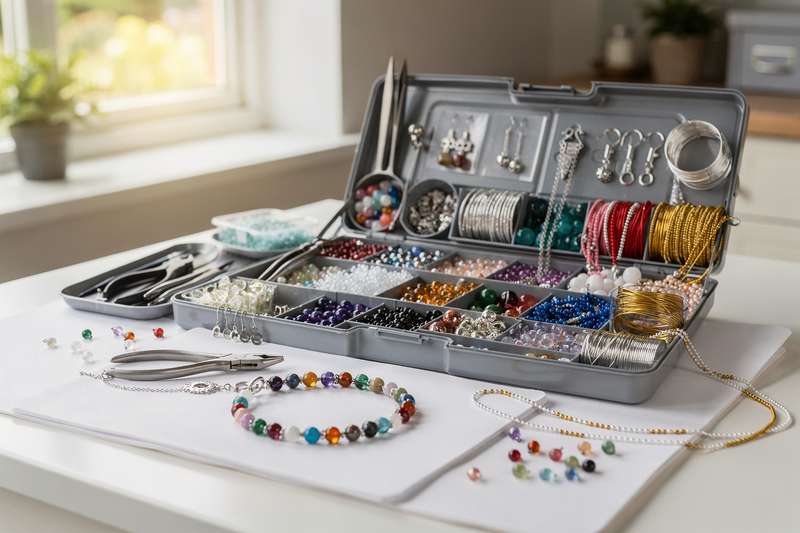
The shynek Jewelry Making Kit for Adults – Supplies with Tools, Wires, Findings, Charms is the pick for anyone who wants to start making jewellery without buying components piecemeal. With 485 reviews averaging 4.7 out of 5 stars, it’s one of the higher-rated comprehensive kits in this space, and the feedback pattern is notably consistent: buyers appreciate that nearly everything you need for a first project is included in a single box.
The kit covers the fundamentals — beading wire, a selection of findings (jump rings, clasps, crimp beads), charms, and tools. For an adult beginner, that combination matters enormously. Buying these items separately can feel overwhelming, and getting the proportions wrong (too many of one type of clasp, not enough of another) is a common early mistake. This kit takes that decision off your hands. The tools included are functional rather than professional-grade, which is an honest trade-off: they’ll get you through dozens of projects, but if you progress to wire wrapping or working with heavier gauges, you’ll eventually want a dedicated pair of round-nose pliers.
Where this kit earns its rating is in the variety of findings. Beginners often underestimate how important quality clasps are — a lobster claw that doesn’t close properly ruins an otherwise good bracelet. Reviews suggest the hardware in this kit performs reliably at the beginner-to-intermediate level. The charms add immediate creative options without requiring additional purchases, which is a genuine convenience if you’re gifting this or getting started without a specific project in mind.
The main limitation is that the bead selection itself is modest — this is primarily a tools and findings kit, not a bead bonanza. If you want a large bead assortment alongside your tools, you’ll want to pair this with a separate bead purchase. But as a single purchase that gets you genuinely working rather than just playing, this is the most complete starting point in the current UK catalogue.
Best Budget Findings and Tools Set
If you already have beads or elastic and just need the hardware and tools to complete your projects, the Kuuqa Jewelry Making Kit: 15-Piece Findings, 4 Beading Wires, Tools for Beginners – Non-Foldable, Adults is worth considering as an entry-level option. It’s positioned at the more accessible end of the market and includes a useful spread of findings alongside basic beading wires and tools.
The “non-foldable” note in the title refers to the pliers, which is worth paying attention to: these are compact but full-action tools rather than the folding travel-style pliers that appear in some cheaper kits. For home use, that’s actually the right call — folding mechanisms on budget pliers tend to loosen quickly, and a solid compact pair is more reliable for the tasks you’ll actually use them for (opening jump rings, crimping, cutting wire).
The four beading wires cover the main diameters you’ll use for different project types — lighter gauges for seed beads and delicate work, heavier for chunky statement pieces. For a beginner, having multiple wire options immediately available means you can experiment with different feels without committing to a bulk spool purchase upfront. The findings selection covers clasps, jump rings, and crimp beads in the quantities you’d expect for a starter set.
The honest caveat here: this is a functional starter set, not a premium one. The tools will work for lighter-gauge wire and standard findings, but they’re not designed for heavy-duty use. Think of this as a solid “get started” purchase rather than something you’ll still be using in two years of regular crafting. For occasional makers or those buying a first kit to test whether the hobby sticks, it hits the right balance of completeness and value.
Best for Learning the Craft Properly
Bead Jewelry Making for Beginners: Step-by-Step Instructions for Beautiful Designs is the outlier in this guide — it’s a book rather than a supplies kit — but it’s included because one of the most common beginner mistakes is buying supplies before understanding technique. Rated 4.5 out of 5 stars, this title covers foundational skills: how to use findings correctly, how to finish a piece properly so it doesn’t unravel, how to read a pattern, and how to build increasingly complex designs from basic starting points.
If you’ve ever watched a bracelet you made come undone at the clasp, or found your strung necklace breaking because the crimps weren’t set properly, the issue is almost always technique rather than materials. A book like this teaches you to fix those problems permanently rather than repeatedly buying better thread and hoping for different results. The step-by-step format is particularly useful for visual learners — jewellery making involves spatial reasoning that’s genuinely hard to pick up from text descriptions alone.
Pairing this with any of the supplies kits in this guide is a stronger approach than buying expensive materials without the foundational knowledge to use them well. It’s especially useful if you’re buying for a teenager or young adult who wants to develop a serious skill rather than just mess around with beads. The designs covered tend to be accessible but not trivial — you’ll be learning genuine jewellery construction rather than basic knotting.
The trade-off is obvious: you need supplies alongside it. But if your budget allows for one kit and one reference, this combination pays dividends in the long run. Skilled technique with modest materials produces better results than premium materials used incorrectly — every time.
Best Specialist Tool — Beading Needles
The Bead Needle, 5 Sizes Stainless Steel Sewing Needles, Big Eye Beading Needles, Collapsible Embroidery Beading Needle, for Craft and Jewellery is a specialist purchase, but one that solves a specific and extremely common frustration: threading elastic or thin cord through small-holed beads without losing your mind in the process.
Rated 4.3 out of 5 stars from a substantial review base, this set includes both traditional beading needles (long, fine, flexible) and big-eye collapsible needles, which are genuinely transformative if you’ve never used them. A big-eye needle opens along its entire length, allowing you to insert thread through the middle of the needle rather than through a tiny eye at the tip — it’s dramatically faster for threading, especially with thicker elastic or multiple strands.
Five sizes matter more than it might sound. Seed beads (the tiny glass ones used in intricate beadwork) typically need the finest needles, while larger craft beads with bigger holes can take a heavier needle. Having the right size prevents the needle from distorting the thread or getting stuck halfway through a bead — both of which are irritating interruptions to the creative process. Stainless steel construction means these won’t corrode or bend easily with normal use, and they’re robust enough to push through fabric if you’re doing any beaded embroidery alongside jewellery making.
If you’re doing any work with seed beads, delicas, or any bead with a particularly small hole, this is a near-essential add-on to your toolkit. The cost is low relative to the frustration it eliminates. The one genuine limitation: the finest needles are fragile, as all thin needles are — rough handling will bend them, so store them carefully rather than loose in a drawer.
Best for Natural Stone and Crystal Bracelets
The Colle 418pcs Crystal Stone Beads, 8mm Round Crystal Bead Jewellery Making Kit Natural Stone Beads for Bracelet Necklace Making, Gemstone Bea addresses a different end of the market — buyers who want to work with natural and semi-precious stone beads rather than clay or glass alternatives. Rated 4.6 out of 5 stars, this kit provides a solid variety of 8mm round stones across multiple varieties.
The 8mm size is well-chosen for beginners: it’s large enough to handle and string without specialist fine-motor control, but not so chunky that the resulting bracelets look clumsy. Round beads are also the most forgiving shape to work with — they sit evenly on cord and don’t require any particular orientation. If you’ve seen the natural stone stretch bracelets sold at markets and in crystal shops and thought “I could make those myself”, this kit provides exactly the raw materials to do so.
Natural stone beads vary more than synthetic alternatives — that’s both a selling point and a caveat. Each bead will have slight variations in colour, marking, and texture, which produces bracelets with genuine character rather than the uniform look of mass-produced alternatives. However, it does mean some beads in a kit will be more attractive than others. Review patterns suggest the quality and variety in this kit are consistent with the price point, with buyers noting genuine stone material rather than dyed plastic pretending to be mineral.
You’ll need elastic cord or beading wire alongside this kit — it focuses on beads rather than findings. Pairing it with the Stretch Magic cord listed below is the most logical combination for making stretch bracelets, which are the most common use case for 8mm stone beads. If you want to make clasped bracelets or necklaces, add a findings set from one of the other picks in this guide.
Best for Organising Your Work — Beading Board
The EuTengHao Bead Design Boards Mats with Scoop Soft Stable Beading Mat Jewelry Stringing Needles Organizer Tray for Jewelry DIY Making of Brac is the pick for anyone who has discovered that working without a dedicated surface is a recipe for beads rolling off the table, designs getting knocked out of sequence, and generally losing momentum mid-project. Rated 4.5 out of 5 stars from 407 reviews, it’s well-regarded by both beginners and more experienced makers.
The flocked (velvet-textured) surface is the key feature — beads grip slightly rather than rolling freely, which sounds minor until you’ve spent five minutes chasing a seed bead across a laminate floor. The grooved channels in the board let you lay out a design in sequence before stringing, so you can check how colours and shapes flow together before committing. This is genuinely useful for anything beyond a simple single-strand stretch bracelet — necklaces, multi-strand designs, and anything with a pattern all benefit from the ability to rearrange before stringing.
The included scoop makes picking up small beads without tweezers considerably easier, and the needle organiser element addresses another common frustration: beading needles are easy to lose, and this kit gives them a dedicated home. The tray also helps with the practical issue of sorting beads by colour or type mid-project without them migrating into each other.
The main limitation of a bead board is that it’s a workspace tool rather than a creative one — it doesn’t come with materials, and it adds a step to your setup routine. For occasional crafters who clear everything away between sessions, the setup and teardown can feel like friction. But if you make jewellery even semi-regularly, or if you’re working with anyone younger who needs visible organisation to stay on task, this is a worthwhile addition to your workspace.
Best Elastic Cord for Stretch Bracelets
The Stretch Magic Elastic Beading Cord – Clear Color, 0.5mm in Diameter, 10-Meter (32 ft) – Easy to Knot, Strong & Stretchy String for Making Be is a specialist consumable rather than a kit, but it’s included because elastic cord quality is one of the most common points of failure in beginner jewellery making. The 4.5-star rating tells part of the story — Stretch Magic is a brand with a track record, not a generic private-label alternative.
The 0.5mm diameter is the most versatile for general bead sizes. It’s fine enough to thread through most stone, glass, and clay beads without needing a needle, but strong enough to hold a bracelet together through normal wearing and occasional pulling. Rated 4.5 out of 5 stars, buyers consistently note that it knots cleanly and holds — which sounds basic but is the core requirement for stretch cord, and one that generic alternatives frequently fail on.
The key technique with any elastic cord is tying a surgeon’s knot (double overhand) rather than a standard single knot, then pulling the ends tight and adding a small dot of clear jewellery glue before trimming. This combination will keep a bracelet intact through years of regular wear. No elastic cord, however good, will compensate for a single-loop knot. Stretch Magic makes the knot-tying step as easy as it can be — the cord is tactile enough to grip and manipulate without slipping mid-tie.
The 10-metre length is practical for multiple bracelets — roughly enough for eight to twelve standard adult bracelets depending on bead size and wrist measurement. If you’re making bracelets in volume (for gifts, for a craft market, or with a class of children), consider buying multiple rolls or the longer lengths that Stretch Magic offers. The clear colour works universally — it disappears inside beads with narrow holes and doesn’t alter the aesthetic of transparent glass or crystal beads.
Best Craft Wire for Wire Wrapping and Beading
The 60m 0.5mm Craft Wire for Jewellery Making 24 Gauge Silver/Gold/Rose Gold Copper Craft Wire Tarnish Resistant Copper Beading Wire for Jewelry is the pick for makers who want to move beyond elastic and into wire-based jewellery — whether that’s wire wrapping stones, making ear wires, linking beads with wire loops, or creating structural elements that cord simply can’t achieve. Rated 4.5 out of 5 stars, it covers the most useful colour finishes in a single purchase.
The 60-metre total length is generous — wire gets used quickly once you start making loops and wraps, and running out mid-project is frustrating. The 24 gauge (0.5mm) is an excellent starting point for jewellery making: it’s fine enough to thread through most beads, flexible enough to manipulate with basic pliers, but holds its shape when coiled or looped. It’s not stiff enough for structural work that needs to hold a specific form under pressure, but for the vast majority of jewellery-making applications at this level, it’s the right specification.
Tarnish resistance matters for wearable pieces — bare copper wire will discolour skin and oxidise relatively quickly, but a good lacquer coating extends the usable life considerably. Reviews note that the finish holds well through normal handling, though like any lacquered wire it will eventually wear through at points of repeated stress (inside loops, at crimps). This is fine for the price point; if you need permanent tarnish resistance, you’d be looking at sterling silver or gold-filled wire at substantially higher cost.
Having silver, gold, and rose gold options in one purchase is practically useful — different pieces call for different metal tones, and being able to match wire colour to findings or beads without buying three separate spools is a genuine convenience. If you’re working through a beginners’ wire-jewellery project for the first time, pair this wire with round-nose and chain-nose pliers and the beading book mentioned earlier for a well-rounded introduction to the technique.
What to Look For When Buying Beading and Jewellery-Making Supplies
- Kit completeness versus component quality: Many kits offer high piece counts at the expense of quality on individual components. A 10,000-piece bead kit with poor-quality beads that crack or fade is worse value than a 500-piece kit with solid, consistent beads. Check whether reviews mention pieces breaking, colours fading, or elastic snapping — these are reliable signals of quality issues that piece count obscures.
- Tools: functional versus professional: Budget jewellery kits often include pliers and cutters that are adequate for light work but won’t handle heavier gauges or prolonged use. If you’re starting out, kit-included tools are fine for learning technique. Once you’re committed to the hobby, investing in separate dedicated tools (round-nose, chain-nose, and flush cutters specifically) pays off in control and longevity.
- Cord and wire compatibility with your beads: The hole diameter of your beads determines what cord or wire you can use. Seed beads typically need very fine thread (0.2–0.4mm) and a beading needle. Stone beads with standard 1mm holes work well with 0.5mm elastic or wire. Larger craft beads often take thicker cord. Buying cord before confirming your bead hole sizes is a common mistake — check product descriptions carefully.
- Storage and organisation: Beads are small, easily mixed, and almost impossible to separate once they’ve combined. Kits that include compartmentalised storage, or a dedicated bead board, save enormous amounts of frustration. If a kit just comes in a bag, budget for a small organiser box or sort beads into labelled ziplock bags before starting work.
- Project type alignment: Different supplies suit different jewellery types. Clay Heishi beads and elastic are ideal for trendy friendship bracelets. Natural stone and stretch cord suit wellness-style stacking bracelets. Craft wire and findings work for clasped necklaces and earrings. Wire wrapping needs specific gauges and plier types. Decide what you actually want to make before buying supplies, rather than buying a general kit and reverse-engineering projects from its contents.
- Findings quality: Clasps, jump rings, and crimp beads are small but critical. A cheap lobster clasp that doesn’t close securely will lose the piece; a jump ring that opens under pressure defeats the whole project. Look for reviews that specifically mention findings durability, not just overall satisfaction. If a kit’s findings receive negative mentions, that’s worth taking seriously even if the rest of the kit scores well.
- Elastic cord knot strength: If you’re making stretch bracelets — and most beginners start here — the elastic cord is the most failure-prone component. Look for cord described as “easy to knot” or with specific mention of knot-hold strength. Surgeon’s knots (doubled overhand) rather than single knots are essential regardless of cord quality, but better cord makes the technique more forgiving.
Verdict
For most readers coming to this guide — someone who wants to start making jewellery at home, or who’s buying supplies for a beginner — the shynek Jewelry Making Kit for Adults is the single strongest starting point. It has the highest rating of any kit in this guide (4.7 stars from 485 reviews), covers tools and findings comprehensively enough to get real projects finished, and doesn’t require a follow-up purchase just to complete your first bracelet or necklace.
If your primary project is stretch bracelets — particularly with natural stone or crystal beads — pair the Colle Crystal Stone Beads with Stretch Magic elastic cord for a focused, practical combination. Add the EuTengHao bead design board if you find loose beads rolling off your workspace — at its price point, it eliminates one of the most common frustrations in the hobby.
For anyone serious about developing their skills rather than just completing a few projects, the Bead Jewelry Making for Beginners book alongside any of the supplies kits here is a combination that will produce genuinely better results within a few sessions.
We were not paid to feature any specific product in this guide. All opinions are independent and based on publicly available specifications, verified buyer feedback patterns, and category research.
Quick Comparison Table


FAQ
What’s the best jewellery-making kit for a complete beginner?
A kit that includes both tools (pliers, cutters) and findings (clasps, jump rings, crimp beads) alongside wire or cord is the most practical starting point. The shynek kit in this guide covers that combination well. Avoid kits that are bead-heavy but tool-light — you can’t finish a piece without the hardware to secure it.
What elastic cord thickness should I use for beaded bracelets?
For most standard bead sizes (6mm to 10mm with typical hole diameters), 0.5mm elastic cord is the most versatile option. It threads through without needing a needle for most bead types, knots reliably, and stretches adequately over a hand without putting excess stress on the cord. For very small seed beads with tiny holes, you’ll need finer thread (0.2–0.3mm) and a beading needle.
Do I need a bead board to make jewellery?
You don’t need one to start, but it makes a significant difference to your workflow once you’re working with patterns or multi-strand designs. The main benefits are stopping beads from rolling away and letting you lay out a design before stringing to check colours and spacing. If you’re making simple stretch bracelets from a single bead type, you can manage without one — but for anything more complex, it’s a worthwhile addition.
What’s the difference between craft wire and beading wire?
Craft wire (like the copper options in this guide) is a single-strand metal wire that you can bend, wrap, and shape — it’s used for wire wrapping, making ear wires, and creating structural loops between beads. Beading wire is typically multi-strand stainless steel coated in nylon, designed for stringing beads that will be secured with crimp beads at each end. They’re not interchangeable — craft wire is too stiff for stringing and beading wire is too rigid for wrapping.
How do I stop a stretch bracelet from breaking at the knot?
The most reliable method is tying a surgeon’s knot (pass the thread through twice on both loops rather than once) pulled very tight, then adding a small dot of clear jewellery glue or superglue to the knot before trimming the ends. Leave a 2–3mm tail rather than cutting flush — this gives the glue something to grip. Let the glue dry fully before wearing. Most bracelet failures are due to single knots or untreated knots, not cord quality.
Can I use regular sewing thread for beading?
Regular sewing thread isn’t ideal for most jewellery making — it lacks the abrasion resistance needed for glass or stone beads with sharp hole edges, and it has very little stretch, meaning bracelets will break under normal use. Dedicated beading thread (like nylon or polyester beading thread) or elastic cord is much better suited. The one exception is very fine bead embroidery on fabric, where standard thread can work if the beads are lightweight and the piece is not load-bearing.