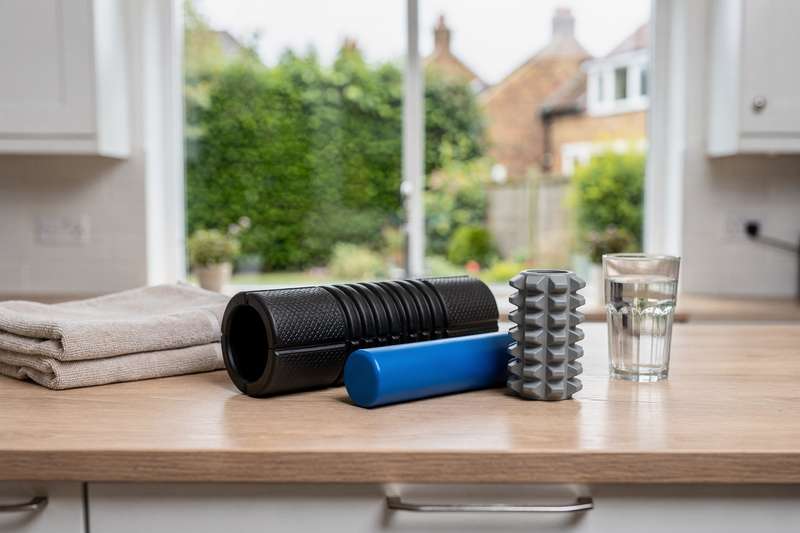
Picture the scene. You finish a tough training session — heavy squats, a long run, or an hour of yoga that has left your hips and thoracic spine feeling locked — and you grab the foam roller you bought months ago. You sit down on the floor, press your weight into it, and it compresses flat. It bounces back the moment you shift, gives you no meaningful pressure, and by the time you have spent fifteen minutes on it nothing has changed. Your IT band is still pulling, your upper back still feels like concrete, and you start wondering whether foam rolling is one of those things that is more placebo than practice.
So you go firmer. You buy something marketed as high density — and now it is so aggressive that rolling your calves becomes punishing enough to make you skip the session entirely. The tight muscles stay tight, the niggles accumulate into the kind of chronic stiffness that affects training quality across the week, and the roller ends up under a bed gathering dust.
This is the foam roller trap. It is not about spending more — a pricier roller can be just as wrong for you as the cheapest option on the market. The real variables are foam density, surface texture, length, and whether the construction holds up over months of regular use. This guide matches you to the right roller for your body, your training style, and your budget, drawn from what is actually available on Amazon UK right now, with a clear account of the trade-offs for each pick.
How We Chose These Picks
Evaluating foam rollers comes down to a specific set of practical criteria: foam density (does the roller hold firm under bodyweight after months of regular use, or does it gradually flatten?), material type (EPP and EVA behave differently in real-world use), surface design (smooth, ridged, or multi-zone grid), and whether size options match how people actually use the product day to day. Where picks carry verified buyer reviews on Amazon UK, we analysed patterns in that feedback — recurring complaints, which body areas reviewers found most effective, and how durability held up over time. Several listings in this guide are newer or carry a limited verified review base; those picks are assessed on specification profiles, material type, surface design, and brand positioning in the UK market, and each is flagged clearly in its section. All picks are genuine foam rollers for muscle recovery, fitness, and physio use — no unrelated products included.
Best Overall
The Foam Roller for Deep Tissue Muscle Massage Trigger Point Muscles Enhance Recovery for Physical Therapy and Rehab (Black) sits at the top of this guide on the back of 460 verified reviews and a 4.4/5 rating on Amazon UK — a volume of real-world feedback large enough to suggest broad appeal across different body types and training contexts, rather than a product that lands well only with a narrow audience.
The construction is firm without being brutal. It holds consistent pressure under bodyweight — the key test that cheap soft-foam rollers fail immediately — which allows you to work meaningfully into larger muscle groups rather than just resting on a squishy surface that deforms with every movement. The textured surface provides enough grip to allow you to pause on a trigger point and apply sustained pressure for twenty to thirty seconds. Continuous rolling back and forth is only part of the technique; pausing and breathing into tight spots is where a significant portion of the tissue benefit actually comes from, and a surface that grips without feeling abrasive makes that much easier to do consistently.
Reviewer patterns across the 460-strong feedback base suggest this roller resonates particularly with runners managing IT band and hip flexor tightness, and with gym-goers using it for thoracic spine mobility and upper back work after sessions heavy on pressing or pulling. The feedback consistently indicates the density is maintained over time rather than softening after a few months of regular use — an important durability signal that separates this from cheaper options that promise firmness but deliver it only briefly before the foam begins to deform.
The honest trade-off is that this firmness level can feel intense if you have never used a proper high-density roller before. Your first week of daily rolling on chronically tight muscles will likely involve some discomfort, particularly on the IT band, the lateral calves, and the upper back. That is a physiological response to applied pressure on tight tissue, not a sign the roller is wrong for you — but if you have an acute injury, post-surgical sensitivity, or very low pain tolerance, a softer starting point followed by gradual progression makes more sense than forcing through.
Practically, the dimensions place this roller in the standard 30 to 33cm range, which handles individual muscle groups well in targeted sessions. If you want to roll your full upper back in a single pass without repositioning, a 60cm or 90cm option would serve better for that specific purpose. But for the kind of deliberate, targeted muscle work that most experienced users do — one area at a time, with intentional pauses — this length is entirely adequate, and the compact footprint means it lives comfortably in a gym bag or a corner of a smaller flat.
Best Budget Pick
The Yes4All Foam Roller – Ultra Lightweight High Density EPP Muscle Roller is the most-reviewed option in this guide, with 651 ratings at 4.5/5 on Amazon UK. At a budget price point, it makes a compelling case for not overspending on a first roller — or on a second one for gym-bag use alongside a home option.
The material is the main story: EPP (expanded polypropylene) is meaningfully lighter than traditional EVA foam while maintaining high density. This combination — firm enough for effective tissue work, light enough to carry without noticing — is what makes EPP rollers practical for people who carry their kit to the gym or travel regularly. If you are commuting to a gym four times a week, that weight difference adds up across the week, and a roller you are comfortable throwing in a bag is one you will actually use rather than leaving at home because it is too bulky.
The size range is a genuine practical differentiator: Yes4All offers this roller in 30cm, 45cm, 60cm, and 90cm lengths. The 30cm fits into most gym bags with space to spare. The 90cm is long enough to work across your full upper back in one pass with your arms raised — a noticeably different experience for thoracic mobility compared to a short roller that requires constant repositioning. For most buyers, the 45cm or 60cm represents the most versatile choice: long enough to work efficiently across larger muscle groups, compact enough to store without issue in a smaller home or shared living space.
The honest trade-off with EPP versus dense EVA is a slightly different feel underfoot. EPP has a marginally more resilient quality compared to the more unyielding firmness of solid dense EVA — some experienced users notice this and have a preference either way. What is not in question is that the Yes4All EPP roller provides consistent, sustained pressure for IT band release, calf and quad rolling, upper back mobility, and piriformis work. It handles everything the average exerciser needs it to do, without fuss.
At the budget tier, this roller occupies an unusual position: the review volume strongly suggests it holds its shape over time, which separates it from cheap soft-foam alternatives that flatten within weeks of regular use. It is a realistic option for buying two sizes simultaneously — one for home, one for the gym — without the purchase feeling like a significant commitment. For most people who want a foam roller that functions as intended, this is where the research starts and often ends.
Best for Back and Spine Relief
The Massage Roller for Spine and Back – Relieves Muscle Tension takes a specific approach to a specific problem: it is purpose-designed for back and spinal tissue work rather than being a general-purpose cylinder. With 394 verified reviews at 4.2/5, it has enough real-world feedback to confirm it works for its intended application — though the slightly lower rating compared to other reviewed picks here reflects its more targeted nature rather than a quality shortfall.
Standard cylindrical foam rollers work well for upper back rolling in a general sense, but they can feel awkward when targeting the mid-to-lower back, because a round cylinder does not account for spinal geometry. The vertebrae sit proud of the surrounding musculature, and a flat-surfaced cylinder can press directly on them in a way that feels more uncomfortable than therapeutic. A purpose-built spine roller profiles around the spinal column itself, directing pressure into the paraspinal muscles — the erector spinae and the muscle groups running along either side of the spine — rather than onto the vertebrae directly.
For people dealing with persistent lower back tightness from prolonged sitting — and the UK working population increasingly spends six or more hours a day in a chair — this kind of targeted design makes more anatomical sense than a generic cylinder. The erector spinae and paraspinals absorb significant compressive load from sitting and from compound lifting like deadlifts and squats, and sustained targeted pressure into these muscles can relieve chronic tightness in a way that broad cylindrical rolling does not replicate as effectively.
The 4.2/5 rating tells an honest story about the trade-offs. Reviewers who primarily want one roller that handles everything — calves, IT band, quads, back — tend to find this less versatile than a standard cylinder, because it is not ideally shaped for rolling the lower limbs. The position here is to use this as a complement to a standard cylindrical roller rather than a replacement: the Massage Roller for Spine and Back handles back-specific work better than any other pick in this guide, and you use a conventional cylinder for everything else.
The mid-budget pricing makes it accessible as a specialist addition to your recovery toolkit, particularly if you have been advised by a physiotherapist to prioritise lumbar and thoracic mobility, or if your training includes a high volume of compound lifting that accumulates posterior chain tension across weeks of programming.
Best Premium Pick
The TRIGGERPOINT Unisex The Grid 1.0 Recovery Roller is the brand name in foam rolling — recommended by physiotherapists, personal trainers, and sports medicine practitioners for long enough that it has become the benchmark by which other grid rollers are measured. This Amazon UK listing carries a 4.7/5 rating; the verified review count on this specific listing is limited, so the recommendation draws partly on that rating and partly on the Grid 1.0’s well-established reputation in the fitness and physio community — context worth bearing in mind when you click through.
The defining feature is the Grid surface. Rather than a uniform smooth cylinder or a consistent ridged surface, the Grid uses a multi-zone texture pattern — wider flat areas alternating with firmer raised channels — designed to replicate the sensation of different parts of a practitioner’s hand working into muscle tissue. The wider zones mimic the palm, while the raised ridges replicate the effect of fingers applying targeted pressure. In practice, this variation means a single rolling pass engages tissue in a more differentiated way than a uniform surface does, which explains the sustained recommendation from practitioners who have compared it with alternatives over years of clinical use.
The hollow core is a deliberate engineering decision. The TRIGGERPOINT Grid flexes very slightly under heavy bodyweight rather than remaining completely rigid, giving it a pressure profile that is firm but not blunt. This small amount of compliance makes the experience more nuanced on sensitive areas like the lateral IT band, the anterior shin, or the thoracic spine — areas where a fully rigid surface can produce discomfort that works against the intended benefit. It is still a firm roller, but the character of the firmness is more sophisticated than a solid dense cylinder.
The standard Grid 1.0 is 33cm long — compact and highly portable, but it means you will need to reposition for thoracic work rather than rolling across your entire upper back in one pass. For targeted, controlled work on individual muscle groups, this is not a meaningful limitation. For someone who specifically wants full-back coverage in a single movement, TRIGGERPOINT produces longer variants. The Grid 1.0 itself is optimised for precision rather than sweep.
The premium investment reflects real construction quality. This roller does not deform, flatten at pressure points, or lose its surface integrity over months of daily use — which matters if you roll every day, train at high volume, or use it in a professional or semi-professional setting. Runners, cyclists, and triathletes doing serious high-volume training will find the long-term quality differential meaningful compared to any budget option.
Best Mid-Range All-Rounder
The Beenax Foam Roller 44cm is a newer listing that carries a 4.6/5 rating but a limited verified review base at the time of writing. It is assessed here on its specification profile, design positioning, and that encouraging early rating — check the current review count on Amazon before purchasing to see how the picture has developed. That caveat noted, a 4.6/5 is a strong start for a product at this price tier.
The 44cm length is a practical choice that does not get enough attention in guides that default to round numbers. At 44cm, you can cover a meaningful portion of your upper back without repositioning as frequently as you would with a 30cm or 33cm roller, while still fitting the roller into most gym bags without it protruding awkwardly. It is longer than the TRIGGERPOINT Grid 1.0 but shorter than the 60cm format, which makes it a sensible default for someone who wants a single roller for a range of purposes without committing to the largest size available.
The roller is positioned for fitness, pilates, yoga, physio, trigger point, and deep tissue work — a range of uses that indicates a medium density rather than an ultra-firm or ultra-soft extreme. This is the right profile for the all-rounder category: firm enough for productive tissue work on most muscle groups, accessible enough for users still building rolling tolerance. The surface appears to offer some texture variation for trigger point work without being a full multi-zone grid system, which keeps it approachable while providing more than a plain smooth cylinder.
Where this roller fits best is for someone moving from a soft beginner’s roller to something that actually functions, or a pilates or yoga practitioner who wants recovery capabilities alongside their practice without stepping into the more aggressive end of the density spectrum. The 44cm format handles the legs, glutes, upper back, and shoulder girdle competently in a single session without the roller feeling oversized in a smaller training space.
If your priority is the reassurance of a substantial verified review base, the Yes4All EPP roller or the deep-tissue black roller reviewed earlier in this guide offer that more clearly. If you are comfortable with a newer listing and the 4.6/5 early rating is sufficient, the Beenax Foam Roller 44cm offers a well-considered size and a solid mid-range position in the market.
Best for Beginners
The Core Balance Foam Roller For Deep Tissue Muscle Massage, Trigger Point Grid Sports Massager, Fitness Gym Physio is positioned at the accessible end of the grid roller segment, carrying a 4.4/5 rating. Like several listings in this guide, this specific product has a limited verified buyer count on Amazon UK, so the recommendation draws on the Core Balance brand’s established presence in the UK fitness accessories market, the EVA construction, and the three-zone grid design.
Core Balance is a UK-focused sports accessories brand with wide distribution in the domestic fitness market, which means replacement products and customer support are accessible from within the UK — a practical consideration when you are buying recovery tools you intend to use consistently over months. The brand markets primarily to home gym users, pilates practitioners, and people working with physiotherapy guidance, which aligns closely with the beginner-to-intermediate profile this roller is designed for.
The three-zone grid design is what makes this more useful than a basic smooth-surface entry-level option. A uniform smooth surface gives you pressure without texture variation, while the three-zone grid helps you identify which surface type feels most effective on different muscle groups — firmer ridges for trigger point work, wider flat zones for broader tissue pressure. For someone building a rolling habit from scratch, this variety is informative rather than overwhelming, and it gives the roller more utility as your technique and tissue tolerance develop over the coming months.
The EVA construction is more durable than cheaper expanded polystyrene alternatives and maintains its shape over months of regular use without deforming at common pressure points. The blue colourway is easy to identify in a pile of kit, and the construction profile appears to hold up to regular home and studio use without visible breakdown over a reasonable timeframe. It is a cleaner, more considered product than the anonymous sponge rollers that flood the lower end of the market.
The limitation is clear: if you are already comfortable on a firm roller and looking for progressive density for deeper tissue work, you will likely outgrow this within a few months of regular use. Think of the Core Balance as a genuine functional starting point that builds correct rolling technique and tissue tolerance — not as a permanent solution if your long-term goal is deeper tissue work. When you are ready to progress, the jump to a higher-density option will be far more productive than trying to start there from the beginning.
Best for Physio and Targeted Relief
The KG Physio Foam Roller – 13×5 Muscle Massage Roller for Pilates, Back Pain is built for a specific type of user: someone working through a physiotherapy programme, managing a recurring back or joint issue, or wanting precise targeted work on a specific problem area rather than broad full-body rolling. The listing carries a 4.4/5 rating with a limited verified review base, so the recommendation draws on the product’s specification profile and KG Physio’s positioning in the UK physio and rehabilitation market.
KG Physio is a UK brand oriented towards physiotherapy and rehabilitation rather than general fitness, which means the design decisions on this roller reflect clinical priorities rather than gym marketing. The 13×5 dimensions — 13 inches by 5 inches, roughly 33cm in length by 13cm in diameter — are deliberately compact. A shorter, narrower roller is easier to position precisely on a specific area: a particular segment of the thoracic spine, a tight spot in the piriformis, the belly of the calf muscle, or the region between the shoulder blades. Broader and longer rollers cover more ground per pass, but precision suffers proportionally, and for targeted rehabilitation work that trade-off consistently favours the compact format.
The three-zone massage grid provides surface variation that allows you to adapt pressure across different tissue types, and the blue EVA construction maintains density and shape through daily repeated use — important if this is part of an active rehab protocol rather than occasional general maintenance. The compact form factor also means it is easy to bring to physiotherapy appointments, use at a desk during a break for thoracic extension over the roller, or keep accessible in a small flat without dedicating meaningful storage space to it.
The clear limitation is coverage. If you want to roll your entire posterior chain efficiently after a run or a heavy session, the 33cm length will require frequent repositioning compared to a 60cm or 90cm option. The KG Physio roller is not designed to compete on coverage — it is optimised for precision and targeted application rather than sweeping rolling passes, and using it as a direct substitute for a longer general-purpose roller will feel limiting in a general fitness context.
The most effective approach is to pair this with a longer all-purpose roller rather than use it as your sole option. The KG Physio handles specific spinal and joint precision work better than anything else in this guide; a 60cm or 90cm general roller covers the sweep. Together, they give you the full spectrum of foam rolling utility without compromise. If physio-guided rehabilitation or persistent back pain management is your primary concern, this is the most purpose-appropriate choice in the guide for that use case.
What to Look For When Buying a Foam Roller
Before you buy, run through these criteria against your specific situation — the right answer for each point varies depending on your experience level, primary use case, and how often you plan to roll:
- Foam density and material: This is the most important variable. A low-density roller compresses flat under bodyweight and provides no meaningful tissue pressure — the most common reason people give up on foam rolling. High-density EVA foam is firm and durable; high-density EPP is similarly firm but meaningfully lighter. Both are appropriate for effective tissue work. Low-density expanded polystyrene, however it is described on the packaging, is not.
- Surface texture: Smooth rollers provide consistent, even pressure and suit beginners and broad rolling across large muscle groups. Ridged or multi-zone grid rollers offer varying pressure zones that target trigger points more specifically. A full multi-zone grid provides the most differentiated pressure — useful for experienced users who know exactly what they are targeting, but not necessary when you are starting out.
- Length: 30 to 33cm rollers are compact and portable but require frequent repositioning during a session. The 45 to 60cm range is the most versatile for full-body use. 90cm rollers are excellent for thoracic spine work and efficient leg rolling, but bulky to carry and store. Match the length to how you will actually use the roller and where it will live between sessions.
- Hollow versus solid core: Hollow-core rollers flex very slightly under heavy load, giving a more forgiving pressure profile that some users find more comfortable on sensitive areas. Solid rollers are uniformly firm throughout. Neither is objectively superior — it comes down to how much pressure you want and how sensitive the areas you are working on tend to be.
- Durability indicators: Look for reviews that specifically mention long-term use over months rather than just initial impressions. Rollers that flatten at common pressure points within weeks are a consistent complaint against low-quality options. High-density EPP and EVA foam maintain their shape significantly better than low-density alternatives.
- Purpose-specific design: Some rollers are shaped or contoured specifically for spinal work, which can be more anatomically comfortable for lumbar and thoracic work than a generic cylinder. If back pain or spinal mobility is your primary concern, a purpose-built option is worth considering alongside a standard cylindrical roller rather than instead of one.
- Portability: If the roller will travel in a gym bag every day, weight and length both matter. EPP is noticeably lighter than EVA at equivalent density, making it the better material choice for frequent commuters and travellers without sacrificing effective tissue pressure.
Verdict
For most people reading this — regular exercisers with muscle tightness from training and desk work who want a reliable, versatile foam roller that holds up over time — the Yes4All Foam Roller – Ultra Lightweight High Density EPP Muscle Roller is the clearest recommendation. It carries the most verified reviews in this guide (651) at a strong 4.5/5 rating, comes in four length options to suit different use cases, and the EPP construction handles the dual demand of genuine density and everyday portability better than any other option at the budget tier. Buy the 45cm or 60cm for home use, and consider adding the 30cm if you want a dedicated gym-bag version.
If you already roll regularly and want a meaningful upgrade that changes what foam rolling actually feels like, the TRIGGERPOINT Unisex The Grid 1.0 Recovery Roller is the step up with the longest track record in this category. The multi-zone grid surface and hollow core construction produce a more sophisticated pressure experience that experienced users notice immediately, and the construction quality means it performs the same way two years from now as it does on day one.
For back pain as the primary concern, the Massage Roller for Spine and Back – Relieves Muscle Tension addresses the anatomical limitations of a standard cylinder more directly than any other pick here — but pair it with a conventional cylindrical roller for everything else.
We were not paid to feature any specific product in this guide. All opinions are independent and based on publicly available specifications, verified buyer feedback patterns, and category research.
Quick Comparison Table


FAQ
What density foam roller should I choose?
For most people, a medium-to-high density roller is the right starting point. Very soft foam compresses under bodyweight and provides no meaningful pressure, while extremely firm rollers can feel punishing if you are new to rolling. High-density EPP or EVA foam is the standard for effective tissue work; build tolerance over a few weeks before deciding whether to progress to something firmer.
How long should I spend foam rolling each session?
Most physiotherapy guidance recommends one to two minutes per muscle group, with a total session of around ten to fifteen minutes for a full-body routine. Spending more than three minutes on a single area per session tends to produce diminishing returns. Focus on the tightest areas, and pause on trigger points for twenty to thirty seconds rather than rolling continuously throughout.
Can foam rolling help with back pain?
Foam rolling can relieve tension in the muscles surrounding the spine — the erector spinae and paraspinals — which is a common contributor to lower and mid-back pain from prolonged sitting or heavy lifting. It is not a substitute for physiotherapy or medical assessment if you have a diagnosed spinal condition, nerve pain, or an acute injury. A purpose-built spine roller is more anatomically appropriate for back-specific work than a standard cylindrical option.
What is the difference between EPP and EVA foam rollers?
EPP (expanded polypropylene) is significantly lighter than EVA (ethylene-vinyl acetate) at equivalent density levels, making it a better choice for people who travel or commute with their roller. EVA is heavier but maintains its shape reliably over extended use. Both materials can be manufactured to high density — the key variable is the density level rather than the material type alone. EPP suits portability; EVA suits firmness and long-term durability.
How often should I foam roll?
Daily rolling is safe and beneficial for most people, particularly as part of a warm-up or cool-down routine. Regular short daily sessions are more effective for maintaining muscle pliability and joint mobility than occasional longer ones. If you are new to rolling, start with three to four sessions per week to allow tissue adaptation, then build to daily use as your tolerance increases.
Is it normal for foam rolling to hurt?
Some discomfort is normal, particularly on chronically tight areas like the IT band, lateral calves, or upper back. The sensation is often described as a productive discomfort — uncomfortable but not alarming — clearly distinct from sharp or shooting pain. Sharp pain, tingling, or numbness is a signal to stop and seek physiotherapy advice rather than push through.