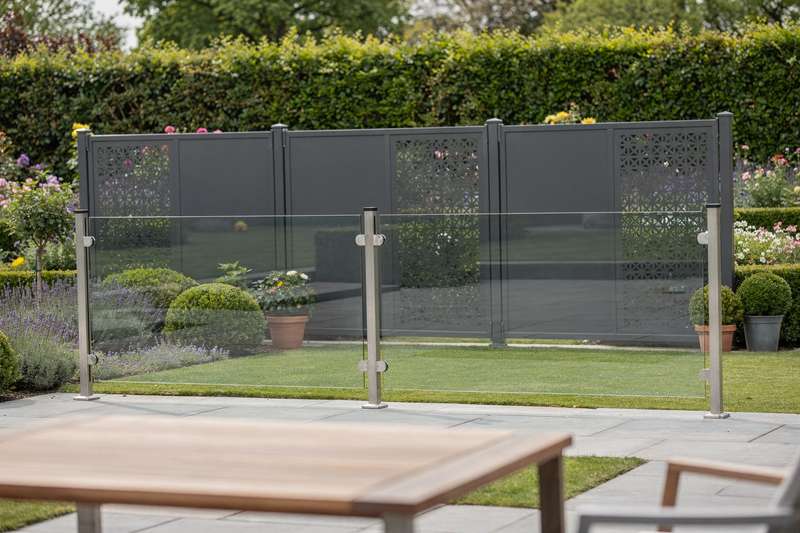
Picture this: it is a Saturday afternoon in late July, finally warm enough to sit outside properly. You have arranged the garden chairs, the drinks are on the table, and you have been looking forward to this all week. Then your next-door neighbour steps out to do some weeding, and you spend the next two hours hyper-aware that they can see exactly what you are doing and hear every word you say. Or perhaps you have a perfectly decent patio but there is a gap in the fence that funnels every breeze straight across your table, making it cold and uncomfortable from September through to May. Or you have a south-facing balcony that is ideal in theory but unusable by midday because the sun turns it into a glare trap.
If any of those situations feels familiar, outdoor screens are the practical fix. The category covers everything from budget PVC slat panels to heavy-duty shade netting, from decorative metal garden dividers to specialist awning shades for campervans. Quality, durability, and suitability vary enormously between products — and listing titles on Amazon do not always make the differences obvious. This guide works through four of the most relevant options currently available on Amazon UK, with honest assessments of what each one does well and where it falls short.
How We Evaluated These Picks
To put this guide together, outdoor screens currently listed on Amazon UK were assessed across five criteria: ease of solo installation, resistance to wind load (particularly relevant in exposed UK gardens and coastal locations), UV stability over multiple seasons, coverage area relative to price tier, and versatility across different mounting situations — fence rail, balcony railing, or freestanding. Where a product carried a meaningful number of verified reviews, recurring patterns in the lower-star feedback were given significant weight. The complaints that appear consistently across many buyers reveal real-world weaknesses that no product listing will volunteer.
One product in this guide — the Garvee metal garden screen — had no published reviews on Amazon UK at the time of writing. That section is clearly flagged, and the assessment there draws on the product’s listed specifications and design characteristics rather than buyer experience. Where review-based evidence exists, it is cited with the actual rating and review count from Amazon UK.
Best Budget Balcony Privacy Screen
The VOUNOT® PVC Privacy Screening Fence 100 x 300 cm is one of the most widely purchased garden screens on Amazon UK, and with 897 verified ratings it has generated a substantial body of real-world experience. A 3.8-star average from that many buyers tells a consistent story: this is a functional, no-fuss product that delivers practical privacy and wind reduction at a budget price point, without being flawless.
The construction uses PVC slats woven into a structured panel, with reinforced metal eyelets spaced along all four edges for attachment. The key design detail is the vertical reinforcement struts running through the body of the screen — these prevent the panel from developing a mid-run belly under wind pressure, which is the most common failure mode on cheaper, non-strut screens. For a balcony or short fence section where you attach at regular intervals, those struts make a meaningful difference to how well the screen holds its shape across a full UK season.
At 100cm tall and 300cm wide, this size fits a standard balcony front-to-back with room to spare, or covers a short garden fence section cleanly. VOUNOT makes this same PVC screen in 80cm and 90cm heights for shorter railings, and in 500cm lengths if you have a longer fence run — those size variants share the same construction and the same 897-reviewer base. The 100cm height is the most versatile starting point for the majority of UK garden fences and balcony rails.
Installation is a straightforward solo job. Thread zip ties or garden wire through the eyelets and fix to a fence post, balcony railing, or trellis — no specialist tools required, and most buyers report having the screen up in under an hour. The reinforced eyelets hold standard cable ties without tearing under normal wind load, which matters because eyelet failure is typically where budget screens begin to deteriorate.
The honest tradeoffs are worth knowing before you buy. In sustained high winds — coastal gardens, elevated or north-facing exposed positions — the plastic strut-end caps can crack after one or two stormy seasons. Upgrading to heavier-gauge stainless cable ties from the outset extends the screen’s usable life significantly. Some buyers in south-facing positions also report colour fading in full-sun exposure over multiple seasons, though the UK’s typically overcast climate means this is far less pronounced here than it would be in sunnier countries. For renters, seasonal users, or anyone needing an effective and clean-looking privacy solution without spending a great deal, this screen delivers on its core promise reliably.
Best Garden Windbreak Netting
The Privacy Netting Garden Screening Windbreak Fencing 95% Shade Fence Net Brown 2m x 5m takes a fundamentally different approach to outdoor protection. Instead of rigid PVC panels, it uses a woven shade-net construction that manages wind, sun, and privacy by allowing a carefully calibrated amount of airflow through the material. With 4.6 out of 5 stars from 627 reviewers, it is the highest-rated well-reviewed product in this guide — and that score holds up under scrutiny. The negative reviews are mostly about installation technique or size expectations rather than product failures.
The 95% shade rating is the headline specification, and it is worth understanding what it means in practice. This netting blocks the vast majority of direct sunlight while allowing a small amount of diffused light through. For a seating area, that translates to filtered rather than eliminated daylight: the space feels open rather than enclosed, which is more comfortable on a summer afternoon than sitting behind a fully opaque solid screen. For a kitchen garden or raised vegetable bed, it cuts wind chill and sun scorch without plunging plants into deep shade. The brown colourway is a particularly good match for UK gardens — it reads as natural and recedes against timber fencing and foliage, rather than drawing the eye the way black netting or grey PVC can.
The netting is available in three widths — 1m, 1.5m, and 2m — paired with a standard 5m length. The width you select should correspond to the height of the fence or post you are attaching it to, since it runs horizontally along the structure. The listing includes 10 bungee cords and 20 zip ties as standard, which is a practical advantage most competing screens do not offer. For a single 5m fence section, the included fixings are typically enough to achieve a taut, secure attachment without a separate trip to a hardware shop.
The windbreak performance is this netting’s most distinctive strength. Because the material is permeable rather than solid, it dissipates wind energy by letting air pass through, rather than presenting a rigid face that concentrates stress on the fixings. In practical terms, that means it stays intact under conditions that would strain or topple a solid PVC panel of similar dimensions. Reviewers from Scotland, the North East, coastal Wales, and other exposed UK locations specifically cite this characteristic as the reason they chose netting over solid panels — the physics works in their favour in a way it simply cannot for a fully solid screen.
Where it falls short: 95% shade is not full opacity. At close range in good light, shapes and movement remain visible through the netting — not ideal for a tight urban balcony where neighbours are directly at eye level. On long unsupported runs of more than four or five metres, the netting can develop a sag in the centre that looks untidy and reduces tautness; tensioning the fixings carefully and adding intermediate clips prevents this. For larger gardens, vegetable plots, and any outdoor space where wind management is the primary concern, this is the most practically effective pick in the guide.
Best for Campervans and Outdoor Events
The RV Awning Sun Shade, Motorhome Campervan Sun Blocker is the most specialist product in this guide, and the most important to approach with a clear sense of what it is designed for. Rated 4.8 out of 5 stars from 24 reviewers, the score is impressive — but the review count is small enough to treat as a strong early indicator rather than an established consensus. What is notable is how consistent those 24 buyers are: there is no polarisation in the ratings, which typically signals a product that delivers on its specific promise for the buyers it is aimed at.
This screen is purpose-built for motorhome and campervan awnings. The construction combines a top section of 600D Oxford cloth — a coated, heavy-duty fabric used in quality outdoor gear — with a black mesh privacy panel running the full depth below. The Oxford cloth section handles the mechanical load at the point where the screen attaches to an awning rail, while the mesh handles UV screening and privacy for the living area beneath. A zip closure runs along the side edges, allowing you to open or close each end independently depending on wind direction and conditions — a level of adaptability that no fixed fence or railing screen can offer.
For motorhome and campervan owners, this design addresses practical problems that cheaper awning panels sidestep. The 600D Oxford cloth resists tearing at the grommets under the sustained vibration of road travel in a way that thinner materials cannot. The zip system means you are not committed to a single configuration regardless of pitch conditions — you can close the windward end against a coastal gust while opening the sheltered side for airflow. For UK campsite use, where weather can change direction quickly and exposed pitches are common, that on-the-spot adjustability is directly useful rather than a nice extra.
The UV and wind protection spec is appropriate for genuinely exposed outdoor conditions: open coastal campsites, upland pitches, festival fields. If you regularly use exposed locations, the construction is well-matched to those demands in a way that garden-rated PVC screening simply is not designed for. The Oxford cloth top section in particular should offer meaningful resistance to UV degradation compared to uncoated mesh materials.
Where this product does not fit is in a conventional garden. The mounting system is built around awning rails and guy ropes rather than fence posts or balcony railings — adapting it to a garden fence would require significant improvisation and would unlikely produce a clean result. For festival traders, market stall holders, or anyone building temporary outdoor shelter around a gazebo-style frame, the adjustable panel and robust fabric make it a capable choice. For straightforward garden use, the other picks in this guide are better matched to the application.
Best Freestanding Decorative Divider
The Garvee Large Metal Garden Screen 183x120cm (6ft x 4ft) is the most visually distinctive product in this guide — and also the most uncertain. It had zero published reviews on Amazon UK at the time of writing, with no listed price. That combination makes it a different kind of buying decision from the other three picks, and it is important to be straightforward about that rather than assessing it as if buyer evidence existed.
The product fills a gap that PVC and netting screens cannot. Rather than covering a fence run or wrapping a balcony, this is a freestanding panel designed to create a visual zone within a garden. At 183cm tall and 120cm wide — a genuine 6-by-4 foot footprint — it is substantial enough to screen a bin store, define the edge of a seating area, or partition a patio from a lawn without requiring any fixed wall or fence to mount against. The included freestanding ground stakes mean renters can use it and owners can reposition it seasonally without any permanent modifications.
A well-powder-coated metal panel should, in principle, be more durable than PVC or woven netting for long-term outdoor exposure. It will not fade, sag, or stretch over time the way plastic screens can; it simply needs a periodic check that the coating has not chipped where water could reach bare metal. The decorative design — which appears from the listing to feature a laser-cut or pressed pattern — adds an aesthetic quality that the purely functional screens in this guide cannot match. For garden owners who want a screen that contributes positively to the garden’s visual character rather than just solving a practical problem, this format is a different kind of answer.
The caveats are significant: zero reviews means zero buyer evidence on construction quality, coating durability, or how the ground stakes perform in UK soil — particularly on clay-heavy or waterlogged ground that is common across large parts of England. A 6ft panel presents a substantial wind load, and the depth and gauge of those ground stakes is a critical unknown without any buyer feedback to draw on. Before committing, check the listing for stake specifications, verify the coating type (powder coat versus basic painted steel make a meaningful difference to rust resistance in the UK’s damp climate), and consider whether additional ballast or anchoring would be appropriate for your location.
The absence of a listed price at the time of writing also means you need to check the current Amazon listing and assess whether the cost represents fair value given the lack of established buyer feedback. New listings sometimes represent good products that simply have not yet accumulated reviews; the absence of reviews can equally reflect limited order volume. For garden owners who want a stylish freestanding divider, are comfortable buying without prior buyer evidence, and are willing to scrutinise the product spec carefully, the Garvee offers something the other picks in this guide do not.
What to Look for When Buying Outdoor Screens
- Height and coverage area: Measure the fence run, balcony railing, or garden zone you want to screen before buying. Standard UK garden fence panels are 180cm (6ft) tall; most privacy screens top out at around 100cm, meaning they cover the upper portion of a fence rather than the full height. Decide whether partial screening — which still obscures line-of-sight from a seated neighbour — is sufficient, or whether you need full-height coverage from a freestanding panel.
- Material and UV stability: PVC slat screens handle light UV exposure well in the UK’s typically overcast climate. Woven shade netting tends to be more UV-stable if a specific UV resistance grade is stated. Metal screens are inherently UV-resistant but will rust if the protective coating chips — look for powder coat rather than basic paint. For year-round use, check that the product explicitly mentions UV protection or UV stabilisation in the specification.
- Wind load and fixing method: Consider how exposed your position is. Fully solid screens act like sails in high wind and put maximum stress on their fixings and supporting structure. Permeable netting distributes wind energy and is generally more resilient in exposed gardens. Whichever product you choose, the fixing method matters as much as the screen itself — use adequately rated cable ties or wire, and check that the eyelets or attachment points are reinforced rather than punched directly through the material.
- Permanence vs. removability: If you are renting, or if you want the option to store the screen over winter, prioritise products that attach without permanent fixings and that roll or fold for storage. PVC slat screens and shade netting both satisfy this well. Metal dividers with ground stakes are removable but harder to store. Any installation intended to stay up year-round should use rust-proof fixings — stainless steel or galvanised.
- Opacity vs. airflow: Not all screens offer the same level of visual privacy. Solid PVC panels provide near-complete opacity. Woven netting at 95% shade allows some visibility at close range in good light. Decorative metal screens with cut-out patterns create visual interest but do not provide anything close to full privacy. Be clear about whether you need privacy, wind reduction, sun shade, or all three — and check that the product you choose genuinely prioritises the one that matters most to you.
- Review count alongside rating: A product with 600 or more verified reviews and a strong average score is telling you something meaningful about real-world performance. A product with fewer than 25 reviews is considerably less certain, however high the score. Weight the review count alongside the rating, and pay particular attention to recurring themes in lower-star feedback — these consistently reveal practical weaknesses that no product listing will flag on its own behalf.
Our Verdict
For the majority of UK garden and balcony buyers, the Privacy Netting Garden Screening Windbreak Fencing 95% Shade Fence Net Brown 2m x 5m is the pick worth starting with. The 4.6-star rating from 627 verified buyers is the strongest evidence base in this guide, and the combination of 95% shade, effective windbreak performance, included fixings, and a natural brown colourway makes it the most versatile choice across the widest range of UK garden conditions. The permeable construction — which works with the wind rather than against it — gives it a resilience in exposed settings that solid PVC panels cannot replicate at a comparable price tier.
If your priority is covering a specific balcony railing and you want something more visually solid than netting, the VOUNOT® PVC Privacy Screening Fence is the reliable budget alternative, with a review base large enough to trust. Motorhome and campervan owners should look carefully at the RV Awning Sun Shade — it is the right tool for that specific application, with a design that garden-rated screens simply cannot replicate. And if you want a freestanding decorative focal point and are comfortable being an early adopter on a zero-review product, the Garvee metal screen offers something the other picks do not — just check the current listing thoroughly and verify the coating spec before committing.
We were not paid to feature any specific product in this guide. All opinions are independent and based on publicly available specifications, verified buyer feedback patterns, and category research.
Quick Comparison Table


FAQ
How do I attach a garden privacy screen to a fence?
Most garden privacy screens — whether PVC slat panels or shade netting — use eyelets or grommets along the edges that you thread cable ties, garden wire, or bungee cords through. Attach at every eyelet rather than alternating ones for maximum security, and use stainless or galvanised fixings if the screen will remain up year-round. For netting, apply enough tension as you work along the run to prevent sagging across longer spans.
Will an outdoor privacy screen survive a UK winter?
Most PVC and netting screens will last through UK winters, but taking them down and storing them over the coldest months extends their lifespan considerably. Sustained frost can make PVC more brittle, and the combined effect of rain, wind, and low UV over successive winters takes a cumulative toll. Metal screens with intact powder coating are the most suitable for year-round outdoor use, as long as any chips in the coating are treated promptly to prevent rust from establishing in the UK’s damp conditions.
What is the difference between shade netting and a solid privacy screen?
Shade netting is permeable — it allows air to pass through, which makes it a better windbreak in exposed positions and reduces the risk of it acting as a sail in high winds. A solid PVC screen provides more complete visual privacy at close range but puts greater stress on its fixings when wind pressure builds. Netting at 95% shade gives near-complete sun blocking but not full opacity; a solid screen is the better choice where total privacy is the priority.
Can I put a garden privacy screen on a balcony railing?
Yes — this is one of the most common uses for both PVC slat screens and shade netting. The key is ensuring the eyelets or grommets on the screen align frequently enough with your railing to allow secure, evenly spaced attachment. For metal railings, cable ties work well; for timber or composite balcony rails, garden wire loops provide a neater finish. Check that your balcony railing can handle the additional wind load before installation, particularly if you are fitting a solid rather than permeable screen.
Do I need planning permission for a garden privacy screen?
In most cases, no. Temporary or lightweight outdoor screens attached to an existing fence or balcony railing do not require planning permission in England, Scotland, or Wales, as long as the overall fence height remains within permitted development limits — generally 2 metres for a rear boundary and 1 metre fronting a highway. Freestanding decorative panels similarly fall under permitted development for most residential properties. If you are in a conservation area or your property has restrictive covenants, check with your local planning authority before installing anything permanent.
How do I stop a garden privacy screen from billowing or flapping in the wind?
The key is tension and fixing frequency. A screen attached loosely will move significantly in wind, stressing the fixings and looking untidy over time. Fix at every eyelet rather than every other one, and use bungee cords or spring-loaded clips rather than rigid cable ties where possible — they allow the screen to flex in a gust without concentrating force at a single point. Choosing a permeable netting screen over a solid PVC panel also reduces the wind load substantially, which means the whole system works less hard in exposed conditions.