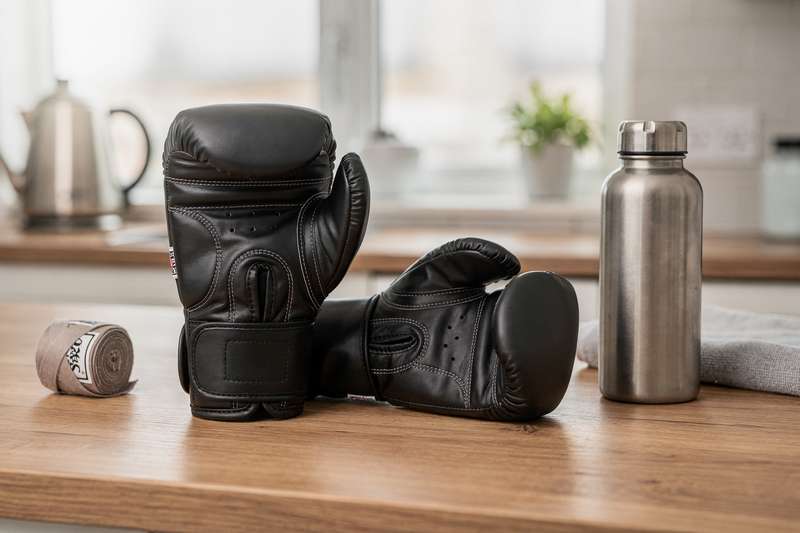
You’ve finally decided to get your own boxing gloves. Maybe you’ve been showing up to class for a few weeks, borrowing the gym’s communal pairs — cracked velcro, battered leather, that smell. Or you’ve hung a heavy bag at home and you’re punching through sessions with just hand wraps, nursing sore knuckles after every round. Either way, you’re ready to buy, and that’s when the confusion hits. Do you need 10oz or 16oz? What even is Maya Hide? Does it matter whether the listing says “bag gloves” versus “sparring gloves”? Every product page on Amazon looks practically identical. You end up with five browser tabs open and still can’t work out what actually separates a budget pair from a premium one. This guide cuts through all of that. Based on an evaluation of construction quality, wrist support, padding design, and intended training use, here are the six best boxing gloves currently available on Amazon UK — covering budgets from entry-level to serious.
How These Gloves Were Evaluated
Each pair in this guide was assessed across a consistent set of criteria: padding construction and layering density, wrist support and closure design, outer material quality (genuine leather versus synthetic alternatives such as Maya Hide and Skintex), available weight options, and the range of training activities each glove genuinely covers — bag work, sparring, or both. Where verified buyer feedback was available, patterns across reviewer comments informed the assessment; the Venum Contender is the only pick here with substantial verified buyer data on Amazon UK. The remaining five picks are evaluated on construction specifications, brand track record in the boxing and combat sports market, and what the material and design choices mean in practical training terms. All assessments are independent and based on publicly available information.
Best Budget Pick
The Venum Contender Boxhandschuhe — “Boxhandschuhe” is German for boxing gloves; it appears in the listing as a quirk of Venum’s European product catalogue, but these are the same Venum Contender gloves widely recommended for recreational boxing — is the most buyer-validated pick in this guide, with over 900 reviews and a 4.6-star average on Amazon UK. For anyone just starting out or training on a limited budget, this is where the conversation should begin.
The outer shell is made from Skintex, Venum’s proprietary synthetic leather, which is noticeably more durable and structured than the generic PU leather found on unbranded pairs at a similar price. Skintex resists surface cracking and holds its shape through consistent training — the kind of detail that doesn’t matter in the first month but becomes very apparent after six months of regular sessions. Padding across the knuckle zone uses a triple-density foam system that handles the repetitive impact of bag and pad rounds without leaving your hands feeling battered after a hard workout.
Wrist support is adequate for bag work and pad sessions but modest by sparring standards. The velcro strap holds the glove securely during combinations, but if regular sparring — particularly with heavier partners — is a meaningful part of your training, a glove with a broader, longer wrist wrap would serve you better. For the bag and pad work that makes up the majority of most recreational boxers’ sessions, the Contender covers it comfortably and reliably.
Ventilation is handled through mesh panelling on the palm section, which slows heat and moisture build-up during extended sessions. Boxing gloves need to be aired out after every session regardless of quality — sealing them in a kit bag overnight is how any pair deteriorates prematurely — but the ventilation here does help. The gloves come in a range of weights, typically 8oz through to 16oz. For most adults doing general bag and pad training, 12oz is the appropriate choice. If sparring is part of your routine, go to 14oz or 16oz.
One honest note on fit: Venum’s sizing runs slightly snug across the knuckle area for people with wider hands. If your hands tend to fill gloves naturally, consider sizing up by 2oz. That minor caveat aside, the Venum Contender is a proven glove for recreational training, and its verified buyer track record gives it a confidence level no other pick in this guide can match.
Best for Beginners
The Everlast Elite 2 Boxing Gloves carry one of the most recognisable names in boxing. Everlast has been making boxing equipment for over a century, and that heritage matters when you walk into a gym as a newcomer — coaches and training partners immediately recognise the brand, which has a real if modest psychological value early in your training. More importantly, the Elite 2 backs that credibility with genuine quality rather than coasting on the name alone.
At the heart of the Elite 2 is Everlast’s C3 foam padding system, which layers different foam densities across the knuckle and back-of-hand area. In practice, this means the gloves feel cushioned without feeling vague — there is still useful feedback through the glove on contact, which is valuable when you are learning technique and calibrating your strikes. Gloves that are excessively padded can mask poor form by absorbing too much force; the Elite 2 provides enough protection without removing the tactile information your hands need at this stage of development.
The closure is a standard velcro hook-and-loop system that is easy to fasten solo with hand wraps already on — a detail that matters more than it sounds when you are between rounds and getting back to the bag. The strap is wide enough to provide reasonable wrist stability for bag and pad sessions without being excessively bulky. For beginners who are not yet hitting with full power, the support level is entirely appropriate.
Interior comfort benefits from a Dri-Lex moisture-wicking lining, which helps keep hands drier through a session and slows the bacterial build-up responsible for boxing glove odour. It won’t eliminate the need to air gloves out, but compared to a plain foam liner, the difference is real and noticeable over time. Sizing runs true to standard weight guidelines, and the fit is accessible for most hand shapes without significant break-in time — these are comfortable from the first session, which helps when you are still finding your feet in the gym.
The limitation is clear: the outer material is synthetic, so very heavy daily use will show wear within a year or two. For someone training two or three times a week at a learning pace, that is a perfectly reasonable lifespan at the price point. If you want to point a friend toward a reliable first pair after they have just joined a local club, the Elite 2 is the answer you would give.
Best All-Round Training Glove
The RDX Boxing Gloves, Pro Training Sparring, Maya Hide Leather come from one of the UK’s most established combat sports equipment brands. RDX consistently builds above what the price tag implies, and this Pro Training Sparring line illustrates that approach well — designed to cover the full range of training activities rather than excelling at one at the expense of another.
The outer shell uses Maya Hide, RDX’s proprietary synthetic leather, which holds up better than basic PU under sustained training. It resists cracking and peeling, and the stitching is reinforced at stress points around the thumb attachment and wrist closure — the areas where boxing gloves typically fail earliest. These reinforcements are what separate a glove lasting two years from one that starts fraying after six months of consistent sessions.
Padding across the knuckle zone uses a multi-layered structure, with a firmer base layer for structural support and a softer contact surface on the striking side. This combination works well for both bag sessions and light-to-moderate sparring, making the Pro Training Sparring versatile across the range of work most recreational boxers actually do. If bag rounds and sparring both feature in your week, you won’t need separate pairs for each context — that consolidation has real practical value over time.
Wrist support is one of this glove’s clear strengths. The extended velcro strap wraps further up the wrist than most options at this price tier, reducing the risk of the wrist rolling or twisting on an off-angle punch. During longer bag sessions when form starts to drift and the wrist takes more stress, that added support makes a practical difference. The thumb attachment is secure, which also matters if you train across Muay Thai or MMA disciplines where hand positioning varies more than in straight boxing.
Note that this model is available in multiple colour options under closely related ASINs — confirm you are selecting the correct colour and weight before purchasing. Sizes typically run from 10oz to 16oz, covering everything from technical bag work to heavier sparring. For a regular trainer wanting a single pair that covers all bases without reaching for a premium leather option, the RDX Pro Training Sparring is the practical, versatile choice.
Best for Bag & Pad Work
The RDX Boxing Gloves, Maya Hide Leather Training Muay Thai Bag Gloves for Sparring, Fighting take a more focused approach than the broader RDX line reviewed above. Where the Pro Training Sparring model is built to handle all training contexts, this bag-and-pad-specific model is tuned for the demands of heavy bag, mitt, and pad work — and that focused construction shows in performance during those sessions.
Heavy bag training places distinct stress on a glove compared to sparring. You are striking a hard, largely stationary target repeatedly, often with genuine power — which means the knuckle padding needs to absorb cumulative impact without the foam compressing and losing its protective quality over time. These RDX gloves address this with particularly dense layering at the strike surface, providing better sustained protection for hands and knuckles across long bag rounds or high-frequency training weeks.
The Maya Hide outer is consistent with RDX’s broader range — durable, easy to wipe clean between sessions, and resistant to the surface cracking that undermines cheaper synthetics fairly quickly. The interior wicks moisture adequately, and the palm section includes ventilation to reduce overheating during extended bag rounds. The velcro closure prioritises quick on-off convenience over maximum wrist wrap, which is the right trade-off for bag and pad work where wrist stability demands are lower than in contact sparring.
The thumb attachment is secure and positioned correctly for straight punching, which matters when driving combinations repeatedly into a bag surface. After many repetitions, a poorly positioned thumb becomes an injury risk rather than a minor inconvenience. RDX handles this consistently across their training range.
Be honest with yourself about the core limitation: these are not the right choice for regular sparring. The density tuned for bag impact doesn’t translate well to sustained partner contact, and the construction stiffness that protects your hands on a bag can be uncomfortable and unsafe in a sparring context. If sparring forms a significant part of your training, look at the more versatile Pro Training Sparring model or the Everlast Powerlock instead. These bag gloves are at their best for home bag owners who train frequently and solo. Most adults doing regular bag work do well with 12oz to 14oz; heavier or more powerful trainers should consider 14oz to 16oz for sustained hand protection.
Best Mid-Range Pick
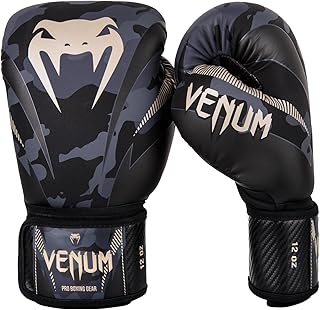
The Venum Men’s Impact Boxing Gloves sit a tier above the Contender in Venum’s own lineup, aimed at the regular trainer who has moved past the early learning phase and wants equipment that keeps pace with more demanding sessions.
The key difference from the Contender is in the foam construction. The Impact uses a more sophisticated multi-layered foam system across the knuckle area, delivering improved shock absorption during sustained, harder training. If you are hitting bags and pads with real intent four or more times a week, that additional protection makes a tangible difference to how your hands feel at the end of a session. Gloves that compress quickly under heavy use and lose their protective quality are a common cause of chronic hand soreness; the Impact’s foam is specifically designed to resist that degradation over time.
The outer shell uses a premium synthetic that has more of the texture and rigidity of genuine leather compared to the Contender’s Skintex — it holds its shape better under heavy use and resists surface wear more effectively. Stitching is reinforced at the key stress points around the thumb attachment and velcro closure. The closure itself is broader than on the Contender, providing more wrist stability during powerful combinations and pad rounds. For anyone doing a lot of heavy bag work or training with a coach on the pads, that additional joint stability reduces the accumulated micro-strain across many sessions.
The Impact is listed for men, with sizing running accordingly. Women training at a comparable intensity should compare hand measurements against the sizing guide or explore Venum’s women’s-specific models. Multiple weight options are available, covering both bag-focused and sparring training needs across the standard range.
The tradeoff to acknowledge: the Venum Men’s Impact represents a meaningful step up in cost compared to the Contender and the RDX options. That investment is justified if you train regularly and with genuine intensity — the construction performs differently under sustained use in ways that matter. If you are training twice a week at a relaxed pace, the additional spend won’t translate into a noticeable benefit in your sessions. But if your current gloves feel under-built — hands aching after bag rounds, padding that feels thin within months of purchase — the Impact is the natural next step.
Best Premium Pick
The Everlast Powerlock OG & Powerlock 2R Boxing Gloves sit at the top of Everlast’s training range and represent a clear step up from the Elite 2. These are for the committed practitioner — someone training regularly with real power, wanting a glove that holds up through sustained serious work.
The Powerlock’s defining feature is its closure system. The extended strap design provides a more comprehensive wrist wrap than standard velcro enclosures, locking the wrist joint securely and limiting movement during powerful punches. This matters most during heavy bag rounds, where imperfect wrist alignment under load — particularly with fatigue setting in — is a common route to strain and longer-term injury. If wrist discomfort from lighter, shorter-closure gloves has been a recurring issue, the Powerlock’s construction addresses that directly.
Padding at this tier uses Everlast’s advanced foam layering, built to handle repeated hard impacts without compression fatigue accumulating over time. The gloves stay protective session after session rather than gradually softening and losing shock-absorbing quality — which is precisely what you want when hitting a bag daily or close to it. The consistency of protection also means your training feedback is predictable from one session to the next, rather than varying depending on how much the padding has worn down on a given day.
The “OG” and “2R” designations refer to two construction variants: the 2R incorporates sustainable and recycled materials in its manufacturing process, which may matter to buyers who weigh environmental factors in their decisions. Both perform at the same level during training; the practical difference is in material sourcing rather than function. Choose based on that consideration.
The outer material is premium synthetic with a quality feel and real durability — noticeably more structured than entry or mid-range alternatives, holding its form under hard use across many sessions. The interior lining is comfortable for extended training. The honest limitation: for someone training once or twice a week without generating significant power, these are more glove than the training demands. The premium construction earns its cost when training is serious and frequent. For dedicated boxers, Muay Thai practitioners, or MMA fighters who put regular time into bag and sparring rounds, the Everlast Powerlock is the top pick in this guide.
What to Look For When Buying Boxing Gloves
- Glove weight (oz): Boxing gloves are sized in ounces. Heavier gloves (14–16oz) provide more padding and are the standard for sparring in most UK gyms. For bag and pad training alone, most adults do well with 12oz. Very light gloves (8oz) are for competition use only and are not appropriate for beginners using a heavy bag.
- Outer material: Genuine leather is the most durable option and improves in comfort with regular use, but costs significantly more. Synthetic materials like Maya Hide (RDX) or Skintex (Venum) offer solid durability at accessible prices and suit most recreational and club-level training. Avoid very cheap PU leather, which cracks and peels within months of regular use.
- Padding construction: Multi-layered foam systems distribute impact more effectively than single-density foam blocks. Look for layered or zone-specific padding in product descriptions. This affects both hand protection during training and the long-term protective quality of the glove as foam ages and compresses over time.
- Closure system: Velcro hook-and-loop closures are standard for training gloves and can be managed solo with wraps already on. Lace-up gloves offer a more precise fit but require someone to tie them and are primarily used in competition. For everyday training, velcro is the practical and correct choice.
- Wrist support: Check how wide and how far the closure strap extends around the wrist. A broader, longer strap offers more joint stability, which matters particularly during heavy bag work and sparring. This is the area where premium gloves most visibly outperform budget options.
- Intended use: Bag gloves prioritise dense knuckle padding for repeated impact on a hard surface. Sparring gloves prioritise cushioning for your training partner’s safety as much as your own. All-round training gloves balance both. Buying for your actual primary training activity will serve you far better than buying on price alone.
- Ventilation and hygiene: Mesh palm panels and moisture-wicking liners slow bacteria build-up and odour. Regardless of which pair you choose, air your gloves after every session — a deodoriser insert makes a noticeable difference and will extend the lifespan of any pair considerably.
Verdict
For most UK buyers — someone training two to four times a week on bags and pads, with occasional sparring — the Venum Contender Boxhandschuhe is the practical recommendation. It is the only pick in this guide with substantial verified buyer data on Amazon UK (over 900 reviews at a 4.6-star average), it covers the full range of recreational training use cases, and it sits at an accessible price point that doesn’t demand a large commitment before you know whether boxing is going to be a lasting part of your routine.
If you have already got a pair and your sessions have reached the point where the gloves feel under-built — padding compressing too fast, wrist support that isn’t holding up under heavier combinations — the Everlast Powerlock OG & Powerlock 2R Boxing Gloves are the natural step up for anyone training with real frequency and power. The wrist support and foam construction at that tier make a genuine difference under sustained heavy use, and the investment makes sense for serious regular training.
For dedicated bag work at home, the RDX Boxing Gloves, Maya Hide Leather Training Muay Thai Bag Gloves are purpose-tuned for that specific context and hold up well under repeated solo sessions. Choose based on how you actually train, not on what sounds most capable in a product description.
We were not paid to feature any specific product in this guide. All opinions are independent and based on publicly available specifications, verified buyer feedback patterns where available, and category research.
Quick Comparison Table



FAQ
What weight boxing gloves should I buy for general training?
For most adults doing bag and pad work, 12oz is a solid starting point. If you plan to spar regularly, move up to 14oz or 16oz — most UK gyms require at least 14oz for sparring to protect both participants. Very light gloves (8–10oz) are for competitive or speed work only and are not appropriate for beginners using a heavy bag.
Can I use the same gloves for bag work and sparring?
All-round training gloves — such as the RDX Pro Training Sparring or the Venum Contender — are designed to cover both, and most recreational boxers use a single pair for everything. Specialist bag gloves typically have denser, harder padding that isn’t safe for sparring because it can injure your training partner. If you spar regularly, a genuine all-round training glove at 14–16oz is the safer and more practical approach.
Are boxing gloves sized differently for women?
Women’s hands tend to be smaller, which means the internal fit of a standard training glove can run loose, affecting wrist support and knuckle alignment. Many brands offer women’s-specific sizing with smaller hand compartments within the same weight class. Women doing bag and pad work often find 10–12oz provides a better internal fit than the 12–14oz range common for men, though individual hand size should guide the decision rather than body weight alone.
How long should a pair of boxing gloves last?
With consistent care — airing out after every session, using hand wraps to keep the interior clean, and using a deodoriser insert — a quality synthetic glove should last one to two years of regular training at two to four sessions per week. Genuine leather gloves typically last three to five years with proper maintenance. When the padding feels noticeably thinner on impact compared to when the gloves were new, replace them regardless of how the outer shell looks.
Do I need to wear hand wraps inside boxing gloves?
Yes — hand wraps are strongly recommended regardless of the quality of your gloves. They support the small bones and joints in the hand and wrist, absorb sweat to keep the glove interior cleaner, and add a protective layer. Skipping wraps is a common shortcut that leads to joint problems over time. Inner gloves — thin padded mitts worn inside the boxing glove — are a practical alternative if you find traditional wraps difficult to apply correctly.
Is synthetic leather good enough for boxing gloves, or should I buy genuine leather?
For recreational and club-level training, a quality synthetic leather — Maya Hide, Skintex, or comparable materials from established brands — performs well and lasts a reasonable amount of time with proper care. The main advantages of genuine leather are longevity and the way the material moulds to your hand with regular use. For professional or very high-frequency training, genuine leather justifies the extra cost. For most people training recreationally, a quality synthetic is entirely sufficient.