You’ve watched the videos, heard the rave reviews, and finally decided that cast iron is worth the investment. But standing in front of your search results, you’re faced with a wall of pans — some suspiciously cheap, some eye-wateringly expensive, and almost none of them with enough detail to tell you whether they’ll actually work on your induction hob, fit in your oven, or survive the chaos of a busy weeknight. You’ve probably already bought a non-stick pan that lost its coating within six months, or a stainless skillet that scorched the edges before the centre even got hot. You want something that lasts, that sears properly, and that you won’t have to baby. That’s exactly what cast iron offers — but only if you choose the right piece for the right job.
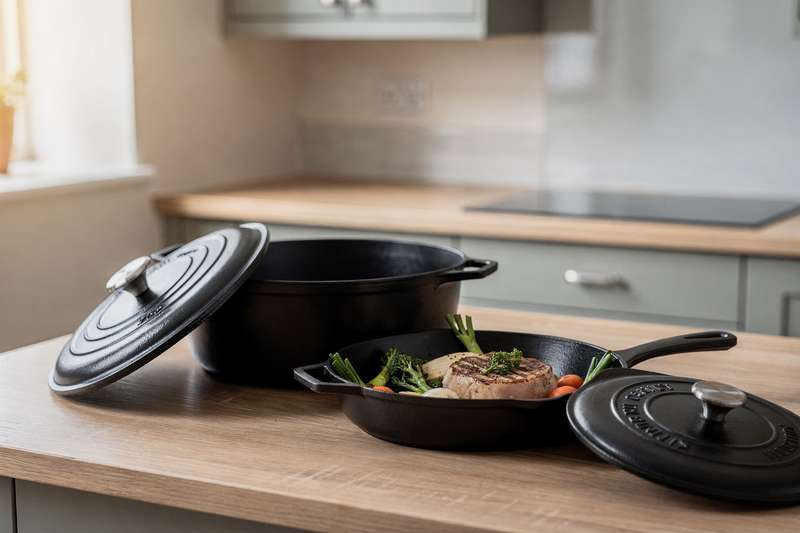
Cast iron cookware isn’t one-size-fits-all. A bare cast iron skillet and an enamelled casserole pot are both made from the same base material, but they behave differently, require different care routines, and suit different styles of cooking. This guide cuts through the confusion and matches specific products to specific needs, whether you’re after a workhorse frying pan for daily use, a Dutch oven for slow braises, or a versatile set that covers multiple bases without taking over your cupboards.
How We Evaluated These Picks
Each product in this guide was assessed against a consistent set of criteria: heat retention and distribution across both stovetop and oven use, surface quality (whether bare or enamelled), compatibility with common UK hob types including induction, ease of handling given cast iron’s inherent weight, the quality of included accessories, and long-term care requirements. We also studied real buyer feedback patterns across Amazon UK to identify recurring issues — things like chipping enamel, warped bases, or misleading size descriptions — alongside detailed specification checks. Where products share a manufacturer or category, we looked hard at what genuinely differentiates them rather than grouping similar items together. The goal is to give you a shortlist of distinct, purposeful picks rather than variations on the same theme.
Best Overall Casserole Pot
The Overmont 26cm/5.2L Enamelled Cast Iron Round Casserole Pot With Lid earns its place at the top of this list for one simple reason: it does the job of several different pots in one go, and it does it well. If you regularly cook for four or more people and want something that can go from hob to oven to table without any fuss, this is the pot to reach for. The 5.2-litre capacity is generous enough for a whole chicken surrounded by vegetables, a hearty stew for a dinner party, or a large batch of soup that’ll last several days.
The enamelled interior is a significant practical advantage over bare cast iron. You don’t need to season it, you’re not restricted to cooking acidic foods like tomato-based sauces, and cleaning is straightforward — the smooth enamel surface releases food far more readily than raw cast iron. The exterior enamel finish also means this pot looks presentable on the table, so you can serve straight from it, which is one fewer dish to wash up. Rated 4.6 stars, it’s one of the better-regarded options in its category on Amazon UK.
The tradeoff with any enamelled cast iron is that the enamel can chip if the pot is dropped or knocked sharply against another item, so it’s worth handling it carefully in a busy kitchen. It also comes with a cookbook and cotton potholders included, which is a practical bonus if you’re new to cast iron cooking and not yet sure how to handle the heat. The lid fits snugly, which matters for long, slow braises where you want to trap moisture and flavour.
Where this pot might not be your first choice is if you primarily need a skillet or want to sear at extremely high temperatures on a gas hob — enamelled cast iron can technically handle high heat, but you’d want to bring it up to temperature gradually to protect the coating. For slow cooking, braising, roasting, and anything involving a liquid component, though, it’s a strong all-round performer in a mid-range tier.
Best Budget Skillet Set
The nuovva Pre-Seasoned Cast Iron Skillet Frying Pans Oven Safe Cookware for Indoor & Outdoor Use – Grill, StoveTop, PFOA & PTFE Free (3-Piece) is the pick for anyone who wants to try cast iron without committing to a significant outlay upfront. Getting a three-piece set at a budget price point is a compelling proposition, especially if you’re not yet sure which pan size you’ll reach for most often. The set includes three different sized pans, which lets you cover eggs and toast in the smallest, chicken thighs in the middle, and larger family meals in the biggest — all with one purchase.
These pans arrive pre-seasoned, which means they’re ready to use out of the box, though you should still give them a quick wash, dry them thoroughly, and add a thin layer of oil before their first cook. The PFOA and PTFE-free designation is worth noting — bare cast iron doesn’t use synthetic non-stick coatings at all, so there’s nothing to flake off into your food. The natural non-stick surface that builds up over time through seasoning is one of cast iron’s most appealing qualities, and with a set like this you can build that patina across multiple pans simultaneously.
The honest tradeoff here is that budget cast iron tends to have a slightly rougher cooking surface than premium alternatives, which means food may stick a little more in the early weeks before a decent seasoning layer develops. The pans are also heavier relative to their cooking area than more refined options — this is common at this price point. Rated 4.1 stars, it’s a solid starting point but not a set you’d describe as refined. If you’re cooking for yourself, learning cast iron basics, or want a campfire-friendly pan that you won’t worry about damaging outdoors, this three-piece set is a pragmatic choice.
One area where this set genuinely earns its place is versatility of use: it works on gas, electric, ceramic, and induction hobs, and goes from stovetop to oven or directly onto a campfire or grill. For a buyer who wants flexibility across different cooking environments without spending a lot, that’s a meaningful advantage.
Best Mid-Range Skillet — American Heritage Brand
The Lodge Pre-Seasoned Cast Iron Skillet for Indoor and Outdoor Use. Induction Frying Pan. Oven, Grill and Metal Utensil Safe Skillet Frying Pan is one of the most consistently recommended cast iron skillets in the world, and for good reason. Lodge has been producing cast iron cookware in Tennessee since the 1890s, and this skillet reflects decades of refinement in a category where consistency matters more than novelty. It’s a workhorse pan that handles everything from bacon and eggs on a Sunday morning to searing a thick steak before finishing it in the oven.
This skillet is rated 4.6 stars on Amazon UK, which puts it among the top-rated cast iron options available. It arrives pre-seasoned with vegetable oil and is safe for use on all stovetops including induction, in the oven, and on outdoor grills or campfires. Metal utensils are safe to use, which is a practical plus — you don’t need to switch to silicone or wooden tools. The handle design is functional rather than elegant, with enough length to keep your hand away from the heat, and the pan includes a helper handle on the opposite side for safe two-handed lifting when the pan is fully loaded.
Where Lodge pans historically differ from premium alternatives like Field Company is surface texture. The cooking surface has a slightly pebbled finish rather than a polished one, which some cooks prefer (it holds oil well from the start) and others find takes longer to build a slick non-stick layer. With regular use and proper maintenance — drying immediately, oiling while still warm, avoiding soaking in water — the surface improves steadily over months of cooking.
This is also a pan that handles thermal shock less gracefully than some rivals, so avoid running it under cold water straight from a high heat. Beyond that caveat, it’s a highly dependable mid-range option that suits beginner and experienced cast iron cooks alike, and it’s the kind of pan that gets handed down through families rather than replaced.
Best Single-Pan Budget Option
The nuovva Pre-Seasoned Cast Iron Skillet Frying Pan – Oven Ready Grill Cookware for Indoor & Outdoor Cooking – Cast Iron Pan PFOA & PTFE Free is the nuovva range’s single-pan offering, and it earns a separate mention from the three-piece set because it suits a different buyer entirely. If you already own a collection of pans and just want to add one cast iron piece — perhaps to improve your searing results or add an oven-safe option — buying a single quality pan at a budget price makes more sense than acquiring three pans you may not use.
Rated 4.3 stars, it sits slightly above the three-piece set in terms of buyer satisfaction, which often reflects the experience of buyers who were specifically looking for a single, straightforward skillet rather than a bundle. The pan is pre-seasoned and ready to use from the outset, PFOA and PTFE free, and compatible with all hob types including induction. Its oven-ready construction makes it suitable for the classic stovetop-to-oven cooking method that cast iron excels at — starting a steak with a hard sear on the hob, then transferring to a moderate oven to finish cooking evenly through.
The honest caveat with single budget pans is that the handle can get very hot during extended oven use, so an oven glove or silicone handle cover is worth having nearby. The cooking surface, like the three-piece set, benefits from a breaking-in period where you cook fatty foods — bacon, sausages — before attempting more delicate items like fish or eggs. Once that seasoning builds up, performance improves considerably.
This pan is a solid choice for a first-time cast iron buyer who wants to test the format without the commitment of a full set, or for someone who wants an affordable but genuinely functional cast iron pan for occasional outdoor cooking alongside a more refined daily-use pan.
Best Three-Size Skillet Collection
The OVERMONT Pre-Seasoned Cast Iron Skillet Set, 3-Piece Frying Pans (6″-15cm, 8″-20cm, 10″-25cm) – Oven Safe, Induction Compatible, Non-Stick takes a different approach to multi-pan value than the nuovva set: it focuses specifically on three skillet sizes rather than mixing pan types. The three sizes — 15cm, 20cm, and 25cm — correspond closely to the three most commonly used cast iron diameters in everyday cooking. The smallest is ideal for frying a couple of eggs or toasting nuts; the middle size handles two chicken thighs or a small steak; the largest is where you’d cook a family meal or sear multiple pieces of meat at once.
Rated 4.2 stars, this set occupies an interesting niche for buyers who want to build a complete cast iron skillet collection in one purchase rather than buying incrementally. The trade-off compared to buying one premium skillet is that the cooking surface on each pan will be less refined initially — Overmont’s bare cast iron has a texture typical of mass-produced cast iron, meaning you’ll need to put in a few cooking sessions before the non-stick quality really starts to develop.
All three pans are oven-safe and induction-compatible, which is important for UK kitchens where induction hobs are increasingly common. They’re also campfire and grill-safe, making the full set useful if you do any outdoor cooking. The smallest pan in the set is particularly useful for people who live alone or cook smaller portions — a 15cm cast iron pan holds heat exceptionally well for cooking a single egg or warming a small sauce, and it takes up almost no space in storage.
Where this set slightly underperforms relative to the Lodge or nuovva single-pan options is in per-pan quality consistency — you may find one pan in the set needs more seasoning attention than the others. But as a starter collection for someone who wants coverage across multiple pan sizes without buying piecemeal, it’s a thoughtful mid-range option.
Best Enamelled Dutch Oven for Bread Baking
The Nuovva Enamelled Cast Iron Dutch Oven Pot with Lid – 5 Quart Casserole Dish – Ceramic Dutch Oven for Bread Baking, Roasting, Braising & Stewing is the standout pick if home bread baking is on your agenda. The Dutch oven method — placing shaped dough in a covered, preheated pot and baking it in a very hot oven — produces bakery-quality loaves with a blistered, crackling crust that’s almost impossible to achieve any other way. The enclosed environment traps steam from the dough, which keeps the crust pliable long enough for maximum oven spring before it crisps up in the final bake.
Rated 4.6 stars, this is one of the higher-rated items in the live product selection, and the feedback pattern reflects buyers who are using it consistently for both bread baking and general casserole cooking. The 5-quart (approximately 4.7 litre) capacity handles a standard sourdough or yeasted loaf with room to spare, and the enamelled interior means you don’t need to do any seasoning preparation before using it. You can also cook acidic ingredients like wine, tomato, or citrus in it without worrying about stripping a seasoning layer — something bare cast iron owners have to be careful about.
The ceramic enamel coating is the element that warrants the most attention in long-term care. It’s durable under normal cooking conditions, but thermal shock — moving the pot from a fridge to a screaming-hot oven, for example — can stress the enamel over time. Best practice is to bring the pot to room temperature before preheating it in the oven. Equally, avoid the dishwasher despite what some manufacturers permit; hand washing extends the life of the enamel surface considerably.
If your cooking splits evenly between slow braises and home baking, this Nuovva Dutch oven is the more versatile of the two casserole-style options in this guide. Its slightly smaller capacity compared to the 5.2-litre Overmont casserole makes it a touch more manoeuvrable, and the emphasis on bread baking in its design gives it a distinct role in the kitchen.
Best Premium Skillet with Handle Cover
The Lodge Cast Iron Skillet, Pre-Seasoned with Silicone Hot Handle Holder, 10.25 Inch Dia, Black/Red Silicone (L8SK3ASHH41B) is the version of Lodge’s famous 10.25-inch skillet that comes bundled with a silicone handle holder — a small but practically significant addition. Cast iron handles conduct heat aggressively, especially during extended oven use, and the silicone grip means you can move the pan safely without hunting for an oven glove. Rated 4.6 stars alongside the standard Lodge skillet, this variant earns its separate recommendation through that safety-focused addition and the slight premium positioning it represents.
The 10.25-inch diameter is the sweet spot for most home cooks. It’s large enough to sear two chicken breasts or a substantial steak side by side, but not so large that it becomes unwieldy on a standard UK hob ring. The pre-seasoned surface is ready to use immediately, and the Lodge seasoning improves meaningfully with regular use — particularly if you cook anything with a decent fat content in the early weeks of ownership.
Where this pan differs from the standard Lodge listing isn’t in cooking performance — the cast iron is the same — but in the overall ownership experience. The handle cover is comfortable, fits securely, and is dishwasher-safe so it stays clean. It’s a small detail that makes the pan noticeably more user-friendly, especially for buyers who are new to cast iron and unfamiliar with just how hot the handle gets. If you’re buying for someone else as a gift or introducing a partner or housemate to cast iron cooking, this version is the more considerate choice.
The honest limitation with this Lodge skillet versus the budget Overmont or nuovva sets is that you’re buying one pan rather than three. But if you’re going to use a skillet daily and want it to be dependable, comfortable, and backed by one of the most established cast iron brands on the market, this is the single skillet worth prioritising.
What to Look For When Buying Cast Iron Cookware
- Bare cast iron vs enamelled: Bare cast iron requires seasoning and is better for high-heat searing, outdoor cooking, and building a natural non-stick surface over time. Enamelled cast iron skips the seasoning routine, handles acidic foods without issue, and is easier to clean — but the enamel can chip if mishandled and typically costs more. Choose based on how you actually cook, not how you intend to cook.
- Hob compatibility: All cast iron — bare and enamelled — works on gas, electric, and ceramic hobs. Induction compatibility is almost universal in modern cast iron, but check the product listing explicitly if you have an induction hob. A flat base is essential for induction; some older or cheaper cast iron pans have slightly warped bases that make poor contact.
- Weight and handle design: Cast iron is significantly heavier than aluminium or stainless steel equivalents. A 26cm casserole pot full of food can weigh over 5kg. Check whether the pan includes a helper handle (a second, smaller handle on the opposite side from the main one) — for larger pots and pans, this is nearly essential for safe two-handed carrying. Silicone handle covers are a worthwhile bonus on bare iron skillets.
- Oven safety: Most cast iron is oven-safe to high temperatures, but some lids — particularly those with composite knobs or plastic components — have lower heat tolerances. If you plan to use a lid in a hot oven, check its individual temperature rating, not just the pot’s.
- Cooking surface texture: Smooth, polished interior surfaces (common on premium bare iron) tend to develop non-stick properties faster. Rougher, pebbled surfaces (common on budget bare iron) take more cooking sessions to season properly but are perfectly functional once they’re there. Neither is wrong — just factor in patience during the break-in period.
- Included accessories: Some listings include potholders, recipe booklets, or silicone handle covers. These don’t make or break a purchase, but they do affect the total value. For new cast iron cooks, a bundled cookbook that covers seasoning and care is a practical addition worth noting.
- Long-term care requirements: All bare cast iron must be dried immediately after washing (never left wet or soaked) and given a light coating of neutral oil after each use. Enamelled cast iron is more forgiving but still benefits from hand washing. Neither type is truly dishwasher-safe in the long run — the dishwasher strips seasoning from bare iron and dulls enamel over time.
Verdict
For most UK home cooks, the choice comes down to two distinct needs: do you want a skillet for daily high-heat cooking, or a covered pot for slow braises and batch cooking?
If you’re after a skillet, the Lodge Cast Iron Skillet with Silicone Hot Handle Holder is the single strongest recommendation. It combines Lodge’s proven, decades-refined cast iron quality with a practical safety accessory that makes daily use more comfortable. Rated 4.6 stars, it’s induction-compatible, oven-safe, and the kind of pan that rewards long-term ownership — the more you cook in it, the better it performs.
If you cook more soups, braises, and stews than you do seared proteins, the Nuovva Enamelled Cast Iron Dutch Oven is the pot to prioritise. It handles the bread baking trend well, works for everything from casseroles to stocks, and its enamelled surface removes the maintenance learning curve entirely — which is genuinely valuable if you want great cast iron results without the ritual.
If you’re on a tight budget and want to cover multiple pan sizes in one purchase, the nuovva 3-Piece Cast Iron Skillet Set gives you the most flexibility per pound spent. It won’t match the quality of Lodge or Overmont’s enamelled range, but it’s a practical way to start building a cast iron collection without overcommitting financially.
We were not paid to feature any specific product in this guide. All opinions are independent and based on publicly available specifications, verified buyer feedback patterns, and category research.
Quick Comparison Table


FAQ
Do I need to season an enamelled cast iron pot?
No. Enamelled cast iron has a glass-like coating over the iron that acts as a non-reactive, non-stick surface without any preparation. You simply wash it before first use and cook normally. Bare cast iron, on the other hand, requires regular seasoning — applying a thin layer of oil and heating it to create a polymerised coating that builds up over time.
Is cast iron cookware safe for induction hobs?
Almost all modern cast iron cookware — both bare and enamelled — is induction-compatible because cast iron is inherently magnetic. The key thing to check is that the base is flat and smooth, as a warped base will make poor contact with the induction surface and cook unevenly. Always confirm the product listing explicitly mentions induction compatibility before buying.
How do I clean a bare cast iron skillet without ruining the seasoning?
Rinse it with hot water while it’s still warm, using a stiff brush or chainmail scrubber rather than soap where possible — a small amount of mild washing-up liquid is acceptable if needed, despite the old advice against it. The important step is drying it immediately and thoroughly (a minute on a low hob flame works well), then applying a very thin layer of neutral oil before storing. Never leave it wet or soak it in water.
Can I use metal utensils in a cast iron pan?
Yes — bare cast iron is robust enough for metal spatulas, tongs, and spoons. In fact, using metal utensils can help smooth out the cooking surface over time. For enamelled cast iron, some manufacturers recommend silicone or wooden utensils to protect the enamel coating from scratches, particularly around the edges of the pot where the enamel may be thinner.
How heavy is a typical cast iron casserole pot?
A 26cm casserole pot empty typically weighs between 4 and 6 kilograms, depending on the manufacturer. Once filled with food and liquid, it can exceed 8 to 10 kilograms. If weight is a concern — particularly for older users or those with wrist or shoulder issues — look for pots with two handles (one on each side) rather than a single long handle, and consider a slightly smaller capacity.
What’s the difference between a Dutch oven and a casserole pot?
The terms are used almost interchangeably in the UK market. Both refer to a deep, lidded, heavy-walled cooking pot suited to slow cooking on the hob or in the oven. “Dutch oven” tends to be used more commonly for bare cast iron versions popular in American outdoor cooking culture, while “casserole” is the more common UK term — but the cooking function is identical. If a product is described as either, check the capacity, material, and lid fit rather than getting caught up in terminology.