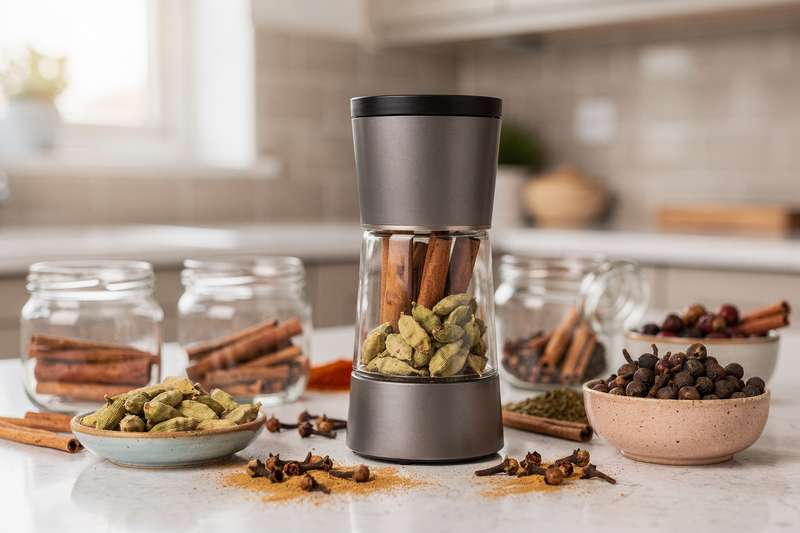
You’ve got a recipe that calls for freshly ground cardamom. You crack open the jar of pre-ground stuff you bought six months ago, take a sniff, and wonder whether you’re smelling cardamom or cardboard. So you invest in whole pods and cinnamon sticks — only to discover that your old blade grinder gives up the moment it meets a cinnamon stick. It rattles, it overheats, it leaves bark fragments half an inch long. You end up finishing the job with a rolling pin and a lot of frustration.
This is the exact scenario that separates a capable electric spice grinder from a cheap coffee grinder with delusions of grandeur. Cinnamon sticks are dense, fibrous, and notoriously difficult to break down. Cardamom pods — when you’re grinding seeds still in the husk — need sustained power to crack open before the blade can get to work. If your grinder isn’t up to the job, you get a gritty, uneven powder with random lumps, and you’ve wasted expensive whole spices in the process.
This guide focuses specifically on grinders that can handle these harder, more demanding ingredients — not just the easy stuff like fennel or dried chilli flakes. Every pick below has been chosen with cinnamon sticks and cardamom firmly in mind.
How We Evaluated These Grinders
Selecting a shortlist for tough spices requires looking at more than wattage ratings on a spec sheet. The criteria used to assess each model covered: motor power and sustained performance (not just peak RPM claims), blade design and height from the bowl floor, bowl capacity relative to typical spice batch sizes, ease of cleaning between different spices, build quality of removable parts, and real-world buyer feedback patterns where available. For cinnamon and cardamom specifically, the ability to grind to a fine, consistent powder — rather than a coarse mix of dust and chunks — was weighted heavily. Models that couldn’t process cinnamon sticks without jamming or leaving significant residue were excluded regardless of their other qualities. The eight picks below represent a range of use cases, from the occasional home cook to someone grinding spice blends weekly in volume.
Best Overall Pick: SHARDOR Electric Coffee Grinder and Spice Grinder (B0GTLQ5RMP)
The SHARDOR Electric Coffee Grinder and Spice Grinder with 2 Removable Stainless Steel Cups and Timed Rotary Knob earns the top spot here because it addresses the two biggest frustrations with standard blade grinders: consistency of grind and cross-contamination between spices. It comes with two separate removable cups — one you can dedicate to cinnamon and woody spices, another for aromatic seeds like cardamom — which means you’re not constantly cleaning out residual flavours between batches.
The timed rotary knob is a genuinely useful feature when you’re working with difficult ingredients. Rather than holding down a button and guessing when the cinnamon stick has gone from bark to powder, you dial in a grind time and let the motor run consistently. This matters because cinnamon sticks benefit from sustained grinding rather than short pulses — longer continuous runs allow the heat from friction to slightly soften the wood fibres, making the final powder finer. The knob gives you repeatable results, which is something you can’t say for many single-button grinders.
The removable stainless steel cups make cleaning straightforward. You lift out the cup, knock out the spice powder, rinse under the tap, and dry before the next use. There’s no wrestling with a fixed bowl and a pastry brush. That said, the cups do need to be fully dry before you grind again — moisture and fine spice powder combine into a paste that’s harder to clean than either would be separately. Rated at 4.5 stars from 88 reviewers, it’s not the most reviewed product on this list but the feedback patterns are consistently positive about its handling of hard spices.
The main tradeoff is that two cups add slightly more to wash up, and the timed knob mechanism adds a touch more complexity than a simple push-button design. For anyone grinding a range of whole spices regularly, though, this additional functionality is worth it. It sits in the mid-range tier and offers noticeably more versatility than budget single-cup options.
Best Budget Pick: KRUPS F2034238 Coffee Mill and Spice Grinder
The KRUPS F2034238 Coffee Mill and Spice Grinder is one of the most tested blade grinders available in the UK and has earned its reputation over years of use in professional test kitchens as well as home settings. At 200W with a 75g capacity, it’s a compact unit that punches above its weight class when it comes to breaking down cinnamon sticks and cardamom seeds.
What makes KRUPS grinders consistently good for hard spices is the blade height relative to the bowl floor — a seemingly minor engineering detail that has a major impact on whether your cinnamon stick ends up as fine powder or gets stuck spinning above the blade. The blade sits close enough to the bottom to catch even small fragments that migrate outward during grinding. The result with cinnamon is a powder that’s much more consistent than you’d expect from a budget single-cup grinder.
The one-touch operation is exactly as simple as it sounds: press and hold to grind, release to stop. You’ll want to use short pulses of around 10 seconds for cinnamon, shaking the unit between pulses to redistribute the bark. This technique matters more with dense spices — it prevents the motor from running hot and ensures the blade contacts fresh material with each pulse rather than just churning already-ground powder. With cardamom, you can crack the pods first by pressing down firmly on the lid, then grind the exposed seeds to a fine powder in 20–30 seconds.
The main limitation here is the fixed bowl — cleaning between different spices requires a dry brush and a damp cloth rather than the simple rinse-out you get with detachable cups. Cross-flavour contamination is a real risk if you’re alternating between, say, cumin and cardamom without a thorough clean in between. If you only grind one type of spice at a time and clean properly between uses, this is a reliable, affordable choice. For occasional use, it’s hard to fault at this price tier.
Best for Volume Batches: SHARDOR Coffee Grinder Electric 75g (B0FR3MNRC3)
The SHARDOR Coffee Grinder Electric with 75g Removable Stainless Steel Cup and 38000rpm Motor is aimed squarely at people who make spice blends in meaningful quantities. If you’re preparing a large batch of garam masala, a mixed chai blend, or any recipe that calls for grinding multiple whole spices together, the 75g capacity means fewer batches and a more consistent blend per run.
The headline spec is the 38,000rpm motor speed. In real-world terms, this translates to fast initial breakdown of even the hardest cinnamon sticks. Where a lower-powered grinder needs repeated pulses to work through a 10g piece of bark, this motor makes shorter work of it — you’ll still want to pulse rather than run continuously, but the number of pulses needed drops noticeably. For cardamom specifically, high RPM helps crack the papery husk and grind the fragrant seeds beneath in one extended session rather than requiring you to remove the pods and separate seeds first.
The removable stainless steel cup is a practical advantage. It lifts out entirely, which makes both cleaning and transferring ground spice to a jar much easier than tipping a fixed bowl. Stainless steel also means the cup won’t absorb spice odours the way plastic components can — an important consideration when you’re grinding strong aromatics like cardamom and cloves that can linger and affect the flavour of the next batch.
The tradeoff with high-RPM motors is that they can generate more heat over extended runs, which can technically affect the volatile compounds responsible for the top-note aromas in delicate spices. For most home cooking purposes this isn’t a significant concern, but if you’re grinding very small quantities of expensive saffron or high-grade cardamom for a specific purpose, short pulses with rest intervals are still the better approach. For robust batch grinding, though, this is one of the more capable budget-tier options available.
Best for Dual Wet and Dry Grinding: Cuisinart Electric Spice Grinder (B07QTTPNRP)
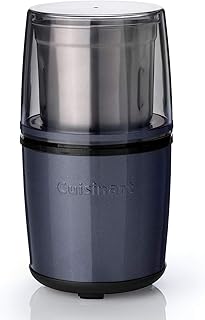
The Cuisinart Electric Spice Grinder with Dual Stainless Steel Bowls for Wet and Dry Grinding is the most established name on this list and the one with the most verified buyer feedback — 914 reviews, rated 4.2 stars. It earns its place here not just on brand recognition but because its dual bowl system makes it genuinely more versatile than most competitors.
The wet-and-dry capability matters if your cooking extends beyond dry spice blends. If you grind fresh ginger, garlic, or make coriander-based pastes alongside your dry whole spice work, having one appliance that handles both without cross-contamination between cups is a practical advantage in a smaller kitchen. For the purposes of this guide — cinnamon and cardamom — you’ll use the dry bowl, and it performs consistently well on both. The bowl design encourages spice particles to cycle back toward the blade rather than clumping at the edges.
Real buyer reviews highlight ease of use and consistent results as the main positives, with a minority mentioning that the unit can feel slightly louder than expected on hard ingredients. Cinnamon sticks do cause more motor noise than soft spices in almost every blade grinder — the noise is partly a function of the blade working harder, so don’t take it as a sign of damage. The Cuisinart handles this without complaint through repeated batches.
Where this model underperforms relative to its price tier is build durability over very long periods of heavy use. Some buyers note that the bowls can become harder to seat and release after extended regular use. If you’re a professional or semi-professional user grinding multiple batches daily, the SHARDOR with timed knob may serve you better. For a home cook who needs reliable results across a range of spices including the tough ones, the Cuisinart is a solid mid-range choice with proven longevity.
Best for Beginners: Electric Coffee Grinder 350W 80g (B0FGY474B3)
The Electric Coffee Grinder with 350W Motor, 80g Large Capacity, One-Touch Operation and 304 Stainless Steel Blades is the most straightforward option on this list. One button, one bowl, no settings to configure — you press, it grinds, you release. For someone who is new to grinding whole spices and wants to get started without any learning curve, this does the job.
The 350W motor is the highest wattage on this list in the budget tier, and the 80g capacity is the most generous. For cinnamon sticks, the extra power means the motor is less likely to struggle or slow noticeably when hitting dense patches of bark. With 621 reviews and a 4.4-star rating, buyer feedback is broadly positive, with reviewers specifically mentioning its ability to handle tougher ingredients without the motor sounding strained.
The 304-grade stainless steel blades are worth noting specifically — 304 is a food-safe, corrosion-resistant grade that holds an edge better than lower-quality stainless alloys. For grinding abrasive ingredients like dried cinnamon bark, blade quality matters for longevity. Cheaper blades can dull over time, producing less effective grinding and requiring longer run times to achieve the same result.
The honest tradeoff with a simple one-touch design is that you have less control over grind consistency. You’re essentially judging by eye and ear when to stop, which takes a few practice batches to calibrate. For cinnamon specifically, watch for the powder to stop looking chunky and start looking like fine sand — at that point, a few more 5-second pulses will take it to the powder consistency most recipes require. For cardamom, the thin husks process more quickly, so keep sessions short to avoid over-grinding. This is an excellent starting point for the occasional spice grinder who doesn’t want to invest heavily upfront.
Best with Timed Grind Control: SHARDOR Coffee & Spice Grinder Electric (B0FK4TBQ3Q)
The SHARDOR Coffee & Spice Grinder Electric with 2 Removable Stainless Steel Cups and Timed Grind Control Rotary Knob for Adjustable Coarse to Fine Grinding adds a coarse-to-fine adjustment dial to the two-cup format, making it the most precise option in the SHARDOR range for dialling in exactly the texture you want from different spices.
The coarse-to-fine adjustment is useful specifically because different spices need different grind sizes in different recipes. Cardamom for a chai blend is better at a medium-coarse grind so the flavour infuses during simmering without turning the liquid muddy. Cardamom for a baked custard or rice pudding benefits from a finer powder that disperses evenly. Being able to preset the fineness rather than guessing from pulse length makes this grinder more reliable across a range of applications.
For cinnamon sticks, the timed knob combined with the coarse-to-fine dial gives you a repeatable process: set the timer, set the fineness, run. The dual cups mean you can keep one bowl for woody bark spices and one for aromatic seeds, avoiding the flavour transfer issue that plagues single-cup designs. The stainless steel construction throughout is food-safe and easy to rinse clean.
The tradeoff here is complexity versus simplicity. There are more controls to learn, and initial setup takes a few batches to dial in to your preferred settings. The grinder also sits at a slightly higher price point than the basic single-cup models in this list. Whether the extra control is worth the additional outlay depends on how precisely you like to cook — for an enthusiastic home cook making spice blends from scratch regularly, the answer is probably yes.
Best Two-Cup Budget Option: SHARDOR Coffee and Spice Grinder Electric (B0861W6XPZ)
The SHARDOR Coffee and Spice Grinder Electric with 2 Removable Stainless Steel Cups for Wet and Dry Grinding, 70g Capacity offers the two-cup convenience at a lower entry point than the timed-knob models, making it a practical option if you want separate bowls for different spice types without paying for advanced timing controls you may not need.
The wet-and-dry capability of both cups means the grinder covers a broader range of kitchen tasks beyond spice grinding. The 70g capacity per cup is generous enough for typical home batch sizes — you can grind enough cinnamon for a week’s worth of baking in one session, or process enough cardamom for a significant batch of garam masala without having to stop and refill.
For cinnamon sticks, this grinder performs best when you break the sticks into shorter pieces — about an inch long — before loading. This isn’t unique to this model; it applies to virtually all blade grinders, but it makes a meaningful difference with the SHARDOR two-cup design. Shorter pieces load more evenly against the blade and reduce the risk of the motor working unevenly as it tries to drag a long piece of bark toward the centre. For cardamom pods, you can load them whole — the blade cracks the husks quickly and the seeds grind down fine within 20 seconds of pulsing.
The main limitation compared to the timed-knob SHARDOR models is the absence of any grind time control — it’s a push-to-grind operation. For users who prefer a hands-on approach and are comfortable judging grind progress by sight, this works perfectly well. For those who want more consistency between batches, stepping up to the timed models makes sense. Rated 4.4 stars, it’s a reliable workhorse at a price point that makes owning a dedicated spice grinder accessible.
Best for Spice Purists: DR MILLS DM-7441 Electric Dried Spice and Coffee Grinder
The DR MILLS DM-7441 Electric Dried Spice and Coffee Grinder with SUS304 Stainless Steel Blade and Cup positions itself specifically for dried spice grinding — not as a coffee grinder that also does spices, but the other way around. This subtle difference in design philosophy shows up in how the bowl and blade are proportioned for maximum contact with dry, brittle ingredients.
The SUS304 stainless steel designation throughout — both blade and cup — is a meaningful spec. SUS304 is a Japanese industrial standard equivalent to AISI 304, the food-safe grade mentioned in the B0FGY474B3 entry above. When both the bowl and blade are made from the same high-grade alloy, there’s no risk of reactive metals combining with acidic spices like tamarind or hibiscus and affecting flavour. For cinnamon and cardamom, this is less critical, but if you grind a wide range of spices including souring agents or dried citrus peel, it matters.
The one-touch operation keeps the learning curve flat. For a cook who wants a dedicated spice grinder they can pick up, use quickly, and put away — rather than a multi-function appliance that requires configuring — the DR MILLS approach is appealing. The bowl is fixed rather than removable, which means cleaning requires the brush-and-damp-cloth method rather than a rinse under the tap. That’s the main functional limitation, and it’s worth factoring in if you grind multiple different spices in succession.
For cinnamon and cardamom specifically, the DR MILLS performs with the consistency you’d expect from a spice-first design. It handles cinnamon sticks with a degree of patience — break them small, pulse in 10-second intervals, shake between pulses — and the result is a fine powder that passes through a standard kitchen sieve without significant residue. Rated 4.5 stars, it’s a trustworthy option for those who want a grinder that takes spices seriously from the outset.
What to Look for in an Electric Spice Grinder for Cinnamon and Cardamom
- Motor wattage and sustained power: Peak RPM figures can be misleading. A motor rated at 200–350W should be sufficient for cinnamon sticks and cardamom, but the key is sustained performance — the ability to maintain speed under load rather than slowing when it meets dense material. Look for models where reviewers specifically mention handling hard spices without strain.
- Blade height from bowl floor: This is rarely listed as a spec but has an outsized effect on grind quality. Blades positioned too high above the bowl floor leave a layer of unground spice at the base. The best grinders for hard spices have blades positioned between 8–10mm from the bottom, ensuring all material contacts the blade rather than just spinning around it.
- Removable versus fixed bowl: Removable stainless steel cups are easier to clean thoroughly and reduce cross-contamination between different spices. Fixed bowls require more diligent dry-cleaning and risk retaining odours. For those who grind multiple spice types, removable cups are worth the slightly higher cost.
- Two-cup versus single-cup design: If you regularly grind both woody spices (cinnamon, nutmeg) and aromatic seeds (cardamom, coriander), a two-cup model lets you keep dedicated bowls for each category. This avoids flavour bleed and reduces the cleaning burden between sessions.
- Timed or adjustable grind control: Manual push-to-grind operation works, but timed controls give you repeatability — particularly useful when you’re making the same spice blend repeatedly and want consistent results each time. Look for rotary knob timers rather than digital controls; they’re more durable and easier to adjust mid-grind.
- Capacity relative to your batch size: Most blade grinders perform best when loaded to 50–70% of their stated capacity. A 75–80g rated bowl typically gives you a practical working capacity of around 50–60g, which is enough for typical home recipe quantities. If you make large batches of spice blends, prioritise higher-capacity models.
- Build quality of food-contact materials: Look for SUS304 or AISI 304 stainless steel on any surface that contacts the spices. Avoid models where the bowl or blade is unspecified alloy — these can dull faster on hard ingredients and may absorb or impart off-flavours to aromatic spices like cardamom over time.
Verdict
For most UK home cooks who want to grind whole cinnamon and cardamom with consistent, repeatable results, the SHARDOR Electric Coffee Grinder and Spice Grinder with 2 Removable Stainless Steel Cups and Timed Rotary Knob is the pick we’d go back to. The combination of two dedicated cups, a timed grind knob for consistency, and a motor capable of sustained work on dense bark and pods addresses the specific frustrations that come with grinding these particular ingredients.
If your budget is tighter or you’re not yet sure how often you’ll use a spice grinder, the KRUPS F2034238 is the most trusted budget-tier blade grinder available and has a long track record with hard spices. It’s the sensible starting point before committing to something more capable.
For anyone who grinds spices in volume or wants the most precise control over grind fineness, the SHARDOR with Timed Grind Control and Coarse-to-Fine Adjustment is worth the step up. It’s the most control you’ll find in a blade grinder at this tier, and for enthusiastic home cooks making spice blends from scratch, that precision pays off in the quality of the final dish.
We were not paid to feature any specific product in this guide. All opinions are independent and based on publicly available specifications, verified buyer feedback patterns, and category research.
Quick Comparison Table




FAQ
Can electric spice grinders really handle cinnamon sticks?
Yes — but not all of them equally. The models that struggle are those with underpowered motors or blades positioned too high above the bowl floor. For best results with cinnamon sticks, break them into pieces roughly an inch long before loading, then grind in short 10-second pulses with shaking between each pulse. A grinder rated at 200W or above with a removable stainless steel cup will generally manage cinnamon sticks well using this technique.
Do I need to remove cardamom seeds from the pods before grinding?
Not necessarily. Most electric blade grinders are powerful enough to crack cardamom pods and grind the seeds within in one operation. If you want a very fine powder with no husk fragments, remove the seeds beforehand — but for most cooking applications, grinding whole pods and then passing the result through a fine sieve removes any larger husk pieces efficiently. The husks do contribute some flavour, though less intensely than the seeds themselves.
How do I clean a spice grinder between different spices?
For fixed-bowl grinders, the most effective method is to knock out excess powder, then brush the interior with a dry pastry brush before wiping with a slightly damp cloth. Grinding two tablespoons of raw white rice then discarding the result helps lift residual oils and aromas. For grinders with removable cups, simply lift out the cup, rinse under warm water, and dry thoroughly before the next use — moisture and fine spice powder combine into a paste that’s much harder to remove.
Is it better to use a dedicated spice grinder or a coffee grinder for spices?
For spice grinding, a blade-style coffee grinder works well — most electric spice grinders are mechanically identical to blade coffee grinders. The practical issue is cross-flavour contamination. If you use the same grinder for both coffee and spices, residual cumin or cardamom oils will affect the flavour of your next cup of coffee, and vice versa. The cleanest solution is to keep a dedicated grinder for spices. The models on this list are all suitable for spice-only use.
What is the difference between a blade grinder and a burr grinder for spices?
Blade grinders use a spinning double-arm blade to chop and crush spices — they’re fast, affordable, and effective for dry whole spices. Burr grinders use two abrasive surfaces to crush material between them, offering more precise grind size control and more consistent particle size. For spices, blade grinders are generally preferred because consistent grind size matters less than it does for espresso or pour-over coffee. Burr grinders are also slower to clean and more expensive, making them less practical for spice use.
Can I grind wet or oily ingredients like fresh ginger in these grinders?
Most blade spice grinders are designed for dry ingredients only, and adding wet or oily ingredients risks damaging the motor and creating a residue that’s very difficult to clean. Some models — including the Cuisinart and the SHARDOR two-cup models with wet-and-dry rated cups — are designed to handle wet ingredients in their designated wet-grinding bowl. Always check the manufacturer’s guidance before grinding anything with significant moisture content, and use separate cups for wet and dry ingredients where the grinder supports both.