You’ve booked the flights. You’ve sorted the accommodation. Now you’re staring at your phone wondering whether you can really rely on spotty mobile data to navigate a country where you don’t speak the language, the street signs are in a different alphabet, and roaming charges are quietly eating through your budget. Sound familiar? This is the exact situation that makes a compact, well-designed travel guide and map pack worth its weight.
The frustration isn’t about being unprepared — it’s about not having the right tool. Digital navigation apps are brilliant when you have signal, but they fail the moment you step into a rural temple district, a dense island archipelago, or any destination where cell coverage is inconsistent. Physical maps and pocket guide-map combos solve a real problem: they’re always-on, require no battery, and let you plan your day over breakfast rather than squinting at a phone screen mid-street.
For UK travellers shopping on a budget, the challenge is finding something genuinely useful — not a tourist tat map that folds awkwardly and tears at the creases — but a properly researched guide that pairs practical sightseeing advice with a navigational aid you can actually use. That’s exactly what this guide is about.
How We Chose These Picks
Every product in this guide was evaluated against a consistent set of criteria drawn from verified buyer feedback, publicly available specifications, and practical category knowledge. The core questions were: Does this product give you both navigation and contextual travel information in one package? Is it genuinely portable — pocket-sized or daypack-friendly? Does it cover destinations popular with UK travellers? And does the map component add real value rather than being a throwaway insert?
We also looked closely at review patterns: not just average star ratings, but the substance of what buyers said — whether they praised legibility, accuracy, page count, and durability, or flagged issues with out-of-date information, poor binding, or unhelpful scale. Products with fewer than a handful of reviews were assessed more conservatively, with weight given to the publisher’s track record and product format. Purely digital tools and non-navigational products were excluded — every pick here has a tangible map component central to its purpose.
Best All-Round Pack for Japan Explorers
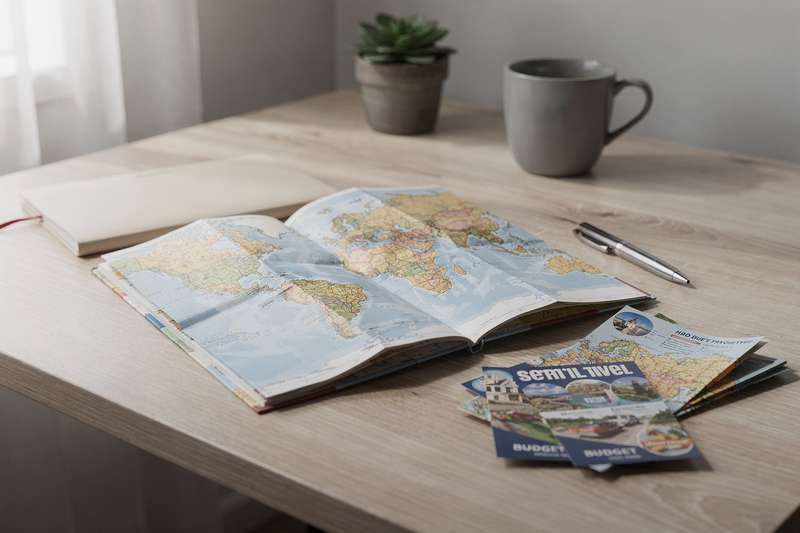
The Japan Travel Guide and Map Tuttle Travel Pack is the pick for anyone heading to Japan and wanting a single compact resource that covers both the country’s highlights and practical navigation without requiring a data connection. It earns its top position not through novelty, but through sheer breadth: the pack combines a folded country-level map with a concise pocket guidebook covering Japan’s best sights across a range of budgets — genuinely useful for first-timers and return visitors alike.
Tuttle is a well-established publisher with decades of experience producing Asia-focused travel content, and this pack reflects that depth. The guide portion gives you curated recommendations on sights, food, transport, and cultural context — not a surface-level rundown, but enough to actually plan a day without pulling out your phone at every junction. The built-in map is scaled appropriately for a country-level overview, helping you understand regional geography and connections between cities before you drill down into local maps on arrival.
With 36 verified ratings averaging 4.3 out of 5, the feedback from buyers is broadly positive, with reviewers noting the quality of curation and the convenience of having guide and map together in one slim format. The tradeoff, as with all country-level packs, is depth: if you’re spending three weeks purely in Tokyo or only travelling Hokkaido, you’ll want to supplement this with a city-specific resource. But as a foundation for planning a Japan trip — and as a reliable backup when your phone dies on a Shinkansen platform — this is the strongest starting point in the category.
The format is particularly well suited to UK travellers who prefer to do their homework before boarding. Reading the guide on the flight and arriving with a mental map of the country’s regions gives you a head start that no amount of in-destination scrolling can replicate. It’s compact enough to slip into a jacket pocket, which matters when you’re navigating busy station concourses with luggage in tow.
One practical note: Japan’s transport network is genuinely complex, and no single pocket guide will replace a dedicated rail pass planner or a local transit app like Hyperdia. Use this pack for orientation and sightseeing, and pair it with a digital tool for precise train schedules. That combination gives you the best of both worlds.
Best Budget Pick for Kyoto and Nara
If Japan is the destination but Kyoto and Nara are the heart of your itinerary, the Kyoto and Nara Tuttle Travel Pack Guide + Map deserves a dedicated look. Rather than a country-wide overview, this pack drills into two of Japan’s most culturally significant cities — the kind of focused coverage that makes a real difference when you’re trying to plan temple circuits, walking routes between neighbourhoods, and day-trip logistics between the two cities.
Rated 4.6 out of 5 stars from 31 buyers, this is the highest-rated product in this guide, and the review sentiment reflects genuine satisfaction from travellers who used it on the ground. Buyers specifically called out the legibility of the map and the quality of the sight recommendations as standout features — exactly the things that matter when you’re standing at a crossroads in Higashiyama deciding which way to walk.
The Kyoto and Nara pack follows the same Tuttle format as the Japan country pack — guide and map in one slim package — but with city-level detail that a country map simply can’t provide. Streets are more legible, neighbourhood boundaries are clearer, and the guidebook content focuses on the specific temples, markets, and districts that make these two cities worth visiting. For a traveller whose trip revolves around Kyoto’s historic core and Nara’s deer park, this level of granularity is far more useful than a national overview.
The tradeoff is obvious: this pack won’t help you if your itinerary extends to Tokyo, Osaka, or Hiroshima. It’s a specialist tool, not a general one. But if Kyoto and Nara are your primary focus — which is a very common itinerary for UK visitors doing Japan for the first time — the specificity is a feature, not a limitation. You’re getting a properly researched, map-backed guide to exactly the places you’re visiting, rather than a diluted overview that spreads its content across a whole country.
Worth noting: Nara is easy to reach from Kyoto as a day trip, and the pack covers both cities, meaning you don’t need separate resources for each. That consolidation is part of what makes it good value for the format — one purchase, two cities, usable from the moment you land.
Best Budget Pack for Southeast Asia — Indonesia Focus
For travellers heading to one of the world’s most geographically complex countries, the Indonesia Tuttle Travel Pack offers a grounded starting point. Indonesia spans thousands of islands, and even experienced travellers can find the logistics overwhelming without some prior orientation. This guide-and-map combo won’t replace a dedicated Bali or Lombok guidebook, but it gives you a solid country-level framework before you start narrowing your focus.
Rated 4.2 out of 5 from 21 reviewers, it sits slightly below the Kyoto pack in terms of community enthusiasm, but the core format is identical: a folded map paired with a curated guidebook covering highlights, practical logistics, and budget-conscious recommendations. For a country as sprawling as Indonesia, that scope means the content necessarily covers the most well-known destinations — Bali, Yogyakarta, Lombok, Komodo — rather than going deep on any single island.
That breadth is actually useful for trip planning. Many travellers to Indonesia haven’t decided exactly which islands they’ll visit until they start researching, and having a country-level guide that outlines the character of each major region helps you make those decisions more confidently. Once you’ve settled on your itinerary, you can fill in the gaps with destination-specific digital resources or local maps purchased on arrival.
The physical map component is particularly valuable here because mobile data coverage in Indonesia varies significantly — reliable in Bali’s tourist areas, patchy in more remote spots. Having a printed map means you’re not entirely dependent on your phone for spatial orientation, which is genuinely reassuring when you’re navigating between ferry terminals or rural guesthouses. It’s also worth remembering that printed maps are accepted without question at checkpoints or when communicating with local transport drivers who may not share a language with you — pointing at a map on paper is universally understood in a way that squinting at a phone screen isn’t.
If your Indonesia trip focuses exclusively on Bali, this pack will give you more country context than you strictly need. But if you’re planning to island-hop or visit multiple regions, it’s a sensible budget investment that sets the navigational and cultural groundwork for your trip.
What to Look For When Buying a Budget Travel Map or Guide-Map Pack
- Map scale and legibility: A country-level map is useful for planning routes between cities but won’t help you navigate individual streets. Check whether the product includes both a regional overview and city-level insets. Legibility matters — small fonts and cluttered iconography make maps frustrating to use under pressure.
- Guide and map integration: The best budget packs combine a curated travel guide with a folded or pull-out map in one purchase. Buying these separately costs more and adds weight. Look for packs where the guide content directly references the map landmarks.
- Publisher track record: Established publishers with a history in travel content (particularly Asia-focused ones for Japan and Indonesia) tend to maintain accuracy through regular edition updates. Check the edition date — a guide that hasn’t been updated in several years may reference closed attractions or outdated transport information.
- Portability: Pocket-sized (roughly A6 or smaller) formats are genuinely more useful than full A4 guides when you’re navigating on the move. If it fits in a jacket pocket, you’ll actually carry it. If it requires a bag, it tends to stay at the hotel.
- Durability: Paper quality and binding matter more than you’d think. Maps that fall apart at the fold lines or guidebooks with pages that detach after a week in a damp climate are a false economy. Look for reviews that specifically mention durability.
- Coverage scope: Be honest about your itinerary. A country-level pack is better for explorers covering multiple regions; a city-specific pack is better for travellers spending most of their time in one place. Buying the wrong scope wastes money and leaves gaps.
- Budget-conscious recommendations: The best guide-map packs don’t just tell you what to see — they flag budget options, free entry days, and affordable local transport. If the guide’s restaurant and accommodation recommendations are all high-end, it’s not genuinely pitched at budget travellers.
Verdict
For most UK travellers buying a budget map or guide-map pack, the Japan Travel Guide and Map Tuttle Travel Pack represents the most broadly useful purchase — it covers one of the most popular long-haul destinations for UK tourists, delivers the guide-plus-map format that genuinely earns its place in a daypack, and has a solid track record with over 36 verified buyers.
If your trip centres specifically on Kyoto and Nara, upgrade to the Kyoto and Nara Tuttle Travel Pack instead — the city-level focus and higher rating from a comparable buyer pool make it the better tool for that specific itinerary. And if Indonesia is your destination, the Indonesia Tuttle Travel Pack fills a genuine navigational need in a country where connectivity can’t be taken for granted.
None of these picks will replace a comprehensive digital navigation setup — treat them as your always-available backup and trip-planning companion, not your sole navigational tool. That pairing of physical map and digital app is, practically speaking, the most reliable approach for any budget traveller who wants to explore without getting stuck.
We were not paid to feature any specific product in this guide. All opinions are independent and based on publicly available specifications, verified buyer feedback patterns, and category research.
Quick Comparison Table


FAQ
Are physical travel maps still worth buying when you have Google Maps on your phone?
Yes, for specific situations — particularly in countries with unreliable mobile data coverage, when roaming charges make data use expensive, or when your battery dies mid-navigate. A printed map is always-on and doesn’t require a signal. Pairing a compact physical map with digital navigation gives you a reliable fallback rather than depending entirely on your phone.
What’s the difference between a travel guide and a guide-map pack?
A standard travel guide is purely text and photography, covering sights, food, accommodation, and cultural context. A guide-map pack bundles a folded or pull-out map with that guidebook content in a single purchase, so you get navigational and contextual information together. The map component is what makes these packs genuinely useful for on-the-ground navigation rather than just pre-trip reading.
Should I buy a country-level map or a city-specific one?
That depends on your itinerary. If you’re covering multiple regions of a country — say, Tokyo, Kyoto, and Hiroshima across two weeks in Japan — a country-level pack gives you the overview you need to connect the dots. If you’re spending most of your time in one city, a city-specific pack offers the street-level detail and neighbourhood context that a national map can’t provide. When in doubt, consider buying one of each if your trip warrants it.
How do I avoid buying an out-of-date travel map?
Check the edition date on the product listing — this is usually listed in the book description or editorial details on Amazon. For fast-changing destinations, a guide more than three to four years old risks referencing closed attractions, outdated transport routes, or superseded entry requirements. Reviews sometimes flag this too; search for comments mentioning accuracy or outdated information before buying.
Can I use a pocket guide-map pack as my only navigation tool?
For very simple itineraries in well-mapped destinations, possibly — but it’s not recommended for most travellers. A pocket pack is best used alongside a digital tool: use the physical map and guide for orientation, planning, and offline backup, and lean on a navigation app for precise routing, real-time transit schedules, and walking directions. That combination is more reliable than either tool alone.
What makes Tuttle guide-map packs stand out from standard travel guidebooks?
Tuttle has focused specifically on Asia-Pacific travel and culture for decades, which gives their Japan, Kyoto, and Indonesia packs a depth of local knowledge that general travel publishers sometimes lack. The guide-plus-map bundled format is also a practical advantage — you’re not buying a separate road atlas or tourist map on top of a guidebook. For budget travellers who want one lightweight resource rather than a stack of materials, that integration has real value.