Picture this: it’s the Sunday evening before the first week of a new half-term. You’ve got a stack of unmarked books on the left, a to-do list that hasn’t shrunk since September, and a browser with fourteen tabs open — most of them fruitless searches for something, anything, that will make Monday morning run more smoothly. You’re not looking for a miracle. You’re looking for a well-designed planner that keeps your week legible, a book that gives you fresh classroom strategies without the academic waffle, a visual timer that stops you from repeating “just five more minutes” twelve times a lesson, and maybe something to show a colleague or student that teaching is a profession you’re genuinely proud of. The problem isn’t motivation — you have plenty of that. The problem is that “teacher resources” covers everything from laminator pouches to mindfulness journals, and sorting the genuinely useful from the novelty filler takes time you simply don’t have.
This guide cuts through the noise. It focuses on physical resources you can order today and have at your desk by the end of the week — the kind that earn their keep in an actual classroom, not just in a Pinterest board.
How These Picks Were Chosen
Each product below was assessed against four core criteria: relevance to daily classroom or planning tasks, real buyer feedback patterns (where reviews exist), specificity to the UK curriculum year and teaching context, and honest value for the category tier it occupies. Where review counts were low or absent, that’s noted plainly in the relevant section rather than glossed over — you deserve to know what’s well-tested and what’s still building a track record. Products that were variants of the same item (same design, near-identical titles) were treated as a single pick, with the better-reviewed listing featured. Novelty gifts and functional classroom tools are kept separate across the structure so each section earns a distinct place.
Best Classroom Planning Tool: A5 ABACUS-Midnight Sky Teacher Planner
If your current planner is a spiral-bound A5 notebook with sticky-note dividers held on by optimism, the A5 ABACUS-Midnight Sky 6-Period Teacher Planner 2026-27 is worth a serious look. Designed specifically for the 2026–27 academic year, it maps out the UK school year in a format built for teachers rather than adapted from a generic diary. With 180 buyer ratings averaging 4.5 out of 5, it has a strong verified track record among practising educators.
The six-period-per-day layout is its most practical feature. Secondary and upper-primary teachers who move between different classes across a structured timetable will immediately appreciate the clarity — there’s a defined space for each lesson rather than a cramped single-column day. You can note learning objectives, homework set, and differentiation notes without resorting to margin scribble or separate sticky notes. The A5 format means it fits in a bag alongside a laptop without adding meaningful weight, which matters when you’re carrying it between rooms or sites.
Where it can feel limiting is for teachers with a seven- or eight-period day, or those who prefer a full A4 spread for longer planning notes — in those cases you’d want to look at the A4 alternatives in this guide. The Midnight Sky cover design is understated and professional rather than novelty-bright, which suits teachers who’d prefer their planner didn’t look like a craft project. Reviewers frequently mention durability across a full term and the quality of the paper stock, both of which matter when you’re writing in it daily under classroom lighting.
This is the pick most likely to genuinely change how you start each week. A planner only works when you actually want to open it, and the combination of a thoughtful layout and a cover that doesn’t embarrass you in a staff meeting makes that much more likely here.
Best A4 Planner for Primary Teachers: Teacher Planner 2026-2027 by Pirongs
The Teacher Planner 2026-2027 by Pirongs A4 5 Lesson – Ditsy is the choice for primary teachers who need more writing space per lesson than a compact planner provides, and who don’t mind a more colourful aesthetic. Pirongs has built a loyal following in UK primary staffrooms for planners that are structured around the actual rhythms of a primary day — five lessons, registration, lunch, and end-of-day routines — rather than a generic business timetable grafted onto academic paper.
The A4 size is a genuine advantage for teachers who are planning extended literacy or maths sessions where a single lesson note needs room to breathe. You can sketch a rough lesson flow, note differentiation groups, and flag resources to prepare — all in the same box — rather than hunting across two pages. The Ditsy print is among the more popular designs in the Pirongs range and reflects the brand’s appeal to teachers who want their workspace to feel human rather than institutional.
The honest caveat here is that this listing has no buyer reviews at the time of writing, since it covers the 2026–27 academic year and is newly listed. Pirongs as a brand has an established reputation in UK teacher communities, but you’re not buying on the strength of this specific listing’s feedback history. If you’d prefer a fully reviewed planner, the ABACUS A5 above is the safer bet. If you’re already familiar with Pirongs from previous years or want the A4 five-lesson format, this is the logical upgrade path.
It’s worth noting that planners of this type tend to sell out of popular colourways before the summer, so if you’re reading this ahead of a new academic year, ordering earlier rather than later is sensible advice.
Best Classroom Management Tool: Learning Resources Time Tracker Visual Timer
The Learning Resources Time Tracker Visual Timer & Clock addresses one of the most persistent low-level frustrations in primary and lower-secondary teaching: getting students to internalise time without constant verbal prompting. The traffic-light colour progression — green for plenty of time, amber for the final stretch, red for stop — gives even your youngest students an at-a-glance understanding of how long they have left, without you needing to narrate it.
In practice, this kind of visual timer dramatically reduces the number of “how long have we got?” interruptions during independent work or group tasks. Teachers who use countdown timers consistently report that transitions between activities become calmer, because students can see the endpoint approaching rather than experiencing it as a sudden announcement. The addition of sound alerts means the timer works even when students aren’t facing it — useful during practical activities where backs may be turned to the display.
The Learning Resources brand is well-established in UK and US classroom supply markets, and the product is designed for ages three and up, which reflects its use case across everything from EYFS classrooms to Year 7 science practicals. It’s a mid-range tool in terms of price, but it’s built more robustly than the budget kitchen timers some teachers repurpose, and the visual display is sized for a classroom rather than a kitchen worktop.
The main limitation is that it’s a single-function device — it times, it signals, and that’s its job. If you’re hoping for programmable intervals or Bluetooth integration with a smartboard, this isn’t that product. But for straightforward, visible countdown timing that requires no tech confidence to operate, it’s a reliable choice that works the same way on day one as it does in week thirty-six.
Best Teaching Strategy Book: Become an Effective Teacher in Minutes
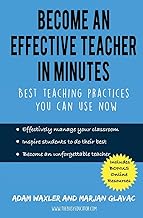
Become an Effective Teacher in Minutes: Best Teaching Practices You Can Use Now is the kind of book that earns its place in a bag rather than on a shelf. With 204 buyer reviews averaging 4.5 out of 5 stars, it has one of the strongest feedback profiles in this guide — and the title’s promise of immediately applicable strategies is one reviewers broadly confirm is kept. The book sits within the classroom management resources genre but reads more like a practical field guide than an academic text.
The format is deliberately accessible. Strategies are presented in short, self-contained sections rather than long theoretical chapters, which means you can dip in during a preparation period, find something relevant to tomorrow’s lesson, and close the book feeling like you’ve gained something actionable rather than just read more about teaching. New teachers often cite it as a useful supplement to formal training, while experienced educators find it a good source of techniques they may have encountered but not yet systematically applied.
It covers ground including behaviour management, classroom environment, instructional techniques, and building student engagement — all presented through a practitioner lens rather than a research-paper one. That said, it isn’t a deep pedagogical work, and teachers looking for evidence-based frameworks with academic grounding will want to supplement it with more rigorous texts. Think of it as a starter toolkit rather than a complete professional library.
For early-career teachers navigating their NQT or ECT year, or for experienced colleagues who feel they’ve hit a routine rut and want fresh stimulus without committing to a lengthy book, this is a genuinely practical pick. The low price point for the format also means it works well as a small department gift or personal purchase.
Best Book for Primary Classroom Ideas: 100 Ideas for Primary Teachers: Playful Learning
100 Ideas for Primary Teachers: Playful Learning is part of the well-regarded Bloomsbury 100 Ideas for Teachers series, and this instalment focuses specifically on embedding play-based approaches across the primary curriculum. With a 4.3-star rating from 15 reviewers, it’s a smaller sample than some picks here, but the feedback pattern is consistently positive and the series itself has a strong track record in UK staffrooms.
Where this book distinguishes itself from a general teaching strategies guide is in its subject-matter specificity. Play-based learning has become increasingly central to EYFS and KS1 pedagogy, but many teachers find the theory easier to absorb than the practical implementation — how do you build a genuinely playful maths lesson without it becoming chaotic? This book answers those questions with concrete, classroom-tested ideas rather than philosophical encouragement. Each idea is brief and structured, so you can scan for relevant activities without reading linearly.
It’s honest to note that the playful learning focus makes it most useful for EYFS, Reception, and lower KS1 practitioners. Upper KS2 teachers will still find ideas worth adapting, but the primary audience is clearly early years and KS1, so set expectations accordingly. Secondary teachers looking for engagement ideas would be better served by the strategy-focused book above.
For primary practitioners who feel that play-based learning is something they know they should be doing more of but aren’t quite sure how to make it work in practice alongside curriculum demands — this is the book that bridges the gap. It pairs well with the visual timer pick: structured playful activities work best when students have a clear sense of time boundaries.
Best Novelty Gift for a Colleague or End-of-Year Token: Best Teacher Ever Embosser Stamp
Not every purchase in this guide needs to be a professional development tool. The Best Teacher Ever Embosser Stamp for Icing, Fondant, Frosting, Sugar Paste, Cupcake, Cake, Cookie, Baking, Decoration occupies a very different niche: it’s a baking-themed novelty gift for a teacher who enjoys decorating cakes or biscuits, sold at a budget price point that makes it suitable for a class collection or a small token from a parent.
At 4.5 stars from 89 reviews, it has a genuine feedback base. The stamp is designed to press a “Best Teacher” motif into soft icing, fondant, or sugar paste — not to use in the classroom, but to be gifted to a teacher who’ll appreciate something a little more personal than a generic mug. It’s a thoughtful choice for parents or students who know their teacher enjoys baking, and the low price means it doesn’t require a large group contribution to be affordable.
The tradeoff is narrow utility: if the recipient doesn’t bake, this gift misses its mark entirely. It also serves a very specific decorating purpose rather than being a general-purpose kitchen tool, so treat it as a fun and targeted gift rather than a versatile one. For a teacher who does bake — especially one who makes treats for the class at Christmas or end of term — it’s likely to land warmly and get used.
One practical note: because both B097ZYH3KS and a closely related listing carry similar names and identical ratings, this section features the listing with the longer, more descriptive title as the canonical pick. Both are the same type of product at the same price; the one linked here is the better-described listing for gift-buying purposes.
What to Look For When Buying Teacher Resources
- UK academic year alignment: Planners and dated resources should map to the UK school year (typically September to August), not a calendar year or a US academic calendar. Check that term dates, half-term positions, and holiday markers match UK practice before buying.
- Layout format and lesson structure: Consider how your timetable is structured. A six-period day planner suits secondary schools; a five-lesson primary layout suits KS1 and KS2. Neither works well repurposed for the other — buy the format that matches your actual working day.
- Paper quality and durability: A planner or book used daily in a classroom needs to withstand coffee, marker bleed, and bag compression. Look for reviewer comments on paper weight and cover robustness before committing to an academic year’s worth of use.
- Immediately applicable versus long-read resources: Teaching strategy books vary enormously in format. If you want something you can browse during a free period and act on the next day, look for books with short, numbered ideas rather than extended essays. Both formats have value, but serve different needs.
- Age-group and phase specificity: A resource designed for EYFS is not automatically useful in Year 6, and vice versa. Check that the phase the resource is written for matches your classroom context — this is especially true for pedagogy books, where the strategies assume a particular developmental stage.
- Classroom versus staffroom use: Some tools (visual timers, display materials) live in the classroom and need to be robust, visible, and easy to reset. Others (planners, books) live in your bag or on your desk. Match your purchase to the physical environment it will actually inhabit.
- Gift versus functional tool: Novelty teacher gifts and classroom resources serve entirely different purposes. Buying a baking embosser stamp for yourself makes little sense; buying it for a colleague who bakes is a thoughtful gesture. Be clear about the category you’re shopping in before adding to cart.
Verdict
For most practising UK teachers reading this guide, the single purchase most likely to improve your working week immediately is the A5 ABACUS-Midnight Sky 6-Period Teacher Planner 2026-27. It’s the pick with the strongest combination of verified buyer satisfaction (180 reviews at 4.5 stars), genuine UK-curriculum alignment, and a format suited to the structured teaching day. A well-designed planner doesn’t transform teaching on its own, but it creates the organisational foundation everything else rests on — lesson intentions, homework tracking, differentiation notes, and week-by-week reflections all become easier when they have a proper home.
If you’re in a primary setting and your planning already works, pair that planner with 100 Ideas for Primary Teachers: Playful Learning for curriculum inspiration, or add the Learning Resources Visual Timer to your classroom for quieter, self-managed transitions. For a newly qualified or early-career teacher, Become an Effective Teacher in Minutes is the book most likely to pay dividends in the first two terms. And if you’re shopping for a gift rather than yourself, the baking embosser stamp is a budget-friendly, personal option for the right recipient.
This guide was produced independently. We were not paid to feature any specific product. All opinions are based on publicly available specifications, verified buyer feedback patterns, and category research.
Quick Comparison Table


FAQ
What are the most useful physical teacher resources to buy on Amazon UK?
The most consistently useful physical resources for UK teachers are a well-structured academic-year planner, a classroom visual timer, and at least one practical teaching strategy book. These three categories address planning, time management, and professional development — the areas that generate the most friction in day-to-day teaching. Novelty items like gift stamps are enjoyable but secondary to these core tools.
Which teacher planner format is better — A4 or A5?
A5 planners are more portable and easier to carry between classrooms or school sites, making them popular with secondary teachers who move around. A4 planners give more writing space per lesson, which suits primary teachers who plan longer literacy and maths blocks in detail. The best format is the one that matches how your school day is physically structured rather than a matter of personal preference alone.
Are visual classroom timers worth buying, or can I just use a phone?
A dedicated visual timer has several practical advantages over a phone: it’s always visible to the whole class rather than just you, it doesn’t trigger notifications or app distractions, and students can monitor their own time without asking you. Phone timers work in a pinch, but a purpose-built classroom timer with colour coding removes the need for verbal countdowns and reduces transition disruptions noticeably in most primary and lower-secondary settings.
What should I look for in a teaching strategy book?
Look for books with a format you’ll actually use under time pressure — short, numbered strategies you can act on within a day are more valuable than extended chapters you need to read linearly. Check that the book’s target phase (EYFS, primary, secondary) matches your context, and look for a strong buyer review count rather than just a high rating, since a four-star average from two hundred reviewers is more meaningful than five stars from three.
Is a teacher appreciation book a good end-of-year gift?
It depends on the individual teacher and the relationship. A heartfelt fill-in appreciation book can be touching when completed by a class or a parent group, but feels generic if handed over blank or mass-produced. For a more personalised feel without much extra effort, a novelty gift tied to a known hobby (like a baking stamp for a teacher who decorates cakes) often lands better than a generic appreciation volume. Consider what you know about the specific person before choosing.
Do UK teachers need different planners from those used in other countries?
Yes — UK academic-year planners should reflect the September-to-August school year, UK half-term positions, and sometimes specific curriculum frameworks such as the National Curriculum phases. Planners designed for the US academic calendar or for a January-to-December year won’t have the right date structure for a UK teacher’s working rhythm, and the lesson-structure assumptions (period length, number of lessons per day) often differ. Always confirm a planner is designed for the UK before buying.