Picture this: you’ve just settled in for a long-haul flight, pulled out your favourite wired earphones, and then stared blankly at your phone — because the headphone jack vanished three phone upgrades ago. Or maybe you’re at the gym, USB-C phone in hand, and every adapter you’ve tried either crackles, drops audio, or snaps off in the socket within a fortnight. Perhaps you’ve got a quality pair of over-ear headphones with a standard 3.5mm plug and a brand-new laptop that refuses to acknowledge their existence. The modern world has an embarrassing number of audio connection formats for such a mature technology.
The frustration is real. You shouldn’t have to spend a fortune on new headphones simply because phone manufacturers decided the headphone jack was expendable. A good adapter — whether it’s a USB-C to 3.5mm dongle, a Lightning converter, or a dual-pronged airplane adapter — solves the problem cleanly and cheaply. The trouble is that the market is flooded with options ranging from genuinely excellent to outright rubbish, and the product listings on Amazon don’t always make it easy to tell the difference. Bad adapters introduce hiss, reduce volume, or simply fail after a few weeks. The right one is practically invisible — you plug it in and forget it exists.
This guide cuts through the noise. Whether you need a certified Lightning adapter for an older iPhone, a USB-C DAC dongle that actually sounds good with your Samsung or recent iPhone, or a sturdy pair of airplane adapters to stop you paying £8 for a single-use pair at the terminal, there’s a pick here for you.
How We Evaluated These Picks
Choosing the right headphone or earphone adapter is less glamorous than picking over-ear headphones, but the criteria matter just as much. For this guide, we evaluated products across several key dimensions: build quality signals (connector reinforcement, strain relief, housing material), audio fidelity indicators (DAC chip presence for digital adapters, channel separation, signal-to-noise ratio where stated), compatibility breadth (which devices and operating systems are officially supported), certification status (Apple MFi for Lightning adapters, which directly affects reliability and longevity), and real-world reviewer feedback patterns across hundreds of verified purchases. We also weighed each product’s niche — an airplane adapter and a USB-C DAC dongle serve completely different needs, and conflating them helps no one. Finally, we considered value for money relative to the tier, not just the absolute cost. A budget pick that lasts six months is worse value than a mid-range pick that lasts three years.
Best USB-C to 3.5mm DAC Adapter for Samsung & Recent iPhones
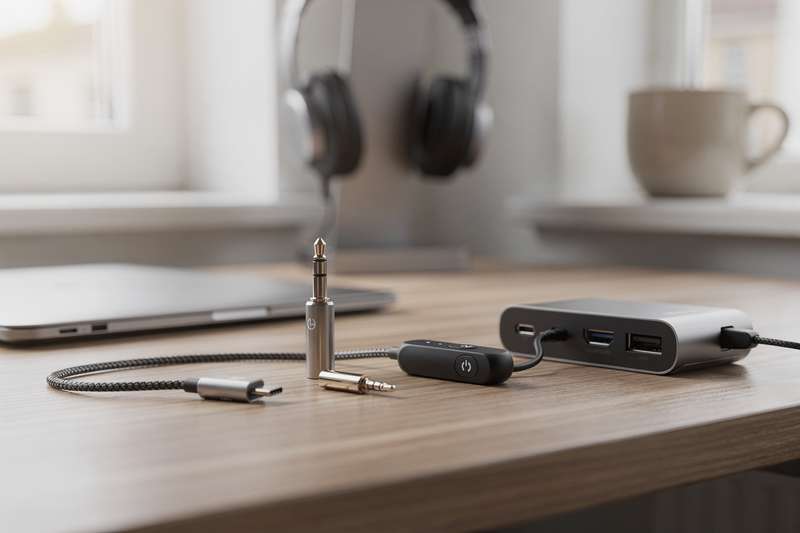
The UGREEN USB C to 3.5mm Jack Angled DAC Hi-Fi Stereo USB C to Aux Headphone Adapter is the standout pick for anyone who needs a USB-C to 3.5mm solution that genuinely prioritises audio quality over bare-minimum functionality. UGREEN is a brand with a strong track record in cable and adapter reliability, and this particular adapter backs that reputation with a built-in DAC (digital-to-analogue converter) chip rather than relying on the phone’s internal audio circuitry — which, on many Android flagships and recent iPhones, has been dramatically cut back as manufacturers prioritise thin chassis over audio components.
The angled connector design is one of the more thoughtful details here. If you’re using this on a phone in your pocket or propped on a desk, a straight connector puts lateral stress on the USB-C port every time the cable gets nudged. An angled plug distributes that force more safely, which matters for port longevity over time. It’s a small thing that separates adapters designed with real-world use in mind from those designed for a product photo.
With a rating of 4.6 out of 5 stars from 445 reviewers, the feedback pattern here is consistent: buyers report noticeably cleaner audio than the no-name adapters they replaced, solid channel separation, and no crackle or interference even when the phone is actively receiving data or notifications. The Hi-Fi stereo DAC chip means you’re getting a proper digital signal conversion rather than a passive resistor trick, which translates to better performance with higher-impedance headphones — the kind that budget adapters often struggle to drive adequately.
Compatibility is broad: it’s designed for Samsung Galaxy devices (including the S24 and S25 series), and the USB-C standard also means it works with recent iPhones (iPhone 15 onwards, which were the first iPhones to adopt USB-C), modern Android flagships, iPads with USB-C ports, and USB-C laptops where you want to use the audio jack. Do note that this will not work with older iPhones that use a Lightning connector — for those, you’ll want the dedicated Lightning adapters covered elsewhere in this guide.
The main tradeoff here is form factor. The angled connector adds a touch of bulk compared to an ultra-slim straight dongle, and if you use a very thick phone case, you may need to check clearance around the USB-C port. But for the vast majority of users, this is a non-issue. If audio quality and long-term build durability are your priorities, this adapter is the one to choose.
Best Budget USB-C to 3.5mm Adapter for Everyday Use
The USB C to 3.5mm Audio Headphone Adapter, Type C to Headphone Jack Adapter sits at the budget end of the USB-C adapter market and delivers solid performance for casual listening scenarios where you don’t need audiophile-grade DAC processing. It has earned a 4.5 out of 5 stars rating from 176 reviewers, which is a meaningful sample size at this price tier and suggests the adapter is consistent rather than a lottery of quality.
This is the kind of adapter you keep as a backup, toss in a travel bag, or give to a family member who keeps losing dongles. It’s also a reasonable first purchase if you’ve just switched to a USB-C phone and want to test whether your existing wired headphones are worth using before investing in a higher-spec adapter. The straightforward passive design works fine with standard impedance earphones and the type of headphones that come bundled with devices — it’s when you move into higher-impedance cans or studio monitor headphones that the lack of a dedicated DAC chip becomes more apparent.
Compatibility covers USB-C Android devices and iPhone 15 onwards (again, USB-C iPhones only — not Lightning). The connector quality feels adequate rather than premium, with a short cable between the USB-C plug and the 3.5mm socket that keeps the overall profile compact. Where some very cheap adapters fail is in the strain relief around the connector joins; this one appears to manage that reasonably based on reviewer feedback, with most complaints at the lower star ratings relating to compatibility edge cases rather than physical failure.
The honest tradeoff: you’re not getting a DAC chip here, so audio quality depends heavily on your phone’s internal DAC — which varies considerably by manufacturer and model. On a Samsung Galaxy S24 or S25, that’s generally fine. On some mid-range phones with weaker audio hardware, you may notice a slight flatness to the sound compared to a dedicated DAC adapter. For commuting, podcast listening, and casual music, though, most people won’t notice. If you’re using this for critical listening or with high-end headphones, step up to the UGREEN DAC pick above.
Best Lightning to 3.5mm Adapter for Older iPhones (MFi Certified, Twin Pack)
If you’re on an iPhone 14 or earlier — any iPhone with a Lightning port — you need a Lightning adapter, not a USB-C one. The Apple MFi Certified 2 Pack iPhone 3.5mm Headphone Adapter, Lightning to 3.5mm Earphone Jack Adapter Aux Audio Dongle Converter addresses this directly, and crucially, it carries Apple’s MFi (Made for iPhone) certification.
MFi certification is not just a marketing badge on Lightning accessories — it actually matters in practice. Apple’s Lightning protocol includes authentication chips, and uncertified adapters frequently stop working after iOS updates as Apple’s firmware rejects unofficial chips. If you’ve ever bought a cheap Lightning adapter that worked for a month and then produced a “this accessory may not be supported” error, that’s exactly what MFi certification prevents. This two-pack comes certified, which means the authentication chip is licensed and compliant, giving you reliable operation across iOS updates.
The two-pack format is genuinely practical. Earphone adapters are among the most commonly lost small accessories — they’re tiny, they get left in jacket pockets, they fall down the gap in car seats. Having two means you’re not immediately stranded when one goes missing, and it’s a sensible way to distribute one between a bag and a bedside table. The rating here is 3.4 out of 5 stars from 991 reviews, which warrants discussion. That’s a large review pool, and the pattern in lower-star reviews tends to cluster around two things: units lost or damaged by users (which skews rating data unfairly), and a minority of units that were DOA. The two-pack format mitigates the latter, and the MFi certification means the functional ones work as intended. This is a case where reading the verified positive reviews — which praise the certification and consistent function — tells a more nuanced story than the headline star rating alone.
For straightforward compatibility: these work with iPhone 5 through iPhone 14 (all Lightning-port iPhones), and also iPad models with Lightning ports. They do not work with USB-C devices. The audio is routed through the Lightning-to-analogue conversion Apple includes in the MFi specification, which is functionally similar to what Apple’s own first-party adapter provides. Don’t expect hi-fi magic, but do expect reliable, consistent audio output that won’t fail on you mid-commute.
Best Single Lightning to 3.5mm Adapter (Budget Single Unit)
Not everyone needs a twin pack. Sometimes you just want a single, inexpensive Lightning adapter that does the job without the higher outlay of a multipack. The Lightning to 3.5mm Headphone Jack Adapter, MFi Certified iPhone Headphone Jack Aux Adapter Dongle Audio Cable Earphone Converter fills that gap with MFi certification at a budget price point.
The MFi certification here is the same assurance as the twin pack above — licensed authentication chip, iOS update resilience, and compliance with Apple’s audio routing specification. For a single-user purchase where you’re confident about where you keep your accessories, this is a sensible choice over buying a pack of two. It’s also the kind of thing you’d buy for a specific use case: keeping one permanently attached to a pair of headphones you use with your iPhone, for example, so the adapter effectively becomes part of the cable.
Build quality on budget MFi adapters is generally adequate rather than robust. The specification describes an audio cable/dongle format rather than a rigid plug-only design, which means there’s a short flexible section between the Lightning connector and the 3.5mm socket. This offers a bit more flexibility in how headphones hang and reduces direct pull stress on the Lightning port. The tradeoff is that the cable section can develop microfractures at stress points over time if it’s repeatedly bent at sharp angles — keeping the cable in a gentle curve rather than coiled tightly will extend its life.
One important note on compatibility: this adapter, like all Lightning accessories, is only relevant for iPhones with Lightning ports (iPhone 5 through iPhone 14 and associated iPad/iPod models). If you or the intended recipient has moved to iPhone 15 or newer, those devices use USB-C and require the USB-C adapters covered elsewhere in this guide. Double-check which port your device has before purchasing — it’s the single most common cause of returns in this product category.
Best Airplane Headphone Adapter (Twin Pack with Gold Plating)
The AXFEE Airplane Flight Headphone Adapters, 2 Pack Gold Plated 3.5mm Airplane Flight Adapters for Headphones solves a specific and recurring annoyance: the dual-prong audio connector used on in-flight entertainment systems in many airlines. Most modern headphones use a standard single 3.5mm TRS plug; many aircraft seat-back entertainment systems use a proprietary dual-prong format that predates the current standard. Without an adapter, your headphones simply don’t connect, and you’re either stuck with the scratchy foam earpieces the airline provides or paying inflated airport prices for a single-use adapter.
This adapter has earned a 4.5 out of 5 stars rating from 526 reviewers — a substantial and reliable sample — and the consistent theme in positive feedback is straightforward: it works on flights across major airlines, the gold-plated contacts resist the oxidation that causes crackle and intermittent connectivity over time, and the dual-plug design handles both the mono and stereo dual-prong formats used by different aircraft systems. The two-pack format is again practical here — keep one in your travel bag and one in your carry-on, or hand one to a travel companion.
Gold plating on audio contacts isn’t audiophile marketing in this context — it serves a real purpose. The contacts on airplane armrest ports are touched repeatedly by different passengers, exposed to varying cabin humidity, and generally not maintained to a high standard. Gold’s resistance to corrosion means the adapter’s plugs maintain clean electrical contact even with degraded or slightly corroded socket surfaces. Cheaper adapters with unplated or lightly plated connectors can develop intermittent crackling after a few uses, which defeats the purpose entirely.
What this adapter is not: a digital audio solution. It’s a purely mechanical connector bridge — it splits your single 3.5mm plug into the dual-prong format. There’s no DAC, no Bluetooth, no active electronics whatsoever. That’s exactly what you want for this application; simpler means less to go wrong at 35,000 feet. It won’t help with noise cancellation, audio quality limitations of the in-flight entertainment system itself, or compatibility with USB-C or Lightning headphones. But for the specific problem of connecting standard wired headphones to aircraft audio systems, it’s the right tool.
Best USB-C to 3.5mm Adapter with Hi-Res DAC Chip (Compact Format)
The USB C to 3.5mm Jack, Type C to Headphone Adapter Aux Digital Audio Earphone Adaptor, Audio Dongle, Hi-Res DAC Chip enters the market as a compact DAC-equipped USB-C adapter aimed at users who want digital audio conversion in a minimal form factor. It currently holds a 5.0 rating, though from a very small number of reviews (just one at time of writing), so this should be treated as an early-signal product rather than a proven performer with a large feedback base.
The presence of a Hi-Res DAC chip is the headline specification, and it positions this adapter above purely passive USB-C to 3.5mm cables that simply route the signal without any digital-to-analogue conversion stage. For phones that have removed or minimised their internal DAC (which describes most recent flagship Android devices and current iPhones), a DAC in the adapter itself can meaningfully improve audio clarity, dynamic range, and volume output — particularly with wired headphones of 32 ohms impedance or above.
The compact design philosophy here is notable. Some DAC adapters are physically large and add noticeable weight or bulk to the connection point between your phone and headphones; this one appears to prioritise a slimmer profile. For commuting, gym use, or any scenario where a dangling lump of adapter is an irritant, that matters. The compatibility statement on the listing covers USB-C Android devices and recent USB-C iPhones (iPhone 15 and later). As with all USB-C audio adapters, it will not work with Lightning-port iPhones.
Given the very limited review data currently available, the honest advice is this: if you’re drawn to this adapter’s DAC spec and compact design but want more confidence before purchasing, the UGREEN DAC pick above has a much larger verified review base to draw assurance from. This adapter is worth watching as reviews accumulate — a 5-star rating with no negative feedback at all can mean a genuinely excellent product, but it can also mean an insufficient sample size. Early adopters who prioritise the compact form factor and DAC chip will likely find it performs well; more cautious buyers may prefer to wait for a larger review pool.
What to Look For When Buying a Headphone or Earphone Adapter
- Connector type compatibility: The single biggest mistake buyers make is purchasing the wrong connector type. Lightning adapters only work with Lightning-port iPhones (iPhone 14 and earlier, plus older iPads and iPod Touch). USB-C adapters work with USB-C devices: Android flagships, iPad Pros, MacBooks, and iPhone 15 and later. These formats are not interchangeable. Before buying, check which port your phone actually has.
- Passive vs. DAC-equipped adapters: Passive adapters are simple electrical bridges — they route the signal without processing it. DAC-equipped adapters include a digital-to-analogue converter chip that processes the digital audio signal from your device. For phones with strong internal DAC hardware, passive adapters are often fine. For phones with weak or absent internal DACs (increasingly common as phones get thinner), a DAC adapter improves audio quality noticeably. If sound quality matters to you, look for a listed DAC chip in the specifications.
- MFi certification for Lightning adapters: Apple’s MFi programme licences manufacturers to produce accessories with compliant authentication chips. Non-certified Lightning adapters frequently fail after iOS updates as Apple’s firmware rejects uncertified authentication chips. For any Lightning adapter, MFi certification is not optional — it’s the difference between a reliable accessory and one that stops working unpredictably.
- Build quality indicators: Look for strain relief at connector joins (the reinforced section where cable meets plug), metal or reinforced housing around the 3.5mm socket (plastic-only sockets crack), and braided or reinforced cable sections if the adapter has a cable length. Gold-plated contacts on audio connectors resist oxidation and maintain cleaner electrical contact, particularly in high-use environments like aircraft armrests.
- Purpose-specific design: Airplane adapters, DAC dongles, and simple Lightning converters are different tools for different problems. An airplane adapter does nothing for your USB-C phone; a DAC dongle is overkill for in-flight use. Match the adapter to the specific scenario you need to solve rather than looking for a single product that does everything.
- Review volume and pattern: A product with 500+ reviews at 4.3 stars is generally more reliable than one with 20 reviews at 4.9 stars. Look for large review counts and read the negative reviews for patterns — recurring mentions of the same failure mode (e.g., “stopped working after one month”, “audio only from one side”) are more meaningful than isolated complaints.
- Impedance compatibility: Most budget adapters work well with standard 16–32 ohm earphones. If you use higher-impedance headphones (above 80 ohms), a passive adapter may not provide enough drive, resulting in low volume or flat sound. DAC adapters with built-in amplification handle higher-impedance loads better.
Verdict
For most UK readers arriving at this guide, the core question is probably one of two things: you’ve switched to a USB-C phone and need a reliable daily adapter, or you’re still on a Lightning iPhone and need a certified solution that won’t fail on you.
If you’re in the USB-C camp and audio quality matters to you at all, the UGREEN USB C to 3.5mm Jack Angled DAC Hi-Fi Stereo Adapter is the pick to buy first. Its 4.6-star rating from a meaningful review base, the presence of a genuine DAC chip, and the practical angled connector design make it the most rounded choice in this guide. It handles the daily use case well, sounds noticeably better than passive alternatives with mid-range headphones, and the angled plug reduces port stress over time.
If you’re on a Lightning iPhone, go for the MFi-certified twin pack — having two certified adapters is genuinely useful and removes the stress of losing the one you have. For frequent flyers, add the AXFEE airplane adapter twin pack to your travel bag and stop paying airport prices for inferior single-use alternatives. It’s a small, one-time purchase that earns its keep on the very first flight.
We were not paid to feature any specific product in this guide. All opinions are independent and based on publicly available specifications, verified buyer feedback patterns, and category research.
Quick Comparison Table

![[Apple MFi Certified] 2 Pack iPhone 3.5mm Headphone Adapter, Lightning to 3.5mm Earphone Jack Adapter Aux Audio Dongle Converter for iPhone 14/13/12/11/11 Pro/XR/X/XS/8/7 (2 pcs)](https://m.media-amazon.com/images/I/514JC83n-DL._AC_UY218_.jpg)


![Lightning to 3.5mm Headphone Jack Adapter, [MFi Certified] iPhone Headphone Jack Aux Adapter Dongle Audio Cable Earphone Converter Compatible with iPhone 14 Pro Max/14 Pro/14/13/12/11/SE/X/XS/XR/8](https://m.media-amazon.com/images/I/61NpZbANeYL._AC_UY218_.jpg)


FAQ
Do I need a USB-C or Lightning adapter for my iPhone?
It depends on which iPhone you have. iPhone 15 and later use USB-C ports, so you need a USB-C to 3.5mm adapter. iPhone 14 and all earlier iPhones use Lightning ports and require a Lightning to 3.5mm adapter. The quickest way to check is to look at the charging port on the bottom of your device — USB-C is a symmetrical oval shape, Lightning is a smaller, slightly wider rectangular port.
Why do cheap Lightning adapters stop working after iOS updates?
Apple’s Lightning protocol includes an authentication chip requirement that iOS firmware checks. Uncertified adapters often use unlicensed or counterfeit chips that pass initial checks but fail subsequent iOS security updates. MFi (Made for iPhone) certified adapters use licensed authentication chips that Apple’s firmware continues to recognise after updates, which is why MFi certification is so important for Lightning accessories specifically.
What is a DAC adapter and do I actually need one?
A DAC (digital-to-analogue converter) adapter includes a chip that converts the digital audio signal from your phone into the analogue signal your wired headphones need. Passive adapters skip this step and rely on your phone’s internal DAC. Many modern phones have reduced or removed their internal audio hardware, so a DAC adapter can meaningfully improve audio clarity, volume, and stereo separation. If you’re using standard earbuds for casual listening, a passive adapter is usually fine. If you use higher-quality headphones or notice thin, flat sound through a passive adapter, upgrade to a DAC-equipped version.
Will a USB-C headphone adapter work with my laptop?
USB-C headphone adapters work with any device that has a USB-C port that supports audio — this includes most modern Android phones, iPad Pros, MacBooks, and many Windows laptops. However, not all USB-C ports support audio output; some USB-C ports are data or power-only. Check your laptop’s manual or manufacturer specification sheet to confirm whether its USB-C port supports audio output before purchasing an adapter for this purpose.
What type of adapter do I need for airplane in-flight entertainment systems?
Many aircraft use a dual-prong audio socket format rather than the standard single 3.5mm jack. You need a dedicated airplane headphone adapter — typically a small plug that converts a standard single 3.5mm connector into the dual-prong format. These are not the same as USB-C or Lightning adapters; they’re purely mechanical connector bridges. Look for gold-plated contacts for better reliability, and a two-pack is practical since they’re easily mislaid in travel bags.
Can I use one headphone adapter for multiple phones or devices?
A USB-C adapter will work across all your USB-C devices — Android phones, recent iPhones, tablets, and laptops — as long as those devices support USB-C audio output. A Lightning adapter only works with Apple Lightning-port devices. If your household uses a mix of Lightning iPhones and USB-C devices, you’ll need adapters from both types. Airplane adapters are device-agnostic: they bridge the 3.5mm format between your headphones and the aircraft socket, regardless of what phone you use to supply audio.