Picture this: you’re setting up a classroom shop corner, or you’re hosting a pirate-themed birthday party for a gang of eight-year-olds, or maybe you’re a new teacher who wants children to actually understand what a pound coin looks like before they ever handle real cash. You’ve scrolled through Amazon, you’ve seen listings that look identical, and you genuinely can’t tell whether you’re getting robust, realistic-looking fake money or a flimsy sheet of low-resolution printouts that’ll fall apart the moment a child picks them up. The coins look gold in the photo — are they plastic? Metal? Will they survive a lunchtime? And when it comes to novelty banknotes, are the notes actually sized like real sterling, or are they some A5 approximation that bears no resemblance to what your child will encounter at a till?
This guide is for you if you need novelty money that actually serves a purpose — whether that’s genuine educational play, party decoration, a novelty gift, or even a collector’s interest in real-world world banknotes. You’ve probably been burned before by a set that arrived looking nothing like the product photo, or discovered that “100 coins” means 100 identical plastic tokens, not a realistic mix. Let’s cut through all of that.
How We Evaluated These Picks
The novelty coins and paper money category on Amazon UK covers an enormous range of products, from teaching aids to party props to genuine collector sets. To narrow down the picks in this guide, each product was assessed against five core criteria: realism and print quality (do the notes and coins look close enough to the real thing to serve an educational purpose?), durability (will they survive repeated handling by children or multiple party uses?), set completeness (does the set include a meaningful range of denominations?), verified buyer feedback patterns (cross-referencing review sentiment, not just star ratings), and value relative to the use case. Zero-review products were included only where no reviewed alternative served that specific niche — and this is noted where relevant. Products that were clear off-topic strays or obvious duplicates of the same product line were excluded.
Best All-Round Kids’ Play Money Set
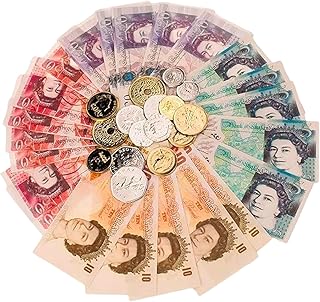
The Play Money Notes and Coins For Kids – UK Pounds Realistic Pretend Money Coins For Children is the pick most parents and teachers will reach for first, and with good reason. It consistently sits at the top of the category by review volume — nearly 900 verified buyers have weighed in, giving it 4.2 out of 5 stars — which means you have a solid body of real-world feedback to rely on rather than a handful of sponsored reviews.
This set covers both notes and coins in sterling denominations, which is important if your goal is genuine numeracy practice. Children need to see the difference between a £1 and a £2 coin, and between a £5 and a £10 note, before they can begin to understand money meaningfully. Sets that only include one denomination type — or that mix up sizes so badly they bear no resemblance to real sterling — defeat the educational purpose entirely. Buyers report that this set strikes a reasonable balance between realistic sizing and child-friendly durability.
Where it does show its budget tier: the plastic coins are noticeably lighter than real coins, and the notes, while printed on both sides, aren’t as tactile as you’d want for older learners who need to develop the feel of real currency. For reception-age and KS1 children doing a classroom shop, though, none of that matters. The set is also compact enough to store in a standard classroom tray without turning into a jumbled mess.
One practical tradeoff to know upfront: buyers occasionally note that the set arrives with denominations unevenly distributed — you might get a generous supply of 1p and 2p coins but fewer £1 and £2 coins than you’d like. If you’re running a shop role-play with more than eight children simultaneously, you may want two sets. That said, for most single-household or small-group use cases, one set is sufficient and represents strong value for money at the budget tier.
Best Budget Starter Set for Early Years
If you need the most affordable entry point for very young children — think toddlers and reception-age learners who are just beginning to understand that money exists — the Sterling Pound Play Money – Engage Kids in Educational Learning with Bank, Shop, and Role-Play Set for Literacy, Numeracy, and Pretend Play is worth considering. It has over 600 reviews at 4.1 out of 5 stars, which gives you a reasonable confidence floor even at its entry-level price point.
The framing of this set around literacy and numeracy is more than marketing — the notes and coins are sized and labelled clearly, making them suitable for structured activities where you want a child to read the value and say it aloud as part of the exercise. Early years teachers in particular mention this as a useful quality: the denomination text is large enough for a child to read independently, rather than requiring adult interpretation of tiny print.
The tradeoff is quality feel. At the budget tier, these coins have a plastic-toy quality that some buyers find unsatisfying if they’re hoping for something that mimics real coinage texture. The notes are thinner than mid-range sets. For a three-year-old playing at being a shopkeeper, this is irrelevant — for a Year 2 child doing formal money work, you might find the step up to the LORD C set (reviewed next) worth it for the sturdier feel.
It’s also worth noting that this set is marketed as a role-play bundle, so it leans more into the imaginative play context than the purely educational one. If your child’s school sends home a note asking for play money for home numeracy practice, this set will serve that purpose adequately. If you’re a teacher wanting something that holds up to a full term of classroom use across 30 children, durability might be a limiting factor — consider buying two or three sets at once.
Best for Classroom Durability
The LORD C Play Money Notes And Coins Sterling Pounds Fake Money UK Currency Toy Banknotes Teach Literacy And Numeracy Role Play Notes And Coins occupies a slightly different niche from the previous two picks. With over 300 reviews at 4.2 stars, it has a respectable feedback base, and buyers specifically call out the print quality on the notes as being a step above the cheapest alternatives — the colours are more saturated and the denomination values are clearly legible even under classroom lighting.
What distinguishes this set for classroom use is the consistency of the coin finish. Teachers in reviews mention that the coins hold up better to repeated sorting exercises — the kind where children pick up, handle, and drop coins dozens of times in a session. Cheaper alternatives tend to show scuff marks on the coin face printing after a few weeks of this treatment; the LORD C set appears to be somewhat more resistant to that.
The notes in this set cover the key sterling denominations children need to know for KS1 and KS2 maths, and the sizing is closer to actual Bank of England note proportions than some competitors. This matters more than you might think: if a child spends months practising with notes that are 20% smaller than real ones, handling real currency for the first time can feel briefly disorienting. Closer proportions mean better transfer of the skill to real-world situations.
The honest limitation here is that this is still a mid-budget product with mid-budget construction. If you need play money that will survive being left out, rained on, or used in outdoor school scenarios, no paper-note set at this price point will hold up indefinitely. Store them in a zip-lock bag or a classroom box when not in use. Also, at 309 reviews, the feedback base is smaller than the top two picks, so there’s slightly less data on long-term durability — but what exists is consistently positive.
Best for Party Decoration and Pirate Themes
The 100 Gold Coins Set for Kids Treasure Hunt, Fake Coins for Pirate Adventure Themed Event Birthday Party Props Decor Party Favor Lucky Draw Ga solves a completely different problem from the educational sets above. You’re not here to teach anyone about sterling denominations — you’re here to fill a treasure chest, scatter coins across a table for a party hunt, or stuff party bags with something that looks exciting. This set is built exactly for that use case.
With 41 reviews at 3.9 out of 5 stars, this is the lowest-rated and least-reviewed pick in this guide. That rating drop is worth understanding: buyers who expected educational play money were disappointed by the lack of denomination variety (all coins look similar) and the toy-like plastic quality. But buyers who used these exactly as intended — as treasure hunt props and party decorations — consistently rate the experience positively. The shiny gold finish photographs well for party planning content, and the quantity of 100 coins gives you enough to be genuinely generous with distribution.
The coins are lightweight plastic with a gold-tone finish. They won’t pass for real gold coins even to a young child at close range, but in the context of a treasure chest or scattered across a blanket, they create the right visual effect. They hold up to outdoor use reasonably well — unlike paper notes, they don’t wilt in light rain or become unusable if someone spills a drink on the party table.
What to avoid: don’t use these as educational play money, and don’t use them with very young toddlers who might mouth them (standard small-part caution applies). For children aged five and up in a supervised party context, they’re a straightforward prop that does exactly what it says. If you need larger quantities for a school fair or a big event, ordering multiple sets is simple — the per-coin cost stays reasonable.
Best Novelty Edible Money Treat
The Edible Paper Funny Money Sweets x10 Packs Supplied is something of an outlier in this guide — it’s the only edible pick, and it’s genuinely unlike anything else here. At 4.6 out of 5 stars from 136 reviews, it’s actually the highest-rated product in this category selection, which tells you something about how well it delivers on its specific promise.
These are old-fashioned edible paper sweet strips printed to look like novelty banknotes — a retro sweet-shop staple that many UK adults will remember from childhood. The novelty factor is the whole point: they make fun party bag fillers, unusual stocking stuffers, or a playful touch for a school fair. Buyers frequently mention using them for children’s parties, retro-themed events, and as affordable sweet gifts that feel more interesting than a standard bag of sweets.
The practical reality is that these are sweets, not play money — children will eat them rather than use them for role play, and that’s entirely the point. The edible paper is rice-paper based, with a mild sweet flavour and printed designs that look like cartoon banknotes. They’re not a realistic substitute for sterling and make no claim to be. If you’re buying these expecting numeracy teaching aids, you’re in the wrong place.
What makes them work as a novelty item is the combination of nostalgia and quantity — ten packs means you have enough to distribute widely at a party or event. The shelf life is reasonable for a confectionery product, but check the product listing for current best-before information before buying in large quantities. One genuine limitation: anyone with dietary restrictions needs to check the ingredients carefully before serving, as with any confectionery product. But for a fun, unexpected novelty that generates an immediate reaction when handed out, these deliver reliably.
Best World Banknote Collection for Hobbyists
The World Uncirculated Banknotes Collection; 32 Banknote Set all from Different Countries is the only pick in this guide aimed primarily at adult collectors and hobbyists rather than children. At 4.5 out of 5 stars from 190 reviews, it’s one of the strongest performers in the category and occupies a completely different use case from everything else here.
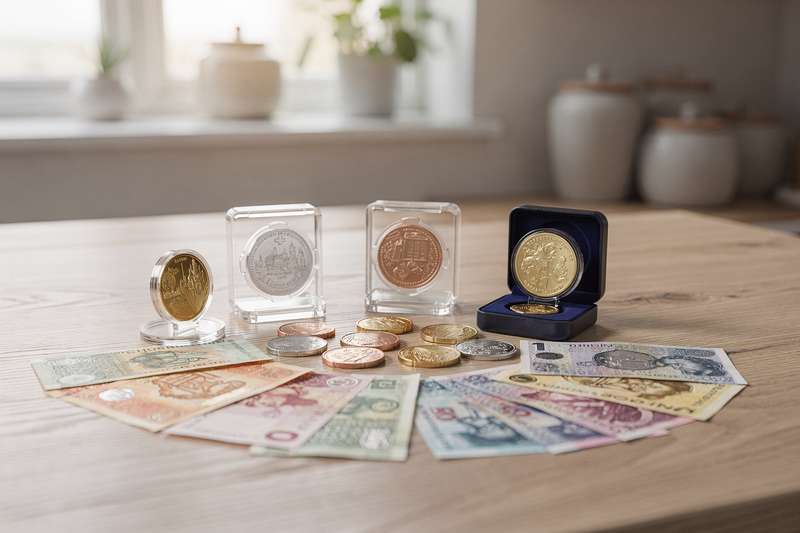
This is a set of 32 genuine uncirculated banknotes, each from a different country. These are real currency — not novelty reproductions — sourced from around the world and presented as a collector’s set. That distinction matters enormously. If you’re a geography teacher looking for authentic examples of world currency to show students, or a collector just starting out who wants a varied starting point, or someone looking for an unusual and genuinely interesting gift for a curious teenager or adult, this set delivers something that no novelty print-on-paper set can replicate.
Buyers consistently praise the variety — 32 different countries means you get a genuine range of designs, languages, and artistic styles on the notes. Uncirculated condition means the notes arrive in good, clean shape rather than the worn, crumpled state you might find with randomly sourced foreign currency. The set comes presented in a way that makes it suitable for gifting, though the packaging can vary — check recent buyer photos in the reviews for the most current presentation.
The honest tradeoff: this is a premium-tier pick relative to everything else in this guide, sitting firmly in the mid-range price band. You’re paying for real banknotes from real countries, which is a different proposition entirely from paying for a bag of plastic coins. It’s also not an educational tool in the sense that play money is — these notes aren’t sized for small hands or labelled for clarity. They’re collectibles, and they should be treated as such. Store them in a protective sleeve or folder if you’re buying them as a lasting collection rather than a one-time novelty gift.
What to Look For When Buying Novelty Coins and Paper Money
- Purpose first, everything else second. The biggest mistake buyers make in this category is buying for the wrong use case. Play money for a four-year-old’s toy shop needs different qualities from a party treasure hunt prop, which needs different qualities from a world currency collection. Define your use case before you look at any product.
- Sterling sizing and denomination accuracy. For educational play money, check that the notes are roughly proportioned to real Bank of England notes and that the set covers the full denomination range — 1p, 2p, 5p, 10p, 20p, 50p, £1, £2 coins plus £5, £10, £20, £50 notes. Sets that omit denominations create gaps in children’s numeracy understanding.
- Coin material and weight. Plastic coins are the norm at this price point, but quality varies significantly. Heavier plastic coins with a more realistic texture will survive more handling before looking scruffy. Very lightweight coins feel toy-like in a way that detracts from educational use. Read recent buyer photos rather than relying solely on product images.
- Print quality on notes. Double-sided printing matters for any educational use — children need to see both sides of a note to understand it properly. For party use, single-sided printing is often fine. Check whether the notes are printed on card stock or thin paper — card stock survives much longer in a classroom or play environment.
- Quantity and denomination distribution. A set labelled as “100 coins” might be 100 identical tokens or a realistic mix. A set labelled as “notes and coins” might be heavily weighted towards one denomination. Look for products where recent reviews comment specifically on the distribution — this is often the most useful piece of information a buyer can share.
- Safety and age appropriateness. Small plastic coins carry standard small-parts choking hazards for young children. For toddlers under three, check that notes-only sets are available, or that any coins in the set are large enough to be safe. Edible novelty money has its own ingredient and allergen considerations that need checking for each individual product.
- Use case longevity. If you’re buying for a one-off party, durability matters less than quantity and visual effect. If you’re buying for a classroom that will use the set weekly across a full academic year, durability matters enormously — and you may be better served by buying two budget sets than one slightly more expensive one, since the total quantity gives you more flexibility.
Verdict
For the modal reader of this guide — a parent, teacher, or gift-buyer looking for realistic sterling play money that will genuinely help a child understand UK currency — the Play Money Notes and Coins For Kids – UK Pounds Realistic Pretend Money Coins For Children is the clearest recommendation. It has the largest verified review base in this category, covers both notes and coins across sterling denominations, and hits the budget tier without cutting corners that matter for its core purpose.
If you’re buying for a party rather than education, the gold coin treasure set is the smarter buy — it’s designed for visual impact and survives outdoor use better than paper notes. If you’re shopping for an adult collector or an unusual gift, the world banknote collection is in a different league entirely and justifies its mid-range price. And if you want something genuinely memorable for a party bag that nobody else will have thought of, the edible paper money sweets remain an underrated option with the highest satisfaction rating of any product in this guide.
Buy to the use case, check the denomination coverage, and read recent buyer photo reviews before committing — and you’ll get exactly what you need without the usual category confusion.
We were not paid to feature any specific product in this guide. All opinions are independent and based on publicly available specifications, verified buyer feedback patterns, and category research.
Quick Comparison Table


FAQ
Is novelty play money legal to use in the UK?
Novelty and play money is entirely legal to buy and use for educational, decorative, and entertainment purposes in the UK, provided it is not represented as genuine legal tender or used in a transaction intended to defraud. Most reputable play money sets are deliberately designed to look different from real currency — different colours, different security features, different proportions — to make the distinction obvious. If in doubt, look for sets explicitly labelled as “toy” or “play” money.
What age is play money suitable for?
Most play money sets are marketed at children aged three and above, though the choking hazard from small plastic coins means close supervision is needed for any child under five. From reception age upwards (around four to five years), children can begin to understand denomination values with adult guidance. More complex money work — making change, calculating totals — typically begins in earnest during KS1, from age five to seven.
Can I use UK play money sets in a Montessori or structured numeracy programme?
You can, with some caveats. Structured numeracy programmes often have specific requirements around denomination accuracy and note sizing, and not all budget play money sets meet these precisely. Look for sets that explicitly mention curriculum alignment or that have been reviewed positively by teachers in a formal classroom context. The LORD C and the main Play Money Notes and Coins sets in this guide have both been used in school settings according to buyer reviews.
What’s the difference between novelty coins and commemorative coins?
Novelty coins are purely decorative or play items — they have no monetary value and are not issued by any mint or government authority. Commemorative coins, by contrast, are genuine legal tender issued by the Royal Mint or equivalent national institutions to mark specific events; they have a face value, though their collector value is usually higher. The products in this guide are novelty items, not commemorative coins. If you’re looking for genuine commemorative coins, search specifically on the Royal Mint’s own website.
How do I store paper play money so it lasts longer?
The biggest enemy of paper play money is moisture, which causes notes to stick together and tear, and rough folding, which causes creasing that quickly becomes tearing. Store sets flat in a sealed zip-lock bag or a shallow plastic tray with a lid. Avoid storing loose in a toy box where coins and other objects will crumple the notes. For classroom use, a dedicated money tray kept inside a cupboard when not in active use will significantly extend the life of the set.
Are world banknote collection sets genuine currency or reproductions?
Sets like the World Uncirculated Banknotes Collection reviewed in this guide contain genuine, real-world currency notes from their respective countries — not reproductions. “Uncirculated” means the notes have not been used in everyday transactions and are in clean, undamaged condition. They retain whatever face value they held in their country of origin, though in practice most are low-denomination notes not worth converting. They are not legal tender in the UK but are genuine foreign currency, which is what makes them interesting as collectibles or educational props for geography and culture lessons.