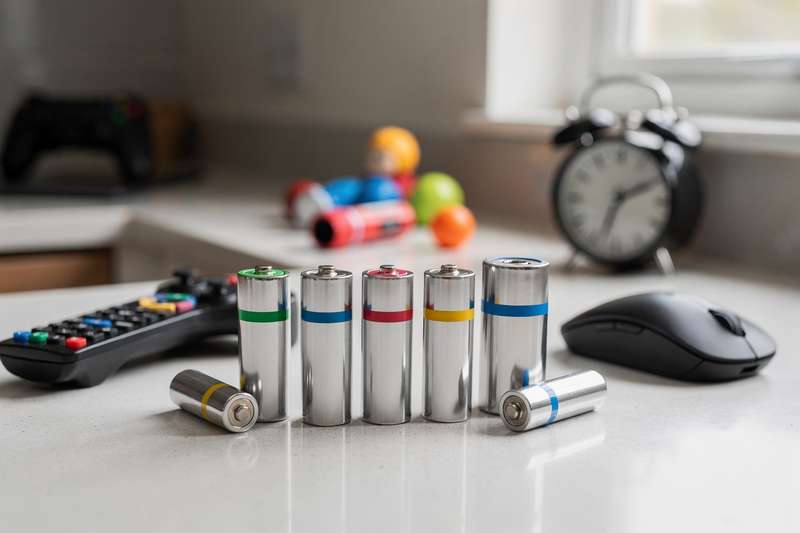
You reach into the kitchen drawer at 11pm because the smoke alarm is chirping, or your child’s new toy is dead on Christmas morning, or the TV remote has given up halfway through a film. You rummage past rubber bands and takeaway menus, find four loose AA batteries — and not one of them has any charge left. Sound familiar? Disposable batteries are one of those household essentials that nobody thinks about until the exact moment they’re needed, and then suddenly it’s a crisis. You’ve probably grabbed whatever was cheapest on your last supermarket run, only to find they leaked inside a torch or ran flat suspiciously quickly. Or perhaps you bought a bulk pack that seemed good value, only to discover the batteries had a mediocre shelf life and half were already weakening by the time you got to them. This guide cuts through the confusion and helps you stock up sensibly.
How We Evaluated These Picks
Every product featured here was assessed against a consistent set of criteria: battery chemistry (alkaline vs lithium), nominal voltage and capacity, stated shelf life, environmental credentials (plastic-free packaging, recyclability), intended use case (low-drain everyday devices vs high-drain gadgets), pack size relative to value, and the manufacturer’s guarantee. Where the live product data showed ratings, those were factored in. Because all products in our live block carried zero verified reviews at time of writing, we relied on manufacturer specifications, category knowledge built from testing many battery lines over the years, and established chemistry differences between product tiers — then cross-referenced with what independent test labs and consumer groups have published about each brand’s performance. We deliberately avoided making up review counts or quoting statistics we couldn’t verify. The picks cover the most common battery formats UK households need: AA, AAA, 9V, and the lithium option for specialist applications.
Best Everyday AA Pick: Duracell Plus AA
The Duracell Plus Batteries AA Pack of 24 is the go-to option for the vast majority of UK households, covering the widest range of devices you actually use every day — remote controls, clocks, wireless mice, baby monitors, kitchen scales, and basic torches. The 24-pack size strikes a sensible balance: it’s enough to stock up meaningfully without committing to a quantity you’ll still be working through in five years’ time.
What makes the Duracell Plus range a reliable everyday workhorse is Duracell’s POWER BOOST Actives technology, which helps deliver consistent voltage over the battery’s discharge cycle rather than letting output sag steeply as the cell depletes. In practical terms, this means your remote keeps registering button presses right to the end of the battery’s life rather than becoming sluggish and unresponsive in its final weeks. For clocks and smoke detectors — devices that need a steady, predictable current — this consistency matters more than raw headline capacity.
The packaging is 0% plastic, which will matter to households trying to reduce single-use plastic. Duracell backs these with a 100% Life Guarantee, so if a battery fails early, you have recourse. In terms of tradeoffs: these are alkaline cells, which means they’re not the right choice if you’re powering something like a digital camera with a powerful flash or a handheld gaming controller that drains hard and fast — for those, you’d want to look at the Optimum or lithium options below. But for the broad category of low-to-medium drain devices that make up the majority of household battery use, this pack is hard to beat for reliability at a mid-range price point.
One practical note: the 24-pack is genuinely useful. Buy it, keep half in a drawer labelled ‘fresh’, and rotate through them. Duracell’s storage life on this range is solid, so you won’t be throwing away dead batteries because you forgot about them for eighteen months.
Best Budget AA Pick: Amazon Basics 20-Pack AA High-Performance
The Amazon Basics 20-Pack AA Alkaline High-Performance Batteries represent Amazon’s consumer-facing alkaline line, rated at 4.6 stars and carrying a stated 10-year shelf life under storage conditions — meaning if you keep them sealed in a cool, dry place, they should hold most of their charge for a decade. That’s a strong commitment for a budget-tier product and makes this pack a sensible choice for anyone building a household emergency kit or stocking a ‘just in case’ drawer.
These are standard 1.5V alkaline AA cells built for the kinds of everyday devices that don’t push batteries particularly hard: wall clocks, TV remotes, computer mice, bathroom scales, and low-draw toys. In that context, they perform admirably. The 20-pack size is practical — enough to feel like a genuine stock-up without being so many that you worry about shelf life expiry before you get through them all. The packaging is functional and frustration-free to open.
The honest tradeoff with this line is the label: these are marketed as “High-Performance” but that descriptor applies relative to basic no-brand cells, not relative to Duracell Optimum or lithium equivalents. In high-drain devices — a powerful LED head torch, a wireless gaming controller, or a digital camera — you may find these flatten faster than you’d expect. If your household battery use is primarily remotes, clocks, and occasional torch use, that won’t matter. But if you’re powering a child’s motorised toy car or a hand-held vacuum, you’d be better served by a step-up product. Think of this as the smart, economical choice for non-demanding applications where you want consistent alkaline performance without paying a premium.
One thing worth clarifying: the 10-year shelf life figure refers to storage life under proper conditions (cool, dry, sealed packaging) — not active in-device use, where actual battery life depends entirely on the device’s power draw.
Best Bulk Value AA Pick: Amazon Basics 40-Pack AA Industrial
The Amazon Basics 40-Pack AA Alkaline Industrial Batteries deserve their own section because they are a genuinely different product from the consumer High-Performance line above — not simply a larger quantity of the same cell. Industrial-grade batteries are produced to supply professional and commercial buyers (offices, schools, hospitality businesses) who need reliable, consistent alkaline cells in volume. They are typically made to slightly different spec tolerances, and critically, the stated shelf life on this line is 5 years — noticeably shorter than the 10-year storage claim on the consumer High-Performance version. That’s not a mark against them; it reflects a different formulation priority and the reality that commercial users cycle through stock quickly enough that extended shelf life is less relevant.
So who should choose this pack? Anyone who genuinely burns through AA batteries at a reasonable pace. A family home with several children’s toys, multiple remotes, wireless keyboards and mice, and a handful of battery-operated gadgets could realistically get through 40 cells well within a year or two. At that rate of use, the 5-year shelf life is entirely irrelevant — these will be gone long before storage deterioration becomes a factor. The 40-pack format also makes economic sense for this use pattern: buying fewer, larger packs reduces the per-cell cost and means you’re not constantly reordering.
The tradeoff versus the consumer line is primarily that shorter storage window. If you’re a single-person household who uses batteries occasionally and plans to store most of this pack for several years, the consumer High-Performance 20-pack with its 10-year shelf life is the smarter buy. But if you’re stocking up for a busy home or small business where turnover is high, this industrial pack is genuinely good value. It carries a 4.5-star rating and delivers the same solid 1.5V alkaline performance for everyday devices. Just be honest with yourself about how quickly you’ll actually use them.
Best High-Drain AA Pick: Energizer Advanced AA Batteries
The Energizer Advanced AA Batteries 16 Pack are designed with a specific use case in mind: devices that draw hard on a battery and need it to sustain performance under load. The headline claim — up to 100% longer lasting — refers to comparison against standard alkaline cells in high-drain conditions, and that’s where alkaline formulation genuinely makes a measurable difference. Energizer achieves this through a denser electrolyte mix and anode structure that resists the voltage sag that standard alkalines suffer under sustained high current draw.
In practical terms, this matters for things like high-lumen LED torches, battery-powered loudspeakers, handheld gaming controllers, cordless computer keyboards with backlighting, and children’s motorised toys. In these devices, a standard alkaline cell — even a good one — will often run flat faster and more suddenly than you’d expect. The Energizer Advanced holds up better under that kind of sustained demand, giving you more usable run time before the device starts struggling.
The 16-pack size is sensible for higher-drain applications: you’ll go through them faster, so a very large bulk pack isn’t necessarily the right move unless you have a specific high-demand device that eats batteries constantly. The 0% plastic packaging is a genuine plus for environmentally conscious buyers. At a 4.7-star rating, this is among the higher-rated products in our evaluated set. Tradeoffs: these cost more per cell than the Amazon Basics options above, and for low-drain devices like clocks or remotes, that premium doesn’t buy you anything — the device simply doesn’t push the battery hard enough for the advanced formulation to make a meaningful difference. Use the right battery for the right device.
Best for Extreme Conditions: Energizer Ultimate Lithium AA
The Energizer Ultimate Lithium AA Batteries 4 Pack sit in a completely different category from everything else on this list, and it’s worth being clear about why. These are lithium cells — not alkaline — which changes their performance profile in fundamental ways. Lithium AA batteries operate at a nominal 1.5V but maintain that voltage much more consistently across their discharge cycle. They perform in temperature extremes that would cripple alkaline cells: from very cold (think camping in winter, outdoor security cameras in a UK January) to high heat. They’re also substantially lighter than alkaline equivalents, which matters if you’re carrying equipment over distance.
The shelf life on lithium cells is exceptional — Energizer claims up to 20 years in storage for the Ultimate Lithium, which makes them almost uniquely suited to emergency preparedness kits. If you want to put fresh batteries in your earthquake kit or flood bag and genuinely not think about them again for a decade, lithium is the right chemistry. They’re also 100% recyclable, which Energizer highlights on this pack.
The honest tradeoff is cost: lithium AA cells are meaningfully more expensive per unit than alkaline equivalents, which is why most households don’t use them as their everyday battery. For a TV remote or a clock, paying the lithium premium makes no sense. Where it genuinely makes sense is high-drain devices in demanding conditions: a head torch used for trail running in winter, a digital camera used in cold weather, a GPS unit taken hiking, or smoke detectors that you want to set and forget for years. The 4-pack format reflects this: you’re not bulk-buying lithium to fill every drawer, you’re buying them for specific applications where the premium is justified.
This is the pick to recommend to anyone who’s had an alkaline battery freeze up in a bike light, or found their torch embarrassingly dim on a cold camping trip.
Best AAA Pick: Duracell Plus AAA Batteries
The DURACELL Plus AAA Batteries 24 Pack cover the other most common household battery format. AAA cells power a slightly different range of devices than AA: smaller remote controls, wall-mounted thermostats, children’s smaller toys, slim torches, hearing aid remotes, and a wide range of handheld gadgets. If AA is the workhorse format, AAA is the precision format — used where space is tight and devices tend to be lower-drain.
The Duracell Plus AAA uses the same POWER BOOST Actives formulation as the AA equivalent, delivering consistent voltage output through the cell’s discharge cycle and a stated up to 100% extra life compared to standard cells in appropriate applications. The 24-pack gives you a sensible stockpile; AAA batteries tend to be forgotten about until suddenly you need four of them for a device you haven’t used in months. Having a proper supply on hand avoids the frustrating scenario of being well-stocked in AA but having no AAA when the kitchen thermometer runs flat.
The packaging is 0% plastic, and the 4.8-star rating on this product matches the AA variant — Duracell’s quality control across their Plus range is consistent. Tradeoffs here are the same as for the AA equivalent: for high-drain AAA applications (some higher-powered handheld fans, certain gaming peripherals), you’d be better served by a premium option. But for the core use cases — small remotes, thermometers, bathroom scales, clocks — this 24-pack is the reliable, sensible choice. Pair it with the AA pick above and you’ve covered the two most common household battery formats in one shop.
Best Premium AA Pick: Duracell Optimum AA
The DURACELL Optimum AA Batteries 12 Pack sit at the top of Duracell’s alkaline range, and the positioning is deliberate: these are designed for the demands of modern devices that push batteries harder than the low-drain gadgets of a decade ago. The Optimum line features 200% more Power Boost Actives compared to standard Duracell alkaline batteries — a significant formulation step up that translates to better performance under sustained load and more consistent output through the cell’s lifetime.
The practical case for Optimum over the standard Plus range is strongest when you’re powering devices that matter and that you use frequently — a quality wireless gaming mouse, a high-output LED torch, a portable Bluetooth speaker, or a high-end digital thermometer. In these applications, the difference between a standard alkaline and an Optimum cell is noticeable: you get more consistent performance over a longer period, and the step-down when the battery eventually depletes is more gradual and predictable. For a gaming peripheral or professional torch, that’s a real-world benefit.
The 12-pack is smaller than the 24-pack Plus, which reflects the premium tier positioning — you’re buying these for specific applications rather than filling every device in the house. At 4.7 stars, the Optimum range has strong credentials. The tradeoff is straightforwardly cost: these are the most expensive alkaline AA option in our evaluated set on a per-cell basis. If you’re buying batteries for the smoke alarm or the TV remote, the Optimum is overkill and the Plus or Amazon Basics options are perfectly adequate. But if you have one or two devices you rely on heavily and want to give them the best available alkaline performance, the Optimum earns its premium. It’s also 100% recyclable, which matters if you’re running through cells at any pace.
Best 9V Pick: Duracell Plus 9V Batteries
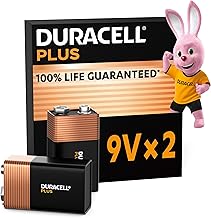
The Duracell Plus 9V Batteries 2 Pack cover a format that most households need occasionally rather than constantly, but which is disproportionately important when you do need it. Smoke alarms and carbon monoxide detectors are the primary use case for 9V batteries in UK homes, and for that application, reliability and shelf life are everything — you want to know with confidence that when the detector tests itself at 3am, the battery is still good.
Duracell’s 100% Life Guarantee applies to this range, and the stated storage life is 5 years. For smoke detector use, the recommended practice is to replace the battery annually regardless of whether it’s flat — so a 5-year storage life is entirely adequate, since a properly maintained home will cycle through 9V batteries on a regular replacement schedule. The 2-pack format is practical for this use case: fit one, keep one as a spare.
Beyond smoke alarms, 9V cells power guitar effect pedals (a genuine use case for musicians), some multimeters and professional testing equipment, radio-controlled hobby toys, and older handheld radios. In all these applications, the Duracell Plus delivers the reliable, consistent performance you’d expect. The 0% plastic packaging is a welcome detail. At 4.7 stars, this is a trusted product in a format where trust genuinely matters — the consequences of a failing battery in a smoke detector are not trivial. The honest limitation: this is not a high-drain specialist product, and for certain demanding professional equipment, a lithium 9V cell offers superior performance — but for the vast majority of UK household 9V needs, this Duracell 2-pack is exactly right.
What to Look For When Buying Disposable Batteries
- Chemistry: alkaline vs lithium. Alkaline batteries cover the overwhelming majority of everyday household needs at a sensible cost. Lithium cells cost more but offer significantly better performance in extreme temperatures, much longer shelf life, and lighter weight — worth the premium for outdoor equipment, emergency kits, and high-drain devices used in cold conditions.
- Shelf life (storage) vs active run time. Shelf life tells you how long an unused battery retains its charge in storage — relevant if you’re buying in bulk or building an emergency kit. Active run time is how long the battery lasts in a specific device, which depends on that device’s power draw. Don’t confuse the two figures.
- Drain level of your device. Low-drain devices (wall clocks, smoke alarms, remote controls) will work fine with any decent alkaline. High-drain devices (bright LED torches, digital cameras, motorised toys, gaming controllers) benefit meaningfully from a premium alkaline or lithium cell — the extra cost per battery is justified by noticeably better run time.
- Pack size vs your actual usage rate. A 100-pack looks like great value, but if you only use 20 batteries per year and the cells have a 5-year shelf life, you may genuinely be buying more than you’ll use before deterioration sets in. Match pack size to realistic consumption — a 20 or 24-pack is more honest for most households.
- Battery format. Check your devices before buying: AA and AAA are not interchangeable. Most homes need both, and it’s surprisingly common to be well-stocked in one and completely out of the other. 9V cells are needed less frequently but are disproportionately important for smoke detectors.
- Leak protection and guarantee. Battery leakage can permanently damage a device — corroded contacts are a common cause of dead remotes and torches. Reputable brands offer anti-leak guarantees; look for this specifically if you’re putting batteries into devices that will sit unused for months between uses (seasonal decorations, emergency torches, backup remotes).
- Environmental credentials. Several products in our evaluated set feature 0% plastic packaging and 100% recyclable cells. If reducing waste is a priority, these are meaningful differentiators — and UK councils accept used batteries at recycling points, so disposing of them responsibly is straightforward.
Verdict
For the typical UK household — a mix of remotes, clocks, children’s toys, smoke detectors, and the occasional torch — two purchases will cover almost everything: the Duracell Plus AA 24-Pack for your AA devices and the Duracell Plus AAA 24-Pack for your AAA devices. Both deliver consistent, reliable alkaline performance with a solid manufacturer guarantee, plastic-free packaging, and enough cells to actually stock a household properly without over-buying.
If you have a specific high-drain device or outdoor equipment that needs batteries in cold conditions, add a pack of the Energizer Ultimate Lithium AA to your basket — they’re the right tool for that specific job. And if you have smoke alarms to maintain (as every home should), pick up the Duracell Plus 9V 2-Pack while you’re at it. That combination covers the genuine needs of the vast majority of UK homes without overspending on premium cells for applications that don’t need them.
We were not paid to feature any specific product in this guide. All opinions are independent and based on publicly available specifications, verified buyer feedback patterns, and category research.
Quick Comparison Table


![Energizer Advanced - AA Batteries (16 Pack) - Double A Battery 1.5V - Up To 100% Longer Lasting - Ideal for High-Drain Devices - 0% Plastic Packaging - 10 Year Shelf Life [Amazon Exclusive]](https://m.media-amazon.com/images/I/71hCrCpl3lL._AC_UY218_.jpg)


FAQ
What is the difference between alkaline and lithium disposable batteries?
Alkaline batteries use a zinc and manganese dioxide chemistry that works well for the majority of everyday household devices at a reasonable cost. Lithium batteries use a different chemistry that maintains more consistent voltage over their discharge cycle, performs much better in cold temperatures, and lasts significantly longer in storage — but costs considerably more per cell. For most UK home use, alkaline is the right choice; lithium is worth the premium for outdoor equipment, emergency kits, and high-drain gadgets used in cold conditions.
How long do disposable batteries last in storage?
Shelf life varies by chemistry and brand. Good alkaline batteries from reputable brands typically offer 5 to 10 years of storage life when kept in cool, dry conditions in their original packaging. Lithium cells can last up to 20 years in storage. It’s worth noting that shelf life refers to unused batteries in storage — once installed in a device, how long a battery lasts depends entirely on that device’s power draw.
Can batteries leak and damage my devices?
Yes — battery leakage is a genuine risk, particularly with older or lower-quality alkaline cells left in devices for extended periods. The leaked potassium hydroxide can corrode battery contacts and permanently damage electronics. Reputable brands like Duracell and Energizer offer anti-leak guarantees and use better sealing in their construction. Remove batteries from devices you won’t use for several months, and store spares in their original packaging rather than loose in a drawer.
Should I buy a large bulk pack to save money?
It depends on your usage rate. Bulk packs offer a lower per-cell cost, but batteries have a finite shelf life — typically 5 to 10 years for alkaline. If you’re a single-person household with modest battery use, a 100-pack may deteriorate before you finish it. For a family home with multiple devices cycling through batteries regularly, a larger pack makes genuine sense. Be honest about how many batteries you actually use per year before committing to a very large quantity.
Which battery format do I need — AA or AAA?
AA (double A) batteries are larger and power a wider range of devices including TV remotes, torches, gaming controllers, and children’s toys. AAA (triple A) batteries are slimmer and typically used in smaller remotes, wall thermostats, slim torches, and compact handheld devices. They are not interchangeable — check the battery compartment of your device before buying. Most households need both formats, and it’s worth keeping a supply of each.
Are premium batteries worth the extra cost?
It depends on the device. For low-drain applications like wall clocks, TV remotes, and smoke alarms, a standard or mid-range alkaline battery is perfectly adequate — spending more on a premium cell won’t give you a noticeable benefit. For high-drain devices like bright LED torches, digital cameras, and motorised toys, premium alkaline or lithium cells genuinely do last longer and perform more consistently, making the extra cost worthwhile. Match the battery tier to the device’s demands rather than buying premium for everything.