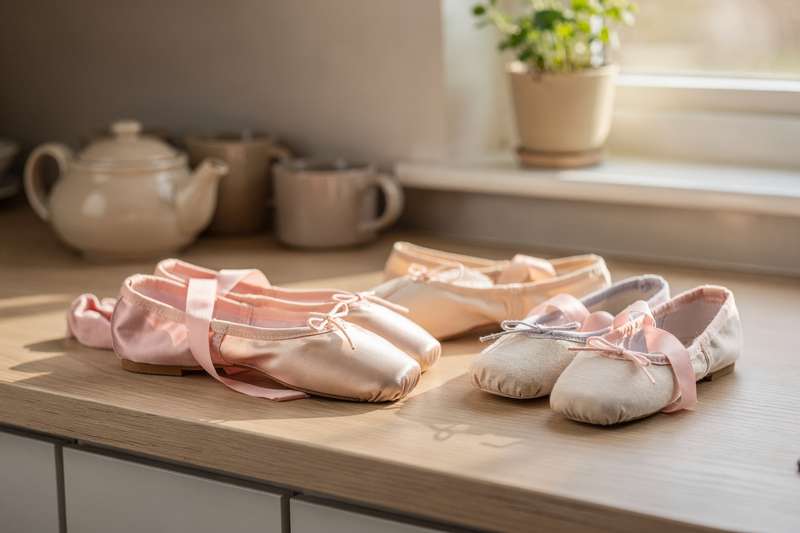
Picture this: your daughter has just been accepted into her first proper ballet class, and the teacher has sent home a note specifying leather split-sole slippers as required kit. You head to Amazon UK to find something, only to be confronted with page after page of near-identical listings — all pink, all promising flexibility, all maddeningly vague about whether they actually suit a six-year-old’s foot or a teenager returning to class. You pick one, it arrives, and either the sizing is completely off or the sole is so rigid she can barely point her foot through it.
Or perhaps you’re the adult returning to dance after years away. You did ballet as a teenager, life intervened, and now you’re joining a local adult class. You know you want something with a split sole, but you’re not sure whether canvas or leather is more forgiving on a foot accustomed to trainers and office shoes. One listing says size two sizes down; the next says true to size. It’s more confusing than it has any right to be.
This guide cuts through that confusion. It covers the key ballet footwear options currently available on Amazon UK, explains what the technical terms actually mean for your situation, and helps you avoid the most common buying mistakes — so your dancer is in the right shoe from the very first class, not after two failed returns.
How These Picks Were Evaluated
To arrive at these recommendations, each product was assessed against a consistent set of practical criteria: sole configuration (split versus full), upper material (leather, canvas, or synthetic alternatives), construction quality as described in the listing specifications, sizing reliability based on buyer feedback where available, and suitability for different age groups and experience levels. This guide focuses on soft ballet slippers — the flat-soled shoes used from beginner level through to intermediate — rather than pointe shoes, which are an entirely separate category requiring one-to-one fitting with a qualified fitter.
Where products had substantial buyer review data, close attention was paid to repeated themes in that feedback — consistent sizing complaints, sole durability patterns, and comfort reports across different foot shapes carry far more weight than a single glowing review. A small number of products in this guide have limited or no public buyer reviews at the time of writing. For those listings, the assessment draws on product specifications and established category knowledge rather than aggregated buyer experience, and those sections flag this clearly so you can weigh the information accordingly.
Best for Regular Dance Classes
The TETSUO Girls Ballet Slippers Dance Shoes are the best-evidenced option in this entire selection — 835 buyers have rated them 4.5 out of 5 stars, which in a category where most listings carry almost no public feedback is significant. That review volume suggests these are not a one-off purchase surge but are being bought consistently across different families, schools, and class terms.
The shoes are aimed at girls in regular structured ballet classes — the kind of weekly commitment where durability and consistent fit matter more than novelty. The construction is pitched at a level appropriate for recreational and beginner-to-intermediate class work rather than pre-professional or performance use. If your child attends two or three classes a week at a local dance school, that is exactly the context these slippers are designed for.
From the patterns in those hundreds of reviews, a few consistent themes emerge. Sizing is the most frequently mentioned consideration — multiple buyers note that these run slightly small, so ordering half a size to a full size up from the child’s measured foot length is a sensible precaution before committing to a single pair. This is not unusual for ballet slippers as a category (the split sole and snug upper tend to compress the foot more than a standard shoe), but it is worth acting on rather than assuming standard shoe sizes will translate directly.
The elastic strap arrangement keeps the slipper secure on the foot during class, which matters more than it might seem — a shoe that shifts during a plié sequence is a technique problem as much as a comfort one. The sole design supports the floor work typical of beginner and junior intermediate syllabi: foot articulation through demi-pointe, barre and centre exercises, and the kind of petit allegro you would encounter in most RAD or ISTD-aligned classes. The lightweight construction allows a young dancer to feel the floor beneath her, which is fundamental to developing good proprioception early on.
Where this shoe has limits: if a dancer is already working at an advanced technical level and needs a slipper that can handle intensive daily training, or if she has a particularly wide foot, a more specialised dance brand will serve her better. These are best viewed as a reliable working shoe for weekly classes — not a performance or examination slipper designed to the tolerances of a major syllabus. For the vast majority of children in recreational ballet, however, this is the pick with the most real-world evidence behind it.
The TETSUO range also includes a separate version marketed specifically for toddlers and gymnastics crossover use, with its own specifications and rating. If you are buying for a child under four or primarily for gymnastic floor work rather than structured ballet, check which listing you are on before purchasing — the two products are not identical.
Best Leather Split-Sole Slipper
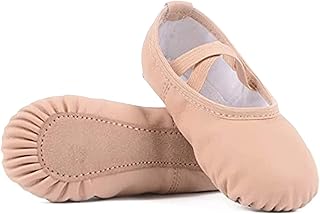
If material quality is a priority — and for many teachers and parents, it genuinely should be — the Ballet Shoes Split Sole Leather Ballet Flats Ballerina Shoes Pink Ballet Gymnatic Yoga Dance Shoes offers leather construction that canvas alternatives cannot match in several key areas. With 99 buyer ratings averaging 4.4 stars, this listing has enough real-world feedback to give you reasonable confidence in what you are getting.
Leather ballet shoes have a distinct advantage over canvas in the way they adapt to the foot over time. A canvas slipper fits well from the outset but largely stays the same shape; a leather slipper gradually conforms to the individual contours of your foot or your child’s foot, which typically makes it more comfortable and more precise-fitting after the first few sessions. This is why many dance teachers — particularly those running classes under formal syllabi — specifically request leather for examinations and performances. Leather is also more robust against the friction of sprung studio floors under sustained use.
The split sole design deserves a proper explanation if you are new to ballet footwear. The gap beneath the arch means the shoe follows the natural shape of the foot through demi-pointe and relevé rather than creating resistance at the arch. Any dancer learning to articulate through the foot — fundamental to classical technique even at beginner level — benefits from this freedom. Full sole shoes are sometimes recommended for very young beginners whose feet are still building arch strength, but for most children from around age six upwards and for adult beginners, split sole is the standard configuration.
The multi-discipline framing of this listing — covering ballet, gymnastics, and yoga — reflects genuine crossover utility. The flexibility and low-profile construction that make a good ballet slipper also suit gymnastics floor work and yoga sequences, so if your child moves between disciplines or you are an adult wanting one shoe to cover both a home practice and a dance class, this is a practical choice. The pink colour is standard for most ballet schools; if your school specifies a precise shade, check the listing’s colour description against the dress code requirements before purchasing.
The main tradeoff with leather is breathability — leather does not allow air to circulate as freely as canvas, so a warm studio on a summer evening can feel less comfortable. Leather also requires slightly more care in storage to keep its shape. But at this price tier, the durability and adaptive fit advantages of leather typically outweigh these minor inconveniences, particularly for children who get through canvas shoes quickly.
Best Budget Starting Point
The Ballet Dance Shoes Split Sole Flat Gymnastics Dancing Slippers sit at the budget end of this selection and are worth considering when you are buying a first-ever pair and are not yet certain the classes will become a long-term commitment. Be aware upfront: this listing has no public buyer reviews at the time of writing, so what follows is based on the product specifications and general category knowledge rather than verified buyer experience — factor that into your decision accordingly.
The split sole flat design covers the functional basics for beginner-level ballet and gymnastics work. Flat soles — as distinct from the hardened box of a pointe shoe — are what all beginner and intermediate dancers use, and the split sole configuration is appropriate for most structured classes from around age five or six upwards. These core features are present here, and for a dancer attending a first term of classes who simply needs a shoe that meets the minimum requirements, this addresses those needs.
Where budget ballet shoes typically struggle is in the longevity of the sole bond and the quality of the elastic. At lower price points, the sole can separate from the upper after sustained use, particularly on a sprung wooden floor where the repeated flex of footwork creates significant stress on the adhesive. Elastics at this price tier can also lose their tension over a term, leaving the shoe loose on the foot mid-class. Neither of these failures is catastrophic if you are in a first-term trial — but if the dancer continues beyond that point, stepping up to a leather split-sole or a higher-construction canvas shoe will make a noticeable difference to both comfort and longevity.
The gymnastics compatibility noted in the title is legitimately useful if your child attends a class that incorporates both disciplines, or if you are an adult looking for one shoe to cover multiple activities at home. A split-sole ballet slipper is workable for gymnastics floor routines and basic sequences, so you need not buy two separate pairs in the early stages of either discipline.
Without buyer reviews to calibrate the sizing, the safest approach is to measure the foot carefully in centimetres and match it against the size chart on the listing before purchasing. The general rule for ballet slippers is to go roughly half a size smaller than your street shoe size for a snug fit, but individual brands size their lasts differently — which is precisely why checking the chart rather than guessing saves you a return.
Best for Toddlers Through to Adults
The Ballet Shoes Leather Ballet Flats Split Sole Dance Slippers for Girls Toddlers Women take a different approach from the other picks by explicitly spanning toddler through to adult sizing — useful if you are buying for multiple people in a household, or if you want a consistent shoe style as a child progresses through age brackets without switching brands as they grow. Like the previous pick, this listing has no public buyer reviews at the time of writing, so the assessment draws on product specifications and category knowledge rather than verified buyer outcomes.
The leather upper and split sole combination mirrors the construction discussed in the leather section above, but the defining characteristic here is the breadth of the size range. For toddlers — children roughly between two and four attending creative movement sessions rather than a formal syllabus — the question of whether a split sole is appropriate is worth thinking through. Some teachers and children’s physiotherapists prefer full-sole support for very young feet still building arch strength; others are comfortable with soft, flexible split-sole slippers at this age. If your toddler’s class teacher has a preference, follow their guidance ahead of anything stated in a product description.
For older children and adult women, leather split-sole slippers are a well-established standard, and the ability to cover the full age span within a single product range simplifies repeat purchasing. If the first size is not quite right, you are already familiar with how the listing is structured and can exchange or reorder without hunting across different brands with different size charts — a real time-saver when managing a busy family schedule alongside multiple extracurricular commitments.
Leather also holds its shape in a dance bag better than canvas does. Canvas slippers can take on a distorted form if compressed carelessly between classes; leather is more forgiving of the casual treatment that most children’s kit receives between sessions. For parents managing overstuffed bags and the general chaos of the school run, this is a small but practical advantage that adds up over a full term.
The key caveat here is the same as for the previous pick: without buyer reviews, construction quality is harder to verify from a listing description alone. Leather at lower price points can vary considerably in sole bond strength and sizing consistency. Examine the shoes on arrival before the first class, check that the sole feels securely attached and the elastic finishing looks clean, and keep the return window in mind if anything looks unsatisfactory. If they arrive in good condition, the specification is sound for the intended use.
What to Look For in Ballet Shoes
With so many near-identical listings on Amazon UK, knowing which specifications actually matter will help you filter quickly and avoid a wasted return. Here are the criteria worth checking before you buy:
- Split sole versus full sole: A split sole has a gap under the arch, allowing the foot to flex freely through demi-pointe and relevé — the standard for most classes from around age six upwards and for adult beginners. A full sole provides more arch support and is sometimes used for very young beginners whose feet are still building strength. Check with your teacher if either configuration is specifically required by the school.
- Material — leather, canvas, or synthetic: Leather moulds to the foot over time, is more durable on studio floors, and is typically specified for formal examinations. Canvas is lighter, fits comfortably from the first wear with no break-in period, and costs less. Synthetic materials tend to wear out fastest under regular class conditions. For serious weekly attendance, leather is the better long-term choice; canvas suits occasional use or tight budgets.
- Sizing — always use the centimetre chart: Ballet slippers fit differently from street shoes. The general rule is to order smaller — by half a size to a full size — because the shoe should fit snugly with the toes lying flat and no bunching at the toe end. Measure the foot, use the listing’s centimetre chart, and when between sizes, go smaller rather than larger. A loose ballet shoe impedes technique far more than a firm one that softens with a few wears.
- Elastic configuration: Some shoes come with elastics pre-sewn; others ship with elastic that requires sewing one end in place after checking the fit on the foot. Pre-sewn is more convenient for most buyers. If you can sew, the adjustable option allows a more personalised fit. Check the listing description before purchasing if this detail matters to you.
- Toe box width: A narrow toe box on a wide foot causes discomfort within minutes of class. Where listings offer width options, choose accordingly. If width is not specified, look for comments from buyers with wider feet in the Q&A or review sections before committing to a pair.
- Sole material and grip level: Traditional leather or suede soles are designed to provide controlled slip — enough traction for stability, enough slide for clean pirouettes. Rubber or overly grippy synthetic soles catch on sprung wood floors and disrupt turns. For yoga or gymnastics on non-wood surfaces, a grippier sole may actually be preferable, so consider your primary activity when choosing.
- Age and level suitability: A toddler in a creative movement class, a child preparing for a Grade 3 examination, and an adult returner each need different things from a ballet shoe. Buy for where the dancer is now rather than an aspirational future stage — the shoe needs to suit today’s class, not a hypothetical next level.
Our Verdict
For most readers coming to this guide — whether you are a parent buying for a child in weekly classes or an adult stepping back into ballet after a long break — the TETSUO Girls Ballet Slippers Dance Shoes is the pick to go with. The 835 buyer ratings at 4.5 stars make it the only product in this selection with enough real-world evidence to recommend with genuine confidence. The feedback is consistent: comfortable, reliable through regular class use, and satisfying for most foot shapes when you follow the sizing note and order slightly larger than your measured size.
If your school or teacher specifically requires leather construction — for examinations, a particular syllabus, or simply because leather tends to outlast canvas under regular use — the Ballet Shoes Split Sole Leather Ballet Flats Ballerina Shoes Pink Ballet Gymnatic Yoga Dance Shoes is the next strongest option, backed by 99 ratings at 4.4 stars. The leather construction is worth considering for any dancer attending more than one class a week or working towards an examination.
The two zero-review options — the budget split-sole slippers and the age-spanning leather slipper — each fill a genuine niche, but go in knowing you are working without the safety net of buyer feedback. Order with enough lead time to return or exchange if sizing or quality does not meet expectations, and check the construction carefully when the shoes arrive.
Whatever you choose: measure the foot in centimetres, use the specific size chart on the listing, and when in any doubt, size down. A properly fitted ballet shoe makes every technical element cleaner — from the first pliés at the barre to a confident relevé — and that is worth getting right from the outset.
We were not paid to feature any specific product in this guide. All opinions are independent and based on publicly available specifications, verified buyer feedback patterns, and category research.
Quick Comparison Table



FAQ
What is the difference between a split sole and a full sole ballet shoe?
A split sole has a gap under the arch of the foot, leaving only the ball and heel areas in contact with the sole material. This allows the foot to articulate freely through demi-pointe and relevé, which is essential for developing classical technique. A full sole runs continuously from heel to toe, providing more arch support, and is sometimes recommended for very young children whose feet are still building strength. Most structured classes from around age six upwards use split sole as standard.
Should I size up or down when buying ballet slippers?
For most ballet slipper styles, you should size down relative to your regular street shoe size — typically by half a size to a full size. The slipper should fit snugly with the toes lying flat and no bunching of material at the toe end. A loose slipper shifts on the foot during class and makes technique significantly harder to execute. Always measure the foot in centimetres and cross-reference with the specific size chart on the listing, as sizing conventions vary considerably between brands.
Are leather ballet shoes better than canvas ones?
Neither is universally better — each suits different situations. Leather moulds to the foot over time, is more durable on studio floors, and is typically specified by formal examination syllabi. Canvas is lighter, requires no break-in period, and is usually more affordable. For a dancer in regular weekly classes or approaching an examination, leather is a better long-term investment. For a beginner still deciding whether ballet will become a regular commitment, canvas is a practical and cost-effective starting point.
Can ballet shoes be used for gymnastics or yoga?
Yes — ballet slippers are commonly used across ballet, gymnastics, and yoga because all three benefit from a lightweight, flexible shoe that allows unrestricted foot movement. The main practical difference is sole grip: leather or suede ballet soles are designed to slide slightly on wood floors, which suits turns but may be less suitable on gymnastics mats or yoga surfaces where grip matters more. Several listings in this guide explicitly cover all three disciplines, so check that the sole type suits your primary activity before purchasing.
At what age should children start wearing proper ballet shoes?
Children in parent-and-toddler or creative movement classes from around age two to four can often dance barefoot or in soft-soled slippers — structured ballet shoes are not always necessary at this early stage. From about age four or five, when children join more formal beginner classes, a soft ballet slipper becomes appropriate. Your child’s teacher will normally specify what is required, including whether canvas or leather and split or full sole is right for their age group.
How often do ballet shoes need to be replaced?
The main signs of wear are a sole separating from the upper, elastics that have lost their tension, or holes worn through the sole at the ball of the foot. A slipper that shifts during class is a technique problem as much as a comfort one. For children in regular weekly classes, most parents find shoes need replacing once or twice a year — driven as much by foot growth as by actual wear. Checking the fit at the start of each school term is a sensible habit.