You’ve hired your harness, chalked your hands, and you’re standing at the base of a wall that’s been humbling you for weeks. Everything feels right — except your feet. Your trainers are sliding off holds they should be gripping, or you borrowed a pair of rock shoes two sizes too small and your toes are screaming before you’ve finished the warm-up. This is the moment most new climbers realise that footwear is not a secondary concern in climbing — it’s arguably the most critical piece of kit you own.
UK climbers face a particular challenge when buying online: the sheer variety of climbing shoes on Amazon spans cheap unbranded entries, mid-range performance shoes, and established technical brands, all listed side by side with little to help you distinguish a shoe built for granite gritstone from one built for plastic gym volumes. You might have bought a pair that felt comfortable at home but turned slippery on real rock, or sized down on the advice of a forum post only to find you can’t wear them for more than a single boulder problem before your feet go numb.
This guide cuts through that noise. Whether you’re just starting out at a local climbing centre, projecting harder boulder problems, or looking for a dependable all-round shoe for sport and trad routes outdoors, there’s a pick here that suits your situation — with honest notes on where each one succeeds and where it falls short.
How We Evaluated These Picks
The products featured here were assessed against five core criteria: rubber quality and grip, sole stiffness relative to climbing style, fit and closure system, verified buyer feedback patterns from Amazon UK reviewers, and how each shoe sits within a broader understanding of what different types of climbers genuinely need. Where a shoe has strong verified review volume on Amazon UK, that data informed the final shortlist. Where review count was low or absent, greater weight was placed on the known reputation of the brand and how the shoe’s specs align with category best practices. No shoe was included simply to fill a slot — if the available evidence didn’t support a recommendation, it was dropped. The result is a set of six picks drawn from real Amazon UK listings, covering the range from true beginners to more experienced climbers seeking a reliable performance shoe.
Best All-Round Beginner Shoe
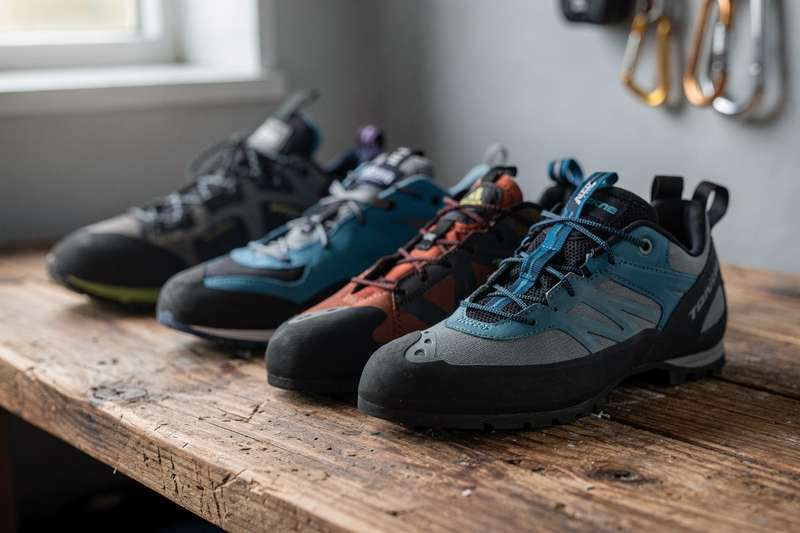
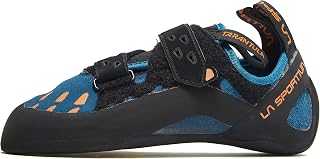
The La Sportiva Tarantula Climbing Shoes – AW26 is the shoe most climbing instructors across the UK would hand to a first-time climber and feel confident doing so. With 146 verified reviews on Amazon UK and a 4.5-star rating, it has one of the strongest credibility signals in this category at its tier. La Sportiva is an Italian brand with decades of technical climbing pedigree, and the Tarantula is their deliberate entry point — a shoe designed to be worn comfortably for extended sessions while still delivering genuine performance on beginner and intermediate routes.
The Tarantula uses a flat, symmetrical last, which means the shoe mirrors the natural shape of your foot rather than forcing it into a downturned curl. For beginners, this is essential: you’re spending your first months learning footwork technique and building strength, and a shoe that causes pain will simply stop you climbing regularly. The lace-up design gives you precise control over the fit across the entire foot, making it easier to dial in your sizing without the all-or-nothing approach of a Velcro strap. The FriXion RS rubber compound — La Sportiva’s own blend — is notably grippy on both plastic gym holds and natural rock, which is important when you’re still developing the trust in your feet that climbing requires.
In terms of stiffness, the Tarantula sits in the moderate range. It’s not a noodle-soft shoe, which is actually beneficial for beginners because a little structure underfoot helps with edging on small footholds before your feet have built the intrinsic strength to do that work alone. It won’t turn you into a slab master overnight, but it gives your technique something to work with. Reviewers on Amazon UK consistently highlight the comfort for longer sessions and the quality of the rubber, with several noting it’s the shoe that finally made them feel like they could trust their feet on the wall.
The honest tradeoff is that the Tarantula is a starting point, not a destination. Once you’re regularly climbing beyond intermediate grades — particularly if you start projecting overhung routes or dynamic bouldering problems — you’ll notice its flat profile limiting you on steep terrain. That’s not a flaw; it’s the design intent. Think of it as the shoe that teaches you to climb, and when your footwork is solid and you know what you need next, you’ll be in a far better position to choose an upgrade. For anyone stepping onto a wall for the first or second year, this remains one of the most sensible purchases available on Amazon UK.
Best Velcro Beginner Option
The La Sportiva Tarantula Boulder Climbing Shoes – AW26 takes the same trusted platform as the standard Tarantula but swaps the laces for a single Velcro strap closure — and that single change makes a meaningful difference for a specific group of climbers. With 37 reviews and a 4.0-star rating, it has a smaller but credible review base. The target user here is someone who primarily boulders at an indoor wall and wants the convenience of slipping shoes on and off between attempts without fiddling with laces.
Bouldering sessions at a climbing gym involve a lot of repetition: put on shoes, try the problem, take shoes off at the top, walk back to the start, repeat. Laces introduce friction into that cycle in a way that becomes genuinely annoying after the twentieth attempt on a stubborn V3. The Velcro strap on this shoe solves that cleanly. The fit is still built on the same flat, beginner-friendly last as the standard Tarantula, so you’re not sacrificing comfort to get the convenience — you’re just accessing it differently.
Where the Tarantula Boulder Velcro differs more meaningfully from the lace version is in the toe box and rubber placement, which have been tuned slightly more towards the short, powerful movements of bouldering rather than the sustained footwork of roped routes. This doesn’t mean you can’t use it outdoors or on a rope — plenty of people do — but its sweet spot is the indoor bouldering wall. If you’re someone who primarily top-ropes or lead climbs at a gym or outdoors, the lace-up Tarantula gives you more precise fit adjustment and is arguably the better choice for that context.
The honest tradeoff with any single-strap Velcro shoe is that the fit can’t be micro-adjusted the way laces allow. If you have a notably narrow or wide foot, you may find the single strap leaves a gap or pinches in a way that laces would resolve. Worth trying in a shop if you can, but if you’re buying online and your foot shape is fairly standard, the Amazon UK reviews suggest most people find the fit acceptable. A solid, practical choice for the gym-focused beginner or casual boulderer.
Best for Progression into Bouldering
The La Sportiva Boulder Tarantula, Men’s Climbing Shoes represents the most performance-oriented of the three Tarantula variants available on Amazon UK, rated 4.4 stars from 57 reviews. While it shares family DNA with the other Tarantula entries, this version is clearly positioned for climbers who have moved past pure beginner grades and are starting to work on more demanding boulder problems — the kind that require a bit more from your footwear in terms of rubber sensitivity and toe precision.
What distinguishes this shoe from its siblings is the rubber coverage and the way the toe is shaped to engage more deliberately with small features on the wall. If you’ve been climbing for six months to a year and you’re starting to feel like your current shoes are holding you back on technical footholds, this is the kind of upgrade that makes sense without the steep learning curve of a fully aggressive downturned performance shoe. You get noticeably improved feel underfoot compared to a standard flat beginner shoe, while still maintaining enough structure that your feet won’t be exhausted after a single session.
The tradeoff here — and it’s worth being direct about this — is that the three Tarantula variants are relatively close together in performance terms. The real-world difference between this and the standard Tarantula lace is meaningful but not dramatic. If you’re a genuine beginner, start with the standard Tarantula. If you’ve been climbing regularly for a year and your footwork is developing well, this version gives you a natural next step without the commitment of a fully aggressive shoe like a downturned single-strap performance model. It’s best thought of as a mid-progression shoe — serious enough to grow into, approachable enough not to punish you for still being on the learning curve.
Amazon UK reviewers note the quality of build and rubber performance as consistent highlights. A few mention that sizing runs a touch small compared to street shoes, which is typical for technical climbing footwear — most climbers size down slightly from their regular shoe size, and this model is no different. If in doubt, check the brand’s sizing guidance and read the Q&A section on the Amazon listing before ordering.
Best Budget Performance Pick
The Climb X Rave Strap Climbing Shoe 2018 is the standout value pick in this lineup, and the numbers support it: 984 reviews on Amazon UK with a 4.3-star rating is the kind of review volume that filters out flukes and reveals a genuinely useful product. Climb X is a US-based brand that has built a following among budget-conscious climbers who don’t want to sacrifice rubber quality for affordability, and the Rave Strap delivers on that promise in a usable, honest way.
The shoe uses a strap closure for quick on-and-off, which suits gym sessions and bouldering well. The fit is relatively straightforward — not as technical or precise as the La Sportiva options above, but comfortable for extended wear and accessible for climbers who are still figuring out what they need from a climbing shoe. The rubber performs well on plastic gym holds and is serviceable on natural rock, making this a practical choice if you’re doing most of your climbing at an indoor wall but occasionally venture outdoors for a day on the crag.
Where the Rave Strap shows its budget positioning most clearly is in the level of technical feedback from the sole. Performance shoes give you a direct, almost unmediated connection to whatever your foot is standing on — you can feel the edge of a hold, sense whether your heel hook is loaded correctly, detect the difference between secure rubber contact and a developing slip. The Rave Strap’s slightly thicker, less sensitive sole dampens that feedback somewhat. For beginners and early intermediates, this is barely noticeable and may even be comfortable. For climbers who have developed a refined sense of footwork, it becomes a limitation on technical terrain.
That said, nearly a thousand Amazon UK reviewers have found this shoe worth recommending, and the consensus is clear: for the price point, it punches above its weight. If you’re buying your first pair of climbing shoes and aren’t sure whether you’ll stick with the sport, or if you’re buying a pair for a friend or family member to try climbing without investing in a premium option upfront, this is a sensible, low-risk choice. It won’t leave anyone feeling short-changed on their first wall session.
Best for Intermediate Climbers Wanting More Performance
The ziitop Climbing Shoes Mens Rock Climbing Shoes with Dual Hook-and-Loop Straps takes a different approach from the La Sportiva and Climb X options by focusing on a dual-strap system that gives more adjustability than a single Velcro closure. Rated 4.2 stars from 26 reviews, it’s a smaller sample size than the Climb X, but the feedback pattern suggests a shoe that rewards climbers who take the time to dial in the fit across both straps and who are looking for something more adjustable than a single-band closure.
The dual hook-and-loop system means you can independently tension the front and back of the shoe, which provides a closer approximation to lace-style fit customisation without the time commitment of lacing up. For climbers with foot shapes that don’t fit neatly into the average last — slightly broader in the forefoot but narrower at the heel, for example — this kind of adjustability can make a real difference in how the shoe performs across a session. A shoe that fits well halfway through is one you’ll actually wear to the end of a session rather than kicking off after three attempts.
The tradeoff is that dual-strap designs add a small amount of weight and closure complexity compared to single-strap or slip-on models. On a bouldering wall where you’re constantly on and off, this can feel slightly laborious if you’re used to a quicker single-strap system. The shoe also sits at a mid-range price point — not as affordable as the Climb X, and not as technically refined as the La Sportiva options — which puts it in a slightly competitive position in the market. Where it earns its place is specifically for climbers who value fit flexibility above all else and haven’t found a comfortable single-strap or lace shoe that works for their foot shape.
Amazon UK reviewers highlight comfort and the adjustability of the closure system as the main positives. A few note that the rubber, while adequate, doesn’t match the top-tier performance compounds from La Sportiva’s own range. That’s a fair observation — this is a practical, comfortable shoe rather than a technically elite one, and it should be evaluated on those terms.
Best Entry-Level Gym Shoe on a Tight Budget
The Bouldering Shoes, Men’s Climbing Shoes, Climbing Shoes Bouldering, Symmetrical Sole, Grip, Lightweight Non-Slip, Quick On/Off, Fit Adjustability is the most accessible price point in this roundup and is aimed squarely at someone who wants to try climbing without committing to any significant spend. With only 2 reviews and a 5.0-star rating, the review base is too small to draw firm conclusions from buyer feedback alone, so this pick comes with the strongest caveat of the group — buy it with realistic expectations, not with the confidence you’d apply to a product with hundreds of reviews.
The design emphasis on quick on/off convenience, lightweight construction, and a symmetrical sole suggests a gym-oriented shoe built for casual use. The symmetrical sole in particular is a beginner-friendly feature — it doesn’t force your foot into any particular position and simply asks you to stand on it and grip. For someone attending their first few sessions at a climbing centre and wanting to avoid hiring shoes repeatedly, this makes a practical entry point.
What you should not expect from a shoe at this tier is the rubber compound quality or the construction precision of established brands. The grip will be adequate on large holds and straightforward terrain, but on small edges or sloping features that require rubber to load and deform in a controlled way, the performance gap between a budget unbranded shoe and a brand like La Sportiva or Climb X becomes noticeable. This is not a shoe to grow into — it’s a shoe to try the sport in, and then replace once you know you want to continue climbing regularly.
If you’re buying for a child or teenager just starting out, or for an adult who wants to attend one or two climbing sessions without the investment of a name-brand shoe, this fills that gap acceptably. Treat it as a gateway rather than a foundation, and you’ll get value from it. Expect it to perform like a mid-range technical shoe and you’ll be disappointed.
What to Look For When Buying Climbing Footwear
- Rubber compound and thickness: This is the single most important performance variable in a climbing shoe. Softer, stickier rubber grips better on rock features but wears faster. Stiffer rubber lasts longer and supports your foot on edges but gives less tactile feedback. For beginners, prioritise stickiness over stiffness — grip builds confidence. Brands like La Sportiva use proprietary rubber compounds that are genuinely superior to generic alternatives, and this difference is tangible on real rock.
- Sole profile — flat vs downturned: Flat soles are comfortable, forgiving, and appropriate for beginners, slab climbing, and crack climbing. Downturned (or cambered) soles concentrate power into the toe for steep, overhung routes and aggressive bouldering but are uncomfortable to wear for extended periods. Match the profile to your climbing style — don’t buy an aggressive downturned shoe because it looks impressive if you’re spending most of your time on vertical or slabby routes.
- Closure system — lace, Velcro, or slip-on: Laces offer the best fit precision and are preferred for crack climbing (Velcro buckles can catch on rock). Single Velcro straps are fastest on and off, ideal for bouldering sessions with many attempts. Dual Velcro straps split the difference between fit adjustability and convenience. Slip-on elastic shoes suit very experienced climbers with refined foot technique. For beginners, lace or single Velcro are the most practical starting points.
- Sizing: Climbing shoes are typically worn tighter than street shoes to maximise contact between your foot and the sole. However, extreme downsizing is mainly for advanced climbers in performance shoes — beginners should prioritise a snug but pain-free fit. Your toes should be gently curled or flat against the end of the shoe without folding uncomfortably. A shoe that causes sharp pain within minutes of putting it on will not perform well because you won’t wear it properly.
- Upper material — leather vs synthetic: Leather stretches over time, conforming to your foot shape and becoming more comfortable with use. Unlined leather can stretch significantly (up to a full size), so size down accordingly. Synthetic uppers don’t stretch much, so what you try on is broadly what you get throughout the shoe’s life. For online purchases where you can’t try before you buy, synthetic uppers are slightly more predictable in terms of fit consistency.
- Review volume and recency: On Amazon UK specifically, treat any product with fewer than 20 reviews cautiously — a handful of reviews can be unrepresentative. Products with 100+ reviews and ratings above 4.0 have been through enough real-world use to give you a reliable signal. Look for reviews that mention specific use cases (gym, outdoor, beginner, experienced) that match your own situation.
- Intended use context: A shoe built for indoor gym use on plastic holds may perform differently on natural rock. If you plan to climb outdoors on sandstone, limestone, or gritstone as well as at the gym, prioritise rubber quality and ensure the sole profile suits both environments. Not all budget gym shoes translate well to real rock, particularly on technical footwork moves.
Verdict
For the majority of UK climbers reading this — whether you’re attending your first sessions at a local climbing centre or you’ve been at it for six months and want a proper pair of your own shoes — the La Sportiva Tarantula Climbing Shoes – AW26 is the clearest recommendation. It has the most credible review base in this roundup, a rubber compound that genuinely outperforms what you’ll find at the same price from unbranded alternatives, and a flat profile that teaches you technique rather than compensating for its absence. The lace-up closure gives you the fit precision that matters when you’re still working out how a climbing shoe should feel on your foot.
If you primarily boulder indoors and want a quick-release shoe for gym sessions specifically, the Tarantula Boulder Velcro version suits that workflow better. If budget is genuinely tight, the Climb X Rave Strap is a well-reviewed, practical alternative with close to a thousand Amazon UK reviews behind it. And if you’re at the very start with minimal commitment to the sport, the budget entry-level option gets you onto the wall without significant spend — just don’t expect it to last or perform like the established brand options above it.
Whatever you choose, the most important thing is to get on the wall. Footwear makes a difference, but technique and time on the rock make a bigger one. Buy something that fits, doesn’t cause pain, and grips reliably — then go climbing.
We were not paid to feature any specific product in this guide. All opinions are independent and based on publicly available specifications, verified buyer feedback patterns, and category research.
Quick Comparison Table




FAQ
How tight should climbing shoes be for a beginner?
For beginners, climbing shoes should fit snugly with no dead space inside, but they should not cause sharp or persistent pain. Your toes should lie flat or very gently curved against the front of the shoe — not buckled or folded. Extreme downsizing is an advanced technique for performance shoes, not something beginners need to do. A comfortable, secure fit will teach you better footwork than an agonising tight fit.
Can I use climbing shoes outdoors if I bought them for the gym?
Many climbing shoes marketed for gym use will also work outdoors on real rock, but the quality of the rubber compound makes a significant difference. Shoes with high-quality sticky rubber from established brands tend to grip natural rock surfaces well. Very cheap, unbranded gym shoes may lack the rubber compound quality to perform reliably on outdoor rock, particularly on technical or sloping features. If you plan to climb outdoors regularly, it’s worth investing in a shoe from a recognised climbing brand.
How long do climbing shoes last before they need resoling?
This depends heavily on climbing frequency and style. Casual climbers using shoes once a week might get two to three years before the rubber wears significantly. Frequent climbers projecting hard problems may wear through the toe rubber within six to twelve months. Most quality climbing shoes can be resoled by a specialist cobbler, which is considerably cheaper than buying new and gives the shoe a second life once the rubber wears thin.
What’s the difference between bouldering shoes and sport climbing shoes?
Bouldering shoes tend to have a more downturned (aggressive) profile, softer rubber for sensitivity on dynamic moves, and Velcro or elastic closures for quick on-and-off convenience. Sport and trad climbing shoes are often flatter and stiffer, prioritising comfort on long pitches and precision on vertical edging. Many beginner and intermediate shoes are versatile enough to work across both disciplines, and it’s only at more advanced levels that specialisation becomes meaningful.
Do I need different shoes for indoor and outdoor climbing?
Not necessarily, especially when you’re starting out. A quality all-round shoe like the La Sportiva Tarantula performs well in both environments. As you progress, some climbers choose to have two pairs — a comfortable shoe for longer outdoor routes and a more aggressive shoe for indoor bouldering sessions — but this is a refinement for experienced climbers, not a requirement for beginners or intermediates.
How do I know what size to order when buying climbing shoes online?
Most climbing shoe brands publish their own sizing guides, and it’s worth cross-referencing your street shoe size with the specific brand’s chart rather than assuming a direct conversion. Reading the Q&A and review sections on Amazon UK listings is particularly useful — other buyers often comment on whether a shoe runs large, small, or true to size. If you’re between sizes, leather-upper shoes will stretch with wear, so erring slightly smaller is often fine; synthetic-upper shoes stretch much less, so sizing true or half a size down is safer.