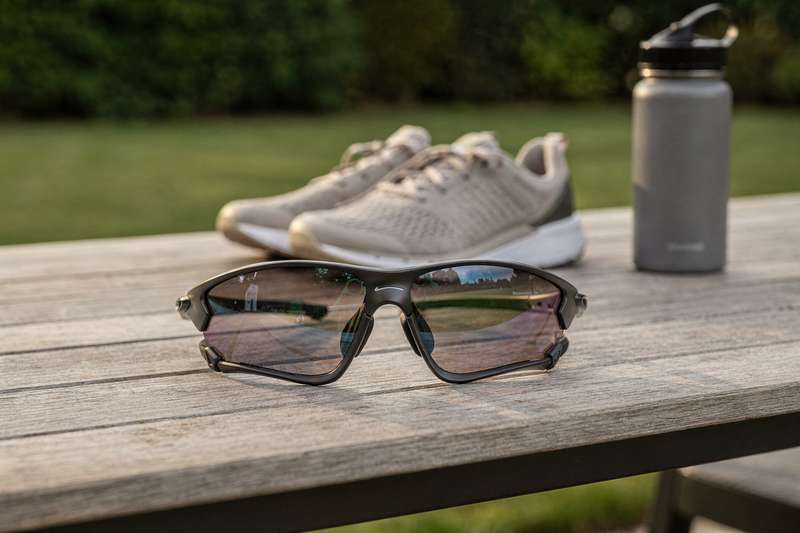
You’ve blocked off an hour for a run, the summer sky is actually delivering for once, and you step outside with sunglasses on. By the first kilometre, you’re already nudging them back up your nose — they’ve started to slip. By the second, the sun catches the wet pavement at a low angle and the glare turns everything into a squinting contest. You try to push your shades up higher and realise they’re just resting on your face rather than gripping it. Sound familiar? If you’ve been using everyday fashion glasses for sport, these frustrations are routine rather than rare.
The problem is that active use demands things from eyewear that street wear was never built for. Vigorous movement means bouncing and sliding. Sweat changes the grip equation entirely. Wind at cycling speed punishes frames that leave the sides of your face exposed. And UV protection claims vary wildly — “UV protection” printed on a lens sticker tells you very little about whether those lenses are doing anything meaningful for your eye health over hours of outdoor exposure.
This guide focuses on sports sunglasses available on Amazon UK across a range of budgets, formats, and use cases. Whether you’re training for your first 10K, commuting by bike, or spending long days on the water, there’s a practical, honest pick below for your situation.
How These Picks Were Selected
Each recommendation was assessed against the criteria that genuinely matter for active use: UV400 certification, which specifies a 400nm cut-off for both UVA and UVB rather than vague “UV protection” wording; lens material quality for optical clarity and impact resistance; frame material and flexibility — particularly whether TR90 thermoplastic or metal alloy is used; anti-slip features at the nose and temples; frame geometry and peripheral coverage; and weight, since even a moderately heavy frame becomes noticeable after extended wear.
Where products had substantial buyer review histories, real-world feedback patterns on fit stability, anti-fog performance, and durability were cross-referenced. Several products in this guide currently have no buyer reviews on Amazon UK — each one is clearly flagged in its section. For those, the recommendation is based on listed specifications and construction materials rather than aggregated buyer experience. If established review data matters to your buying decision, look for that flagging and weigh it accordingly.
Best All-Round Sports Sunglasses
The ZILLERATE Polarised Sports Sunglasses for Men & Women aim to cover the widest possible range of outdoor activity in a single frame — driving, cycling, golf, fishing, running, sailing, and skiing are all listed in the specification. That breadth of claimed versatility is worth scrutinising, but it also reflects the design approach: a true wrap-around frame with UV400 polarised lenses built to perform across conditions rather than excel at just one discipline. Be aware that this product has no buyer reviews on Amazon UK at the time of writing, so this pick is based on specification rather than community feedback.
The wrap-around geometry is the foundational feature here. Unlike a standard frame that sits flat across the bridge of your nose with arms extending straight back, a wrap-around design curves the lens around the sides of your face. That curve cuts peripheral glare from the edges, blocks wind when you’re moving at speed, and keeps debris out of your field of view — all things that become very apparent once you’re cycling into a headwind or running along a busy road. For anyone who rotates across activities and doesn’t want to own separate pairs, this kind of design flexibility makes practical sense.
Polarisation is the other key feature for an all-round outdoor pair. Polarised lenses filter out horizontally polarised light — the type that bounces aggressively off roads, water surfaces, car bonnets, and wet grass. The visual fatigue that builds over a long run or bike ride in bright conditions is substantially reduced when polarisation is working properly. Combined with UV400 coverage (blocking both UVA and UVB wavelengths up to 400nm), you’re getting genuine eye protection rather than just darkened glass.
Where all-rounder designs make trade-offs: a dedicated cycling pair might include better ventilation channels to prevent fogging at high output; a dedicated running pair might have more aggressive silicone temple grip. The ZILLERATE covers general-purpose use well but likely won’t outperform a specialist pair in its specific domain. The listing emphasises lightweight construction, which matters for comfort across longer sessions — frames that feel fine for twenty minutes often start creating pressure at the nose and temples after an hour of sustained activity.
This is the right pick for someone who participates in several different activities and wants one capable pair rather than building a collection. The absence of buyer reviews is the main caveat — there’s no community track record yet to confirm whether the grip materials hold up after a summer of use, or how the lenses perform in direct sun versus the variable light typical of UK outdoor sport.
Best Budget Pick
The LINVO Polarised Sports Sunglasses Mens Womens Wraparound Shades UV400 is the most buyer-validated pick in this guide at its price tier, carrying a 4.1/5 rating from 688 Amazon UK reviewers. For a budget sports pair, 688 reviews is a meaningful sample that surfaces real performance patterns — you’re not relying purely on marketing specification here.
The wraparound design ticks the right box for eye coverage, and the adjustable nose pads are a feature that often gets overlooked at this price point. Nose pad adjustability matters more than it might seem: a frame that sits slightly too high or too low means lenses end up not quite in front of your eyes, which creates peripheral coverage gaps and a tendency to look over rather than through the glasses after a few kilometres. Being able to position the bridge correctly for your face shape means the lenses actually do what they’re supposed to do throughout your session.
The feedback pattern from 688 reviews suggests that the glare reduction performs well relative to the price, and the lightweight frame doesn’t create the kind of temple pressure that heavier budget options can produce. At this price tier, the core risk is always lens quality — specifically, whether optical distortion toward the edges of the field of view is noticeable. The 4.1/5 across a large sample suggests the optics are functional, though a comparison to pricier pairs with premium lens materials will be evident under very bright or rapidly changing light conditions.
One practical note: budget sports sunglasses sometimes use softer lens coatings that scratch more easily than the harder coatings on premium pairs. If you plan to toss these into a bag without a case, expect surface marks over time. The LINVO listing mentions durable frame construction, but lens coating longevity is a separate question that the review pool can answer more accurately than any spec sheet.
For a first pair of sports sunglasses, or a reliable backup you keep in a kit bag, the LINVO is the sensible starting point. It covers the essentials — UV400, polarisation, wraparound fit, adjustable nose pads — with more real-world performance evidence behind it than any other option at this price point in this guide. If you’ve never tried wraparound sports eyewear before, starting here before investing more is a sound approach.
Best Lightweight Metal Frame
The ATTCL 25g Polarised Sunglasses Mens Sports UV400 Protection AL-MG Metal takes a different construction approach to most picks in this guide, using an aluminium-magnesium (AL-MG) alloy frame rather than the TR90 plastic that dominates the category. The 25g weight stated in the product name signals the design priority: minimal mass while retaining the structural advantages of metal. There are currently no buyer reviews on Amazon UK for this product, so this assessment draws on its listed specifications and construction materials.
The case for a metal frame in sports eyewear isn’t immediately obvious, since TR90 has become the benchmark in performance glasses. The difference tends to show up in long-term shape retention: TR90 is flexible enough to bend without breaking, while AL-MG alloy holds its geometry more rigidly over time. A TR90 frame that has been compressed in a bag repeatedly might develop a slight looseness at the hinges that a metal frame resists. For people who treat their sunglasses hard in everyday use but don’t expose them to severe impact, the stiffer metal construction holds its fit adjustment better across months of wear.
At 25 grams, this pair sits at the lighter end of what metal frames can achieve. Many standard fashion sunglasses run between 25–35g, and while dedicated TR90 sport pairs often come in lighter still, the ATTCL’s weight is not prohibitive for most activities. The rectangular lens shape is also notably different from the aggressive wraparound silhouettes elsewhere in this guide — it’s a cleaner, more understated look that transitions well from activity to everyday use without announcing itself as sport equipment.
The HD TAC lenses deliver polarisation and scratch resistance — the latter being particularly practical for a metal-frame pair, since the construction approach tends to accompany rougher handling. TAC (triacetate cellulose) is a common mid-range lens material that balances optical quality with light weight and good polarisation film adhesion. Anti-glare performance and scratch resistance are both listed, which matters if the frame is going into a pocket or bag without a dedicated case.
Choose this pair if you want a lightweight metal frame aesthetic, prefer a more understated look than the sport-forward designs elsewhere in this guide, or do lower-intensity activities where frame flexibility under hard impact is less of a priority. The zero-review status is the significant caveat — there’s no buyer community yet confirming how the nose pad adjustment holds up or whether the temples stay comfortable under sustained sweaty use.
Best for Cycling & Trail Use
The RIVBOS Polarized Sports Sunglasses UV400 for Cycling Fishing Driving RB832 is built around a TR90 frame — the thermoplastic widely adopted in performance cycling eyewear for its combination of very low weight, flex-memory behaviour (it returns to shape after bending rather than taking a permanent set), and resistance to both cold and heat. For anyone cycling in the UK through seasonal temperature swings, a frame that doesn’t become brittle in February or distort in a hot car in July is a practical requirement. Note that there are currently no buyer reviews on Amazon UK for this product, so the case for it rests on its construction specifications.
The TR90 frame makes particular sense for cyclists who deal with vibrations from road or trail surfaces. A stiffer frame transmits those vibrations more directly to the nose and temple contact points; TR90’s inherent flex absorbs some of that. Combined with the polarised UV400 lenses, the optical experience while moving should reduce the micro-adjustments of eye strain that come from unmanaged road glare — important when you need concentration on the surface ahead rather than on visual noise at the margins.
The activity trio in the product name — cycling, fishing, driving — connects neatly around the relevance of polarisation to all three: road glare for cycling and driving, water surface glare for fishing. If you cycle to work on weekday mornings and fish at weekends, a polarised pair that serves both without compromising either is a practical single purchase. The UV400 certification covers extended outdoor exposure in all three contexts.
Helmet compatibility is worth thinking through for cyclists. Bulkier or thicker-armed frames can create pressure points where helmet straps cross the temples — something more noticeable on longer rides or with tighter-fitting helmets. Lightweight TR90 construction typically correlates with slimmer temple arms that sit more comfortably under helmet strapping, though this varies by specific frame geometry.
With no buyer reviews to draw on, the LINVO elsewhere in this guide is the safer bet if community-backed validation matters to you. But if you’re comfortable buying on specification and the TR90 plus polarised UV400 combination for cycling or trail use appeals, the RIVBOS has the right material approach for the job.
Best for Running
The PUKCLAR Polarised Sports Sunglasses for Men and Women, UV400 CAT.3 is positioned specifically around all-day wear comfort and reduced frame pressure — the two things that distinguish a running-optimised design from a generic sports pair. The TR90 frame and the CAT.3 lens designation are both worth understanding before buying. Note upfront that this product currently has no buyer reviews on Amazon UK, so this recommendation draws on specifications and materials rather than aggregated performance data.
Running makes specific demands on eyewear that other activities don’t quite replicate. The vertical head movement involved — more pronounced than the relatively stable position when cycling — means glasses that aren’t properly anchored to your face will bounce. Even a modest bounce becomes deeply irritating over distance, and the visual interruption of frames that aren’t sitting steadily affects your ability to read the ground ahead and spot uneven surface in time. Anti-slip grip at the nose bridge and temples is therefore non-negotiable for running, and the PUKCLAR’s emphasis on reduced wear pressure addresses this directly.
The CAT.3 lens designation tells you about the tinting level. Lens categories range from CAT.0 (near-clear, for very low light) to CAT.4 (extreme darkness for high-altitude conditions). CAT.3 is the standard for bright outdoor sports and suits the majority of UK summer running conditions — direct sun, open coastal paths, exposed moorland. It’s worth noting that CAT.4 is not legal for driving in the UK, which CAT.3 avoids. If you run in the early morning or through autumn, you might find CAT.3 darker than ideal — CAT.2 suits mixed-light runners better, but that’s a different product category.
TR90 construction is the right material choice for running because it flexes slightly with facial movement and performs consistently across a temperature range. Runners who start early morning when temperatures are low and finish when the day has warmed up benefit from a frame that doesn’t stiffen in the cold or lose its grip as you heat up. Cheaper plastic frames can behave inconsistently across that range in ways TR90 avoids.
For runners specifically, this is the pick with the right design thinking — TR90, CAT.3 polarisation, UV400 coverage, reduced pressure framing. The zero-review caveat applies here as it does to the ZILLERATE and RIVBOS picks, so checking the returns policy before buying is sensible if you want reassurance about real-world grip performance in genuinely sweaty conditions.
Best for Driving
The Polarised Sunglasses Mens Womens UV Protection Pilot Metal Frame is the most refined, everyday-wearable option in this guide — it’s not an aggressive wraparound sport design, but a classic pilot-shaped frame built around polarised UV protection for driving and general outdoor use. With 780 buyer reviews at 4.4/5, it’s the highest-reviewed product here, giving you a solid foundation of real-world experience to draw on.
The pilot frame shape — characterised by gently oversized lenses with a relatively straight upper edge and a softly curved lower edge — offers more eye coverage than its refined appearance suggests. For driving, this silhouette is particularly effective: the lens geometry covers the lower field of vision where dashboard reflections and road glare tend to concentrate, without the tunnel-vision effect that very aggressive wraparound designs can produce inside a car interior. Drivers will also appreciate that a pilot frame looks at home off the car — at a café table, on a walk, or at the school gates — which is a real practical consideration if you want a single pair that transitions across daily contexts.
The 780 reviews at 4.4/5 suggest the HD TAC polarised lenses deliver on their glare-reduction claim in real conditions. Road glare from wet surfaces, oncoming vehicles, and low autumn sun angles is the main adversary for driving visibility, and polarisation is the most effective single lens technology for managing it. The metal frame adds some weight compared to the lightest TR90 options, but the listing’s emphasis on ultralight frame construction indicates the alloy keeps this at a manageable level for most wearers.
One well-documented characteristic of polarised driving glasses worth knowing about: polarised lenses can cause certain digital displays to appear dark or partially invisible depending on the screen’s orientation relative to the lens polarisation angle. This is a general property of polarised lenses, not specific to this product, but if your car has a large digital instrument cluster or landscape-oriented sat-nav, it’s worth testing before committing to these for daily driving use.
For frequent drivers wanting UV-protective, glare-cutting eyewear with the most community backing in this guide, this is the clear choice. It’s less suited to vigorous sport where frame grip under movement is critical, but for driving, moderate-pace cycling commutes, and general outdoor leisure, the pilot frame performs well above its price tier based on the review evidence available.
Best Value Multi-Pack
The 3Pcs Wrap Around Sport Sunglasses, UV400 Sun Glasses approaches value differently from every other pick here — instead of one well-built pair, you get three pairs in the same purchase. With 92 reviews at 4.1/5, there’s a reasonable body of buyer feedback behind the format. The use case for this pack is distinct enough from a single-pair purchase that it warrants thinking through carefully before ordering.
The wraparound design is present across all three pairs — this isn’t a fashion multi-pack with a coincidentally sporty name. UV400 coverage is listed, providing baseline eye protection across all three. The futuristic oval styling in the listing suggests a forward-facing sport aesthetic rather than a classic or lifestyle look, which suits active outdoor use better than a driving or office context. If the pack includes pairs with different lens tints, you gain the added flexibility of picking one for bright overhead sun and another for flatter light conditions — a practical benefit that a single fixed-tint pair can’t offer.
The practical argument for a multi-pack is straightforward. If you run or cycle regularly, a backup pair in your kit bag means you’re never caught without eye protection because your main pair is broken, lost, or in the wrong bag. For households where several people do different activities, a three-pack removes the negotiation over sharing. For beach holidays or environments where a nicer pair might get scratched, dropped in salt water, or sat on, having low-stakes replacements available makes sense without regret.
The honest limitation is that manufacturing cost per pair at this price tier is considerably lower than a single dedicated sport pair. Lens clarity at the edges, anti-slip grip material quality, and long-term frame durability will all fall short of what you’d get from the LINVO or PUKCLAR individually. The 4.1/5 across 92 reviews suggests buyers are broadly satisfied with what they get, but the comparison should be calibrated: these are functional UV400 pairs, not performance eyewear designed to hold up through sustained athletic use across months.
This pack makes most sense as a secondary purchase — alongside a better main pair — or as an entry point for buyers new to the wraparound sports format. If you already know you like the form factor and want to invest in a single well-built pair, any of the dedicated single-pair picks above will serve you better in the long run.
What to Look For in Sports Sunglasses
- UV400 certification vs. vague “UV protection”: UV400 specifies that lenses block all wavelengths up to 400 nanometres, covering both UVA and UVB rays. Listings that say “UV protection” without specifying UV400 may or may not reach this standard. Always look for UV400 stated explicitly — not just a tinted lens with a sticker.
- Lens category (CAT.0–CAT.4): CAT.3 is the standard for bright outdoor sport and suits most UK summer running, cycling, and hiking conditions. CAT.2 is better for variable or overcast light. CAT.4 is for extreme environments such as high-altitude skiing and is not permitted for driving in the UK. Knowing the category helps match the pair to your typical conditions.
- Polarisation: Polarised lenses cut reflective glare from flat surfaces — roads, water, car bonnets, wet grass — and significantly reduce visual fatigue during long sessions outdoors. The trade-off is that polarised lenses can make some digital displays appear dark or distorted at certain angles. For road sport and water activities, the glare reduction is almost always worth it.
- Frame material — TR90 vs. metal vs. standard plastic: TR90 thermoplastic is the practical choice for vigorous activity — light, flexible, and stable across a wide temperature range. AL-MG alloy is stiffer, holds its shape well over time, and suits driving and lower-intensity use. Standard plastic can be brittle and heavy; avoid it in dedicated sport pairs where durability under movement matters.
- Anti-slip contact points: Rubber or silicone nose pads and temple tips make a significant difference once you start sweating. Smooth hard plastic contact points slide. If the listing doesn’t mention grip material or rubber nose pads, assume the fit will be less secure during high-output activity — and test accordingly if you can.
- Frame geometry and peripheral coverage: Wrap-around frames block peripheral light and wind from the sides of your face. Semi-wrap or conventional flat designs look sleeker but leave gaps at the edges. For cycling, running into wind, and skiing, more coverage pays off. For driving and casual leisure, standard coverage is usually adequate.
- Lens material: Polycarbonate is the benchmark for impact resistance and is used in both premium sports pairs and safety eyewear. TAC (triacetate cellulose) is lighter and handles polarisation film well, making it the common choice in mid-range sports sunglasses. Avoid acrylic lenses in anything you plan to use seriously — they scratch more easily and offer lower optical clarity under bright conditions.
Verdict
For most UK readers looking for a reliable everyday sports pair, the LINVO Polarised Sports Sunglasses Mens Womens Wraparound Shades UV400 is the most straightforward recommendation. It covers the core requirements — UV400, polarisation, wraparound frame geometry, adjustable nose pads — has the most substantial verified buyer feedback in this guide at 688 reviews and 4.1/5, and sits at a price point where the risk of trying them is low. The adjustable nose pads give you a degree of fit personalisation that most budget pairs skip entirely, which matters when you’re using them across a range of distances and intensities.
If you drive frequently and want something that handles the commute, the leisure walk, and the weekend ride without looking like you arrived from a race briefing, the Polarised Sunglasses Mens Womens UV Protection Pilot Metal Frame deserves attention — 780 reviews at 4.4/5 gives it the strongest community backing of anything in this guide, and the pilot aesthetic transitions across daily contexts without effort.
Runners and cyclists who want the right material approach — TR90 frame, UV400, polarised CAT.3 tinting — should look at the PUKCLAR and RIVBOS picks respectively, accepting that both currently lack buyer review history. And if you simply want to try the wraparound format before committing to a single quality pair, the three-pack covers that ground at the lowest possible outlay.
We were not paid to feature any specific product in this guide. All opinions are independent and based on publicly available specifications, verified buyer feedback patterns, and category research.
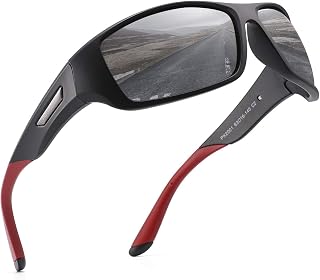
Quick Comparison Table




FAQ
What is the difference between UV400 and polarised lenses?
UV400 refers to the level of ultraviolet protection — lenses with this rating block all light wavelengths up to 400 nanometres, covering both UVA and UVB rays. Polarisation is a separate feature that reduces reflected glare from flat horizontal surfaces such as roads, water, and car bonnets. A lens can carry UV400 without being polarised, and vice versa. For outdoor sport, you ideally want both: UV400 for long-term eye health protection and polarisation for improved visual clarity and reduced fatigue during extended sessions in bright conditions.
Are polarised sunglasses legal for driving in the UK?
Yes, polarised sunglasses are legal for driving in the UK and are generally beneficial, as they reduce glare from wet road surfaces and low sun angles considerably. The caveat is that polarised lenses can make certain digital displays — including some in-car sat-nav screens and digital instrument clusters — appear partially dark or distorted depending on the screen orientation relative to the lens. It is worth testing with your specific vehicle’s displays before relying on a polarised pair for daily driving use.
What lens category should I choose for outdoor sports?
CAT.3 is the standard choice for most outdoor sports in bright sunlight and suits the majority of UK summer running, cycling, and hiking conditions. CAT.2 is better suited to variable or overcast light — useful for early morning or autumn sessions where brightness fluctuates significantly. CAT.4 is reserved for extreme environments such as high-altitude skiing and is not permitted for driving in the UK. Most sports sunglasses sold on Amazon UK for general outdoor use default to CAT.3.
Is TR90 or metal better for sports sunglasses frames?
TR90 thermoplastic is generally the better choice for vigorous physical activity. It is very light, has flex memory that helps it return to shape after bending, and performs consistently across a wide temperature range from winter cold to summer heat. Metal alloy frames are stiffer, hold their precise shape well over time, and suit lower-intensity activities and driving. For trail running, cycling, and high-output sport, TR90 is the practical recommendation; metal suits those who prefer a more refined aesthetic for less demanding conditions.
Can I wear sports sunglasses if I need prescription lenses?
Most standard sports sunglasses are not designed to fit over prescription glasses. If you need vision correction while active, the realistic options are custom prescription sports lenses (expensive but the best performance solution), frames that accept clip-in prescription inserts, or contact lenses worn with standard sports sunglasses. A few larger wrap-around designs can physically accommodate smaller prescription frames, but fit is rarely comfortable for extended sessions and optical alignment is unreliable without a dedicated OTG (over-the-glasses) design.
How do I stop sports sunglasses from fogging up during exercise?
Fogging occurs when warm, humid air from your face meets a cooler lens surface. Frames with ventilation — small cutouts or channels around the lens perimeter — help significantly by allowing airflow to carry moisture away before it condenses on the lens. Keeping lenses clean and free from skin oils also reduces fogging noticeably. Anti-fog coatings are available on some higher-priced models; for budget pairs without this feature, a separate anti-fog spray designed for sports eyewear works well on most lens types and is widely available.