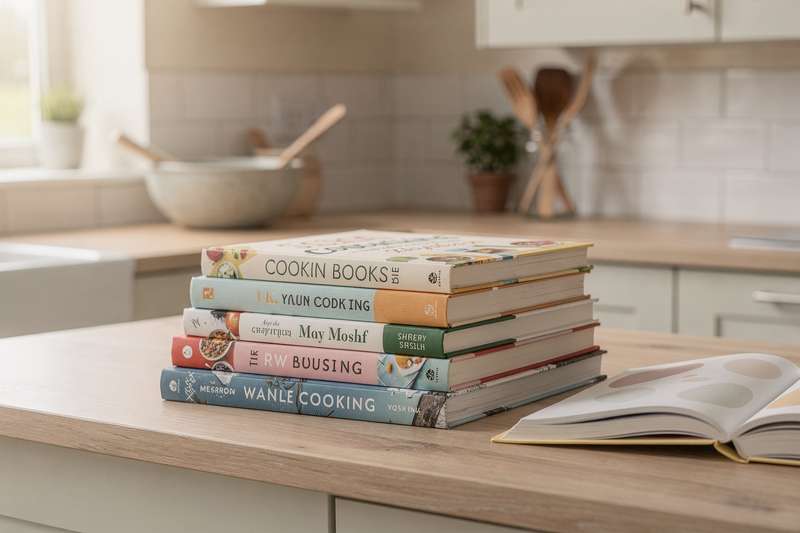
You know that feeling when you’ve cooked the same rotation of dinners for the third week running and even the dog looks bored? You’ve mastered spaghetti bolognese, your stir-fry is reliable but predictable, and Sunday roast is about as adventurous as it gets. You start watching cooking videos online, buy ingredients on impulse, and then stand in the kitchen with a courgette and absolutely no idea what to do with it. What you actually need isn’t another YouTube rabbit hole — it’s a proper book that fits how you cook, written for the way you actually live. Whether you want to get more out of your air fryer, learn the fundamentals of baking from scratch, throw a genuinely impressive BBQ, or cook your way through classics from France to South Africa, there is a book on Amazon UK right now that will make a real difference in your kitchen. The trouble is knowing which one is worth buying. That’s what this guide is for.
How We Chose These Picks
Every book in this guide was evaluated against a consistent set of criteria: clarity of instruction (are recipes written for a real home cook or a professional kitchen?), range of dishes (does the book give you enough variety to stay interested?), production quality (photos, layout, and whether the binding survives heavy use), and reader feedback patterns drawn from Amazon UK reviewers. We also looked at subject-matter depth — a book that does one thing brilliantly often beats a book that covers everything shallowly. Ratings and review volumes were factored in where meaningful: a book with 200+ reviews and a 4.6 rating tells you something different from a book with seven reviews and a perfect 5.0. Finally, we considered the audience fit — who each book is genuinely written for, so you can match your own experience level and interests to the right pick.
Best for BBQ Enthusiasts: BBQ: Easy Grilling, Big Flavour
BBQ: Easy Grilling, Big Flavour is the book to reach for if you want to move beyond charred sausages and burnt chicken thighs. It holds a 4.6-star rating from over 200 Amazon UK reviewers, which for a cookery book is genuinely strong — that many readers agreeing on quality is a reliable signal. The premise is straightforward: big, confident flavours without requiring you to spend three days on a marinade or invest in specialist equipment you’ll use once.
The recipes are structured accessibly, covering everything from quick weeknight grilling to longer, low-and-slow cooks for weekends when you have more time. You’ll find guidance on cuts of meat, how heat and smoke behave differently on gas versus charcoal, and flavour combinations that go well beyond the standard supermarket BBQ sauce. Vegetable and plant-based options are included properly — not as an afterthought, but as genuine recipes worth cooking.
Where it performs well is in bridging the gap between beginner and intermediate. If you already know your way around a grill but feel stuck repeating the same three recipes every summer, this book gives you genuine new territory to explore. If you’re a complete newcomer, the accessible tone means you won’t feel talked down to or lost in jargon.
The tradeoff is that if you’re already an experienced competition-level pit master, you may find the recipes land more in the accessible-rather-than-advanced range. And as a grilling-focused book, it’s inherently seasonal in the UK — you’ll get more value from it between April and September than through winter. That said, for the overwhelming majority of UK home cooks who want to make their BBQs genuinely good rather than just passable, this is the book to have on your shelf.
Best for British Classics: Traditional British Cooking
Traditional British Cooking earns its place here for one simple reason: it does exactly what it promises, and it does it reliably. With 235 reviews and a 4.4-star average on Amazon UK, this is one of the better-reviewed books in its specific niche, and the feedback patterns are consistent — readers praise the clarity of recipes and the breadth of coverage across genuinely traditional British dishes.
If you’ve ever tried to recreate your grandmother’s steak and kidney pudding from memory, or wanted a proper recipe for Lancashire hotpot that doesn’t involve a packet mix, this is where you turn. The book covers the full range of British cooking from soups and starters through main courses to puddings, with recipes that respect the original rather than modernising them into something unrecognisable.
The production quality matters here too. This is a book that tends to get used, not just displayed — the layout is practical and the instructions are written in clear, unambiguous steps. You won’t find yourself stopping mid-recipe to decode what a technique actually means in practice.
It’s worth being honest about the limitations: if you’re looking for contemporary British cooking — the kind that draws on immigrant food traditions and modern ingredient availability — this isn’t that book. It sits firmly in the traditional camp, and the recipes reflect that. Some dishes also call for ingredients that require a good butcher or specialist shop rather than a supermarket sweep. But for anyone who wants to get proper, honest British cooking right — whether that’s a first-time attempt at toad-in-the-hole or finally nailing a suet pastry — this delivers.
Best for International Home Cooking: The Best Recipes in the World
The Best Recipes in the World: More Than 1,000 International Dishes to Cook at Home is the book for the home cook who gets restless with a single cuisine and wants the freedom to cook across borders. It carries a 4.5-star rating from 171 Amazon UK reviewers — a healthy combination of volume and quality that suggests the content holds up in real kitchens, not just in editorial write-ups.
More than 1,000 recipes is a genuine number, and with international scope it means you’re getting real coverage: dishes from Asia, the Americas, Europe, the Middle East, and Africa all appear here, with context that helps you understand not just what to cook but why these dishes are made the way they are. That cultural grounding makes recipes stick in a way that bare ingredient lists don’t.
The practical reality of a book this size is that depth is variable. Some regional cuisines get more thorough treatment than others, and not every recipe will be written with the same level of detail. For dishes in cuisines you’re less familiar with, you may occasionally want to supplement with additional research on specific techniques. That’s a reasonable tradeoff for what is essentially a comprehensive starting point for global cooking at home.
Where this book genuinely excels is in breaking the rotation trap. If you’ve been cooking the same meals on repeat, working through different sections of this book gives you a structured way to expand your repertoire without committing to a specialist book on every individual cuisine. It’s best used as an exploration tool rather than a deep-dive reference — cook something from a region you’ve never tried, see what appeals, then go deeper if you want to. For curious home cooks who want variety as much as technique, there’s real value here.
Best for Baking From Scratch: The Best Ever Baking Book
The Best Ever Baking Book: How to Bake Delicious Things to Eat (DK’s Best Ever Cook Books) comes from DK, a publisher with a genuine track record for well-structured, visually clear reference books. This one carries a 4.7-star rating — the highest in this selection — which tells you that the people who’ve bought and used it are satisfied with what they got.
Baking is a discipline where instruction quality matters more than in most other cooking. Getting the ratio of butter to flour wrong by a meaningful amount doesn’t produce a slightly inferior result — it produces something inedible. A baking book that explains the why behind each step, not just the what, will teach you transferable skills rather than just giving you recipes to follow blindly. This book takes that approach seriously, walking through techniques with the kind of clarity that helps you understand what’s happening in the oven rather than just crossing your fingers and hoping.
The range of recipes covers bread, cakes, biscuits, tarts, pastry, and more — enough variety to keep a keen baker occupied across different projects without the book feeling padded. The DK visual approach means the step-by-step photography is genuinely useful rather than decorative, which helps particularly for techniques like shaping dough or lining a tin correctly.
The limitation to note is that this sits firmly in the foundational-to-intermediate range. If you’re already comfortable with enriched doughs, tempering chocolate, or laminated pastry, you’ll likely find the ceiling here relatively quickly. But if you’ve ever produced flat scones, sunken cakes, or bread that could double as masonry, and you want to understand why and fix it, this book gives you the tools to do that properly.
Best for Air Fryer Owners: The Complete Air Fryer Cooking Guide
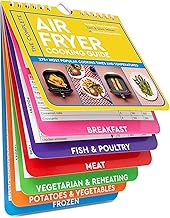
The Complete Air Fryer Cooking Guide: 275+ Most Popular Cooking Times and Temperatures — The Sunday Times Bestseller addresses one of the most common frustrations air fryer owners have: the machine came with a basic guide and you’ve been guessing at temperatures ever since. The Sunday Times Bestseller status is a meaningful indicator of reach, and the 4.5-star rating reflects a book that earns its credibility through practical usefulness rather than just good cover design.
The core value here is the reference format. More than 275 cooking times and temperatures for different ingredients and dishes means you have a reliable starting point for almost anything you want to cook in an air fryer, rather than having to extrapolate from oven instructions and hope for the best. For anyone who has pulled out an air fryer chicken breast that’s simultaneously dry on the outside and underdone in the middle, having accurate baseline timings is genuinely useful.
Beyond the reference tables, the book includes recipes that take proper advantage of what an air fryer does well — crispy textures, fast cooking, and lower oil use — rather than just adapting oven recipes with a blanket temperature reduction. That distinction matters: an air fryer isn’t just a small oven, and the best results come from recipes designed with the appliance’s specific characteristics in mind.
Where the book has natural limits is in the depth of any individual recipe. A guide covering 275+ dishes across that many categories will necessarily trade some depth for breadth. If you want to truly master one specific area of air fryer cooking — say, baking in it, or cooking whole fish — you may eventually want something more focused. But as the book that turns your air fryer from a novelty into a daily-use appliance, this does the job reliably.
Best for French Cooking: Best of French Cooking
Best of French Cooking, The is a more focused pick that rewards a specific kind of reader. It holds a perfect 5.0-star rating on Amazon UK, though with a smaller review pool — the rating is notable, but treat it as an indicator of quality for a niche audience rather than a signal of mass-market appeal.
French cooking has a reputation for being technically demanding, and while that reputation isn’t entirely undeserved, a well-written book on the subject can demystify techniques that seem intimidating and show you why they produce results that simpler methods don’t. Classic preparations — sauces, braises, roasts, tarts — are the kinds of dishes that genuinely improve your cooking across the board, because French technique underpins so much of Western cooking more broadly.
If you’ve wanted to properly understand how a beurre blanc works, why a daube tastes different from an ordinary stew, or how to produce a tarte Tatin that actually caramelises correctly rather than turning soggy, a focused French cooking book gives you that grounding. The dishes here are the kind that impress dinner guests without being theatrical — they work because the method is sound, not because of exotic ingredients or elaborate presentation.
The honest caveat is that the smaller reviewer base means there’s less collective feedback to draw on compared to some of the other picks in this guide. It’s also worth knowing that classic French cooking can require ingredients and equipment — a proper saucepan, a thermometer, sometimes specialist cuts of meat — that push this into more committed territory. If you’re looking for casual weeknight cooking, this isn’t the right fit. But if you want to genuinely understand and cook French food properly, this is a worthwhile starting point.
Best for South African Food: The Best of Cooking in South Africa
The Best of Cooking in South Africa is the pick for home cooks who want to explore a cuisine that’s underrepresented on British bookshelves — and for good reason. South African cooking draws on a genuinely diverse set of culinary traditions: Malay-influenced Cape Malay cooking, Afrikaner braai culture, Zulu and Xhosa food traditions, and the Portuguese and Indian influences that shaped coastal cooking in KwaZulu-Natal. The result is a cuisine that’s far more varied and interesting than the limited UK exposure to it might suggest.
The 4.2-star rating from 17 reviewers is a smaller sample size than the other picks here, but the feedback is consistent: readers who bought it for genuine practical use found it delivered. For a book covering a cuisine that doesn’t have much competition on UK Amazon, that consistency matters.
Practically, you’ll find recipes here that are manageable with UK supermarket ingredients supplemented by occasional trips to a specialist food shop. Dishes like bobotie, boerewors, malva pudding, and sosaties are genuine home cooking in South Africa — they’re not restaurant-only preparations, and the recipes reflect that. The braai culture section will resonate particularly with anyone who enjoyed the BBQ book above and wants to explore how a different food culture approaches live-fire cooking.
The tradeoff is that some ingredients — particular spice blends, specific cuts of lamb, certain dried fruit preparations — may require sourcing effort in the UK that other books don’t. And with a smaller review base, there’s less community knowledge to draw on if you hit a question the book doesn’t answer directly. But for a home cook who genuinely wants to cook something different — not just a different pasta shape or a new way with chicken — this book opens up territory that most UK cookery shelves completely ignore. That’s worth something.
Best General Cooking Reference: Best of Cooking
Best of Cooking occupies a different niche from the more specialised books in this guide. It holds a perfect 5.0-star rating on Amazon UK, and while the review count is small, the consistency of the feedback points to a book that works well as a general kitchen companion rather than a deep-dive into any single style or cuisine.
A general cooking reference of this kind is most valuable when you’re still building foundational confidence — when you need reliable recipes across multiple categories without committing to a subject-specific book for each one. It works well alongside a specialist title: if you buy the baking book and the BBQ book, a broad general reference fills in the gaps for weeknight cooking, soups, pasta, and everyday meals that don’t belong to a single tradition.
The honest positioning here is that general cooking books compete with a saturated market, and the books that stand out do so by being clear, practical, and honest about how long things actually take. The perfect rating suggests this one avoids the common trap of optimistic timing estimates and over-complex methods. For a home cook building their first proper cookbook collection, it makes sense alongside two or three more specialised picks rather than as a standalone purchase.
The small review pool does mean you’re taking slightly more on trust here than with the higher-reviewed picks in this guide. But as a broad, accessible starting point for general everyday cooking, the consistent feedback it has received earns it a place in this selection — particularly for newer cooks who want solid foundations before going more specialist.
What to Look for When Buying a Cooking Book
- Clarity of instruction: The best cookery books tell you not just what to do but what you should see, smell, or feel at each stage — what does ‘softened’ onion actually look like? What temperature does butter foam at before it browns? If recipes skip these sensory cues, they’re harder to follow reliably.
- Recipe testing credentials: Look for books where the author or a test kitchen has cooked each recipe multiple times rather than compiling reader submissions or adapting existing recipes without retesting. The difference shows up in consistent results.
- Skill level match: Be honest about where you are. A book pitched at beginners will frustrate an intermediate cook and vice versa. Check whether the techniques called for match what you’re comfortable with — or stretched but not impossible for you.
- Ingredient accessibility: Some books are written for markets where specific ingredients are widely available that aren’t easy to find in the UK. Check whether a book’s ingredient list is manageable with what you can realistically source, or whether it requires specialist effort you’re prepared to put in.
- Photography and layout: Good food photography isn’t just decorative — it tells you what the finished dish should look like, which is useful quality control. Step-by-step images for technique-heavy processes (laminating pastry, shaping bread) are particularly valuable for home cooks working without a teacher present.
- Binding and durability: A cookbook that falls apart the third time you open it is a poor investment. Lay-flat bindings and sturdy covers make a practical difference if you cook from a book regularly rather than using it as a coffee-table prop.
- Breadth versus depth: Decide before buying whether you want a comprehensive reference covering many cuisines and techniques at moderate depth, or a specialist book that goes deep on one area. Both approaches have value — but they serve different needs, and buying the wrong type for your situation is a common source of disappointment.
Verdict
If you could only pick one book from this guide, the choice depends on where you are in your cooking right now. For the largest group of UK home cooks — someone who’s moved beyond the basics but wants structured, reliable recipes to broaden their everyday cooking — The Best Recipes in the World offers the broadest return on investment. Over 1,000 international recipes means you won’t exhaust it quickly, and the variety combats the routine-repetition problem that most home cooks are trying to solve.
If your priority is a specific skill — baking properly, getting more from your air fryer, or mastering the grill — then the specialist picks are the smarter choice. The Best Ever Baking Book earns particular mention for its combination of high rating and genuine instructional depth for anyone who wants to understand baking rather than just follow recipes. And BBQ: Easy Grilling, Big Flavour stands out for its combination of strong reviews and real-world usefulness through the warmer months. Any of these three would make a tangible difference to what you cook and how confidently you cook it.
We were not paid to feature any specific product in this guide. All opinions are independent and based on publicly available specifications, verified buyer feedback patterns, and category research.
Quick Comparison Table




FAQ
What is the best cooking book for a complete beginner in the UK?
For a complete beginner, prioritise books that explain techniques clearly rather than assuming prior knowledge. A general reference that covers the basics of heat, timing, seasoning, and knife skills alongside recipes will build transferable skills faster than a collection of standalone recipes. The Best Ever Baking Book is a strong choice for baking specifically, while The Best Recipes in the World offers broad coverage that keeps a beginner engaged across different cooking styles.
Are air fryer cookbooks worth buying, or is the machine guide enough?
The guide that comes with an air fryer typically covers only a handful of basic uses and rarely provides the range of temperatures and timings needed for confident everyday cooking. A dedicated book like The Complete Air Fryer Cooking Guide fills that gap practically, covering 275+ ingredients and dishes with tested timings. If you use your air fryer regularly, a proper reference book will improve your results noticeably within the first week of using it.
Is French cooking too difficult for a home cook to attempt from a book?
French cooking has a reputation for difficulty that’s partially deserved — some classic preparations require patience and technique — but many French dishes are genuinely straightforward once you understand the principles. A well-written book demystifies the method rather than obscuring it. Starting with braises, roasted meats, and simple tarts is very achievable from a home kitchen before progressing to more complex sauces or pastry work.
How do I choose between a broad international cookbook and a specialist regional one?
A broad international book is better when you want variety and aren’t sure yet which cuisines you enjoy cooking most — it lets you explore widely before committing. A specialist regional book is better when you already know you love a particular cuisine and want to cook it with more depth and accuracy. Many experienced home cooks end up with both: a broad reference for exploration and specialist books for the cuisines they return to most often.
What should I look for in a British cooking book specifically?
Look for books that treat British cooking as a serious culinary tradition rather than a punchline — one that covers regional variation (the food of Lancashire is genuinely different from that of Devon or Scotland) and includes recipes for the full meal, not just mains. Clear instructions for pastry, suet, and slow-cooked cuts matter particularly, as these are the areas where vague recipes most often lead to disappointing results. Traditional British Cooking is a reliable example of a book that takes the tradition seriously.
How many cookbooks does the average home cook actually need?
Most home cooks get better value from three to five well-chosen books than from a large collection they dip into rarely. A sensible starting collection might include one solid general reference, one specialist book aligned to your favourite cooking style (BBQ, baking, a regional cuisine), and one book that pushes you slightly beyond your comfort zone. Buying books you’ll actually cook from regularly is more useful than building a comprehensive library that looks impressive but stays on the shelf.