Picture this: it’s a Saturday afternoon and you’ve finally got around to repainting the kitchen. The floors are covered, the furniture is pushed back, and you’ve carefully taped off the skirting boards and window frames before picking up the roller. Two coats later, you wait patiently for everything to dry overnight. Sunday morning arrives and you peel back the tape — only to reveal the tell-tale sign of the wrong tape: a ragged, feathered paint line where you expected something crisp and clean. Paint has crept under the edge in three separate spots. Now you’re cutting in by hand to fix the damage, adding another 90 minutes to a job that should already be done.
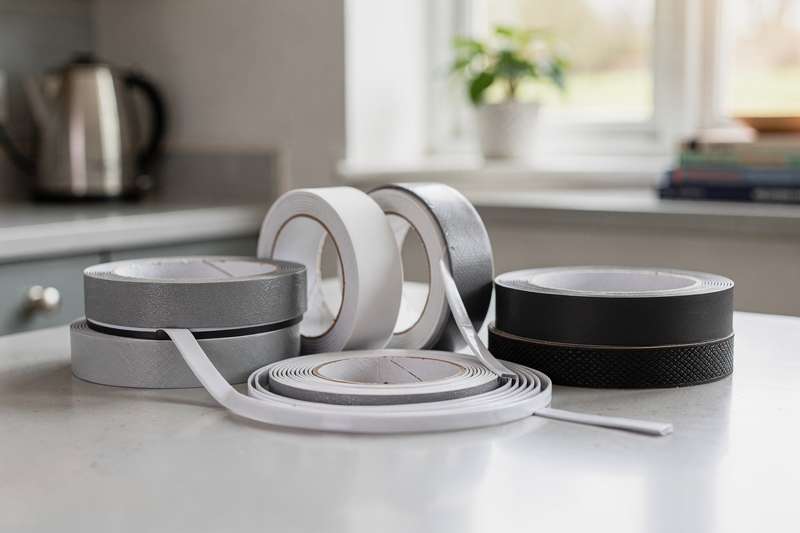
Most decorators have been there at least once. The frustrating part is that it’s rarely the paint to blame — it’s almost always the tape. Choosing the wrong edge tape for your surface is one of the most avoidable DIY mistakes made in UK homes every weekend. But before you start reading reviews, it helps to know that “edge tape” isn’t a single product. It covers precision masking tapes for painting, low-tack variants for delicate or recently finished surfaces, structural joint tapes for plasterboard work, and even athletic strapping tapes used to protect joints and equipment edges during sport. Each type solves a specific problem. Substituting one for another is where projects go sideways and money gets wasted.
This guide covers the best edge tape options available on Amazon UK right now, matched to specific use cases — from decorating a bedroom to finishing a stud wall partition to taping up a sports injury — so you can identify the right product for your actual job rather than gambling on a generic purchase.
How These Picks Were Evaluated
Five core criteria shaped this selection: adhesion strength relative to surface sensitivity (how firmly the tape bonds without damaging what it is stuck to), bleed resistance (how reliably it prevents paint or compound from migrating under the edge), ease of removal and residue-free performance on common UK interior finishes, application handling (how the tape tears, lays flat, and conforms to surfaces and corners), and roll length value for the tier of job it targets.
Verified buyer feedback patterns from hundreds of Amazon UK reviews were cross-referenced with product specifications to identify consistent real-world strengths and failure points. Products were evaluated within their intended use case rather than held to a single standard — masking tapes assessed as masking tapes, plasterboard tape as a construction product, and sports tape in the context of athletic use. Where a product performs well in one scenario but struggles in another, both outcomes are described honestly. The five picks below reflect different needs, and the aim is to match the right tape to your job rather than award a single winner across incompatible categories.
Best for Indoor Painting
The ProDec Advance 24mm (1 inch) x 50m Precision Edge Multi Surface Painters Masking Tape is the straightforward recommendation for anyone who wants clean, sharp paint lines on a standard indoor decorating job. Rated 4.6 out of 5 stars by 966 Amazon UK buyers, it is the highest-rated edge tape in this category and the product that appears most consistently in positive review patterns across both weekend decorators and professional painters. That is not a coincidence — a score that high across that many real-world purchases reflects a product that consistently delivers on its core promise.
The 24mm (one-inch) width is a well-judged choice for most UK interior applications. It is wide enough to give you a clear visual guide when masking off skirting boards, door frames, architraves, and window reveals, yet narrow enough to handle tight corners and rebates without overlapping onto adjacent surfaces. Crucially, the precision-edge design means the tape itself is cleanly and consistently cut along both sides — not torn or irregular — so the boundary between painted and masked surface stays sharp and consistent along the entire run rather than gradually varying.
In practice, this tape adheres confidently to standard interior surfaces including emulsion, satin, and gloss woodwork, as well as primed bare plaster. The adhesive holds the edge securely through two or three coats of paint, which matters when you are doing a full room over a weekend rather than a single-pass touch-up. When removed within the recommended window — typically within 24 hours of the final coat being touch-dry — it comes away cleanly with no adhesive trace left behind. That clean removal is precisely where many cheaper masking tapes fail, leaving ghostly residue lines that require a secondary clean-up step with white spirit.
The honest limitations are worth knowing. On very fresh paint (less than a week old) or highly textured surfaces such as rough-cast plaster, bare brick, or unfinished board, the adhesive bond can be inconsistent along the tape edge. If you press the tape down and find it lifting slightly at any point, that is a reliable warning that paint bleed is likely to follow. In those situations, the low-tack variant covered in the next section is the safer choice. This tape is also tuned specifically for indoor conditions — prolonged humidity or outdoor temperatures can weaken the adhesive before the job is complete.
For the typical UK homeowner redecorating a living room, bedroom, hallway, or kitchen on smooth plaster or previously painted surfaces, this is the natural first pick. The 50m roll length is enough for most single-room jobs without running short. Nearly a thousand verified buyers and a 4.6 rating are a meaningful signal that the product performs as described in real homes rather than just in controlled settings.
Best for Delicate Surfaces
When your job involves surfaces that cannot tolerate a strong adhesive pull on removal — freshly painted walls, expensive wallpaper, polished satin woodwork, or surfaces painted within the past fortnight — the ProDec Advance 24mm (1 inch) x 50m Low Tack Precision Edge Multi Surface Painters Masking Tape is the safer option. The critical difference from the standard version is not visible to the eye but immediately apparent when you peel it back: the reduced adhesive strength is engineered to release from delicate finishes without lifting or marking the surface beneath.
With 4.2 out of 5 stars from 445 reviewers, the slightly lower rating compared to the standard version is expected and informative rather than alarming. Low-tack tape is a deliberate engineering tradeoff — you are sacrificing some raw adhesion in exchange for surface safety. On smooth, sealed surfaces it performs very well. On rough or porous surfaces, the reduced tack makes it more susceptible to edge lifting, which allows paint to seep underneath more easily. That is not a product flaw — it is an inherent characteristic of low-adhesive formulations that you need to factor into your application technique.
Application is notably more forgiving than with standard tape. The tape repositions easily if your initial placement is off, which is a real practical advantage when working around intricate mouldings, curved bannisters, ornate cornicing, or other surfaces where a single straight line cannot be achieved in one smooth pass. The tape has enough flexibility to follow curves without tearing or kinking, and buyers working on period-property details — picture rails, decorative corbels, and layered architrave profiles — repeatedly note that this tape handles those shapes better than stiffer alternatives.
One technique point that makes a significant difference: with low-tack tape, burnishing the inner edge carefully is even more critical than with standard versions. Run a fingernail or the edge of a hard plastic tool firmly along the tape’s painted edge immediately after application to create the best possible seal against the surface. Skipping that step relies on gravity and surface tension alone to prevent bleed, which will not hold reliably. The extra 30 seconds spent burnishing pays back immediately when you peel and find a clean line.
The same ProDec range is also available in a 48mm width for wider masking tasks — large windowsills, broad wall panels, worktops, or deep door reveals where a narrower tape would require multiple overlapping strips. If you have both fine detail work and large flat areas to cover in the same job, comparing both widths before ordering can save time during application.
Best Budget Painting Tape
The Trimaco 591360 KleenEdge Low Tack Painting Tape, 1.5-inch x 60-Yard is the practical choice for large-scale projects where the priority is coverage volume rather than precision line quality. At 60 yards (approximately 54 metres) per roll with a generous 1.5-inch (38mm) width, it offers more usable tape per roll than most comparable UK options — a genuine advantage if you are masking floor edges, wide window reveals, large cabinet fronts, or multiple rooms in a single decorating run.
With 4.0 out of 5 stars from 59 reviewers, the sample size is smaller than the ProDec options above, but the feedback pattern is broadly consistent: competent, reliable performance on smooth painted walls, wood laminate, glass, and ceramic tile for short-application tasks. Buyers working through rental property refreshes or large domestic redecoration projects mention it as a cost-effective way to cover high volumes of masking work without the per-roll spend adding up uncomfortably.
The low-tack formula removes cleanly from emulsion and standard gloss finishes when peeled within 24 hours of application. Reviewers working on multi-day decorating projects — where tape gets left in place across skirting boards and frames for three or four days at a stretch — note occasional slight adhesive transfer on very smooth gloss surfaces. Testing a short strip on an inconspicuous patch before committing to a full application is worthwhile with any tape, but especially so for longer-duration use in warm rooms where adhesive can bond more aggressively over time.
Where the KleenEdge is honestly outclassed is in paint line sharpness. It is a competent general-purpose masking tape, but it does not market itself as a precision edge product, and in practice the line quality on painted emulsion surfaces is noticeably less crisp than the ProDec Precision Edge range. For broad areas where the job is simply keeping paint off the skirting board during wall rolling, that difference does not matter. For detailed cut-in work where the tape edge will be visible at close range — on a feature wall, around decorative woodwork, or on a freshly painted contrast border — the investment in a precision tape is worth it.
Trimaco has a long-standing reputation in professional painting supply markets, and the KleenEdge range represents a solid, uncomplicated product for volume work. If your next project involves masking out an entire floor’s worth of rooms and your priority is getting through the work efficiently, this tape pulls its weight without drama.
Best for Plasterboard Edges
Boarding out a loft, building stud wall partitions, or finishing a home extension introduces a completely different edge tape requirement, and the Tuff-Tape Drywall Edge Protection Corner Rail Plasterboard Joint Tape for Connecting GK Panels 30 m addresses it directly. Rated 4.5 out of 5 stars from 524 buyers, it is one of the better-reviewed specialist construction products in this category and a credible alternative to traditional metal corner bead for gypsum board finishing.
This is a structural product, not a masking product — and that distinction matters enormously. Rather than being applied temporarily and removed after decorating, it is embedded permanently into jointing compound and becomes part of the finished wall surface. It reinforces exposed plasterboard corners and panel joints, creating an edge that resists the impact damage, chipping, and gradual corner cracking that unprotected plasterboard suffers in any busy hallway, stairwell, or kitchen over time. The 30-metre roll makes it practical for whole-room installations or sizeable building projects without constantly joining rolls mid-run.
The practical advantage over traditional galvanised metal corner bead is handling simplicity, particularly for self-builders working without a second pair of hands. Metal bead requires tin snips for cutting, has to be held carefully in position while the first compound coat goes on, and can introduce rust problems if the finishing schedule slips. This tape format is far easier to position and trim on site. Reviewers who have used both approaches consistently rate this as the easier option for solo work, with finished results that are just as clean when the compound coats are applied, feathered, and sanded properly.
The limitations are equally worth stating plainly: this is not a quick weekend fix. Applying it correctly requires jointing compound in two or three passes — a bonding coat to embed the tape, a finishing coat to fill and feather, and often a final skim — with sanding between each. The results depend on finishing skill as much as on the tape itself, and anyone who has never jointed plasterboard before should practise on scrap pieces first. The 30-metre roll quantity also makes this more of a trade or self-builder purchase than an impulse buy for a single corner repair.
For loft conversions, kitchen extensions with new partition walls, or any GK panel project where neat, durable finished edges are the goal, the Tuff-Tape is a solid, well-reviewed choice. The strong rating across a substantial buyer base reflects consistent performance from people who clearly know how to use it — a signal worth weighing when you are buying a specialist product in a category where technique matters.
Best Sports Edge Tape
Not every edge tape application involves a paint brush or a trowel. The Firstaid4sport Straight Edge Elastic Adhesive Bandage (EAB) is a mainstay of UK sports medicine — used by physios, coaches, and athletes to support joints, secure wound dressings, and protect skin edges through high-intensity activity. Rated 3.9 out of 5 stars from 622 buyers, it has a broad user base across rugby clubs, football teams, athletics squads, and cycling groups across the UK, which itself speaks to its reliability in real sport contexts.
EAB functions as the edge tape of the athletic world. It defines and holds the boundary of a support wrap, keeps a protective pad anchored firmly against skin, or provides consistent joint compression through sustained movement. The “Straight Edge” format means the bandage is cleanly cut along both sides rather than having a torn or irregular edge — relevant when you are building multiple overlapping tape layers around an ankle or knee and need each layer to sit flat without the edges rolling or catching mid-game.
In practice, EAB adheres firmly to both skin and to itself, creating a bond that holds through sweat and sustained physical effort far better than standard medical tape. It tears cleanly by hand rather than needing scissors — a feature that sounds minor until you are applying it quickly on a cold touchline with numb fingers. The elastic construction allows some give in the tape, so it does not restrict circulation or limit range of motion in the way a rigid non-stretch tape would across a joint like the ankle or knee.
The 3.9 rating is the lowest among this guide’s picks, and the gap reflects a few honest recurring limitations in the reviews. The adhesive is quite aggressive directly against skin, particularly over areas with body hair — removal without an underwrap layer beneath can be uncomfortable at best and painful at worst. Physios routinely apply a thin foam pre-wrap (sometimes called underwrap or foam cohesive) underneath the EAB as standard practice, which resolves the problem but adds a small additional cost and step. The tape’s hold also weakens noticeably if it becomes fully saturated in water, which limits its use in open-water swimming or extended outdoor sport in heavy rain.
For standard athletic strapping and first aid applications in UK sport — taping ankles before football, securing padded dressings for rugby, strapping wrists for gymnastics — this is a professionally used product available at consumer prices. You will find it in the kitbags of qualified sports first aiders at club level across the country, which is a reliable indicator of real-world trust rather than marketing copy.
What to Look for When Buying Edge Tape
- Surface type and existing finish. The most important variable is what the tape is sticking to. Freshly painted walls, bare MDF, wallpaper, and polished woodwork all require different adhesive strengths. As a rule, the more delicate or recently applied the existing finish, the lower the tack you need. On bare or rough surfaces, you need firmer adhesion and careful burnishing to prevent paint from wicking under the edge.
- Tape width. Narrow widths around 24mm are ideal for detail work — skirting boards, door frames, architraves, and precise cut-in lines on walls. Wider widths from 38mm upwards are more practical for large flat surfaces, flooring edges, or broad masking runs where a narrower tape would require multiple overlapping strips. Buying two different widths for a mixed job is often more efficient than compromising on either task.
- Low-tack vs standard adhesive. Low-tack tape is repositionable and gentle on finishes, but provides less reliable bleed resistance on rough or porous surfaces. Standard-tack tape seals more firmly and holds the edge better on variable surfaces, but carries more surface-damage risk on delicate finishes, particularly on removal. Match the adhesive type to the sensitivity of the surface rather than to the type of job in the abstract.
- Roll length and value. A 50-metre roll covers most single-room interior painting jobs without running short. For multi-room projects or when using a wider tape that depletes rolls faster, longer rolls or multi-packs provide better value and fewer interruptions. Construction tapes like plasterboard joint tape come in longer rolls because they are used across large surface areas in multiple application coats.
- Removal timeframe. Most interior masking tapes are designed to be removed within 24 to 72 hours of application. Leaving tape in place beyond the recommended window — particularly in warm or humid rooms — significantly increases the chance of adhesive residue transferring or existing paint lifting when you peel. Always check the specific guidance for your tape and surface combination, and remove at a low angle rather than pulling straight back off the wall.
- Bleed resistance and edge precision. Standard masking tape protects areas from paint coverage but does not consistently prevent capillary action — the way paint wicks along the surface and creeps under the tape edge. Precision edge tapes are formulated specifically to prevent this. If the quality of the paint line is visible and matters for the finished result, look for “precision edge” or “no bleed” in the product description rather than buying any roll of masking tape and hoping for the best.
- Specialist vs general purpose. Plasterboard joint tape, painter’s masking tape, and sports strapping tape are not interchangeable. Each is engineered for a specific task and will underperform when used outside that context. Buying the product designed for your job is always the right call — the workaround that seems functional in theory rarely holds up under real working conditions.
Verdict
For the majority of UK readers arriving here — someone about to repaint a room and wanting clean, bleed-free lines on skirting boards, door frames, or ceiling edges — the clear pick is the ProDec Advance Precision Edge Multi Surface Painters Masking Tape. Nearly a thousand verified buyers and a 4.6-star rating tell a consistent story: this tape performs as described on standard indoor painted surfaces, removes cleanly, and leaves no residue. It is the easiest recommendation in the group for the most common use case.
If your surfaces are delicate — fresh emulsion, wallpaper, or polished woodwork — switch to the low-tack ProDec Advance variant and take the time to burnish the edge after application. For high-volume work across multiple rooms where budget efficiency matters more than precision line quality, the Trimaco KleenEdge offers a longer roll at a lower cost per metre. If your project is construction-based — finishing plasterboard partition walls or protecting drywall corners — the Tuff-Tape Corner Rail is a strong specialist choice that simplifies edge finishing without requiring traditional metal bead. And if you are buying for sport rather than decorating, the Firstaid4sport EAB is the professionally trusted strapping tape used across UK clubs and physio rooms.
Match the tape to the job, prepare the surface correctly, and every one of these picks is capable of delivering the result it promises.
We were not paid to feature any specific product in this guide. All opinions are independent and based on publicly available specifications, verified buyer feedback patterns, and category research.
Quick Comparison Table


FAQ
What is edge tape used for?
Edge tape covers a broad range of products: precision masking tapes for painting sharp lines, structural joint tapes for plasterboard corners and seams, and sports strapping tapes for joint support during athletic activity. The right type depends entirely on your specific application — what works well for masking a door frame before painting will not work for plasterboard jointing or sports injury support.
Can I use standard masking tape instead of precision edge tape for painting?
Standard masking tape can cover areas to protect them from broad paint overspray, but it often results in paint bleed along the tape edge due to the adhesive not forming a complete seal against the surface. Precision edge tapes have a consistently cut, clean edge and an adhesive specifically formulated to resist capillary action — the way paint wicks underneath. For any job where the sharpness of the finished line is visible and matters, precision edge tape is worth the small additional investment.
How long can you leave masking tape on a painted surface?
Most indoor precision edge tapes are designed to be removed within 24 to 72 hours of the final paint coat becoming touch-dry. Leaving tape in place beyond that window — particularly in warm or humid conditions — significantly increases the chance of adhesive residue transferring to the wall or existing paint lifting on removal. Always check the specific guidance on your tape and remove it at a shallow angle rather than pulling it straight back off the surface.
Is low-tack tape worse at preventing paint bleed?
It can be, particularly on rough or porous surfaces, because the reduced adhesion makes it harder to form a perfect seal along the tape’s edge. On smooth, sealed surfaces, a quality low-tack precision tape can perform almost as well as standard tack — provided you burnish the inner edge firmly with a fingernail or hard tool immediately after application. The tradeoff is surface safety versus bleed resistance: low-tack protects delicate finishes, standard tack seals more reliably on variable surface textures.
What is the difference between plasterboard jointing tape and painter’s edge tape?
Painter’s edge tape is a temporary masking product designed to be removed cleanly after decorating is complete. Plasterboard jointing or corner tape is embedded permanently into jointing compound during construction, reinforcing exposed panel edges and corners as a structural element. They serve completely different purposes and cannot substitute for one another — using masking tape as a plasterboard finish or jointing tape as a paint mask will not work in either direction.
Is EAB sports tape suitable for protecting equipment edges as well as skin?
EAB is designed primarily for joint support and dressing fixation on the human body, not for adhering to hard or composite equipment surfaces. The adhesive bonds effectively to skin and to itself but is unlikely to hold reliably on hard plastic, carbon fibre, or polished wood without specialist surface preparation. For sports equipment edge protection specifically, look for tape products designed for the material type of your equipment rather than repurposing a body-use strapping tape.