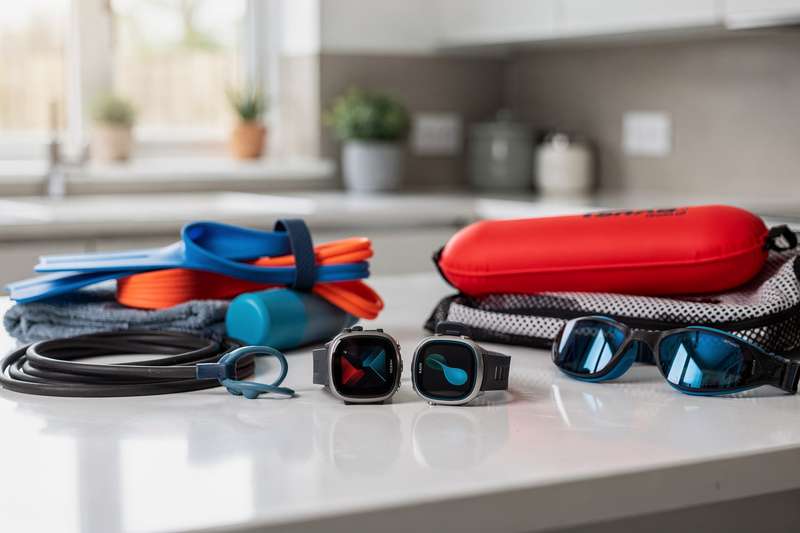
You have just finished your fiftieth length of the morning — or was it forty-eight? You are standing at the wall, catching your breath, trying to retrace the last twenty minutes of mental arithmetic through chlorine-stung eyes. At some point you lost count, probably around that hard 100m set, and now you are wondering whether to add two more lengths or call it done. The swimmer in the lane next to you never has this problem. They glance at their wrist mid-turn and carry on, tracking every detail without breaking rhythm.
Or perhaps you have moved beyond the pool entirely and you are doing open water sessions at a reservoir in the Peak District or a loch in Scotland, and you have just realised that nobody on the bank can actually see you. That hi-vis float you have been meaning to buy keeps sliding down the to-do list.
This guide is for both of you. Whether you want to stop guessing your lap count and start training with real data, or you need the right open water safety kit to support your outdoor swimming habit, there are clear and accessible options on Amazon UK. Here is an honest breakdown of what is available, who each product suits, and where each one falls short.
How These Picks Were Evaluated
Every product in this guide was assessed using buyer feedback patterns from Amazon UK, rating consistency, and how well each item addresses a distinct swimmer need. Priority went to products with a meaningful review count — at least ten verified buyer ratings — to ground the assessment in real-world use rather than manufacturer descriptions. Where a product has fewer reviews, this is stated directly in that section so you can weigh confidence accordingly.
Criteria varied by product type. For the swim computer, the focus was on tracking accuracy as reported by buyers, ease of use with wet hands, and battery life in practice. For open water safety gear, the key considerations were visibility colourway, inflation reliability, and dry bag waterproofing under swimming conditions. For pool training aids, build quality under repeated chlorine exposure and comfort during extended sets were the main factors. Each pick addresses a specific swimmer use case and none are interchangeable.
Best Dedicated Swim Computer for Pool Training
The Swimovate PoolMate2 is the most accessible dedicated swim computer on the UK market right now, and with nearly 500 buyer ratings on Amazon UK it is the device most pool swimmers encounter first when they start looking beyond lap guesswork. It sits in the mid-range tier for dedicated swim computers — notably below the cost of a full multisport GPS watch while offering considerably more than a basic stopwatch.
The core concept is straightforward. Before your session, you input your pool length (anything from 15 to 100 metres) and press start. The PoolMate2 uses an accelerometer to detect when you push off the wall at each turn, automatically counting laps and recording total distance, time, average pace per 100 metres, stroke count per length, and your Swolf score. Swolf combines your stroke count and time per length into a single efficiency figure. When that number falls over weeks of training while your speed holds steady, your stroke technique is improving. It is a concrete, trackable metric that a stopwatch alone can never give you.
The interface is entirely button-based, which sounds limiting but is a practical advantage in a pool. Wet fingers and touchscreens are a frustrating combination; physical buttons work reliably every time, even mid-set. The watch face is legible in swimming conditions, and cycling between metrics does not require you to stop. Battery life runs to months of regular training use, which is substantially more practical for consistent swimmers than any daily-charge smartwatch.
The honest tradeoffs show up clearly in the 3.4-star average. Detection accuracy is the primary sticking point in buyer feedback. Swimmers with very smooth, subtle tumble turns — where the wall push-off does not generate a sharp enough deceleration signal — sometimes find the device miscounts, dropping a lap or adding a phantom one. Open turns and breaststroke swimmers generally see better accuracy. If you favour an unconventional push-off style, expect some adjustment time before you fully trust the count. The design is also unambiguously functional rather than stylish, and there is no heart rate monitor, GPS, or connectivity with training apps such as Strava or TrainingPeaks.
For pool swimmers training three or more times a week who want objective data on pace and stroke efficiency without the cost or complexity of a multisport watch, the PoolMate2 does that job solidly and for a long time between charges. Best suited to regular pool swimmers, masters athletes, and club swimmers who want to track long-term training progress through consistent session logging.
Best Kickboard for Lower Body Strength Training
The Speedo Kick Board earned a 4.7/5 rating from over 150 buyers, which is the strongest satisfaction score in this entire guide and reflects how consistently it fulfils its purpose. A kickboard is not complicated kit, but getting the details right makes the difference between a training tool you reach for every session and one that sits at the bottom of your swim bag, and the Speedo version clearly gets those details right.
The purpose of a kickboard is to isolate your leg kick during pool training. You hold the board in front of you, rest your upper body weight on it, and let your legs do all the work. This drill is used at all competitive levels because it forces you to confront weaknesses in your kick that your arms mask during full stroke swimming. Weak ankle flexibility, uneven bilateral kick strength, insufficient kick depth: these all become apparent when you remove the distraction of arm propulsion and the water has nowhere to hide your technique gaps.
The Speedo board’s contoured edges are specifically noted in buyer feedback as reducing hand fatigue during longer kick sets, compared to flat-edged boards that create pressure points in the palms after extended use. The waterproof construction handles repeated chlorine exposure without material degradation, which matters for anything used in a pool several times a week across a full season. The board is also practical to carry in a standard swim bag without dominating the space.
The limitations here are inherent to the product category rather than this specific model. A kickboard is a pool-only tool with a single, targeted function. It does not track anything, connect to anything, or replace any electronic training aid. If your weakness is stroke mechanics above the waterline or your goal is pace data, this addresses neither of those needs. Using it effectively also requires understanding what a productive kick looks like — kicking without corrective intent behind the drill produces limited results. Some coaching input on kick mechanics makes this tool considerably more valuable.
For swimmers following structured training plans that include kick sets, this is exactly the right tool for the job. Best suited to pool swimmers at any level who incorporate kick drills regularly, and to competitive swimmers doing targeted lower-body work alongside coached sessions.
Best Large Safety Buoy for Open Water Swimming
The ZONE3 28L Swim Safety Buoy/Dry Bag is the standout pick for open water swimmers who need both visibility and practical carrying capacity in a single tow float, rated 4.6/5 from 50 buyers. ZONE3 has strong credibility in the triathlon and open water swimming community, and this product reflects the brand’s understanding of what serious swimmers actually need when they leave the pool behind.
The 28-litre dry bag capacity is the defining feature. Most tow floats offer a small pocket for a locker key; this one can carry a full change of clothes, shoes, a phone, wallet, and food for after your swim, with room to spare. For point-to-point swims where you need belongings at the far end, for remote lake sessions where leaving kit unattended on the bank is not practical, or for venues without staffed bag storage, that capacity makes a real difference to how you can organise your training. Buyer reports consistently confirm the dry bag keeps contents dry during lengthy open water swims.
The hi-vis colourways are chosen specifically for visibility against open water backgrounds. In busy waterways, on reservoirs with boat traffic, or in coastal areas with jet skis, a bold orange or red float trailing behind you makes you visible at a meaningful distance to other water users. The 28L buoy volume also ensures it sits clearly above the surface in moderate chop, rather than being swamped as a smaller float can be.
The main tradeoff with the larger size is drag. A 28L buoy creates more water resistance than a compact safety float, which is barely perceptible on shorter swims but noticeable on longer efforts where pace matters. Inflating and resealing the dry bag on a cold, wet morning takes slightly more effort than simpler float designs, and the packed size is bulkier if you are transporting kit by bike or public transport to your swim spot.
The 100% recycled polyester construction is a meaningful distinction for environmentally conscious swimmers. For those for whom sustainable kit choices factor into purchasing decisions — a growing group within the UK open water community — this is worth noting as part of the overall picture rather than a peripheral detail. Best suited to open water swimmers doing longer sessions or point-to-point courses, triathletes needing kit at both ends of a swim leg, and anyone training at remote spots where carrying belongings is a logistical necessity.
Best Tow Float for Open Water Beginners
The Speedo Tow Float With Dry Bag is a sensible starting point for swimmers stepping into open water training for the first time, rated 4.0/5 from 16 buyers. For someone new to outdoor swimming, the priorities are clear: be visible to other water users, keep a key or card accessible, and do not overspend on gear until you know how regularly you will actually use it.
This tow float covers those priorities without unnecessary complexity. The Speedo brand provides a reasonable quality baseline — this is not an unknown import, and the build quality reported by buyers is consistent with what that name typically means for swimming equipment. The tow mechanism keeps the float trailing at a sensible distance without tangling with your kick or arm stroke during normal open water swimming. The dry bag compartment handles the essentials: a locker key, a bank card, an emergency contact card tucked alongside your kit.
The attachment system and inflation process are both straightforward, which matters considerably for first-time open water swimmers. Managing a wetsuit, sighting landmarks, adjusting to colder water, and monitoring your effort level all simultaneously leaves little mental bandwidth for complicated equipment. A tow float that takes five minutes to work out at the water’s edge on a grey morning is a frustration you can do without. This one is simple to operate, which is a real advantage for those new to the discipline.
The honest constraints: 16 reviews provide a thinner evidence base than the higher-reviewed picks in this guide, and the 4.0-star average indicates solid rather than exceptional performance. Buyers note the dry bag compartment is compact — adequate for a single key and card, but not a reliable waterproof solution for a modern smartphone under swim pressure. Anyone planning longer swims or needing meaningful carrying capacity should look at the ZONE3 28L instead.
This is the right pick for new open water swimmers who want to cover the safety visibility requirement at an accessible price point, for casual lido and lake swimmers who want basic protection without committing to a premium tow float, and for anyone testing whether open water swimming will become a regular training habit before investing further. Best suited to those at the beginning of their open water journey.
Best Compact Safety Buoy for Travelling Swimmers
The ZONE3 Recycled On The Go Swim Safety Buoy is the most portable option in this guide, holding a 4.6/5 rating — though from just 3 buyers, which means this score should be treated as a provisional early signal rather than a settled reputation. With three reviews, there is simply not enough data yet to draw confident conclusions about long-term durability or performance across a full UK open water season. If certainty from buyer feedback matters more than packability, the ZONE3 28L or the Speedo Tow Float are better-evidenced choices at this stage.
With that caveat clearly on the table: what this buoy provides is distinct from the larger options here. It is built to be lightweight and packable — the type of safety float that fits in a jacket pocket or the side mesh pocket of a rucksack without taking up meaningful space. For open water swimmers who travel regularly for swim tourism (the Lake District, the Scottish Highlands, coastal touring), or who combine swimming with other sports where luggage space is already tight, a compact buoy that needs no dedicated bag of its own is a practical convenience that larger floats simply cannot match.
The hi-vis orange colourway is effective for open water visibility in UK conditions, particularly the overcast skies and grey water that characterise a significant proportion of outdoor swimming here. Orange reads clearly against subdued water tones in a way that some lighter, more muted colours do not. The adjustable waist belt system accommodates different body sizes and works comfortably over a wetsuit, which is an important practical detail when seasonal temperatures mean switching between neoprene and an open water swimsuit across the year.
The key limitation is the absence of dry bag storage. This is a visibility-only safety buoy: there is nowhere to carry a key, card, phone, or any personal item. You will need a separate solution for belongings, whether that is an ankle key pouch, a swim-cap key pocket, or a bag drop at your venue. For swimmers at venues with staffed storage or with someone meeting them at the finish point, this is no inconvenience. For solo swimmers without those options, the lack of storage is a meaningful gap in what this product can offer.
The recycled materials construction is consistent with ZONE3’s sustainability positioning across their range. Best suited to experienced open water swimmers who travel frequently, have their logistics sorted independently of their tow float, and want the most packable safety buoy currently available. As the review count grows, a clearer picture of its durability will emerge.
What to Look For When Buying Swim Training Equipment
- Pool vs open water compatibility: Pool training tools rely on wall-turn detection and fixed pool lengths — they do not function accurately in open water. Open water safety gear has no role in a pool. If you swim in both environments, you will likely need equipment from both categories. Confirm the primary environment each product is designed for before buying, particularly for any electronic tracking device.
- Waterproofing standard: Swim training equipment should be fully waterproof rather than simply water-resistant. For pool use, check specifically that the product is chlorine-resistant — many items that handle fresh or salt water fine will degrade under repeated pool chemical exposure. For tow floats, buyer reports on how the dry bag seal performs under swimming conditions are the most reliable indicator of genuine waterproof performance.
- Tracking accuracy and your swimming style: Accelerometer-based pool computers detect wall push-offs to count laps. Swimmers with very smooth, low-deceleration tumble turns tend to see more counting inconsistencies than those with conventional technique. Search buyer reviews specifically for reports of missed or double-counted laps, and factor your own turn style into any assessment of whether a device will work reliably for you in practice.
- Safety buoy visibility colourways: Hi-vis orange, yellow, or bright red are the most effective colours for open water visibility in UK conditions. Subdued colours are significantly harder to spot against grey, choppy water or in overcast light — both of which are common in British open water swimming. Brighter is consistently the safer choice across different water environments and light conditions.
- Dry bag capacity vs drag: Larger dry bags add storage but also add water resistance. Match the capacity to what you genuinely need to carry. A locker key and card need a small compartment, not a 28L bag. For longer swims or sessions where you need kit at a different location, the storage benefit outweighs the drag. For short visibility-only swims, a compact buoy is more practical and less tiring over distance.
- Review count alongside star rating: A 4.6/5 from three buyers tells you far less than a 3.8/5 from three hundred. Both the rating and the volume of reviews matter when assessing a product. Where a product has fewer than twenty reviews, treat the average as provisional and look for specific buyer comments about failure modes or durability to build a more complete picture.
- Battery life for electronic devices: Think realistically about your charging routine before committing to any swim tracking device. Dedicated swim computers typically run for months between charges, which is a significant practical advantage over smartwatches for swimmers who train at 6am and find daily charging a friction point. A device that needs charging every few days will eventually be left behind on a session where it matters.
Verdict
For pool swimmers who want to stop guessing their lap count and start training with consistent data, the Swimovate PoolMate2 is the practical, accessible starting point available on Amazon UK. Its 3.4-star average reflects real limitations — detection accuracy frustrates some swimmers, and the absence of GPS, heart rate, and app connectivity will rule it out for others. But if you have a conventional tumble turn and want reliable pace and efficiency data without the cost of a multisport watch, it does that job solidly and for months without needing a charge.
For open water swimmers, the right pick depends on how much kit you need to carry. The ZONE3 28L Safety Buoy/Dry Bag offers the best combination of visibility, carrying capacity, and brand credibility from this selection. If you are newer to outdoor swimming and want a simpler entry point, the Speedo Tow Float covers the essentials at a lower commitment level. The ZONE3 Recycled On The Go Buoy is worth keeping an eye on as more reviews arrive — its compact format is appealing, but the current evidence base is too thin to recommend it with full confidence. For pool technique work, the Speedo Kick Board’s near five-star rating signals it does exactly what it should.
For most UK swimmers starting to take their training seriously: the PoolMate2 for pool data, and a safety buoy from ZONE3 or Speedo when you move your sessions outside.
We were not paid to feature any specific product in this guide. All opinions are independent and based on publicly available specifications, verified buyer feedback patterns, and category research.
Quick Comparison Table


FAQ
What is a swim computer and how does it work?
A swim computer is a wrist-worn device that automatically tracks your swimming metrics — including lap count, total distance, pace per 100 metres, stroke count per length, and Swolf score (a composite of stroke count and time per length that indicates efficiency). It detects wall turns using an accelerometer, removing the need to count laps manually. Before each session you input your pool length so the device can calculate accurate distance and pace figures throughout the workout.
Can I use a pool swim computer for open water swimming?
Most dedicated pool swim computers, including the Swimovate PoolMate2, are not designed for open water use. They detect turns at the pool wall rather than using GPS to track position, so distance calculations will not be accurate in a lake, reservoir, or coastal swim. If you swim in both environments regularly, you would need a GPS-enabled multisport watch for open water sessions, as a pool-only computer cannot reliably track distance without fixed wall-turn points to calibrate from.
Is a tow float or safety buoy required for open water swimming in the UK?
No UK law makes tow floats mandatory for open water swimmers. However, many organised open water swim venues and events require them as a condition of entry, and safety guidance from bodies such as Swim England strongly recommends them for all open water swimmers. A brightly coloured tow float makes you significantly more visible to boat traffic, kayakers, jet skiers, and safety marshals, which is why the vast majority of experienced open water swimmers in the UK choose to use one regardless of formal venue requirements.
What is the difference between a tow float and a safety buoy?
The terms are often used interchangeably. In practice, a tow float refers to an inflatable device attached to your waist by a leash that trails behind you as you swim, providing visibility to other water users. Many tow floats — such as the ZONE3 28L and the Speedo Tow Float — include a waterproof dry bag compartment for carrying personal items. A pure safety buoy like the ZONE3 Recycled On The Go model provides visibility only, with no storage function. The choice between them comes down to whether you need to carry kit during your swim.
How accurate are swim computers at counting laps?
Accuracy varies by device and swimming technique. Pool computers that detect wall push-offs via accelerometer can miss or double-count a turn if the deceleration signal is not sharp enough. Swimmers with very smooth, subtle tumble turns tend to experience more counting inconsistencies than those with conventional technique, while open turns and breaststroke swimmers generally see better accuracy. Setting your pool length correctly before every session is non-negotiable: even a small input error compounds significantly over a long training distance.
Are kickboards useful for experienced swimmers, or just for beginners?
Kickboards are used across all ability levels, including competitive club swimmers, masters athletes, and triathletes. They isolate leg propulsion so you can train lower body strength and kick mechanics without your arms compensating for weaknesses. Experienced swimmers use kick drills to identify bilateral imbalances or ankle flexibility issues that do not appear in full stroke swimming. Beginners benefit from the additional buoyancy support while developing body position. Kick sets with a board feature in structured training plans at most UK swimming clubs, regardless of the swimmer’s level.