Picture a rainy Sunday afternoon in October. You have two children aged three and five, a hallway about four metres long, and no plan for the next two hours. Bowling sets seem like the perfect solution — active, simple, something the whole family can join in on without needing a garden or good weather. You order what looks like a decent option, it arrives two days later, and within fifteen minutes the plastic pins have cracked on the laminate floor, the ball bounces more than it rolls, and both children have abandoned the whole thing entirely.
Sound familiar? It happens more often than it should. Bowling sets for children and families span a genuinely wide quality range, and the differences are rarely obvious from a product photo. Some sets are solid enough to handle a summer of daily garden play and the occasional enthusiastic five-year-old overarm throw. Others fall apart before the second session. The gap comes down to pin weight, ball diameter, construction material, and — often overlooked — whether the set is actually calibrated for the age group you are buying for.
If you have been burned by a floppy plastic set that topples in the breeze, or a wooden set so heavy a toddler cannot shift the pins at all, this guide is for you. Working through the reviewed options available on Amazon UK right now, here are five picks covering distinct use cases — from a first bowling toy for a one-year-old through to a garden skittles set for mixed-age birthday parties.
How These Picks Were Evaluated
The evaluation focused on five criteria: build material and durability (plastic composition, wooden construction, joint quality); age suitability (pin height and diameter, ball weight relative to the recommended age range); ease of setup, including pin stability on different surfaces and whether a lane mat is included; verified buyer feedback patterns from Amazon UK reviewers; and overall value relative to what you actually get in the box. Products with zero customer reviews were excluded where reviewed alternatives in the same category existed. Each pick covers a distinct use case, so rather than ranking these in order, treat them as five different answers to five different situations.
Best Overall for Young Children
The Qukir Bowling Toy for 1 2 3 4 Year Old Boy Girl Gift is the most reviewed bowling toy in this category on Amazon UK, with over 640 ratings averaging 4.2 out of 5 stars — and that kind of sustained buyer volume is a reliable indicator of consistent quality. It is aimed at children from around twelve months up to roughly four years, which means every design decision prioritises safety, proportions suited to small hands, and a forgiving play experience for children who are still developing their motor control.
The pins are lightweight and sized so that a toddler rolling the ball with two hands will knock them over satisfyingly, creating exactly the motivation loop you need at this age. That might sound obvious, but plenty of cheaper sets pitch the difficulty too high — pins that barely budge and a ball that is awkward to grip mean children give up before they get a run of success. The Qukir avoids this by calibrating the whole system (pin weight, ball size, surface friction) for the target age group rather than simply assembling generic components.
Buyer feedback highlights two things consistently: the pins stand upright reliably on carpet, which is always a challenge with budget alternatives, and the bright colour scheme holds a young child’s attention through multiple sessions. The set does not include a lane mat, so you will be improvising the play surface. On hard floors, a small rug placed underneath the pins helps them stay in position and allows the ball to roll more predictably. On carpet, it works straight from the box without any modification.
Where this set falls short: children aged five and above will find it too easy almost immediately. The pins are small, the distances are short, and an older sibling will clear the full set on nearly every go without trying. If you are shopping for mixed-age family play, think of the Qukir as the right tool for the youngest player specifically — not a shared activity for children with more than three years between them. For a household with siblings, this works best as the toddler’s set, with one of the other options in this guide serving the older child separately.
Setup is genuinely quick — triangular pin placement takes seconds, and the ball is simply handed to the child. This is the type of set you leave accessible in the living room corner rather than storing after every session. At the one-to-four age bracket, how easily a child can access and reset the game matters as much as the quality of the components themselves. For a birthday or Christmas gift for a toddler, the combination of strong review history and age-appropriate design makes this the most reliable choice in this guide.
Best Budget Pick
If you need a set that covers the essentials without a significant outlay, the Sport Zone 10 Pin Bowling Game Set, Indoor & Outdoor Play, Ages 3+ has been listed on Amazon UK for several years and carries over 210 reviews with a 3.6-star average — a result that tells you exactly what you are getting: a functional set with some limitations, not a polished premium product.
The set includes ten plastic pins and two bowling balls, which is a better specification than some budget alternatives that cut corners on pin count. Ten pins means you get a proper triangle formation and the full game structure, which makes a real difference to how satisfying play sessions feel. Two balls means two players can bowl simultaneously or you have a spare when one rolls under the sofa and disappears for the afternoon.
The 3.6-star rating warrants an honest breakdown. The pin quality is basic — the plastic is noticeably thinner than you would find on a premium set, and on smooth hard floors the pins can slide on impact rather than tipping over cleanly. On carpet or grass, both of which provide grip at the pin base, the experience is meaningfully better. Several reviewers note that the balls are lighter than expected, which suits younger children but leaves six-to-eight year olds feeling short-changed on weight and challenge.
A handful of reviews mention the balls cracking after sustained heavy use. This is consistent with the price point and worth knowing if your children are enthusiastic throwers rather than careful rollers. The set is rated from age three, and that lower end of the range is where it works best — for three-to-five year olds using it casually through a season, it is a reasonable choice. If you have older children who will give the pins a serious bashing, or if you are planning regular outdoor use on rough terrain, manage your expectations accordingly on longevity.
The most practical deployment for this set is as a secondary or situational option: kept in the car boot for beach trips, pulled out at a party as an additional activity, or left in the garden over summer where occasional loss or damage to a pin is not a problem. For that kind of low-stakes use, the price point makes it a sensible call. For a primary, high-use set that children will return to daily, spending a little more on one of the other options in this guide will pay off in durability over time.
Best for Early Learning
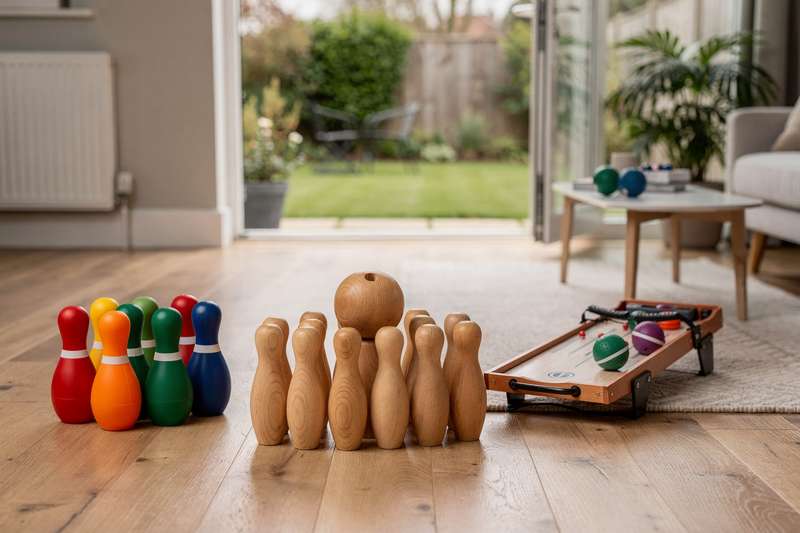
The Wooden Bowling Set Skittles Toys with 10 Animal and 3 Balls for Toddlers Boys Girls takes a different approach to the format. Rather than pure play, this is a set with early learning built directly into the activity. Each pin features an animal character with a facial expression and a number, meaning the game naturally incorporates number recognition and character identification for children in the two-to-four age bracket — the kind of dual-purpose design that tends to land well with parents who want play to carry some educational weight alongside the fun.
The wooden construction is the headline feature. Solid wood pins have a different character to plastic: they carry natural weight, stand upright without wobbling from the slightest vibration, and are far less likely to crack or chip when knocked together. The set includes three balls rather than the two you find in most alternatives — which gives young players extra attempts before needing to reset the pins. Young children learning to bowl spend as much time walking to retrieve the ball as they do actually rolling it; a third ball meaningfully smooths out the session rhythm and reduces the frustration of constant interruptions.
With 54 reviews averaging 3.8 stars, the feedback is sufficient to draw useful conclusions. Positive reviews focus consistently on build quality — buyers frequently note that the pins feel noticeably more solid than plastic alternatives and that the set holds up well to daily use over several months. The constructive feedback centres on pin height: these pins are shorter than full-size skittles, which is entirely appropriate for a two-year-old but can leave four-to-five year olds wanting more challenge and distance. If your child is already confident with basic bowling and wants a more demanding game, this set may feel too easy within a few months of purchase.
Surface matters with this set: wooden pins on smooth laminate or tile floors can slide when hit rather than tipping over cleanly. On a rug or play mat, the experience is considerably better. Several reviewers mention placing the set on a foam play mat before use, which solves the slide issue and has the bonus of defining a clear play area for young children — a useful boundary at an age when they might otherwise wander towards the television mid-game.
As a gift, the animal theme and wooden construction give this set an appeal beyond what basic plastic alternatives offer. It feels substantial in the hand, the painted animals are engaging for young children, and the learning element gives parents a reason to feel good about the purchase beyond pure entertainment value. For children aged two to four, this is the most thoughtfully designed option in the guide. For children aged five and above who want more challenge and distance, the Sport Zone or KEAGAN sets would serve better.
Best for an Indoor Alley Experience
The KEAGAN Mini Bowling Set, Full Bowling Alley Games Toys goes furthest toward recreating the feel of an actual bowling alley at home. The defining feature is the inclusion of a bowling lane mat — a physical surface that defines the play area, keeps rolls consistent, and adds a sense of occasion that a plain pin-and-ball set without a lane simply cannot replicate.
If you have watched a child try to bowl down a hallway and spend more time chasing the errant ball than actually playing, you will understand immediately why a lane matters. It channels the ball in the right direction, provides a clear visual start and end point, and gives the game a structure that makes it feel like an actual activity rather than a series of uncontrolled rolls. Children in the four-to-eight range respond well to this format because they are old enough to understand rules and targets, and the lane makes both visible and concrete.
With 24 reviews averaging 3.7 stars, the KEAGAN set is newer and less reviewed than the top picks in this guide, and the rating reflects a mixed buyer experience. Positive reviewers highlight the lane mat as the standout feature and note that it substantially improves how organised and enjoyable sessions feel. The constructive feedback points to the pins as the weaker element — they are lightweight enough that older children or adults playing alongside younger ones can find them too easy to topple, and a particularly forceful throw can send pins flying beyond the boundaries of the mat.
The lane mat is a lightweight, rollable surface — easy to roll up and store after use, which matters if you are working with a modest living room that needs to revert to normal after playtime. Rolling it out and positioning the pins takes under a minute. On smooth laminate floors, the mat can shift slightly during play; a strip of non-slip matting underneath, or a couple of heavy objects placed at the edges, keeps it stable. This is a common practical solution mentioned in the reviews and takes around ten seconds to implement.
This is the right pick if you want structured, lane-based bowling at home and have children roughly in the four-to-eight age range. The lower review count introduces some uncertainty around long-term durability, so if you are buying for daily high-intensity use, factor that in. For occasional family game nights, rainy-day activities, or a structured play session with visiting friends, the lane inclusion makes this the most immersive option in the guide. Note that KEAGAN also offers a similar set under a separate listing — if stock availability or pricing differs between them, the core playing experience is broadly comparable across both.
Best for Garden Parties and Group Play
The MantraRaj 6pk Skittles Sport shifts the format compared to the rest of this guide. Rather than a structured indoor bowling set, this is a colourful outdoor skittles set — a format that suits garden parties, casual lawn games, and mixed-age group play better than a lane-and-pin setup ever could.
Skittles as a garden game has a longer tradition in the UK than American-style ten-pin bowling, and for good reason. The informal nature of the format allows you to adjust difficulty on the fly — closer distances for younger children, further back for older players, and anywhere in between. At a children’s birthday party outdoors, a skittles set like this requires almost no explanation and keeps children occupied without constant adult supervision once the basic concept is understood. That low-friction entry to the activity is a practical advantage when you are simultaneously managing food, guests, and the inevitable small person who is upset about something entirely unrelated.
The multicoloured pins improve garden visibility considerably and lend themselves naturally to competitive play — children can claim colours, families can run team rounds, and the visual variety keeps interest alive across multiple games. With just six reviews averaging 3.8 stars, the buyer evidence here is limited, and that is worth acknowledging plainly. You are taking a larger risk on this set than on the Qukir or Sport Zone options, which have substantially more reviewer evidence behind them. For a party-use or seasonal purchase rather than a daily-use set, that uncertainty is more acceptable.
There is an inconsistency in the product title worth flagging before you buy: the listing simultaneously references ‘6pk’ and ‘8 Pack’ in the same title, which creates genuine ambiguity about the exact pin count you will receive. Before purchasing, check the current listing description carefully to confirm the precise number of pins and balls included. This matters if you are planning a specific party game format around a set number of players or teams.
On build quality: the pins are plastic and designed with outdoor use in mind. On grass, which provides natural grip at the base, the pins stand upright reliably and the irregular surface slows the ball naturally, producing a more forgiving and manageable game. On smooth hard surfaces indoors, the experience is more variable. For seasonal summer use, occasional parties, and casual family garden play, this set fills a gap that none of the other picks in this guide are designed for. Go in with realistic expectations about the limited buyer feedback, confirm the pin count before committing, and treat it as the right tool for informal outdoor occasions rather than structured daily play.
What to Look For in a Bowling Set
- Age suitability and pin height: Pin height and weight should match the child’s development stage. Pins designed for toddlers are too small and too easy for children aged five and above; full-size pins are impossible for a two-year-old to shift with a gentle roll. Check the manufacturer’s recommended age range and treat it as a genuine guide rather than a marketing formality.
- Pin material: Plastic pins are lighter, less expensive, and better suited to younger children who need minimal resistance to stay motivated. Wooden pins are more durable and carry a more satisfying weight, but they can slide on hard floors rather than tipping cleanly. If you play predominantly on hard surfaces, a play mat under wooden pins is worth having alongside the set.
- Ball size and weight: The ball needs to fit a young child’s hand comfortably. Too large or heavy, and children tire quickly or resort to overarm throws, which scatter pins randomly rather than producing a controlled roll. Older children and adults need a ball with enough weight behind it to feel satisfying; very light balls drift unpredictably on smooth floors.
- Surface compatibility: Think about where you will actually play. Carpet grips pin bases naturally and slows the ball slightly, producing a more controlled game. Hard floors do not provide this grip. Grass provides grip but an uneven roll. A lane mat, where included, solves the surface problem on almost any floor by creating a consistent channel for the ball from start to finish.
- Pin and ball count: Ten pins gives you the full triangular formation and a proper game structure — six pins works for very young children but feels incomplete once they are old enough to compare with real bowling. Two balls is better than one for keeping multiple players active. Three balls, as in the wooden set above, is a meaningful upgrade for toddler-age play where retrieval takes up significant time.
- Storage and portability: A carry bag makes a set practical for parks, beaches, and party venues. Sets with lane mats that roll up are better suited to smaller homes where floor space is at a premium. If you are primarily playing indoors with no plans to travel with the set, storage footprint matters more than portability features.
- Review volume and history: Products with hundreds of verified reviews accumulated over multiple years provide far more reliable quality signals than newly listed sets with fewer than twenty ratings. A high average rating across a large buyer pool indicates consistent manufacturing quality; a set that launched recently with a handful of reviews is a harder call to make with confidence.
Verdict
For the majority of people reading this guide — parents or gift-buyers looking for a bowling set for a child between one and four years old — the Qukir Bowling Toy for 1 2 3 4 Year Old Boy Girl Gift is the clearest recommendation. It has the strongest review evidence of any set in this category on Amazon UK right now, the calibration between pin weight and ball size suits the target age group well, and it sets up and resets in seconds — which matters enormously when you are playing with a three-year-old whose patience window is about four minutes.
If you are shopping for a slightly older child in the four-to-eight range who wants a proper lane and a more structured game, the KEAGAN Mini Bowling Set is worth the step up — the lane mat transforms the experience in a way that is hard to replicate otherwise. For garden parties or informal outdoor play with mixed ages, the MantraRaj skittles set fills a niche that the indoor sets are not designed for. If budget is the primary constraint, the Sport Zone set is functional and affordable, provided you go in knowing its limitations on hard floors. And for a two-to-four year old where build quality and an early learning angle both matter, the Wooden Bowling Set Skittles Toys is the thoughtful alternative. There is a realistic fit in this list for every common scenario.
We were not paid to feature any specific product in this guide. All opinions are independent and based on publicly available specifications, verified buyer feedback patterns, and category research.
Quick Comparison Table



FAQ
What age is a bowling set suitable for?
Most children’s bowling sets are designed for ages one to eight, but the right set depends on the specific age range. Sets for toddlers (one to three years) use very lightweight pins and small balls suited to small hands. Sets for four-to-eight year olds work with slightly heavier pins and larger balls, and benefit from a lane mat to add structure to the game. Wooden sets with full-size pins are typically more appropriate from age three or four upwards, once children have the strength to create a satisfying knock-over.
What is the difference between a bowling set and a skittles set?
In practice, the games are very similar — both involve rolling a ball to knock over standing pins. The main distinction is format: ten-pin bowling uses a triangular arrangement of ten pins on a defined lane, creating a structured game with clear scoring. Skittles is more informal, typically played with fewer pins in a loose outdoor arrangement with variable distances and no fixed lane. Skittles sets tend to suit garden party use and mixed-age outdoor play; bowling sets with lane mats work better for structured indoor sessions.
Are wooden or plastic bowling sets better for children?
It depends on the age group and playing surface. Plastic sets are lighter, safer for very young children, and better suited to toddlers who need pins they can knock over with a gentle roll. Wooden sets are more durable and feel more substantial, but they can slide on hard floors rather than tipping cleanly. For children aged two and under, plastic is generally the better choice. From age three upwards, a wooden set placed on a rug or play mat works well and tends to last considerably longer than its plastic equivalent.
Can bowling sets be used outdoors?
Yes — most children’s bowling sets are designed for both indoor and outdoor use. On grass, pins tend to stand more reliably than on smooth indoor floors because the surface provides natural grip at the base. The main outdoor consideration is wind: lightweight plastic pins can topple in a breeze before anyone has even bowled. Heavier wooden pins or wider-based pins handle mild wind better. Dedicated lane mats are less practical outdoors unless the surface is very flat and sheltered from strong gusts.
How many pins should a children’s bowling set include?
Ten pins is the standard for a complete game, giving you the proper triangular formation that makes bowling feel like an actual sport rather than a simplified toy. Six-pin sets work for very young children or casual play but feel incomplete once children are old enough to compare with real bowling. Having two balls rather than one improves session flow, particularly for younger children who spend a lot of time retrieving. Three balls, where included, is a meaningful upgrade for toddler-age play where retrieval is frequent.
What surface works best for indoor bowling sets?
Carpet and rugs work well for most children’s bowling sets because the surface grips both the ball and the pin bases, producing clean knock-overs rather than slides. Smooth hard floors — laminate, tile, or bare wood — can cause pins to shift on impact rather than tip, which is far less satisfying. A non-slip mat or foam play mat under the pins solves this on any indoor surface. Sets that include a dedicated lane mat handle the surface problem automatically by creating a consistent roll channel wherever you play.