You step out of the shower onto your current bath mat and immediately feel that familiar cold, slippery slab of synthetic fabric that never quite dried from this morning. Or worse, the mat skids under your foot and you grab the towel rail to steady yourself. Maybe you’ve already tried a couple of cheap mats — one that flattened to cardboard after three washes, another that shed fluff across the entire bathroom floor. You want something that feels genuinely comfortable underfoot, stays put on ceramic or vinyl tiles, dries before the next person uses the bathroom, and doesn’t look threadbare by Christmas. That tension between comfort, safety and durability is exactly what makes buying a bath mat harder than it should be — and it’s the problem this guide is built to solve.
How We Evaluated These Bath Mats
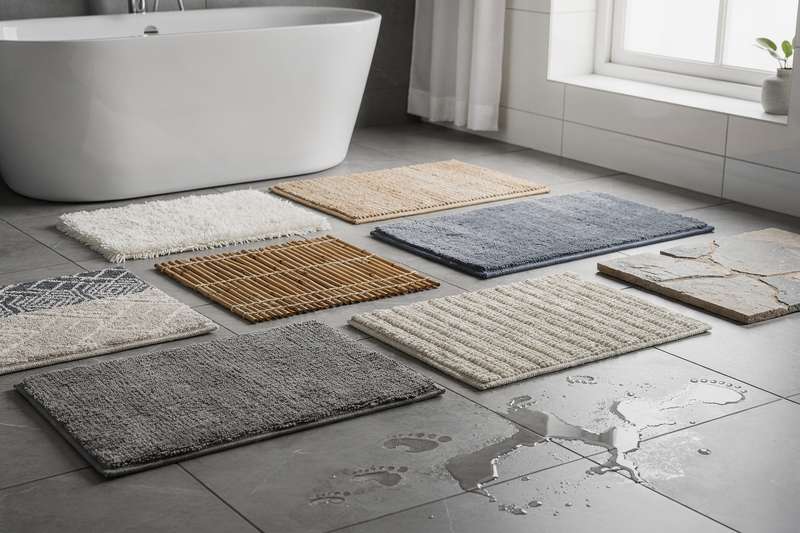
To narrow down the options, we looked at eight bath mats currently available on Amazon UK and assessed them against five core criteria: absorbency (how quickly the mat soaks up water and holds it without spreading puddles), slip resistance (quality and density of the non-slip backing), drying time (how quickly the mat returns to a usable, non-waterlogged state after use), wash durability (whether the material holds its structure, softness and colour after repeated machine washes), and overall comfort underfoot. We also factored in size availability, colour range for bathroom décor flexibility, and what verified buyer feedback patterns consistently praised or flagged. Material construction — chenille, microfibre, memory foam — was evaluated in the context of real bathroom use rather than lab conditions, because a mat that performs brilliantly in a controlled test but grows mouldy in a humid British bathroom is no use to anyone.
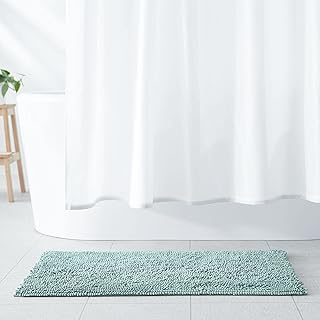
Best Overall: Amazon Basics Non-Slip Chenille Microfibre Bathroom Bath Mat
The Amazon Basics Non-Slip Chenille Microfibre Bathroom Bath Mat earns the top spot not because of any single standout feature, but because it gets almost everything right without costing a fortune. At 53 x 87 cm, it’s one of the larger standard-sized mats in this selection, which means it genuinely accommodates adult feet stepping out of a shower or bath without the mat shifting off to one side. The chenille microfibre construction gives it a noticeably dense, plush feel that holds up well after repeated washing — something that cheaper microfibre mats often fail at, going thin and crusty within a few months.
The non-slip backing is well-distributed, with small rubber or latex-style nubs across a meaningful proportion of the underside. In practice on both ceramic tile and vinyl flooring, the mat stays planted without bunching up at the corners. The seafoam green colourway listed in the title is just one option — you’ll find a range of neutrals and muted tones depending on stock, which makes it easier to co-ordinate with existing towels or wall colour.
Where does it fall short? Drying time is moderate rather than fast — after heavy use this mat needs a couple of hours to fully dry out, so if your household puts two or three people through the bathroom in quick succession each morning, you may find it still damp by the time the last person steps on it. It’s also on the larger side, which is a benefit for most bathrooms but less ideal for very compact en-suites. That said, at a mid-range price point and with a rating of 4.6 stars, this is the mat that delivers the broadest appeal for UK buyers who want quality they can rely on without overthinking the purchase.
One thing to be aware of: chenille mats can shed slightly in the first couple of washes. Run it through once before first use, and it settles. After that, the texture remains consistent. This is the mat we’d recommend to most people reading this guide.
Best Memory Foam Pick: Yimobra Memory Foam Bath Mat
If comfort underfoot is your primary concern — particularly if you stand at a sink brushing teeth, or if older joints make cold hard floors a real issue — the Yimobra Memory Foam Bath Mat is worth serious consideration. Measuring 43 x 61 cm, it sits in the compact-to-standard size bracket that suits most UK en-suites and family bathrooms without overwhelming the space. The memory foam core gives it a noticeably different feel to standard microfibre: it compresses under your weight and rebounds, rather than simply flattening like a thin fabric mat.
Absorbency is solid — the top layer wicks moisture quickly, and the foam layer holds it away from the surface so you’re not standing in a wet patch. Crucially, it’s rated as machine washable, which is a non-negotiable for most households. It holds its shape after washing better than budget memory foam mats, which can develop lumps or lose their rebound once the foam gets wet repeatedly. The non-slip base keeps it stable on smooth flooring, and the 4.4-star rating reflects buyers who found it reliable for everyday use.
The honest tradeoff with memory foam is drying time. This mat takes longer to dry than a pure microfibre option. If you tumble dry it, keep the heat low — high heat can damage the foam layer. Air drying is safer but slower. If your bathroom has good ventilation or you can hang the mat between uses, this isn’t a problem. If it’s going to sit folded or on a damp floor, it can hold moisture for hours, which creates a hygiene concern over time. For people who prioritise cushioned comfort and don’t mind managing drying time, the Yimobra is an excellent choice at a budget-friendly price point.
Best for Small Bathrooms: LuxUrux Small Bath Mat
Not every UK bathroom has room for a full-sized mat. Compact en-suites, cloakrooms, or shower rooms with awkwardly placed fixtures often need something smaller that doesn’t end up crumpled against the base of the toilet or shower tray. The LuxUrux Small Bath Mat at 42 x 60 cm hits a practical size that fits most tight spots without sacrificing the features that matter.
The chenille microfibre construction feels genuinely soft underfoot — LuxUrux positions this as a premium compact mat, and the texture backs that up. It absorbs water well for its size, and the non-slip backing grips a range of flooring types reliably. The mat also dries relatively quickly compared to heavier, thicker options, which is a genuine advantage in smaller rooms where ventilation may be limited. It’s machine washable and holds its pile after repeated washes, which is where some compact mats disappoint.
The main limitation here is obvious: it’s small. If you have large feet, or if two people often use the bathroom in quick succession, you may find yourselves stepping off the mat onto bare floor more than you’d like. It’s not designed to be a full bathroom rug — it’s a targeted step-out mat positioned exactly where you exit the shower or bath. For that specific purpose, it performs well. The 4.3-star rating is consistent with buyers using it as intended. If you’re tempted to use it as your only mat in a larger bathroom, consider sizing up instead.
One practical note: compact mats move around more easily than larger ones, especially on smoother floors. The non-slip backing on the LuxUrux is competent, but no small mat is as stable as a larger one with more surface area. Check the corners periodically if you’re placing it on very smooth vinyl or polished tile.
Best Budget Pick: smiry Non Slip Chenille Bath Mat
At the lower end of the price spectrum, the smiry Non Slip Chenille Bath Mat offers surprisingly good value for what it is. Chenille construction at a budget price point often cuts corners on pile density or backing quality, but this mat holds together respectably across both. It’s described as extra soft, which you can actually feel — it’s not the stiff or scratchy experience you sometimes get from very cheap synthetic mats.
The non-slip base provides adequate grip on smooth flooring — adequate being the operative word. It performs well enough for normal use, but it’s not as aggressive in its grip as the Amazon Basics or DEXI options. On very smooth, freshly cleaned tile it can creep slightly, so if your bathroom floor is particularly slick, you might want to add a mat gripper pad underneath, or consider spending a little more. The mat is machine washable and quick-dry, which matters at this price tier because budget mats sometimes only survive three or four wash cycles before the backing degrades or the pile compresses permanently.
The honest assessment: this is a good mat for a spare bathroom, a holiday let, or if you’re furnishing a bathroom temporarily while waiting to redecorate. For a daily-use main bathroom over several years, the mid-range options in this guide will serve you better. But if you need a soft, absorbent, washable mat at a minimal outlay, the smiry chenille delivers more than its price might suggest. The 4.2-star rating across buyers is fair — broadly positive without being exceptional.
Best for Quick Drying: smiry Microfiber Bath Mat
The smiry Microfiber Bath Mat at 40 x 60 cm distinguishes itself from the brand’s chenille version through its construction material — microfibre rather than chenille loop pile. This matters because microfibre flat-weave mats tend to dry significantly faster than looped chenille or memory foam alternatives. If your main frustration is stepping onto a mat that still feels cold and damp from the morning shower, a microfibre mat is the most direct solution.
The fluffy shaggy texture still provides a comfortable feel underfoot — it’s not the thin, scratchy microfibre you associate with cheap gym towels. The pile is thick enough to absorb a meaningful amount of moisture, but the individual fibres release that moisture back into the air more readily than memory foam or dense chenille. In practice, on a typical British bathroom day with reasonable ventilation, this mat is back to dry or near-dry within an hour or so of use, which is meaningfully faster than most alternatives.
The non-slip backing does its job on standard bathroom flooring, and the mat is machine washable. As with most microfibre mats, avoid high-temperature wash cycles — 30°C or 40°C is sufficient and gentler on the fibres. Don’t use fabric softener, as it can reduce the microfibre’s absorbency over time by coating the fibres. If you wash it with softener and notice it becoming less absorbent, a couple of washes without should restore performance.
Where the smiry microfibre falls slightly short is in long-term plushness. After many washes, microfibre shaggy mats can flatten slightly compared to chenille. It still functions perfectly, but if the cushioned feeling is important to you, this will degrade more noticeably than a denser option. For households that prioritise hygiene and fast turnaround over maximum comfort, this is a strong choice.
Best Mid-Range Performer: DEXI Bath Mat
The DEXI Bath Mat sits at the mid-range tier and justifies that positioning with a noticeably higher-quality feel in person. At 40 x 60 cm in grey (one of the easier colourways to match in UK bathrooms), the microfibre construction is extra soft and the absorbency is reliable — water soaks in quickly rather than beading on the surface, which is a basic requirement that some mats surprisingly fail at.
What sets the DEXI apart from similarly-priced competition is the backing. The non-slip underside is one of the more effective in this group — the material grips without being so aggressive that it marks the floor or leaves a residue on vinyl. It’s particularly stable on ceramic and porcelain tile, which is the dominant floor type in UK bathrooms. The 4.3-star rating across buyers is consistent and positive, with particular praise for wash durability. It retains its structure through repeated laundering better than average for this price tier, which means the investment stretches further over time.
The 40 x 60 cm size is standard rather than generous, so if you’re a larger household or have bigger feet, you may feel the edges of the mat when stepping out. It’s also worth noting the mat is better suited to step-out use than to use as a general bathroom rug — it doesn’t have the size or weight to anchor well in the middle of a room. As a positioned shower or bath exit mat, though, it’s one of the better-executed options in this guide. Pair it with the Rururug set (below) if you also need a toilet mat, or use it solo if your bathroom layout only requires one piece.
Best Memory Foam Budget Option: smiry Memory Foam Bath Mat
Memory foam at a lower price point is always a compromise — the question is where the compromise lands. With the smiry Memory Foam Bath Mat, the compromise is primarily in foam density rather than in surface texture or backing quality, which means the cushioning is softer and less resilient than the Yimobra but still delivers the core memory foam benefit: a noticeably more comfortable feel than a flat microfibre mat.
At 40 x 60 cm, it covers the standard step-out zone. The non-slip base is adequate — not exceptional, but functional on most standard UK bathroom tiles. Machine washable at low temperatures is the key claim, and buyers broadly confirm this works, though some note the mat benefits from air-drying after washing rather than tumble drying to preserve the foam layer. As with any foam mat, high heat in the dryer is the primary enemy of longevity.
The honest limitation is long-term resilience. At the lower price tier, memory foam mats compress faster with repeated use and washing, and after six to twelve months of daily use the cushioning effect becomes less pronounced. If you’re buying this for a guest bathroom that sees occasional use, it will likely stay performing well for years. For a main bathroom in a household of three or four people, the Yimobra is worth the modest step up in investment for better foam density. That said, the smiry memory foam is a fair choice if you want the memory foam experience without the mid-range outlay, and the 4.2-star rating reflects buyers who found it did what they needed.
Best Two-Piece Set: Rururug Bath Mat Sets 2 Piece
Some bathrooms benefit from co-ordinated coverage — a mat at the shower or bath exit and a second contoured mat around the base of the toilet. Buying them separately means wrestling with mismatched colours, textures and pile heights that end up looking chaotic rather than intentional. The Rururug Bath Mat Sets 2 Piece solves this by delivering both pieces together in a matching colourway — the dusk blue option listed is a versatile neutral that works with a wide range of UK bathroom schemes.
The microfibre construction on both mats is consistent in texture and absorbency, and the non-slip plastic-point backing (a slightly different approach to traditional rubber nubs — a point-pattern plastic base) provides reasonable grip on smooth flooring. Buyers note the backing is effective without marking floors over time, which is a common complaint with some rubber-backed mats on vinyl. Both mats are machine washable, which is essential when you’re dealing with a toilet mat as well as a shower mat — the hygiene requirements are different but both need easy laundering.
Where the two-piece approach makes tradeoffs: individually, neither mat in this set is quite as plush or as robustly backed as the DEXI or Amazon Basics single mats at the same or similar price points. You’re paying partly for the co-ordination and convenience of a matched pair. If your priority is absolute performance in the shower mat, buy a dedicated single mat. If you want a bathroom that looks deliberately styled with co-ordinated floor coverage, the Rururug set is the more practical and aesthetically coherent solution. The 4.2-star rating suggests most buyers are satisfied with that tradeoff.
What to Look For When Buying a Bath Mat
- Material and pile type: The main choice is between chenille, microfibre, and memory foam. Chenille is looped and plush but slower to dry. Microfibre dries faster and is easy to launder. Memory foam is the most cushioned but takes longest to dry and is more sensitive to high wash temperatures. Pick based on what frustrates you most — if it’s damp mats, choose microfibre; if it’s comfort, choose memory foam; if it’s durability, quality chenille is hard to beat.
- Non-slip backing: The backing is as important as the top surface — a beautiful mat that skids on wet tile is a hazard. Look for dense rubber or latex nubs, or point-pattern plastic bases that distribute grip evenly. Check buyer feedback specifically for comments on whether the mat moves in use, particularly on smoother flooring types like polished tile or vinyl.
- Size: Measure your bathroom before you order. A mat that’s too small leaves wet feet on bare floor; one that’s too large bunches up against the bath, toilet or door. Standard UK bath mat sizes run from roughly 40 x 60 cm up to 50 x 80 cm for a single mat. If you have a walk-in shower or freestanding bath, consider whether you need a larger piece or a runner-style mat.
- Wash durability: A bath mat that deteriorates after five washes costs more per use than a slightly more expensive mat that holds up for three years. Check the care label and buyer reviews for wash longevity. Avoid mats that require dry-cleaning or hand-wash only — in a busy UK household, machine washability is non-negotiable. Use 30°C–40°C cycles, avoid fabric softener on microfibre, and keep memory foam away from high heat in the dryer.
- Drying time: If multiple people use the bathroom in quick succession, drying speed matters. Microfibre dries fastest, chenille moderately, and memory foam slowest. Good ventilation in the bathroom helps any mat dry faster — use the extractor fan or crack a window. For slow-drying mats, hanging the mat over the bath or towel rail between uses extends its usable life and reduces the risk of mould.
- Colour and décor fit: This is subjective but worth thinking about practically. Lighter colours show watermarks and staining more readily; darker colours hide everyday grime but can fade more visibly after repeated washes. Mid-tones — grey, dusk blue, taupe — tend to be the most forgiving for busy family bathrooms. Always check whether the colour shown on Amazon matches reviews from buyers, as screen colour calibration varies.
- One mat or a set: If your bathroom layout has distinct zones — shower exit and toilet base — a co-ordinated two-piece set gives you matching coverage without separately hunting for compatible pieces. If you only need a single step-out mat, don’t pay for a set you won’t use.
Verdict
For the majority of UK buyers — whether you’re outfitting a family bathroom, an en-suite, or a guest room — the Amazon Basics Non-Slip Chenille Microfibre Bathroom Bath Mat is the pick we’d choose without hesitation. It offers the best combination of size, plushness, non-slip reliability and wash durability across the eight mats reviewed here. The 4.6-star rating is the highest in this group, and it reflects a product that consistently delivers across the metrics that matter most in daily use.
If comfort is your overriding priority and you’re willing to manage drying time carefully, the Yimobra Memory Foam Bath Mat is a strong second choice, particularly for households where cold floors are a real concern in the mornings. For small bathrooms, the LuxUrux Small Bath Mat is the compact option that doesn’t compromise on softness. And if you need to cover two zones without mismatched styling, the Rururug Bath Mat Sets 2 Piece makes sense as a practical, co-ordinated solution. But for most people, start with the Amazon Basics — it’s hard to go wrong.
We were not paid to feature any specific product in this guide. All opinions are independent and based on publicly available specifications, verified buyer feedback patterns, and category research.
Quick Comparison Table




FAQ
How often should you wash a bath mat?
Most households should wash their bath mat once a week, or every two weeks at minimum. Bath mats absorb significant moisture and skin cells with every use, making them a breeding ground for bacteria and mould if left too long. If you have a household with several daily users, lean towards weekly washing. Always check the care label — most cotton and microfibre mats handle 40°C machine washes well, while memory foam mats often prefer 30°C and air drying.
What’s the difference between a bath mat and a bathroom rug?
A bath mat is positioned specifically at the exit point of a shower or bath, designed to absorb water and prevent slipping on wet flooring. A bathroom rug is generally larger, used more decoratively across a broader area of the bathroom floor, and may not be designed for heavy moisture absorption. In practice the terms overlap, but when buying specifically for shower step-out use, prioritise absorbency and non-slip backing over decorative pile height.
Are memory foam bath mats safe to machine wash?
Most memory foam bath mats are machine washable, but they require care. Use a cool or warm cycle (30°C–40°C), gentle or delicate setting, and avoid high-speed spin cycles which can damage the foam core. Never tumble dry on high heat — air dry flat or on a towel rail instead. Check the specific care label of your mat, as some cheaper memory foam mats may not survive repeated machine washing as well as the manufacturer claims.
How do I stop my bath mat from sliding on tile floors?
Start by making sure your floor is clean and dry before placing the mat — soap residue or floor conditioner can significantly reduce grip. If the mat still moves, consider a non-slip rug gripper pad or rug tape placed underneath. Choosing a mat with a denser, more aggressive non-slip backing from the outset is more effective than retrofitting grip to a poorly-backed mat. Rubber-nub and point-pattern plastic bases both perform well on ceramic tile, which is the most common bathroom floor type in UK homes.
Can I use a bath mat on underfloor heating?
Most microfibre and chenille bath mats can be used over underfloor heating without issue, as the heat levels involved are low. Memory foam mats require more caution — sustained heat can degrade the foam layer over time. If you have underfloor heating, opt for a thinner microfibre mat and check the manufacturer’s guidance. Avoid leaving any mat permanently on an underfloor-heated surface if the mat has a dense rubber backing, as this can trap heat and discolour the flooring.
What size bath mat do I need for a UK bathroom?
The most practical size for a standard UK bathroom shower or bath step-out zone is 40 x 60 cm to 50 x 80 cm. Measure the specific area where you want the mat to sit and leave a few centimetres clearance on each side so it lies flat without curling against fixtures. For larger bathrooms or walk-in showers, a longer runner-style mat may cover the step-out zone more effectively. For compact en-suites, 40 x 60 cm is usually sufficient and easier to manage in a smaller machine wash load.