Picture this: it’s Saturday morning, you’ve set aside two hours to get the house properly clean, and by hour one you’re already frustrated. The mop leaves streaky smears across the kitchen floor. The duster just redistributes dust rather than capturing it. Your arms ache from scrubbing the shower tiles with a sponge that’s losing the battle against limescale. You’ve tried the own-brand supermarket sets, you’ve watched the cleaning content online, and you’re still not getting results that match the effort you’re putting in. The culprit isn’t always the cleaning product — it’s often the tool itself. The wrong brush head, a handle that’s too short, a duster that sheds fibres rather than trapping them — these are the things that quietly sabotage your cleaning routine. The good news is that upgrading the right tool in the right spot can cut your cleaning time dramatically while actually delivering better results. This guide focuses on the tools — the physical equipment — that make the biggest difference in a typical UK home.
How We Evaluated These Picks
Each tool here was assessed against a set of practical criteria: how well it performs its primary job, whether it’s genuinely easy to use for an average person (not just someone who cleans professionally), how durable it looks and feels, and what the real-world tradeoffs are for everyday household use. We looked at verified buyer feedback patterns across Amazon UK, paid close attention to what frustrated users flagged as much as what delighted them, and weighed up category-specific factors — things like reach for dusting tools, IPX waterproof ratings for anything used in wet environments, and bristle type for scrubbing tools. We also considered whether each tool is appropriate for the room or surface it claims to target, because a general-purpose tool that does six things poorly is less useful than a specialist that does one thing very well. Every pick below has a specific use case, and we’ve been honest about where each one falls short.
Best Electric Spin Scrubber for Bathrooms
The Leebein Electric Spin Scrubber is the kind of tool that makes you wonder how you cleaned a bathroom without one. It’s a cordless, rechargeable scrubber with an extendable handle and eight replaceable brush heads — that combination of reach and versatility is what separates it from cheaper fixed-head alternatives.
The core appeal here is ergonomics. Bathroom cleaning is physically demanding precisely because so much of it happens at awkward angles: low down near the base of the toilet, at arm’s length on the back wall of the shower, along the grout lines of tiles that require sustained pressure to get properly clean. With a spin scrubber, the motor does the rotational work, so your job is just to steer and apply light pressure — your wrists and elbows will thank you after a full bathroom session. The extendable handle means you can reach the top of shower enclosures or behind the toilet without contorting yourself.
Eight brush heads is a meaningful number. You’ll typically get a flat head for large tile surfaces, a round head for general scrubbing, a corner head for grout lines and angles, and smaller heads for taps, plughole surrounds and similar fiddly spots. The heads lock in and swap out quickly — look for a twist-and-click mechanism rather than a screw fitting, as the former makes mid-clean swaps much faster.
The tradeoffs are worth knowing. Battery life on spin scrubbers in this category typically gives you enough runtime for one thorough bathroom clean per charge, but if you’re doing a full house session — bathroom, kitchen, utility room — you may need to recharge partway through. The motor is also audible; it’s not loud enough to be a problem but it’s not silent either. For anyone with a small flat bathroom or who only needs to tackle tiles and grout a couple of times a week, this sits in the sweet spot of useful and affordable without overcomplicating things.
One thing to verify before you buy any electric scrubber: check the IP rating. A tool used near water — showers, sinks, baths — should have at least IPX5 (protected against water jets). The Leebein is designed for bathroom use, but always confirm current product specifications on the listing before purchase. This model carries a solid 4.4/5 rating, which for a cleaning tool with regular heavy use is a reliable indicator of durability and performance.
Best Telescopic Duster for High-Up Surfaces
The Fogray 2026 Upgraded Extendable Feather Duster solves one of the most tedious cleaning jobs in any home: getting dust off ceiling corners, light fittings, the tops of wardrobes, and stairwell banisters without climbing on furniture or dragging out a ladder every time.
What makes this worth picking over the average supermarket duster is the combination of microfibre construction and the soft silicone cap at the tip. Microfibre is genuinely better than natural feather or cheap synthetic alternatives for dust capture — the fibres have an electrostatic effect that traps particles rather than brushing them off into the air to resettle elsewhere. The silicone tip protects delicate surfaces like lampshades and painted architraves from scratching, which matters more than it sounds if you’re reaching up to clean a pendant light or the top rail of a picture frame.
Telescopic reach is the other key factor. The ability to extend the handle means you can clean cobwebs from a 3-metre ceiling corner without a stepladder, which isn’t just convenient — it’s genuinely safer for older household members or anyone in a tall Victorian property with high ceilings. Look at the minimum and maximum extension range when comparing telescopic dusters; some compact versions don’t extend far enough to be truly useful for high work.
Where this type of duster falls short is on heavily soiled surfaces. A telescopic duster is a maintenance tool — it’s for keeping up with regular dust accumulation, not for shifting a layer of grease-coated dust above a kitchen extractor hood or sticky grime near a wood-burning stove. For those jobs, you’d want a damp microfibre cloth on a flat mop head. The Fogray scores 4.5/5, which reflects how well it performs for its intended light-dusting role. It’s also a budget pick, making it a genuinely low-risk upgrade to your cleaning kit.
Maintenance is simple: microfibre duster heads should be washed occasionally (most are machine washable) to restore their dust-trapping capability. A duster that’s clogged with old debris will simply move dust around rather than capturing it. Check the washing instructions on the listing before your first use.
Best for Deep-Cleaning Carpets and Upholstery
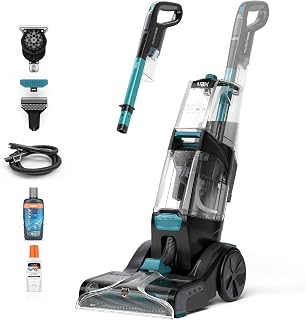
If your home has carpets, a dog, a cat, or children — or any combination of the four — the Vax Platinum SmartWash Pet-Design Carpet Cleaner Machine is the tool that fills the gap between your regular vacuum and a professional deep clean. It rated 4.5/5 from 694 verified buyers, which is a meaningful sample for a premium-priced appliance — that consensus is hard to fake.
Vax is a well-established UK brand in the carpet cleaner space, and the Platinum SmartWash Pet variant is specifically engineered for homes dealing with pet hair, pet odours, and the particular ground-in grime that builds up in high-traffic carpet areas. The machine works by injecting a water-and-detergent solution into the carpet pile, agitating it with rotating brushes, and then extracting the dirty water back into a tank. The result is a level of clean that vacuuming simply cannot achieve.
The “SmartWash” feature on this model refers to automatic solution control — it adjusts the amount of cleaning solution based on your brush direction, which simplifies the process for anyone using a carpet washer for the first time. Push forward to clean, pull back to dry — it’s genuinely intuitive. The upright format means you’re not crouching over it, and the inclusion of a handheld spot cleaning attachment makes it useful for stairs, car interiors, and sofa cushions beyond just flat floor carpets.
The tradeoffs are real, though. This is a large appliance — it needs storage space, and it takes a bit of setup time compared to just running a vacuum. Carpets also need adequate drying time after a wash; in a UK winter with limited ventilation, that can mean staying off a room for several hours. It’s not a daily-use tool — it’s something you’d deploy for a seasonal deep clean or after a specific incident (red wine, pet accident, muddy football boots in the hallway). For renters in small flats without carpet, it’s clearly not the right pick. But for homeowners with pets and substantial carpeted areas, it replaces the cost of hiring a professional carpet cleaner multiple times over.
Budget for the proprietary cleaning solution as an ongoing consumable cost. Generic carpet cleaner solutions can work but may void any warranty or affect machine performance; check what Vax recommends on the listing.
Best Floor Scrubbing Brush for Kitchens and Hard Floors
The CLEANHOME Floor Scrubbing Brush with Metal Telescopic Handle is the low-tech answer to a surprisingly common problem: getting a proper scrub on kitchen tiles, bathroom floors, and any hard surface that accumulates grime in the grout lines or textured surface areas that a flat mop just skates over.
The key features here are the stiff-bristle head (nearly 15 inches wide, which covers decent ground per stroke) and the rubber squeegee strip integrated into the same head. That combination matters because it means you can scrub with the bristles, then flip or push with the squeegee to move the dirty water towards a drain or doorway for collection — you’re not just spreading dirty water across the floor. The metal telescopic handle is preferable to plastic for this kind of heavy-duty scrubbing work because it won’t flex under pressure when you’re leaning into it.
This is a proper back-to-basics tool. There’s no battery to charge, no heads to lose, no motor to service. If you have quarry tiles, stone floors, or any textured surface that collects grease or mud and needs a stiff-bristle attack rather than a gentle mop, this is the straightforward solution. It’s also worth having for cleaning patios, conservatory floors, and utility room floors — the kind of surfaces that need periodic effort rather than daily maintenance.
Where it falls short is precisely in its simplicity: it’s not the right tool for sealed wood floors, luxury vinyl tile, or any surface that could be scratched by stiff bristles. And because it requires you to bend into the work (even with an extended handle, you’re more upright than with a mop but still working the handle), it’s physically demanding for a large floor area. Think of it as the specialist tool you reach for when your regular mop isn’t cutting it, rather than your daily floor cleaner. The 4.5/5 rating confirms that buyers who understand what they’re buying are consistently happy with it.
Best Budget Electric Scrubber for Versatile Use
The LyriFine Electric Cleaning Brush is a credible option if you want an electric spin scrubber without committing to a higher spend. It comes with seven brush heads, a long handle for extended reach, dual-speed settings, and — importantly — a full-body IPX7 waterproof rating.
IPX7 is a meaningful spec here. It means the unit can withstand immersion in water up to a certain depth for a short period, which is a more comprehensive waterproofing standard than the IPX5 (water jet resistance) you’ll see on many cheaper alternatives. For a tool you’re actively using in showers and over sinks, that extra protection against water ingress translates to a longer lifespan. It’s not a detail manufacturers always highlight clearly, so it’s worth checking on the current listing.
The dual-speed setting is practically useful. A lower speed gives you more control for delicate surfaces or intricate work — grout lines, around taps, the edges of ceramic fixtures — while the higher speed is better for blasting through general tile grime and mildew. Seven heads covers most bathroom and kitchen scenarios. The long handle means you can use it standing upright rather than on your knees.
It scores 4.3/5, which is slightly lower than the Leebein model — the gap likely reflects some inconsistency in motor durability or head fitment quality that shows up in a minority of reviews. For occasional use, that’s probably fine. For someone who wants to scrub bathrooms multiple times a week over years, the Leebein’s slightly higher rating might be worth considering. As a budget entry point for electric scrubbing, though, the LyriFine gives you the core functionality at a lower outlay — making it a reasonable starting point if you’re not sure you’ll commit to the electric-scrubber habit.
Battery runtime varies by speed setting — at higher speed you’ll burn through charge faster, so factor that in if you have multiple rooms to do in one session.
Best Shower Squeegee for Streak-Free Glass
The dancemoon JustHang Shower Squeegee is the single-piece silicone squeegee that quietly prevents more cleaning work than it causes. It rated 4.8/5 — the highest in this round-up — which for a straightforward tool reflects how well it does a simple job consistently.
The principle is simple: wipe your shower screen and tiles down after each use and you slow the build-up of soap scum and limescale dramatically. UK water in hard-water areas (most of the South and Midlands) deposits calcium and magnesium on glass surfaces with every rinse; a squeegee takes those minerals off before they bond to the glass. The result is that your bathroom looks cleaner between proper cleans, and when you do clean properly, there’s less stubborn limescale to battle.
What distinguishes this particular model is the all-one-piece silicone construction with a built-in hook. The absence of a separate metal blade or separate rubber strip means there are no joints to collect mould or mineral deposits in the squeegee itself — a genuine quality-of-life improvement over cheaper designs where the blade tracks become grimy faster than the surface you’re trying to clean. The hook means it hangs in the shower after use, which sounds obvious but matters: a squeegee that lives somewhere inconvenient doesn’t get used after every shower.
Its limitation is equally obvious: this is a maintenance tool, not a heavy-duty cleaner. It won’t remove established limescale deposits — for that, you need a descaling solution and a scrubbing tool. Think of this as the prevention step that reduces how often you need the deep-cleaning tools. At a budget price point, it’s also the easiest upgrade in this guide: low cost, zero ongoing consumables, simple to use, and it demonstrably reduces maintenance cleaning time.
Best BBQ and Grill Cleaning Brush
The TNTOR Grill Brush handles the specific and stubborn job of cleaning barbecue grates — one of the most neglected cleaning tasks in many UK households, particularly in the months after the garden season ends and the BBQ gets put away with residue still on the grates.
Grill cleaning is a niche but necessary task. Baked-on grease and carbon residue from repeated cooking sessions bonds to grate surfaces in a way that no general cleaning tool is designed to handle. You need a combination of stiff wire bristles for scraping carbon deposits, a metal scraper for heavier accumulations, and enough handle length to keep your hands away from a hot grill if you’re cleaning it shortly after use. The TNTOR covers all three: stainless steel bristles, a scraper integrated into the head, and an extra-long handle.
The 4.6/5 rating suggests it delivers on those fundamentals. Stainless steel bristles resist the rust that plagues cheaper wire brushes — if the bristles start to rust, they can shed onto the grate, which is not something you want near food. Check bristle condition before each use and replace the brush if you notice any loosening or corrosion; this is standard safety advice for any wire grill brush regardless of brand.
The limitations of this tool are scope-related rather than quality-related: it’s designed specifically for grill grates and isn’t useful elsewhere. But if you’re a regular BBQ user through the UK spring and summer, a dedicated grill brush is meaningfully better than improvising with a scrubbing pad or stiff household brush. Store it somewhere dry between uses to extend bristle life. This is the kind of purchase you make once and forget about until next grilling season.
Best Disposable Duster Kit for Everyday Dust Maintenance
The Flash Duster Dust Magnet Starter Kit takes a different approach to dusting than the telescopic microfibre duster above: rather than a washable head you maintain, this system uses disposable refill sheets that trap and lock in dust, then get thrown away.
Flash is a household name in UK cleaning, and this particular duster format works well for the quick daily or twice-weekly pass around a living room or bedroom — surfaces like TV units, bookshelves, skirting boards, and windowsills that gather dust consistently but don’t need a deep clean. The electrostatic fibre sheets pull dust off surfaces rather than just moving it, and because you dispose of the sheet after use, you’re not re-depositing trapped dust somewhere else.
The starter kit format (one handle plus thirteen refills) gives you enough refills to establish whether this dusting method works for your household before committing to ongoing refill purchases. That’s a sensible way to trial a consumable-based cleaning system. The 4.3/5 rating is solid for a product in daily use across a range of home environments.
The honest tradeoff is ongoing cost: disposable refills are a recurring expense in a way that a washable microfibre duster is not. If you dust frequently, the cost adds up over a year. However, for convenience and for households where someone prefers not to deal with washing duster heads, the disposable format offers genuine ease. It’s also lighter and more flexible than any rigid telescopic duster, which makes it practical for quick passes over intricate objects — ornaments, photo frames, speaker grilles — where you need something soft and yielding rather than structured.
For the best value, pair this with the Fogray telescopic duster from above: use the Flash Duster for low and mid-level surfaces in your regular routine, and reach for the telescopic model when you’re tackling high ceilings and cobwebs. They complement each other rather than duplicating effort.
What to Look For When Buying Cleaning Tools
- Surface compatibility: The single most important question is whether a tool is appropriate for the specific surface you’re cleaning. Stiff-bristle brushes are excellent on quarry tile but will scratch sealed wood or luxury vinyl. Microfibre is gentler but less abrasive. Check manufacturer guidance and err on the side of softer if you’re unsure about a surface’s resilience.
- Waterproofing rating for electrical tools: Any powered cleaning tool used near water — electric scrubbers, rechargeable brushes — should carry a clear IP (Ingress Protection) rating. IPX5 means protected against water jets; IPX7 means protected against short-term immersion. Look for at least IPX5 for bathroom use. Tools without a stated IP rating should not be used near wet surfaces.
- Handle ergonomics and reach: Long handles reduce the amount of bending and crouching involved in floor and low-level cleaning; telescopic handles add versatility for high-up work. Consider your own height and the layout of the spaces you clean most often — a handle that’s too short will cause back strain over a long session.
- Replaceable heads and consumables: For tools that wear out at the business end — scrubber brushes, duster pads, squeegee blades — check that replacement heads or refills are readily available and reasonably priced before you buy. A tool that’s cost-effective to buy but expensive or difficult to maintain is a false economy.
- Battery life and charging for cordless tools: Electric scrubbers and cordless cleaning tools vary considerably in runtime. If you’re cleaning a large home or multiple rooms in one session, look for at least 60 minutes of runtime on a full charge. USB-C charging is more convenient than proprietary connectors.
- Build quality indicators: Metal components (handles, scraper bodies) outlast plastic equivalents in high-effort scrubbing and cleaning tasks. Look at joint quality on telescopic handles — these are the first points of failure on cheaper versions. Check product listings for buyer feedback specifically mentioning durability after extended use rather than just initial impressions.
- Storage and size: Cleaning tools have to live somewhere. A bulky carpet washer needs a cupboard; a squeegee needs a hook in the shower. Consider how a tool will be stored before buying — a tool that’s inconvenient to access gets used less, which defeats the point entirely.
Verdict
If you’re upgrading just one tool in your cleaning kit, start with an electric spin scrubber for the bathroom — it’s the single change that makes the biggest difference to both results and the physical effort involved. Between the two options here, the Leebein Electric Spin Scrubber edges ahead for most buyers: eight brush heads, a solid 4.4/5 rating, and a cordless format make it the most versatile starting point.
If you already have an electric scrubber and want the next biggest impact upgrade, the Vax Platinum SmartWash Pet-Design Carpet Cleaner is the standout premium pick — 694 verified reviews at 4.5/5 is genuine consensus, and for any home with carpets and pets it pays for itself quickly versus professional cleaning costs.
For a no-fuss, low-cost addition, the dancemoon JustHang Shower Squeegee at 4.8/5 is the highest-rated tool in this guide and the easiest win — a daily 30-second habit that meaningfully reduces your bathroom cleaning load over time. Buy all three together and you’ve covered the three biggest problem areas in most UK homes: bathrooms, carpets, and shower enclosures.
We were not paid to feature any specific product in this guide. All opinions are independent and based on publicly available specifications, verified buyer feedback patterns, and category research.
Quick Comparison Table




FAQ
What is the most useful cleaning tool for a bathroom?
An electric spin scrubber is the most impactful single upgrade for bathroom cleaning. The rotary action breaks down soap scum and limescale on tiles, grout, and fittings far more effectively than manual scrubbing with a sponge or cloth, and it does so with significantly less physical effort. Look for a cordless model with multiple brush heads and at least an IPX5 waterproof rating.
Is a carpet cleaner machine worth buying or should I just hire one?
If you have pets, children, or heavily used carpets and you deep clean more than twice a year, owning a carpet washer typically pays for itself within a year or two compared with hiring costs. Hire makes more sense if you only need a deep clean occasionally or have a very small carpeted area. Machine ownership also means you can respond immediately to spills and accidents rather than waiting for a hire appointment.
How do I stop limescale building up on my shower screen so quickly?
The most effective prevention habit is to squeegee your shower screen and tiles immediately after each use. This removes the mineral-laden water before it evaporates and deposits calcium and magnesium on the glass. In hard-water areas (much of England), this single habit dramatically extends the interval between proper descaling cleans. A silicone squeegee with a built-in hook, stored in the shower itself, makes the habit genuinely easy to maintain.
Are wire grill brushes safe to use on barbecue grates?
Wire grill brushes are safe if used carefully and replaced regularly. The risk with wire brushes is bristle shedding — loose wires can end up on the grate and potentially transfer to food. Inspect your brush before each use and replace it at the first sign of loose or fraying bristles. Stainless steel bristles resist corrosion better than standard wire and tend to last longer before shedding begins.
What’s the difference between a disposable duster and a washable microfibre duster?
Washable microfibre dusters have a lower ongoing cost and are better for the environment, but they require washing to maintain their dust-trapping effectiveness. Disposable duster sheets are more convenient and ensure a fresh, fully effective surface every time, but the refill cost adds up with frequent use. For everyday light dusting, disposable sheets are more practical; for periodic high-reach dusting (ceiling corners, above wardrobes), a reusable telescopic microfibre duster is the better choice.
Can I use an electric spin scrubber on all bathroom surfaces?
Most bathroom tiles, porcelain fittings, and grouted surfaces handle electric spin scrubbers well. Use a softer brush head on acrylic baths and shower trays — these can be scratched by abrasive bristles. Avoid using stiff rotating heads on chrome fittings and plated surfaces; a softer head at lower speed is safer for those areas. Always check the brush head guidance from the manufacturer and start with lighter pressure on any surface you’re using an electric scrubber on for the first time.