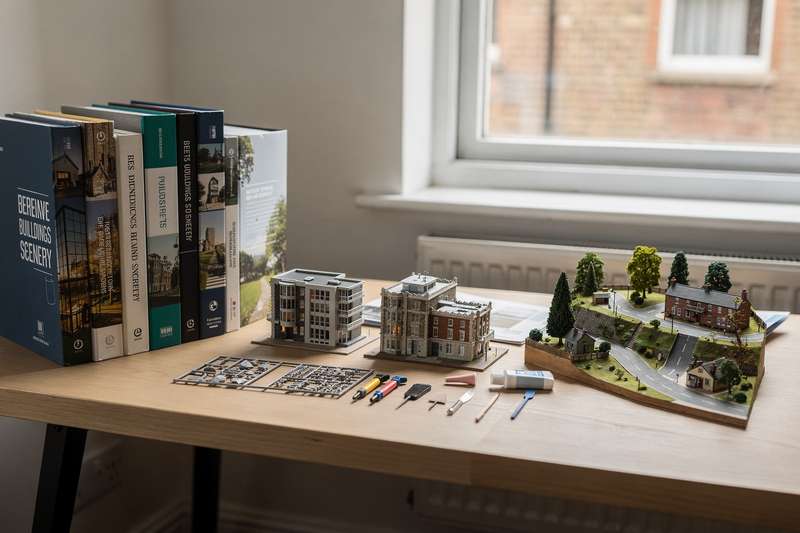
You’ve been staring at a half-finished model railway layout for three weekends running. The trackwork is done, the locomotives run smoothly, and yet the whole thing looks oddly hollow — bare green board where a village should be, no sense of place, no story. Or perhaps you’re an architecture enthusiast who has just moved house and wants a proper coffee-table reference that earns its shelf space rather than gathering dust. Maybe you’re a wargamer trying to bring a 28 mm battlefield to life and finding that a bag of static grass and some vague YouTube tutorials isn’t quite cutting it. Whatever the scenario, you’ve typed some version of “best buildings and scenery” into a search bar and been hit with a wall of results that mixes serious modelling handbooks with novelty tree sets, local history titles with landscaping tools. This guide cuts through exactly that confusion.
The challenge with this category is that “buildings and scenery” spans at least three distinct audiences: modellers and hobbyists who need practical techniques and physical materials; architecture lovers who want authoritative reference books; and readers interested in local or regional architectural history. The best pick for one person may be actively useless for another. What you need is honest guidance that names each product for what it actually is — and tells you plainly whether it fits your situation.
How These Picks Were Evaluated
Each product here was assessed against a consistent set of criteria: depth and accuracy of content (for books) or physical quality and value (for modelling materials); relevance to a UK buyer’s needs; verified buyer feedback patterns drawn from Amazon ratings and review counts; and genuine fit within the buildings-and-scenery category. Products with very few reviews were noted carefully — a low review count isn’t automatically a disqualifier, but it means less collective buyer wisdom to draw on, and that’s flagged honestly in the relevant sections. Off-topic or duplicate products were excluded regardless of their Amazon listing placement. The result is a tightly curated set of picks that each serve a distinct reader type, from the dedicated model railway enthusiast to the architecture bookshelf builder.
Best Practical Guide for Model Railway Scenery
Building Realistic Model Railroad Scenery is the standout practical handbook in this category, and with 194 reviews averaging 4.8 out of 5 stars it has earned that position through consistent real-world use rather than marketing. If you own a model railway layout and feel that the scenic side of the hobby is where you’re weakest, this is the book to reach for first.
The book walks you through the full scenery-building process from bare baseboard to finished landscape: groundwork preparation, rock casting, water effects, vegetation, and — crucially — buildings placed in context. What separates it from generic craft guides is its focus on realism as a discipline, not just a goal. You’ll learn how prototype landscapes actually behave — how hillsides erode, how trackside vegetation clusters, how a station building relates to the surrounding streetscape — and then you’ll learn techniques to replicate that on a model. The approach is methodical without being dry, and the photography throughout gives you clear visual targets to aim at.
For UK modellers, there’s a slight caveat worth naming: the book originates from an American publishing tradition and many of the prototype examples lean North American. OO gauge and N gauge hobbyists working to British outline will find the techniques fully transferable, but you’ll need to mentally translate some of the scenic references. That said, the fundamental methods — foam carving, plaster casting, static grass application, scratch-building simple structures — are universal. The scale doesn’t change how you mix texture paste.
This is not a coffee-table book. It’s a working manual that you’ll want to keep near the layout table, probably getting paint and flock on the cover within a few months. If that sounds right to you, it absolutely delivers. Where it falls slightly short is on electronics-integrated scenery (lighting buildings realistically, animated water features) — those areas are touched on but not the book’s strength. For a pure scenic modelling foundation, though, nothing in this price range comes close.
Best Architecture Reference Book
Great Buildings: The World’s Architectural Masterpieces Explored and Explained by DK is the architecture reference that genuinely earns its place on a serious bookshelf. Rated 4.8 out of 5 stars from 39 reviewers, it sits in the tradition of DK’s large-format illustrated encyclopaedias — which means superb photography, clear cutaway diagrams, and explanatory text that doesn’t talk down to you but doesn’t require a degree to follow either.
The scope here is genuinely global and spans centuries: ancient structures, Gothic cathedrals, Baroque palaces, modernist landmarks, and contemporary architectural statements all get coverage. Each building entry typically includes exterior photography, a structural cutaway or plan, and explanatory annotations that tell you why design decisions were made, not just what they look like. If you’ve ever stood in front of a famous building and felt you were missing the full picture, this book provides the visual and contextual vocabulary to understand it properly.
The DK format is both its strength and its limitation. You get breadth — an enormous range of buildings across cultures and eras — but depth on any single structure is necessarily limited. If you’re a professional architect or an academic, you’ll quickly want more. For a well-informed general reader, an architecture enthusiast, or someone who travels regularly and wants to understand what they’re looking at, the balance is exactly right. It also works well as a gift for someone who has expressed interest in architecture but hasn’t found a clear entry point into the subject.
The book is a substantial physical object — DK produces these to high production standards — so it photographs well on a shelf and holds up to repeated browsing. If you’re building a home library around architecture and design, this belongs early in that collection. Just manage expectations: it’s a survey, not a deep-dive monograph, and it’s stronger on iconic landmarks than on vernacular or industrial architecture.
Best for UK Architectural Heritage
Britain’s Best Buildings takes a more focused and distinctly British lens, with a rating of 4.5 out of 5 stars from 11 reviewers. Where the DK volume takes you around the world, this title grounds itself in the UK’s own architectural story — from medieval parish churches and Tudor manor houses through to Georgian terraces, Victorian civic buildings, and twentieth-century modernism.
The format is deliberately accessible: rather than exhaustive technical analysis, it presents each building in a way that invites you to go and visit, understand what you’re looking at when you get there, and appreciate why it matters within British architectural history. That makes it genuinely useful as a companion to actual travel around the country, not just armchair reading. If you’ve ever walked past a handsome building in a town centre and wished you knew more about it, this is the kind of book that starts to answer those questions in a satisfying way.
With 11 reviews the sample is smaller, so there’s less collective feedback to draw on compared to the DK volume. The reviewers who have bought it lean positive, and the BBC Books provenance (the title is associated with a BBC series) gives it a reasonable baseline of editorial credibility. It’s written to be enjoyed rather than studied, which is either a feature or a limitation depending on what you want. Architecture students or serious scholars will find it light; anyone who loves British buildings and wants to understand them better will find it genuinely rewarding.
One practical note: because it covers Britain broadly rather than any single region, it naturally can’t go deep on any one area. If you want local granularity — the specific story of buildings in your town — you’ll want to supplement it with a regional or local title. Think of this as the overview that tells you where to look, not the definitive account of any single place.
Best for Miniature Landscape Trees
70PCS Mixed Model Trees, 1.5-2.4 inch Mini Miniature Landscape Trees for DIY Building Train Railways Natural Green Landscape Diorama Scenery is a practical scenic material set aimed squarely at modellers, wargamers, and diorama builders. With 57 reviews at 4.4 out of 5 stars, it has enough real-world feedback to give a clear picture of what you’re getting.
The set provides 70 individual model trees in a mixed range of heights — broadly suitable for OO gauge, HO scale, and many wargaming terrain applications. The variety within a single pack is useful: rather than 70 identical trees (which immediately looks artificial), the mixed sizes let you create natural-looking groupings with canopy variation. The trees come pre-assembled in the sense that the foliage is already applied, which saves considerable time compared to making trees from scratch with wire armatures and scatter material.
The tradeoff is fidelity. These are entry-level scenic trees rather than premium hand-crafted specimens, and up close on a well-lit layout the foliage texture won’t fool a scrutinising eye. The colour consistency can also vary slightly between batches — something that experienced modellers manage by mixing batches or adding their own weathering washes, but that might frustrate a newcomer expecting uniformity straight from the box. Used in groups and at normal viewing distances, though, they read convincingly as trees, which is the actual test for scenic modelling.
For a beginner building their first layout or diorama on a budget, this set is a sensible starting point. You get enough trees to populate a meaningful area without spending the kind of money that premium scenic suppliers charge for smaller quantities. More experienced modellers might use packs like this as background filler — quickly populating mid- and far-distance scenery — while reserving more detailed hand-crafted trees for the foreground. That’s a legitimate and cost-effective approach to scenic hierarchy.
Best for Static Grass Scenic Detail
120 Grass Tufts for Model Railways, OO Gauge & HO Scale Scenery – Static Grass Clusters for Dioramas, Wargaming Terrain, Miniature Bases addresses a specific but important gap in the scenic modeller’s toolkit: ready-made grass tufts that can be applied directly to a layout or wargaming base without needing a static grass applicator. With 126 reviews at 4.2 out of 5 stars, this is one of the more widely tested products in this selection.
Grass tufts are a genuinely different scenic element from scatter grass or flock. Rather than sprinkling loose material across a base, tufts are pre-formed clumps with a peel-and-stick backing — you place them individually to suggest specific vegetation growth, tufted field edges, trackside weeds, and similar detail work. The result is more controlled and naturalistic-looking than broadcast scatter, particularly around structures where you want to suggest overgrowth at wall bases or between sleepers on a less-maintained section of track.
The 120-piece count is generous enough to cover a reasonable scenic area, and the OO and HO scale callout in the listing makes it explicit that the product is sized for the UK’s dominant model railway gauges. The 4.2-star average is honest — some reviewers note that the adhesive backing isn’t infallible on all surface types, and a small percentage of tufts may need an additional dot of PVA to stay put. That’s a minor and easily managed issue, but worth knowing before you buy. On textured scenic surfaces (model grass mat, painted and sanded groundwork), adhesion is generally solid.
For wargamers basing miniatures, these work equally well on figure bases and movement trays, and the scale is forgiving enough to read correctly across a range of wargaming scales from 15 mm to 28 mm. If you’re new to scenic modelling and want an immediate, visible upgrade to a bare layout or wargaming board with minimal faff, a pack of quality grass tufts is consistently one of the highest-return purchases you can make.
Best for Contemporary Residential Architecture
21st Century Houses 150 of the Worlds Best pivots firmly into contemporary residential design territory. With a 4.8-star rating from 5 reviewers, the sample is small — that’s an honest limitation, and you should treat it as a promising signal rather than a confident verdict. But for architecture enthusiasts specifically interested in how domestic architecture has evolved in the twenty-first century, this title addresses a gap that the broader survey books don’t fill as well.
The focus is on houses — residential buildings designed as considered architectural works — from around the world, spanning a range of climates, budgets, and design philosophies. That specificity is actually what makes it valuable. Rather than diluting across all building typologies, it goes deep on the domestic scale: how light is managed in a private home, how indoor and outdoor spaces connect, how contemporary architects have rethought the relationship between a house and its landscape. For anyone interested in residential design as a distinct discipline, that focus is the whole point.
The low review count means you should consider this a considered niche purchase rather than a safe crowd-pleasing gift. If you know the recipient (or yourself) well enough to be confident that contemporary houses are genuinely the subject of interest, it’s a strong choice. If you’re buying blind for someone with general architecture interest, the DK volume or the Britain’s Best Buildings title carries less risk. For modellers, this one is squarely an architecture reference rather than a scenery-building guide — there’s nothing practical here for layout work, but it’s a rich visual source for anyone scratch-building contemporary residential structures for dioramas.
What to Look For When Buying Buildings and Scenery Products
- Know your audience — books vs materials: The category spans architecture reference books, local history titles, and physical scenic modelling materials. Before you browse, decide which you actually need. A scenic modelling book won’t help you base wargaming miniatures, and a grass tuft pack won’t satisfy an architecture enthusiast’s bookshelf.
- Scale compatibility for modelling materials: Miniature trees, grass tufts, and other scenic materials are sized for specific scales. OO (1:76) and HO (1:87) are the dominant scales for model railways in the UK and continental Europe respectively, and most products in this category call these out explicitly. If you’re modelling in N gauge (1:148 or 1:160) or working in a wargaming scale, check dimensions before buying — an OO-scale tree looks enormous on an N gauge layout.
- Review count as a confidence indicator: A product with 194 reviews tells a very different story from one with 4 reviews, even if both carry high ratings. Small review counts can reflect a genuinely good product that’s under the radar, but they mean less collective wisdom has been tested against your specific use case. Factor this into your risk assessment, especially for physical materials where texture and adhesion quality matter.
- Depth vs breadth in architecture books: Survey books cover many buildings briefly; monographs go deep on fewer. For a first architecture book, a well-produced survey gives you the widest useful context. For a specific building typology (domestic houses, civic buildings, a particular period or region), a focused title will serve you better. There’s no single right answer — the best book is the one that matches the depth you actually want on the subject you actually care about.
- Regional focus: Local and regional architecture books (town-specific titles like those in the “X in 50 Buildings” format) are excellent for enthusiasts with a specific geographic interest, but they’re narrow by design. Don’t buy a Taunton architecture title expecting coverage of Manchester. Equally, don’t dismiss local titles as less serious — they often contain research that national surveys simply can’t accommodate.
- Material quality signals in scenic products: For physical scenic materials, look for specific mentions of what the product is made from and how it adheres. Grass tufts should specify whether the backing is peel-and-stick or requires separate adhesive. Model trees should indicate whether foliage is pre-applied or requires assembly. Vague listings that say only “suitable for dioramas” without scale, material, or size information are a yellow flag.
- Photography quality in architecture books: For reference books, photography is as important as text — you’re buying a visual resource as much as a written one. Look for reviews that specifically mention image quality, print resolution, and paper stock. DK and similar established publishers typically set a high bar here; smaller or older publishers can be inconsistent.
Verdict
For most readers landing on a guide like this, there are two genuinely distinct needs at play. If you’re a modeller — whether model railways, dioramas, or wargaming — the single most valuable purchase is Building Realistic Model Railroad Scenery. Its 194-review track record at 4.8 stars is the most reliable signal in this entire product set, the techniques are fully transferable to UK outline modelling, and it gives you a framework for thinking about scenic work rather than just a list of tips. Pair it with the grass tufts and miniature trees for an immediately practical combination.
If you’re an architecture enthusiast building a reference library, Great Buildings: The World’s Architectural Masterpieces Explored and Explained is the broadest-value single purchase — it gives you the global context that makes regional and specialist titles more meaningful. Add Britain’s Best Buildings if you want the specifically British layer alongside it.
The modal reader for this guide — someone who has searched “best buildings and scenery” and landed here — is most likely a hobbyist modeller. For that reader, the scenery handbook is the clear first recommendation. It’s practical, trusted, and genuinely changes how you approach a layout.
We were not paid to feature any specific product in this guide. All opinions are independent and based on publicly available specifications, verified buyer feedback patterns, and category research.
Quick Comparison Table


FAQ
What’s the difference between static grass tufts and loose scatter grass for model railway scenery?
Scatter grass is loose fibrous material that you sprinkle or apply with an electrostatic applicator across a base coat of PVA — it creates broad ground cover but requires more equipment and technique to get right. Grass tufts are pre-formed clumps with a peel-and-stick backing that you place individually for controlled, naturalistic vegetation detail. Tufts are generally the easier starting point and give you more precise control over where vegetation grows, making them particularly effective around buildings, wall bases, and trackside edges.
Are OO gauge scenic materials compatible with HO scale layouts?
OO (1:76) and HO (1:87) are close but not identical scales — OO is slightly larger. In practice, trees, grass tufts, and ground cover materials are forgiving enough that they read correctly in both scales, especially at normal viewing distances. Structures with specific architectural details (windows, doors, roof pitch) are more scale-sensitive, but broad scenic materials like those covered in this guide work across both gauges without obvious mismatch.
How many model trees do I need for a typical small layout?
This depends heavily on how much scenic area you’re covering and how densely planted you want the result to look. A 4×2 foot starter layout with a mix of open ground and wooded sections might use anywhere from 30 to 80 trees depending on composition. It’s generally better to buy slightly more than you think you need — trees are easy to leave off if the layout looks busy, but running short mid-project means ordering again and risking a batch colour mismatch. A pack of 70 mixed trees covers a meaningful scenic area for most beginner layouts.
Which architecture reference book is best for someone with no prior knowledge of the subject?
A well-produced survey volume covering many buildings across history and geography is the most effective entry point — it gives you the widest context and lets you identify which periods, styles, and regions interest you most, which then informs what to read next. Books from established illustrated publishers tend to prioritise strong photography and accessible annotation alongside the text, which makes unfamiliar architectural concepts much easier to absorb. Start broad, then go deep on what genuinely engages you.
Can miniature model trees be used for wargaming terrain as well as model railways?
Yes, and this is one of the most flexible uses for sets like the mixed miniature trees in this guide. At OO and HO scale heights (roughly 40–60 mm), these trees sit comfortably in the territory used for 15 mm to 28 mm wargaming miniatures, which covers the majority of popular historical and fantasy wargames. The key check is whether the tree diameter works for your basing convention — some wargamers find that pre-made model railway trees have bases that are slightly too large or too obviously circular for wargaming aesthetics, but these can be trimmed, rebased, or partially buried in scenic groundwork.
Do local architectural history books (like town-specific titles) make good gifts?
They can be excellent gifts, but only when the recipient has a clear personal connection to the specific place covered — they grew up there, live there, or have a strong interest in that area’s history. A well-researched local history title tends to contain detail and photography that no national survey can accommodate, making it genuinely meaningful to the right reader. For someone without that specific geographic connection, a broader survey title is the safer and more universally useful choice.