You’ve been putting it off for months. Your current handset drops calls, the battery barely lasts a morning, and every time someone sends a group photo you miss it because the storage ran out in 2023. Or perhaps you’re shopping for a parent or grandparent who just wants a phone that rings, has big buttons, and won’t confuse them with seventeen apps they’ll never open. Either way, you’ve opened Amazon, searched “mobile phone”, and been greeted by a wall of listings — some from brands you recognise, some from brands that appear to have been invented last Tuesday — with wildly varying specs, suspicious review counts, and prices that don’t always match what you’d expect.
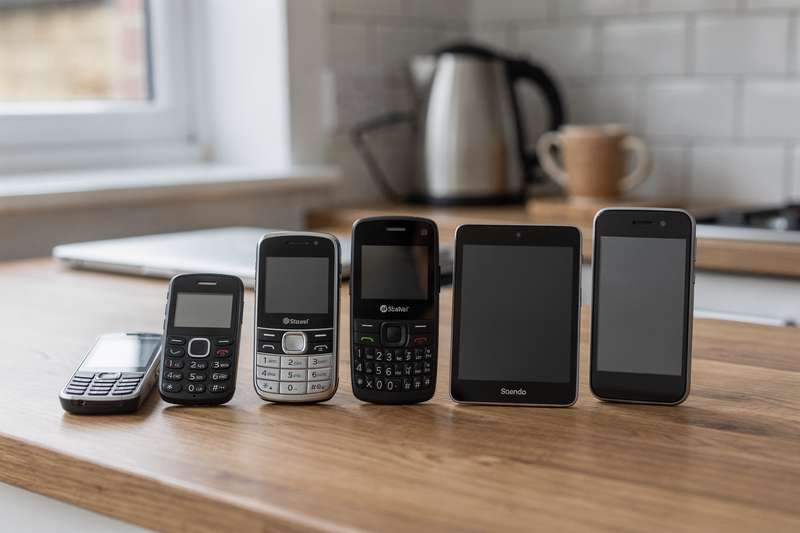
This guide cuts through that noise. The live Amazon listings available right now in this category skew heavily towards simple feature phones and senior-focused handsets, with a small number of budget Android options. That’s actually useful, because these are the phones most people in the UK struggle to find honest, plain-English advice about. The flagship Samsungs and iPhones get coverage everywhere. The £20 dual-SIM phone your mum needs, or the basic 4G handset for a teenager’s first mobile? Not so much. That’s what this guide is for.
How These Picks Were Evaluated
Each phone in this guide was assessed against criteria relevant to the actual buyers these devices serve. For senior-friendly and feature phones, the priorities are: ease of use (button size, menu simplicity, SOS/emergency features), network compatibility in the UK (4G vs 2G — more on why this matters below), battery life, call quality, and verified buyer feedback patterns. For budget Android options, the focus shifts to display quality, storage, camera adequacy for everyday use, software version, and whether the reviews suggest a reliable day-to-day experience rather than a returns nightmare.
An important caveat: two products in this category are listed with very few reviews (under 5), which limits confidence in their real-world reliability. Where that’s the case, it’s flagged clearly. Ratings alone don’t tell the full story — a 5-star average from 4 buyers means something very different from a 4.4-star average from 239 buyers. Review count and the pattern of feedback matter as much as the headline score. Products with claims that appeared inconsistent with known specifications — such as references to Android versions that don’t yet exist in stable consumer release — are treated with appropriate scepticism and flagged accordingly.
Best Senior-Friendly Feature Phone with Proven Track Record
The Doro 1380 is one of the most consistently recommended senior mobile phones available on UK Amazon, and with 239 reviews averaging 4.4 out of 5 stars, that confidence is earned through actual buyer experience rather than marketing copy. This is a 2G-only handset, which is the single most important thing to understand before buying it — and the one thing sellers don’t always make obvious enough.
Here’s the network situation you need to know: the UK’s 3G network was switched off by all major operators in 2024. 4G and 5G now carry almost all data and voice traffic. However, 2G (GSM) remains operational on major UK networks including EE, Vodafone, and O2, primarily to support legacy devices. Most operators currently plan to keep 2G running until at least 2033, though this is subject to change and varies by provider. The practical upshot: the Doro 1380 will make and receive calls and texts on most UK SIMs right now, but you should check with your chosen network before buying, and be aware that 2G-only devices have a finite lifespan as network evolution continues. This phone has no mobile internet capability — it cannot browse the web, use apps, or send anything other than standard SMS.
Within those constraints, the Doro 1380 does exactly what it promises. The 2.4-inch display is clear and readable in good light, the buttons are physical and well-spaced, and the menu structure is genuinely simple — not just marketed as simple. The built-in camera is basic (rear-facing, no autofocus to speak of), useful mainly for the odd snapshot rather than serious photography. The Assistance Button on the back is the standout feature for family members who worry about elderly relatives: press and hold, and it sends an alert with GPS location to pre-configured contacts, then dials them in sequence. This alone justifies the phone for many buyers.
Battery life is strong for the use case — several days on standby with moderate call usage is typical from verified buyer reports. The dual-SIM capability is useful if you want to keep a personal and a “family” SIM active simultaneously. Packaging is clear and the included manual is actually written in plain English, which sounds like a low bar but matters enormously for the target audience. The main tradeoffs: no WhatsApp, no 4G browsing, no smartphone functionality whatsoever. If the person you’re buying for needs to video call grandchildren on WhatsApp, look at a 4G Android option instead. If they just want reliable calls and texts with an emergency button, the Doro 1380 delivers.
Best 4G Feature Phone for Seniors
The Doro2424 is the natural step up from the 1380 for anyone who needs the reassurance of 4G network compatibility without venturing into smartphone territory. With 56 reviews at 4.3 out of 5 stars, the feedback base is smaller but consistently positive, particularly around call clarity and the large colour display. This is a bar-style phone — not a touchscreen — built specifically for the UK and Irish market.
The most significant practical advantage over older Doro models is 4G compatibility. Calls and texts route over 4G networks, which means stronger signal in areas where 2G coverage has already thinned, and future-proofing against network changes that would strand a 2G-only handset. The large colour screen is noticeably easier to read than budget competitors, and the physical keypad buttons have good tactile feedback — a detail that matters enormously for users with reduced dexterity or arthritis. The emergency button is retained from Doro’s signature design language, placing it prominently on the back.
Buyers report that setup is straightforward and the included documentation is genuinely usable. The dual SIM slot adds flexibility for anyone using a pay-as-you-go SIM alongside a contract. Battery life draws positive comments — consistent with several days of standby for a light phone user making a handful of calls per day. Where the Doro2424 falls short: the camera is included but shouldn’t be a selling point. It produces usable photos in bright light for record-keeping purposes, not for sharing on social media. There’s also no WhatsApp or internet browsing, which is worth reiterating for family members who assume any phone automatically runs messaging apps.
The Doro2424 costs more than the 1380 but less than a budget Android, which puts it in a sensible middle position. If the person buying this will never want internet access and just needs a reliable 4G voice phone with a clear display and emergency functionality, this is the most polished option in the category right now. The tradeoff compared to the 1380 is simply price — the core functionality for a non-internet user is similar, but the 4G compatibility and improved display quality justify the step up for anyone planning to use this phone for several years.
Best Budget Basic Phone for Everyday Use
The Nokia 105 4G Edition (2023) is the most-reviewed phone in this category by a significant margin — 417 ratings at 3.8 out of 5 stars — and that volume of feedback gives a much clearer picture of real-world experience than the handful of reviews on competing basic handsets. Nokia’s 105 series has been the go-to ultra-budget feature phone for years, and the 4G Edition addresses the key weakness of earlier versions by supporting 4G networks for calls and texts.
For the price, what you get is genuinely functional: a small, lightweight handset with a 1.8-inch display, physical keypad, dual SIM support, expandable memory (there’s a microSD slot), and a 1450mAh battery that Nokia claims lasts for days on standby. Buyer experience broadly supports the battery claims for light users. The 3.5mm headphone jack is a thoughtful inclusion given that Bluetooth is absent on this model. There’s a basic torch, FM radio, and Snake — the last of which remains, improbably, a genuine selling point for a certain type of buyer.
The 3.8-star average reflects a phone that does its core job adequately but isn’t without frustrations. The display is small and basic — fine for reading who’s calling, less comfortable for navigating menus. Some buyers report that the keypad buttons feel slightly mushy rather than crisp. The camera (rear-facing) is present but produces images that are best described as documentary rather than photographic. Call quality draws mostly positive comments, which is ultimately what matters most for this type of device. The 128MB of ROM is enough for contacts and basic use; the expandable memory slot means you can add a microSD card for music or additional content.
Where the Nokia 105 4G genuinely earns its place is as a secondary phone, a travel phone, a phone for a child who keeps losing things, or a first handset for an elderly relative who is intimidated by smartphones. It’s also a reasonable emergency backup to keep charged in a drawer. It’s not a substitute for a smartphone and doesn’t pretend to be. If you need WhatsApp, internet access, or a camera worth using, look at the budget Android options below. If you need a simple, affordable 4G phone that makes calls and sends texts without drama, this delivers — and the 417-review track record confirms it’s not a lottery.
Best Budget Backup or Secondary Phone
The TTfone TT150 occupies a similar price point to the Nokia 105 but offers Bluetooth connectivity, which the Nokia lacks — a meaningful differentiator if you want to pair a wireless headset or speaker. With 169 reviews at 3.8 out of 5 stars, the feedback volume is reasonable and the pattern is broadly consistent: buyers acknowledge it’s a no-frills device and judge it accordingly, which keeps the rating honest rather than inflated.
The TT150 supports dual SIM cards and includes a basic camera and a small selection of pre-installed games. Battery life is positioned as one of its stronger points — the standby time is designed to suit users who charge infrequently. The Bluetooth support, while basic, enables connection to wireless earbuds and speakers without a physical cable, which matters for accessibility if someone finds plugging in headphones difficult. Build quality is described as durable in buyer feedback, which matters for a phone that might be knocked around in a pocket or handbag.
The tradeoffs are similar to those of the Nokia 105: no smartphone functionality, a small and basic display, no internet browsing, and a camera that records moments rather than producing quality images. Some buyers note that the menu navigation is slightly less intuitive than Doro’s senior-focused software. The 3.8-star average does reflect occasional complaints about call quality and button response — worth noting, though not universal across the review set. This isn’t a phone for anyone who wants a rich mobile experience; it’s a phone for anyone who wants the cheapest reliable voice-and-text handset with the bonus of Bluetooth. For that specific brief, it’s a reasonable pick, and the 169-review track record suggests it’s not a risky purchase.
Where the TTfone TT150 falls short of the Nokia is in the overall polish of the experience, but the Bluetooth support is a genuine functional advantage for specific users. If Bluetooth doesn’t matter to you, the Nokia 105 4G Edition’s stronger review volume makes it the safer choice at a similar price. If Bluetooth does matter — for a wireless hearing loop, hands-free driving, or wireless earphones — the TTfone earns consideration.
Best Flip Phone for Seniors
The artfone F30 4G SIM-Free & Unlocked Mobile Phone brings the classic flip form factor to a 4G network-compatible handset, which is a combination that genuinely appeals to a specific type of buyer. It’s worth noting upfront that this listing currently shows zero verified reviews on Amazon, so while the specification looks attractive on paper, real-world performance cannot be confirmed through buyer feedback at this stage. Approach with that in mind.
The flip design has practical merits beyond nostalgia. The clamshell form means the screen and keypad are protected when the phone is in a pocket or handbag, reducing the risk of accidental calls or screen damage. Opening and closing the phone to answer and end calls is intuitive for anyone who used a mobile phone in the 2000s — and that demographic now includes a lot of people in their 60s and 70s. The 2.4-inch display is positioned on the upper half of the phone, making it reasonably readable. The SOS/Talk-back button is included, keeping the safety feature that senior-focused buyers prioritise.
The 4G compatibility is the most important specification here — it future-proofs the handset against the ongoing 2G network evolution and ensures stronger signal availability on modern UK networks. Dual SIM support adds flexibility. As a SIM-free, unlocked handset, you can pair it with any UK network’s SIM card, which is sensible if you want to shop around for the best PAYG deal. The built-in camera is present but, as with all phones in this category, shouldn’t be a primary reason to buy.
The honest caveat is the review situation. Zero verified buyer reviews on Amazon means there’s no independent confirmation that the product performs as listed, that build quality holds up over time, or that customer service is responsive if something goes wrong. If you need confidence from buyer experience before purchasing, the Doro options above have that track record. If the flip form factor is a priority and you’re willing to accept the risk of being an early adopter of this particular listing, the artfone F30 is worth considering — but go in with eyes open and keep the returns window in mind.
Best Budget Android Smartphone
The SIM-Free & Unlocked Mobile Phone 2025 is the only conventional Android smartphone in this category available on Amazon right now, and it’s worth being direct about what the data says: 27 reviews at 3.5 out of 5 stars is a modest rating from a modest sample. That doesn’t make it a bad phone, but it does mean this pick comes with more uncertainty than the others in this guide, and the Verdict section reflects that honestly.
The listed specifications include a 6.5-inch display, Android 12 software, an octa-core processor, 4G dual-SIM support, a 13MP main camera, and a storage configuration described as 16GB internal with 256GB expandable (via microSD). Android 12 is a legitimate, stable Android version — released by Google and deployed on a wide range of budget handsets. It’s worth noting that Android 12 is not the latest version, so if long-term software updates matter to you, understand that budget handsets at this price tier rarely receive more than one or two years of OS updates regardless of brand. The operating system works; it just won’t be updated to future Android versions in the way a flagship would be.
The display size is genuinely useful for everyday tasks — browsing, messaging, social media, and video calls all benefit from a 6.5-inch screen compared to the tiny displays on the feature phones above. The 4G dual-SIM setup means you can run a personal and work SIM simultaneously, or switch between a contract and PAYG SIM as needed. The 13MP camera produces results adequate for everyday snapshots and WhatsApp sharing, though don’t expect anything approaching a flagship camera experience. Buyer feedback is mixed rather than consistently positive — some report satisfactory everyday performance, others flag concerns around software stability and build quality. At 3.5 stars from 27 buyers, the honest position is: it may work well for you, but the track record isn’t strong enough to recommend it without reservation.
If your priority is a working Android smartphone with WhatsApp, a proper browser, app access, and a camera beyond the feature-phone basics, and your budget is tight, this is currently the only available option in this category on Amazon. Go in knowing the limitations, use the returns window if the unit you receive doesn’t perform to an acceptable standard, and keep expectations calibrated to the price tier. This is a phone for basic daily smartphone tasks — not photography, not gaming, not anything processor-intensive.
What to Look For When Buying a Mobile Phone in the UK
- Network compatibility (4G vs 2G): This is the most critical factor in 2025. The UK’s 3G network closed in 2024. 2G remains live on major networks but is not guaranteed long-term — check with your specific operator before buying a 2G-only device. For any handset you plan to use for more than a year or two, 4G support is strongly advisable.
- SIM-free vs locked: All phones in this guide are SIM-free and unlocked, meaning you can use any UK network’s SIM. This is almost always preferable to a locked handset, as it gives you control over which network and tariff you use, and makes switching easy. Pair with a PAYG SIM for elderly relatives who make few calls — the economics usually favour it over a monthly contract.
- Feature phone vs smartphone: Feature phones (Nokia 105, Doro, TTfone, artfone) make calls, send texts, and little else. Smartphones (like the Android option in this guide) run apps including WhatsApp, have proper browsers, and function as pocket computers. Choose based on what the user actually needs — a feature phone is genuinely better for someone who will never use apps, as the simplicity reduces confusion and improves battery life.
- Emergency/SOS button: If you’re buying for an elderly or vulnerable person, prioritise phones with a dedicated SOS or assistance button that can alert pre-configured contacts. The Doro range handles this particularly well. Not all senior-marketed phones include this — check the specification before buying.
- Battery life vs battery size: A feature phone with a 1450mAh battery can outlast a smartphone with 5000mAh because it’s doing so much less work. For light users making a handful of calls per day, any feature phone in this guide will last several days. For Android users with screen-on time, browser use, and messaging, battery life varies significantly — look for buyer feedback specifically on daily use rather than headline claims.
- Display size and readability: For older users, display size and contrast matter more than resolution. A clear 2.4-inch display with high contrast and large fonts is more useful than a high-resolution screen with tiny default text. Doro’s displays score well in buyer feedback on readability. For Android users, a 6.5-inch display enables comfortable app use.
- Review count and recency: A 5-star average from 4 reviewers is statistically near-meaningless. Prioritise products with 50 or more reviews, and scan the most recent feedback to check for issues that may have emerged after launch. This guide flags where review counts are low.
Verdict
For the majority of people reading this guide, the right answer depends on one question: does the person using this phone need smartphone functionality (WhatsApp, apps, browsing) or not?
If the answer is no — you’re buying for an elderly relative, a secondary simple phone, or someone who just wants reliable calls and texts — the Doro 1380 and the Doro2424 are the two most trustworthy options. The Doro 1380 suits buyers who are comfortable with its 2G-only limitation and want the most affordable, well-proven senior handset. The Doro2424 is the better long-term choice for anyone concerned about network evolution, given its 4G support.
If smartphone functionality matters, the budget Android option is the only available route in this category, but its modest rating warrants caution — treat it as a workable entry point rather than a confident recommendation.
For the sheer value of a basic 4G phone with the most verified buyer feedback, the Nokia 105 4G Edition (2023) is the pick if budget is the primary constraint and simple calls are all that’s needed.
We were not paid to feature any specific product in this guide. All opinions are independent and based on publicly available specifications, verified buyer feedback patterns, and category research.
Quick Comparison Table


![Doro 1380 Unlocked 2G Network ONLY Dual SIM Mobile Phone for Seniors with 2.4" Display, Camera and Assistance Button [UK and Irish Version] (Red)](https://m.media-amazon.com/images/I/613YlO50ysL._AC_UY218_.jpg)


FAQ
Are 2G mobile phones still usable in the UK in 2025?
Yes, 2G networks remain operational on major UK networks including EE, O2, and Vodafone as of 2025, primarily to support legacy devices. However, 2G coverage has thinned in some areas, and network operators are expected to phase it out in the coming years — timelines vary by operator. If you’re buying a 2G-only phone, check with your chosen network that 2G coverage is available in your area, and understand the handset has a more limited lifespan than a 4G-compatible device.
What happened to 3G in the UK?
All major UK mobile operators — EE, Vodafone, Three, and O2 — completed their 3G network shutdowns in 2024. Any phone that only supports 3G (or 3G and 2G) will not function on UK networks for calls or data. When buying a handset, ensure it explicitly states 4G support if you want reliable network coverage going forward.
What is the best mobile phone for an elderly person in the UK?
The best choice depends on what the person actually needs. For someone who only wants to make calls and send texts, a senior-focused feature phone with large buttons, a clear display, and an SOS emergency button — such as those in the Doro range — is usually the most practical option. If they need WhatsApp to stay in touch with family, a basic Android smartphone with a large screen is a better fit, though the learning curve is steeper. Physical button phones are generally easier to use for people unfamiliar with touchscreens.
Can I use any SIM card with these phones?
All phones featured in this guide are listed as SIM-free and unlocked, which means they can be used with any UK network’s SIM card. This gives you full flexibility to choose between pay-as-you-go SIMs (often more economical for light users) and monthly contracts. Check the SIM card size required for each handset — most current phones use nano-SIM, but verify before ordering a SIM separately.
Do budget Android phones receive software updates?
Generally, budget Android handsets receive limited software update support compared to flagship devices. Entry-level phones at the lower price tier typically receive one to two years of security patches and may or may not receive major Android version upgrades, depending on the manufacturer. If long-term software support is important to you, it’s worth researching the manufacturer’s stated update policy before buying — or consider that for basic daily use, the installed Android version will function adequately even without future updates.
What does SIM-free mean, and is it better than a contract phone?
SIM-free means the phone is sold without a SIM card and without being tied to a specific network — you supply your own SIM. This is almost always advantageous because it gives you full control over your network, tariff, and the ability to switch providers without penalty. For light users, a pay-as-you-go SIM paired with a SIM-free phone often costs significantly less per month than a contract that bundles a subsidised handset. The upfront cost is higher, but total cost of ownership over two years is frequently lower.