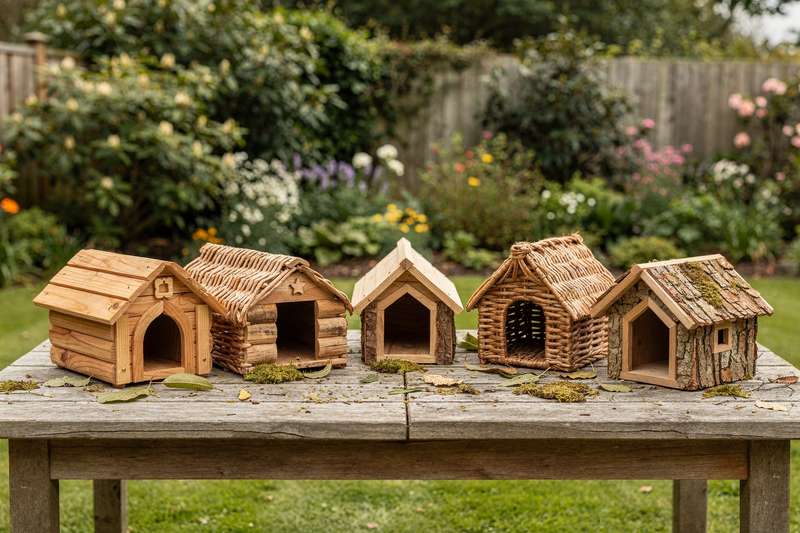
You spotted your first hedgehog of the year rootling around the compost bin in June, and by August you were reliably putting out cat food and fresh water each evening. You have punched the regulation 13cm gap under your fence panel. You have even signed up to the local hedgehog count. But as October approaches and the nights sharpen, a nagging question settles in: where exactly is this animal going to sleep? A hedgehog without a safe, insulated shelter risks a difficult hibernation — or worse, gets disturbed mid-sleep by a fox or badger nosing around the garden at 2am. You have browsed the hedgehog houses on the market, but the range is baffling. Some look like glorified plant pots with a hole cut in the side; others cost the best part of a hundred pounds and it is not immediately clear what the premium buys you. The truth is that a thoughtfully designed hedgehog house can meaningfully improve a hedgehog’s survival odds over winter, while a poorly built one will sit untouched season after season, warping in the rain and doing no wildlife any good whatsoever. Britain’s hedgehog population has been falling for decades and the species is now classed as vulnerable to extinction — your garden can be a real refuge, but only if the shelter you provide is actually worth using.
How This Guide Was Put Together
Every product here was assessed against criteria that matter to both hedgehog and gardener. Timber quality and weatherproofing came first — a house that rots after one wet winter is no use to anyone. Entrance tunnel design was scrutinised: it needs to be narrow enough to exclude foxes and badgers while remaining passable for a pregnant hedgehog. Interior chamber size matters because a hedgehog needs room to build a proper nest, not just squeeze in and shiver. Roof or access-panel removability is essential for annual cleaning — without it, old bedding that can harbour parasites stays in the house indefinitely. Ventilation, insulation, and any useful extras — integrated feeding provisions, cameras, included bedding — were weighed against overall build quality. Buyer review patterns across verified purchasers formed a core part of the evaluation; a product with 100 or more reviews gives a far more reliable signal than one with a handful. Where a product has very few buyer reviews, that is flagged plainly in its section. Two colour or finish variants of the same model count as one pick, with the best-reviewed variant featured.
Best Overall: Hedgehog House & Feeding Station
The Hedgehog House & Feeding Station – Predator Proof Nesting Box For Garden with Bedding and Bowls – Self Assembly Required tops this guide for one practical reason: it combines two essential functions — a predator-proof nesting chamber and an integrated feeding station — in a single package that over 115 buyers have rated 4.5 out of 5 stars.
The combined design is the real differentiator. Instead of sourcing a shelter and a feeding station separately and then trying to position them effectively in relation to one another, you get both in a single unit. This matters more than it might initially appear. Hedgehogs are more likely to investigate and take up residence in a house that is already associated with food. Placing food near but physically separate from a shelter can attract competition from rats; an integrated feeding station with a shielded access point reduces that risk considerably. The feeding area is kept separate from the sleeping chamber — the correct approach, since food debris inside a nesting space would attract rodents and insects rather than encourage hedgehog activity.
The shelter itself is predator-proof, with a tunnel entrance designed to exclude foxes and badgers while allowing hedgehogs free passage. It arrives with bedding material and feeding bowls included, which is useful if you are setting up hedgehog support in your garden for the first time and do not want to source those items separately. Assembly is required, but buyers consistently describe the process as straightforward — most report having it together within 20 to 30 minutes using basic tools.
The honest tradeoff: the integrated chamber is comfortably sized for one adult hedgehog. Hedgehogs are broadly solitary during hibernation, so this is not a design flaw, but if you have observed more than one animal visiting your garden regularly, you may want to add a second shelter in a different corner. Some buyers note that the timber benefits from an additional coat of wildlife-safe wood preservative before its first winter outside — sensible practice for virtually any timber garden product. Sited in a sheltered position and maintained annually, this is the most complete first-time hedgehog setup on this list.
For someone setting up hedgehog support in their garden for the first time, this is the strongest starting point available. You get shelter, feeding infrastructure, bedding, and bowls in a single kit, validated by a strong rating across more than a hundred buyers. The self-assembly requirement is the only real friction point — if that puts you off, pre-assembled alternatives exist — but the overall functionality here is hard to match at this tier.
Best for Year-Round Reliability: FeelGoodUK Hedgehog House and Hibernation Shelter
The FeelGoodUK Hedgehog House and Hibernation Shelter – Large Predator-Proof Outdoor Habitat – Felt Roof Cover and Full Wood Flooring has the highest review count in this guide — 128 buyers have rated it 4.4 out of 5 stars — which means you are drawing on feedback from a wide range of gardens, climates, and multiple seasons of outdoor use. That depth matters when you are choosing a shelter that will live outside year-round in British conditions.
The construction features a full timber body with a felt roof cover that sheds rain reliably. The full wood flooring is a meaningful detail: some cheaper designs use thin plywood bases or leave the floor entirely open, resulting in a damp, cold interior. Full flooring keeps the sleeping space drier and provides proper insulation from cold ground during hibernation — where a hedgehog actually needs warmth. The predator-proof tunnel entrance is a long-run design effective at excluding foxes, and the internal chamber is described as large, making this a workable option for a nursing female in spring and early summer as well as a hibernation shelter in autumn and winter.
Where this house performs particularly well is in longevity. Reviewers who have used it across two or three seasons consistently report that it holds up without the warping or splitting that affects cheaper timber shelters. The felt roof needs checking annually and may need patching or replacing over several years — as with any outdoor felt product — but that is a routine maintenance task rather than a structural failing. A light brush of wildlife-safe wood treatment on external surfaces before each winter extends the lifespan further without significant effort.
It is also available in a Sage Grey finish listed separately on Amazon under a different ASIN but with the same specification and rating. If you want the house to sit more quietly against a painted fence or contemporary garden planting rather than showing raw timber tones, that colour variant is worth looking up. The core product is otherwise identical in specification and review-validated performance.
One practical caution: buyers who positioned this house in wetter spots — beneath dripping trees or in low-lying corners with poor drainage — found the felt roof needed attention sooner than expected. If your chosen site is exposed to prolonged moisture, adding a layer of waterproof garden membrane under a camouflage of leaves and soil will help considerably. Sited in a reasonably sheltered position, though, this is one of the most dependable multi-season hedgehog houses currently on Amazon UK.
Best Extra-Large Design: Moorland Weatherproof Hedgehog House
The Moorland Weatherproof Hedgehog House UK FSC® Wood with 2-Chamber System takes a more considered approach than most hedgehog shelters on the market. At 54 x 38cm, it is noticeably larger than standard designs, and its 2-chamber system is the defining feature: an outer antechamber acts as a buffer zone before the main sleeping area, replicating the tunnel-and-chamber structure that hedgehogs naturally prefer. It carries 4.0 out of 5 stars from 25 buyers — a smaller sample than the top two picks, but consistently positive across the reviews available.
The FSC-certified timber confirms the wood comes from sustainably managed sources, a detail that matters to gardeners investing in wildlife support for broader environmental reasons. The weatherproofing is built into the construction rather than relying solely on a separate roof covering — the more durable long-term approach for something that never comes indoors. A removable floor and roof access panel make annual cleaning manageable, and the extra internal volume makes this a realistic nursery site for breeding females in late spring and early summer, not only a hibernation shelter in autumn.
The 2-chamber layout offers real practical benefits beyond its naturalistic appeal. The outer chamber helps regulate temperature and humidity in the inner nesting space more effectively than a single-chamber design. It provides an additional barrier against predators reaching into the sleeping area through the entrance. And it gives a hedgehog a transition zone between the outside world and its resting space — something that can increase uptake rates, particularly for hedgehogs accustomed to denning in natural hedgerow cover with its more complex layered structure.
The tradeoff is physical footprint. If your garden is modest or your sheltered corners are already committed, 54 x 38cm is a substantial commitment of ground. This design suits larger gardens where hedgehog activity is already well-established and you want to invest in a habitat that reflects how hedgehogs actually live. For a compact courtyard or a terrace, one of the smaller options in this guide will serve you better. The price point is also higher than the budget picks, and the lower review count means less community-validated evidence to draw on than the top-rated options above.
For a larger, wildlife-focused garden where you want to provide the most naturalistic shelter possible using sustainably sourced timber, the Moorland 2-chamber design is a serious piece of wildlife gardening kit — and the extra internal capacity gives it a reasonable chance of being used in both summer and winter, which is more than most simpler designs can claim.
Best Budget Pick: Fallen Fruits Hedgehog House FSC 100%
The Fallen Fruits Hedgehog House FSC 100%, Brown is the most straightforward budget option in this category. Rated 4.1 out of 5 stars from 22 buyers, it covers the fundamentals — enclosed sleeping chamber, tunnel entrance, weatherproof construction — without unnecessary additions, at a cost that makes hedgehog support accessible for gardeners not yet ready to commit significant expenditure, particularly when they are not yet certain hedgehogs visit their garden regularly. The 100% FSC-certified timber means you are not compromising on sourcing ethics to keep costs low.
Fallen Fruits is an established name in UK wildlife garden products, and this house reflects a no-frills design philosophy: functional, reasonably well-built, and fit for purpose. The tunnel entrance provides adequate predator protection for most garden situations. The enclosed chamber is sized appropriately for a single adult hedgehog. The timber construction handles typical British winters adequately, particularly if you site it in a sheltered position and camouflage it with dead leaves and garden debris — which hedgehogs naturally favour, as it replicates the leaf litter they would nest in beneath a hedgerow.
The limitations are real and worth naming. The interior is relatively compact compared to larger designs in this guide, so while it works well as a hibernation and daytime resting shelter, it is less well suited as a nursing site for a female with young, who needs more space to construct a substantial nest. The construction is simpler, with less sophisticated insulation, meaning in persistently cold or very wet winters the interior may not retain warmth as effectively as thicker-walled alternatives. Buyers consistently recommend applying a coat of wildlife-safe wood preservative before the first winter — a straightforward task that noticeably extends the product’s lifespan.
What this house does particularly well is lower the barrier to entry for a first attempt. If you have spotted hedgehogs visiting your garden but have not set up a shelter before, this is a sensible starting point. You find out whether your garden will attract a resident without a significant outlay. If uptake happens, you can invest in a more feature-rich design in a following season while leaving this one in place as additional accommodation — hedgehogs do not object to having more than one shelter option within their territory.
When it arrives, check the entrance tunnel dimensions before siting: the opening should be wide enough for an adult hedgehog but narrow enough to deter foxes. Position the entrance facing away from the prevailing wind, place the house against a wall or fence in a sheltered corner, and weight the roof with a flat stone to discourage investigation from larger animals. Simple measures, but they make a noticeable difference to how quickly a hedgehog takes up residence.
Best for Wildlife Watching: Smart Hedgehog House with HD Camera
The Smart Hedgehog House with HD Camera – Solar-Powered Wi-Fi Nest Box with Night Vision & Audio is categorically different from every other product in this guide. Rather than simply being a shelter, it incorporates an HD camera, solar-powered operation, Wi-Fi connectivity, and night vision — designed to let you observe your garden hedgehog on a smartphone or tablet without disturbing the animal at all. It carries a rating of 4.5 out of 5 stars, but it is essential to state plainly: at the time of writing, this comes from just two reviews. That figure carries far less statistical weight than the established picks in this guide, and you should treat this product as meaningfully less validated than the others as a result.
For anyone who has been trying to catch a glimpse of their garden hedgehog without resorting to a torch and creeping around outside at 11pm, the core appeal is obvious. Night vision means you can observe feeding and nesting behaviour in the dark — precisely when hedgehogs are active. The audio capability lets you hear as well as see, which turns out to be a surprisingly engaging experience once set up. Solar-powered operation means no cable to run across the garden and no battery to charge, keeping the installation tidy and low-maintenance once the house is in position.
The weatherproof wooden construction appears solid from the specification, and the shelter follows standard hedgehog house design principles — enclosed chamber, tunnel entrance — so this functions as a real habitat rather than a camera housing with a token sleeping space bolted on as an afterthought. The Wi-Fi connectivity feeds footage to a companion app on your home network, which is the practical mechanism for viewing activity inside the house without going anywhere near it and potentially disturbing a sleeping hedgehog.
The honest cautions here are worth taking seriously. With only two public reviews, you are buying a product that lacks the multi-season validation the other picks have accumulated. Any product combining solar charging, embedded Wi-Fi electronics, and a camera has more components that can develop faults than a simple timber box. If the electronics fail after the warranty period, you are left with a shelter that cost significantly more than simpler alternatives for equivalent habitat function alone. The technology adds real value for committed wildlife enthusiasts — particularly for monitoring breeding season activity or confirming that a hedgehog has safely ended hibernation — but you are accepting meaningful uncertainty about long-term reliability.
The right buyer for this product is someone who already knows hedgehogs visit their garden reliably and wants to observe their behaviour in detail without causing any disturbance. If you are still hoping to attract a first resident, a proven simpler shelter gives you a stronger foundation until hedgehog presence in your garden is confirmed.
Best DIY Option: CKB LTD Build Your Own Hedgehog House
The CKB LTD Build Your Own Hedgehog Wooden Hedgehogs or Guinea Pig House Outdoor Shelter Outside Habitat House takes a different angle entirely: rather than delivering a finished shelter, it provides pre-cut wooden panels for you to assemble yourself into a hedgehog house. It is rated 3.7 out of 5 stars from 10 reviews — the lowest rating in this guide — and that figure warrants honest context before you decide whether this is the right choice for you.
The appeal of a build-your-own design is partly educational and partly practical. For households with children, constructing a hedgehog house is an engaging wildlife project that creates a personal connection to the shelter and to whatever animal might eventually use it. For adults with basic woodworking confidence, the self-build element lets you apply additional weatherproofing treatments, adjust the entrance dimensions during construction, and give the finished house the extra care that makes a real difference to how long it lasts outdoors in British conditions.
The lower rating reflects recurring themes in buyer feedback. The wood panels have been described as thinner than expected by some purchasers, meaning the finished house has less inherent insulation than a thicker-walled alternative, and durability through wet winters requires supplementary treatment rather than being built in from the outset. Assembly instructions have been described as fairly basic, which is manageable if you are handy but can frustrate someone approaching flat-pack timber construction for the first time. The completed shelter functions adequately when assembled with care and treated properly, but it does not match the structural robustness of the FeelGoodUK or Moorland options.
It is also worth noting that this product is listed as suitable for guinea pigs as well as hedgehogs, reflecting its multi-purpose design origins. There is nothing inherently wrong with that — the dimensions can accommodate a hedgehog — but it explains why the design may be less specifically optimised for hedgehog requirements than dedicated wildlife shelter products. Check the entrance opening dimensions before finalising assembly; it may need slight adjustment to ensure it reliably excludes foxes and badgers while remaining usable for a hedgehog passing through.
Treat this as a project kit that produces a functional shelter rather than a precision wildlife product. If you enjoy building things, want to involve children in a garden wildlife activity, or want the most affordable possible entry point and are prepared to add weatherproofing work, this is a fair option. If you want a robust, dependable shelter that hedgehogs will use reliably year after year with minimal ongoing effort, the other picks in this guide will serve you better.
What to Look For in a Hedgehog House
- Entrance tunnel design: A long, narrow tunnel entrance — typically around 12 to 14cm wide — that allows a hedgehog through but excludes foxes and badgers is the single most important safety feature. An L-shaped or baffle-style entrance adds extra protection by preventing predators from reaching into the sleeping chamber even if they can get their muzzle into the opening. Avoid any design with a wide, direct entrance straight into the nesting area with no buffering tunnel at all.
- Interior chamber size: The sleeping chamber needs sufficient room for a hedgehog to build a proper nest from leaves and plant material — a practical internal minimum of around 30 x 30cm. Larger is better if you are hoping the house will also be used by a nursing female in spring, who needs considerably more space to raise young. A hedgehog that cannot build an adequate nest inside a house will simply not use it.
- Roof access or removable panel: Non-negotiable. You need to be able to access the interior fully each spring to remove old bedding, check for damage, and allow the space to air out before summer. Bedding left from hibernation can harbour mites and other parasites. The roof or access panel should also lock or clip securely so it cannot be displaced by a curious fox investigating the outside of the house.
- Timber quality and weatherproofing: Solid timber — ideally FSC-certified from a sustainably managed source — is the standard to aim for. Look for pre-treated wood, or plan to treat external surfaces yourself with a wildlife-safe preservative before the first winter. Thin plywood or untreated softwood degrades quickly in British conditions. A pitched or overhanging roof that sheds rain rather than allowing it to pool on the surface makes a real difference across multiple seasons.
- Ventilation: Good designs incorporate small, high-positioned ventilation gaps that allow airflow through the structure without creating cold draughts at floor level where the hedgehog sleeps. This prevents condensation building up inside during milder weather in autumn and spring, which can make the interior damp even in the absence of direct rain — something that discourages use and encourages mould in the bedding.
- Floor construction: A solid timber floor keeps the interior drier and provides insulation from cold ground. If siting the house on bare soil, place it on a flat stone or piece of slate to prevent rising damp from wicking into the base. Some designs incorporate short feet or raised sections to achieve the same effect — a useful detail to look for when comparing options.
- Siting and camouflage: No house performs well if poorly positioned. The entrance should face away from the prevailing wind direction — typically north or east in most of the UK. Choose a quiet, undisturbed corner against a wall, fence, or bank, away from garden paths and lighting. Cover the exterior with dead leaves, soil, and garden debris once the house is in place — this camouflage makes it more appealing to a cautious hedgehog and less visible to predators. Never site a hedgehog house in a low-lying area prone to flooding or directly beneath a dripping tree.
Verdict
For most UK gardeners setting up hedgehog support for the first time, the Hedgehog House & Feeding Station is the most practical starting point. The combined shelter and feeding provision removes the need to source and position two separate items, the 4.5-star rating across 115 verified buyers provides real confidence, and the included bedding and bowls mean you can have everything operational in a single afternoon. For gardens where hedgehog activity is already well-established and you want a more durable long-term investment, the FeelGoodUK Hedgehog House and Hibernation Shelter — with the highest review count in this guide — offers the strongest track record for year-on-year reliability in British weather. If you have a larger garden and want to invest in the most naturalistic shelter design available, the Moorland 2-chamber option is worth the extra outlay. Whatever you choose: site it carefully in a quiet corner, give it a full season of patience, and pair it with supplementary food, fresh water, and a hedgehog highway gap under your fence.
We were not paid to feature any specific product in this guide. All opinions are independent and based on publicly available specifications, verified buyer feedback patterns, and category research.
Quick Comparison Table


FAQ
When should I put a hedgehog house out in the garden?
The sooner the better — hedgehog houses can be used year-round. Hedgehogs use shelters for daytime resting and summer nesting as well as winter hibernation. Putting one out in spring or early summer gives visiting hedgehogs time to investigate and become familiar with it before they need it for hibernation, which typically begins in November. A house put out in October may still attract a resident, but earlier is always preferable.
Where is the best place to position a hedgehog house?
Choose a quiet, undisturbed corner — against a wall, fence, or bank, ideally in light shade. The entrance tunnel should face away from the prevailing wind direction (typically south-westerly in most of the UK, so orienting the entrance north or east is a reasonable starting point). Avoid low-lying areas prone to flooding and positions directly beneath dripping trees. Camouflage the exterior with dead leaves and garden debris to make it more appealing to cautious hedgehogs and less visible to predators.
How do I clean a hedgehog house?
Clean the house once a year, ideally in late March or April after hibernation has ended and before any summer nesting begins. Remove all old bedding and dispose of it well away from the garden. Wipe interior surfaces with boiling water — avoid chemical cleaners, as residual fumes can deter hedgehogs from returning. Allow the house to dry fully in open air before returning it to its position. Never disturb the house between November and March in case it is occupied by a hibernating hedgehog.
What bedding should I put in a hedgehog house?
Dry, natural materials work best. Dried leaves — particularly from deciduous trees such as oak or beech — are ideal, as they compact naturally into well-insulating layers that a hedgehog can arrange to its preference. Untreated hay is a workable alternative. Avoid straw, treated wood shavings, or synthetic materials of any kind. A hedgehog will often rearrange or supplement whatever you provide with material it gathers from the garden, so a starter layer is all you need to put in when setting up.
Will a hedgehog actually use my hedgehog house?
Many gardeners find their hedgehog house goes unused for a season or even two before a resident takes it up — this is entirely normal. Hedgehogs are cautious about novel structures and need time to investigate on their own terms. Correct positioning, good camouflage, and supplementary food and water placed nearby all increase the probability of uptake significantly. If you have confirmed hedgehog activity in your garden through sightings or droppings, the chances of the house eventually being used are high with patience.
How can I tell if a hedgehog is using my hedgehog house?
The simplest method is a footprint tunnel: a short cardboard tube baited with cat food and containing a strip of paper with an ink pad at each end, positioned near the entrance overnight. Hedgehog footprints are distinctive — four toes on the front feet, five on the back. You can also lay a thin twig lightly across the entrance; if it is disturbed by morning, something has entered. A wildlife camera positioned nearby will give you a definitive answer without any risk of disturbing the house or its occupant.