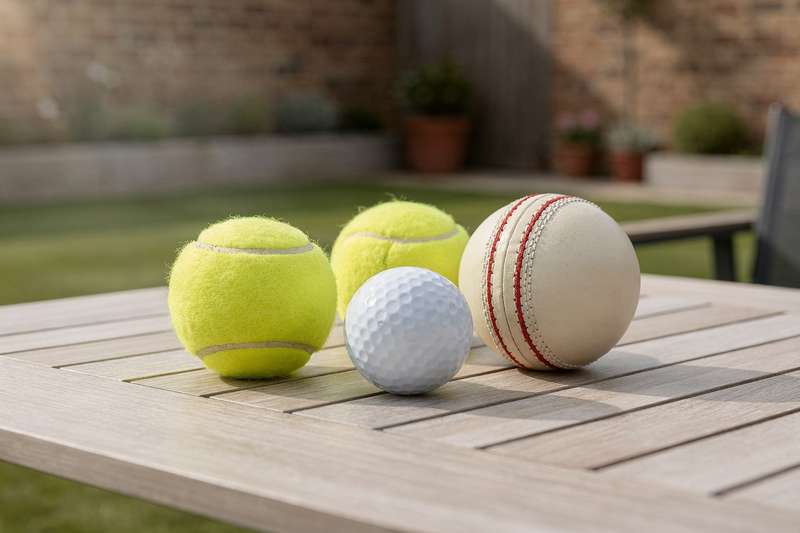
You know the scenario. You’ve just signed up for tennis lessons, taken up golf on a tight budget, or organised a backyard cricket session for the kids — and suddenly you’re standing in front of dozens of ball options on Amazon, unsure whether the cheap ones are actually any good or just destined to fall apart after three uses. Maybe you bought a multi-pack last time that felt rock-hard, lost their bounce after a fortnight, or simply weren’t fit for the surface you play on. That’s a waste of money, however little you spent.
The good news is that budget balls have genuinely improved. Whether you’re a high-handicap golfer who loses a sleeve per round, a casual tennis player who trains twice a week, or someone who needs a safe soft cricket ball for a garage net session, there are solid options that won’t embarrass you on court or on the fairway. The bad news is that the category is cluttered with novelty products, near-identical rebrands, and vague marketing claims. This guide cuts through all of that and points you to real products that deliver where it counts.
How We Evaluated These Picks
This guide covers budget balls across three popular UK sports — golf, tennis, and cricket — because the core buying challenge is the same in each: identifying which affordable options perform reliably versus which look like bargains but disappoint in use. To evaluate picks, we analysed verified buyer review patterns on Amazon UK, cross-referenced specialist editorial sources covering each sport’s equipment, and assessed key technical criteria relevant to each ball type. For golf balls, that meant construction (two-piece vs three-piece), compression, and durability. For tennis balls, it meant court compatibility, bounce consistency, and how long they hold pressure. For cricket, it came down to seam construction, swing behaviour, and safety for different contexts. Ratings and review volumes from live Amazon data were factored in to ensure picks have real-world backing, not just spec-sheet appeal.
Best Everyday Golf Ball for Beginners
The Second Chance Lake Golf Balls with Reuseable Carry Bag is the pick that makes the most practical sense for anyone who is new to golf or regularly loses balls on the course. These are recovered and refurbished balls — sometimes called lake balls — and the concept is straightforward: instead of buying new balls at a premium, you get used ones that have been graded, cleaned, and sorted. The reusable carry bag is a thoughtful inclusion that makes storage and transport genuinely convenient rather than a promotional afterthought.
The real-world value here is significant. When you’re playing off a high handicap or still finding your swing, the honest truth is that you don’t yet have the consistency to extract the performance difference between a premium and a budget ball. What you need is something that flies reasonably straight, holds up to a full swing, and doesn’t make you wince every time it disappears into rough. Lake balls tick all three boxes. The grading system means you can choose near-mint condition balls that have seen minimal use, giving you something close to a new ball experience at a fraction of the cost.
With over 780 verified reviews and a 4.2 rating, buyers consistently highlight the value for money and condition of the balls received. The main tradeoff is predictability — because these are mixed brands and models, you won’t always get the same ball twice, which makes it harder to build consistent feel over time. Golfers who are developing their game and calibrating distance control may find that inconsistency mildly frustrating. If you’re at a stage where you can genuinely feel the difference between a firmer and softer ball, you might prefer a dedicated single-model option. But for most beginners and casual golfers, this package is exactly right.
The flexible quantity options — 25, 36, 50, or 100 balls — also mean you can scale your purchase to your actual needs. If you’re playing once a fortnight, 25 balls will last a long time. If you’re practising at a driving range regularly or playing multiple rounds a week, the 100-ball option offers genuine economy. One thing to be aware of: always select a reputable grade when ordering. Reviews occasionally mention variation in condition across batches, so opting for the higher-quality grade tiers reduces the chance of receiving balls that are too scuffed to play comfortably.
Best Budget Golf Ball for Feel and Control
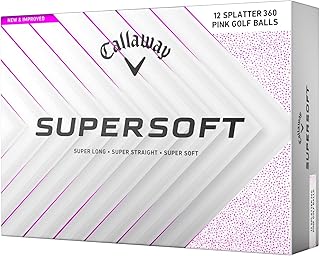
The Callaway Golf Supersoft Golf Ball 2025 occupies a different position to refurbished lake balls — it’s a new, purpose-built ball with a clear performance identity. The Supersoft range has been one of Callaway’s most consistent sellers for years, and the 2025 edition continues the formula: low compression, soft feel, and a design optimised for golfers who prioritise greenside touch and a smooth sensation at impact over raw distance.
Low-compression balls like this are particularly well suited to golfers with moderate swing speeds. If you’re generating less clubhead speed, a softer ball can actually help you achieve better energy transfer at impact, resulting in more carry than a firmer ball would give you. That’s a meaningful real-world benefit, not just marketing language. Around the greens, the soft cover provides a responsive, controllable feel that budget two-piece balls with harder ionomer covers struggle to match. Short game confidence matters — and this ball delivers it.
The 4.7 rating on Amazon is strong, though the review count is low at the time of writing — this is a recently listed 2025 edition, so buyer feedback is still building. That means you’re relying more on the Supersoft’s long-standing reputation and Callaway’s track record with this line than on a large pool of independent reviews. The tradeoff for the soft feel is distance: faster swingers or those who prioritise maximum carry off the driver may find it falls slightly short of firmer, higher-compression alternatives. It also won’t generate the same level of spin on full iron shots as a premium urethane-covered ball, so if you’re working on precise shot-shaping, you’ll notice the ceiling.
What makes it the right choice in this guide is that it gives a genuine, purpose-built golf ball experience at a budget-friendly price point, with real brand engineering behind it rather than anonymous bulk production. If you want a consistent, repeatable ball that performs well at moderate swing speeds and feels good when you’re chipping and putting, the Callaway Supersoft 2025 is the most satisfying option in this guide for that specific need.
Best Novelty Golf Balls for Gifts and Casual Rounds
Not every golf ball purchase is about squeezing out extra yards or dialling in spin rates. The Funny Golf Balls, 6-Pack Colored Golf Balls exist in a completely different category: they’re designed to raise a smile, make a good gift, and hold up well enough on the course to be genuinely playable rather than purely decorative. With a 4.7 rating from over 80 reviewers and a bright, coloured design, these have found a solid audience among golfers looking for something a bit different for a charity round, a round with mates, or a gift for someone who takes their golf lightly.
The six-pack format makes gifting easy — there’s enough variety in the pack to be interesting, and coloured balls are genuinely useful on certain courses where a white ball gets lost against light rough or overcast skies. Yellow and orange golf balls in particular have become mainstream on the professional tour for exactly this reason, so there’s nothing gimmicky about playing a non-white ball if it actually helps you track it in the air. The design here leans into novelty, but the functionality is real enough for casual use.
The honest tradeoff is performance. These are not competition-grade balls, and anyone expecting Titleist TruFeel levels of greenside control or consistent compression data is shopping in the wrong place. The construction is likely basic two-piece, which is appropriate for the price and purpose. They won’t hold up as well through repeated hard contact as a dedicated performance ball, and durability across a full 18 holes might vary depending on the course and play style. But for social rounds, fun team events, or as a gift alongside a card for a golfing dad or friend, they do the job with a bit of character.
If you’re after a gift rather than a performance purchase, you might also consider the Second Ave Pack of 3 Joke Funny Golf Balls, reviewed separately below, which takes the novelty angle even further with printed joke text — better suited to Father’s Day or birthday gifting than to a competitive golf context.
Best Golf Gift Set with Novelty Appeal
The Second Ave Pack of 3 Joke Funny Golf Balls This Could Go Anywhere Father’s Day Christmas Birthday Golfer Gift is unambiguously a gift product, and that clarity makes it easier to recommend without reservation for the right buyer. The joke format — each ball printed with a self-deprecating or humorous message — works well as a standalone present for a golfer who doesn’t take themselves too seriously. It’s compact, it doesn’t require size or colour preference knowledge, and it’s something most golfers haven’t received before.
With a 4.7 rating and 55 reviews, buyers are consistently satisfied, and the reviews are weighted heavily towards gifting occasions — birthdays, Father’s Day, Christmas — exactly as the name suggests. The presentation is tidy enough to give without additional wrapping, and the jokes tend to play on familiar golfing frustrations, which land well with anyone who’s spent time on a course.
Performance-wise, treat these as playable novelty balls rather than serious equipment. They’re two-piece construction at most, and the printed text means cover durability might be slightly compromised after sustained contact. They’re not the balls you’d take to a club medal round. But slipping one into someone’s bag as a joke during a social round, or giving the whole pack as a standalone birthday gift, is exactly what they’re designed for — and they deliver that experience reliably. The three-ball count is the right size for a gift: enough to be generous, not so many that it becomes a bulk purchase.
One practical note: if you’re buying these alongside other gifts and want something the recipient can actually use seriously on the course, pair them with a box of proper performance balls. The Second Ave set is the fun element, not the functional one.
Best Budget Tennis Balls for Training and Match Play
The DUNLOP Tennis Ball ATP Championship – for sand, hard court and turf (4 balls) is the standout tennis pick in this guide, and not just because of the ATP branding. Dunlop has supplied tennis balls to professional tour events for decades, and the ATP Championship range carries genuine technical credibility. The fact that you get court versatility — sand, hard court, and turf — in a single ball means you’re not locked into buying a specific variety based on where you play, which is a real practical advantage for UK club players who use multiple surfaces across the year.
The 4.6 rating from 225 reviewers is the strongest and most substantial rating in the tennis section of this guide. Buyer feedback consistently highlights bounce consistency, durability across multiple sessions, and the satisfying feel at contact. These are pressure-filled balls, so they will lose pressure over time — as all pressurised balls do — but the consensus is that they hold up well for training and recreational match play across several weeks of regular use, which is reasonable for the price.
The four-ball pack is a sensible format for club practice or social doubles. You have a spare to hand without carrying an excessive number of balls, and you can assess how the bounce holds up across a session before rotating in fresh ones. The tradeoff compared to a higher-end ITF-approved competition ball is marginal at a recreational level, but serious club players competing in leagues or tournaments will want to check whether the ball carries the specific ITF or LTA approval their competition requires. For training, social games, and casual match play, the Dunlop ATP Championship is a confident pick.
It’s also worth noting that the Dunlop name carries reassurance for coaches working with groups. If you’re buying balls to use in a lesson environment or for junior coaching sessions, a reputable brand with a track record on the pro tour gives parents and clubs confidence that you’re using quality equipment, even at a budget price point.
Best Budget Tennis Balls for All-Court Practice
The Hy-Pro 3 Pack All Court Tennis Balls Training/Match Quality Premium Bounce fills a slightly different role. With 112 reviews and a 4.6 rating, it has solid independent backing for a budget three-pack. The “all court” positioning and training/match quality claim are the key phrases to interrogate here: they indicate a pressurised ball with a standard felt cover designed for use across the common UK court surfaces — hard, clay, and grass — which matches most recreational players’ needs.
The three-pack format is practical for individual players who practise regularly. Three balls is enough to sustain a baseline rally or serve practice session without constant interruption to collect balls, yet it’s compact enough to fit in most tennis bags without bulk. Buyers report consistent bounce and reasonable durability across training sessions, which is exactly what you want from a ball at this price tier. This isn’t a ball that will feel identical to a Slazenger Wimbledon or Wilson Pro Staff, but it doesn’t need to be.
Where the Hy-Pro 3 Pack is at its best is in regular weekly practice sessions — the kind of context where you’re not drilling groundstrokes for four hours daily (which would eat through any ball quickly), but instead playing two or three times a week for an hour at a time. In that usage pattern, you can expect a can to last a reasonable number of sessions before the bounce noticeably degrades. The honest tradeoff is that the review count, while solid for a budget pick, is smaller than the Dunlop ATP Championship, so the performance evidence base is thinner. If you’re buying for a group or want extra confidence in consistency, the Dunlop is the safer choice. If you’re an individual player looking for a compact, affordable three-pack for personal practice, the Hy-Pro delivers good value.
Best Budget Tennis Balls for Durability on Hard Courts
The 1ABOVE 3 Pack Extra Duty Tennis Balls in Tube for All Courts brings something specific to the table: the “extra duty” designation. In tennis ball terminology, extra duty refers to a heavier felt construction designed to withstand the abrasive surface of hard courts, which wear through standard-duty felt faster. If you play primarily on hard courts — as most UK public courts are — this is a genuinely useful spec distinction rather than marketing padding.
The tube packaging is a practical bonus. A proper pressurised tube protects the balls before first use and keeps them in better condition if you don’t open them immediately. It also makes the pack easier to store in a bag or drawer without the balls getting bashed around and losing felt integrity before you’ve even used them. With 53 reviews and a 4.6 rating, the feedback base is the smallest of the three tennis picks in this guide, so this is the most speculative recommendation — though the rating is strong for what’s there.
The tradeoff to flag is that extra duty felt, while more durable on hard courts, can feel slightly heavier and less lively than standard duty felt on softer surfaces like clay. If you split your time between hard courts and clay courts, a standard all-court ball (like the Dunlop ATP Championship) might serve you better overall. But if hard court is your primary surface, the 1ABOVE extra duty construction is a smart choice that extends the useful lifespan of the ball and maintains consistent bounce longer than a standard-duty equivalent would in the same conditions.
Best Budget Cricket Ball for Practice and Casual Play
The Premium Windball Soft Cricket Ball is a fundamentally different product from the leather cricket balls used in formal matches, and that difference is what makes it the right pick for the specific context it serves. Windball cricket — sometimes called tape-ball or soft-ball cricket — is enormously popular in informal, backyard, and indoor settings where a hard leather ball would be dangerous or impractical. The soft construction means it can be used safely in a garage net, a garden, on concrete, or in a sports hall without the injury risk or equipment requirements that come with a hard ball.
With 355 reviews and a 4.4 rating, this is the best-evidenced cricket pick in the guide by some margin, and the feedback is detailed. Buyers highlight true swing behaviour — a feature that distinguishes this from cheaper plastic windball alternatives that tend to travel unpredictably. The colour seam is a functional detail: it helps batters track the ball and helps bowlers aim their seam correctly, which matters if you’re using this for coaching or skill development rather than purely recreational knockabouts. The durable construction means it holds up to repeated use on hard surfaces better than foam balls.
The honest limitation is context-specificity. If you need a ball for actual competitive cricket — club matches, league play, or any formal fixture — you need a proper leather ball, and this isn’t it. The windball is purpose-built for practice, coaching, and informal play. It won’t behave identically to a leather ball off the pitch or in the air, and bowlers developing spin or seam bowling skills will find the feedback differs from what they’d experience with a match ball. But for garden cricket with family, junior coaching sessions, net practice when a leather ball isn’t safe or appropriate, or a cricket session in a hired sports hall, this is a solid, well-reviewed option that outperforms cheaper alternatives on the market.
What to Look For When Buying Budget Balls
- Sport and surface compatibility: This sounds obvious, but it’s the most commonly overlooked step. Tennis balls come in three felt types (standard, extra duty, and high altitude), and using a standard-duty ball on an abrasive hard court wears them out much faster. Golf balls behave differently at different swing speeds — a low-compression ball suits moderate speeds, a firmer ball suits faster swings. Cricket balls differ radically between leather, rubber, and windball formats. Always match the ball to the surface and context before anything else.
- Construction quality signals: For golf balls, two-piece construction (core plus cover) is the standard at budget price points and delivers good durability and distance. Three-piece designs offer more feel and versatility. For tennis balls, look for pressurised balls (as opposed to pressureless ones) for recreational play — they feel livelier and more natural, though they lose bounce over time. For cricket windball products, seam construction and the density of the rubber core affect how the ball swings and bounces.
- Review volume and rating together: A 4.9 rating from 11 reviewers tells you very little. A 4.4 from 350 reviewers tells you a lot. Prioritise products where both the rating and the review count are substantial — it reduces the chance that you’re buying based on a handful of biased early reviews.
- Pack size versus usage rate: Budget balls are often sold in multi-packs, and it’s worth thinking honestly about how often you play and how quickly you’ll use them. Buying 100 lake golf balls when you play once a month is poor value if the balls degrade in storage. Buying a 3-pack of tennis balls when you coach a group of six is going to run out quickly. Match the quantity to your actual usage pattern.
- Purpose clarity — performance vs novelty: Some budget balls are designed for real performance at an accessible price; others are gifts or conversation pieces. The products in this guide cover both, but make sure you know which category you’re buying in. A funny golf ball is a thoughtful gift; it’s not the right choice for a competitive medal round. A soft windball is ideal for garden cricket; it won’t prepare you for a league match.
- Durability on your specific surface: Hard surfaces — concrete, Tarmac, or abrasive artificial grass — will wear through a ball’s cover faster than a soft clay or grass surface. If your primary playing surface is hard, prioritise balls with tougher cover materials, and factor in the likely replacement rate when assessing overall value.
- Brand track record in the category: Established names in each sport (Dunlop in tennis, Callaway in golf) offer product continuity and quality benchmarks that generic brands can’t always match. At budget price points, paying a modest premium for a recognised brand is often worth it for the consistency guarantee.
Verdict
Across this guide, different picks serve genuinely different needs, so the right choice depends on what you’re actually buying for. If you’re a golfer who loses balls regularly and just wants to keep your rounds moving without anxiety, the Second Chance Lake Golf Balls offer the best volume-to-value ratio available. If you want a new, purpose-built golf ball with soft feel and real performance identity, the Callaway Golf Supersoft Golf Ball 2025 is the clear step up.
For tennis, the DUNLOP ATP Championship balls are the strongest all-round pick — the combination of court versatility, brand credibility, and the largest verified review base in the tennis category makes them the most reliable choice for most players. If you play exclusively on hard courts, the 1ABOVE Extra Duty balls are worth considering for their surface-specific durability.
For garden cricket, informal play, or net sessions where a hard ball isn’t appropriate, the Premium Windball Soft Cricket Ball is the well-reviewed, versatile option that outperforms the foam and plastic alternatives in this space. If you’re buying a golf gift, the funny ball sets from Second Ave or the coloured six-pack both deliver well on their specific, novelty-focused purpose.
We were not paid to feature any specific product in this guide. All opinions are independent and based on publicly available specifications, verified buyer feedback patterns, and category research.
Quick Comparison Table


FAQ
Are budget golf balls actually worth using, or should I just spend more?
For most beginners and high-handicap golfers, budget balls are absolutely worth using. The performance gap between a budget and premium ball is real, but it only becomes relevant when your swing is consistent enough to extract that difference — which typically means a handicap below 12-15. Until then, the extra spend on a premium ball is largely wasted. Focus on reducing losses and building consistency first, then upgrade your ball as your game matures.
What’s the difference between standard duty and extra duty tennis balls?
The difference is in the felt density. Standard duty balls have lighter felt designed for clay or indoor surfaces, where the abrasion is gentler. Extra duty balls use heavier, more tightly woven felt that holds up better on hard courts, which are more abrasive. Using standard duty balls on hard courts isn’t dangerous — they’ll just wear out much faster. If your primary court surface is hard, extra duty is the right choice for better durability and more consistent bounce over time.
Can I use a windball cricket ball for proper batting practice?
Yes, with some caveats. A windball is excellent for practising shot selection, timing, and hand-eye coordination, and a good-quality windball like the Premium Windball Soft Cricket Ball will produce genuine swing and bounce behaviour. However, it won’t replicate the pace, hardness, or seam response of a leather ball exactly, so while it’s useful for skill development — particularly in a net or garden setting — it shouldn’t replace leather ball practice entirely if you’re preparing for competitive cricket.
How long do pressurised tennis balls last before losing bounce?
The rate of pressure loss depends on how often and how hard they’re used, but as a general guide, recreational players can expect a can of pressurised balls to last three to five hours of active play before the bounce noticeably degrades. Storing unused balls in a pressurised tube or canister (keeping the original seal until first use) helps preserve them. Once opened and used, there’s no practical way to fully restore pressure without specialist equipment.
Are lake golf balls safe to play in a competition?
It depends on the competition’s rules. Most casual club competitions and social rounds have no restrictions on ball type, so lake balls are perfectly fine. However, some club competitions, county events, and any formal handicap rounds may require balls on the R&A/USGA conforming ball list. Lake balls are typically recovered versions of conforming balls, so they usually qualify — but the condition grading matters. Very scuffed or damaged balls can affect flight unpredictably. Always check your club’s competition rules before using lake balls in a formal event.
What makes a golf ball ‘soft’ and does it matter at a beginner level?
Softness in a golf ball refers to compression — how much the ball deforms at impact. Low-compression (soft) balls are easier to compress with slower swing speeds, which can improve energy transfer and feel. For beginners, a soft ball often feels more satisfying at impact and can provide slightly better short-game feedback than a harder, high-compression ball. It’s not a transformative difference at the learning stage, but if you’re choosing between two similarly priced options, a softer ball is generally the better starting point for most recreational players.