It starts the same way every time. You finish a long run — maybe 12 kilometres, maybe further — and feel broadly fine. The legs are tired in the way legs are supposed to be tired, and you go about the rest of your day without a second thought. Then you walk downstairs the next morning and feel it: a tight, burning line down the outside of your thigh, running from somewhere near your hip and landing just above your knee. Not sharp, not injury-level — just that dull, persistent grip that never quite goes away, no matter what you try.
You’ve stretched. You’ve done the crossover stretch, the figure-four stretch, the pigeon pose recommended by every running blog you can find. You’ve rested for a week, felt better, gone for a cautious 5km, and felt the tightness creep back within two kilometres of starting again. You’ve even tried foam rolling — lying on your side, rolling back and forth along the outside of your leg from hip to knee, grimacing through what felt like rolling over a bruise — and woken up the next day more tender than before. None of it sticks.
The problem, which almost nobody explains properly, is that most runners foam roll the wrong area entirely. The IT band itself is a thick, inelastic band of collagen fibres — it doesn’t stretch or contract, and it doesn’t respond to compression the way a muscle does. What actually causes that tight feeling are the muscles that pull on it: the glutes, the tensor fasciae latae (TFL) at your outer hip, and the lateral quadriceps. Rolling those muscles correctly, with a roller firm enough to reach them, is where genuine relief comes from. This guide gives you the right tools and the context to use them properly.
How These Picks Were Evaluated
Every roller in this guide is currently available on Amazon UK and was assessed against criteria specific to IT band-related recovery, not general foam rolling. Five areas were evaluated: foam density and firmness, since reaching the TFL and glutes under body weight requires a roller that doesn’t compress flat when loaded; surface texture and whether the grid pattern genuinely aids trigger point location and sustained pressure rather than being purely cosmetic; length and format suitability for hip and glute floor work; durability based on construction type and buyer review patterns across extended use; and portability for runners who train away from home or want something compact enough for daily use. Where products are clearly colour or size variants of the same item, one representative listing is featured. Any product with zero verified buyer reviews on Amazon is explicitly flagged — its evaluation draws on specifications and brand context rather than buyer feedback, and that is stated plainly in the relevant section.
Best Overall for IT Band Recovery
The Foam Roller for Deep Tissue Muscle Massage Trigger Point Muscles Enhance Recovery for Physical Therapy and Rehab (Black) has the largest verified buyer base of any roller currently in this guide, sitting at 4.4 out of 5 stars from over 450 reviewers. That breadth of feedback matters when you’re buying something to address a specific physical complaint — you’re not relying on a handful of early or incentivised reviews, but on a sustained pattern of real-world use across different body types and training backgrounds.
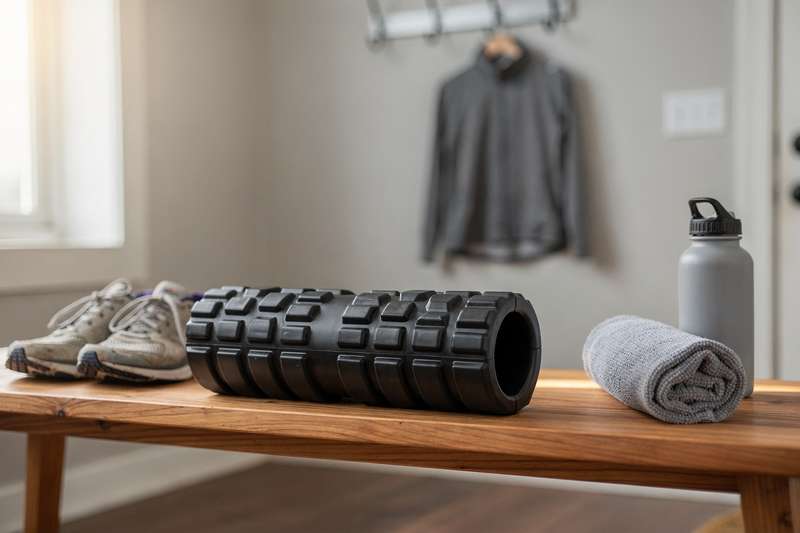
The reason this roller works well for IT band recovery specifically is its density. This is a high-density roller, not the sort of soft, accommodating foam you find stacked in gym corners that compresses flat under casual body weight. When you position it under the outer hip and transfer your weight onto it to target the TFL, it holds its shape and maintains consistent pressure. The TFL sits beneath skin and connective tissue and isn’t as immediately accessible as, say, a calf muscle — you need something that resists and doesn’t bottom out before it reaches the deeper tissue. This roller does exactly that.
The grid texture is not decorative. When working on the TFL or the glutes, the most productive approach is sustained point pressure — finding a specific tender area and holding steady on it for 30 to 60 seconds, rather than rolling continuously back and forth. A smooth roller makes this surprisingly difficult because you lose the tactile feedback about exactly where you’re positioned. The grid ridges and channels here give you that feedback, making it easier to slow down, locate the sore spot, and stay on it without sliding off.
Durability is a consistent strength in the review patterns. Buyers who’ve had this roller for several months report that the foam hasn’t deformed or developed flat spots the way cheaper solid-foam options tend to after regular use. The hollow-core construction is largely responsible: a hollow centre distributes compression differently from solid foam and prevents the progressive softening that renders some budget rollers ineffective within a few months of three-to-four-times-weekly use.
For technique, a practical sequence when using this roller for IT band work: begin with the lateral quad before moving to the TFL and glutes. Lie on your side with the roller under the outside of your thigh — not at the knee — and work the length of the muscle with slow strokes for a couple of minutes per side. Then shift the roller upward and slightly forward to the meaty outer part of your hip to address the TFL. Use the grid texture to locate tender spots, and when you find one, slow down and hold rather than rolling past it. That’s where the work actually happens.
The main caveat is that the brand isn’t prominent — the product name is functional and descriptive rather than brand-forward. Based on the review patterns, that’s not a quality concern, but if you’re used to buying named fitness brands, this will feel less familiar at purchase. For most UK runners looking for a reliable, high-density, well-reviewed roller to address IT band tightness through proper glute and TFL work, this is the most sensible place to start.
Best for Post-Run Portability
The KAYMAN Sports Foam Roller Sports Recovery, Deep Tissue Muscle Tension Relief & Circulation Increase Portable & Lightweight Self Massager is the highest-rated roller in this guide at 4.5 out of 5 stars from over 260 verified buyers, and the consistent theme across those reviews is how practical it is to use consistently — not just at home, but wherever running takes you.
The portability angle is real here, not a marketing description. The KAYMAN’s compact, lightweight form factor means it fits into a standard gym bag alongside your kit rather than requiring its own bag or being left at home because it won’t fit in the car. For runners who travel to races, commute to track sessions, or simply want something they can reach for immediately after an evening run without having to move furniture, this practical accessibility removes a significant barrier to consistency. There’s a fundamental truth about recovery tools: the best roller is the one you actually use, and something this portable removes real friction from the habit.
For IT band-specific work, the KAYMAN has enough density to work effectively on the TFL and outer hip. Buyers specifically mention using it for glute and hip recovery as part of a longer post-run routine, and the feedback is consistent: it maintains its firmness through regular use and doesn’t soften noticeably after a few weeks of daily rolling. The size also makes it useful for pre-run hip activation — a couple of minutes on the glutes and TFL before heading out can help address residual tightness carried from the previous session, which is particularly useful for runners training on consecutive days.
The tradeoff with a compact roller is surface area, and it’s worth being clear about what that means in practice. For lateral quad rolling — lying on your side and working the outside of your thigh from hip toward the knee — a shorter roller means working in sections rather than in a single long sweep. You’ll reposition two or three times to cover the full muscle length. For most runners this becomes routine quickly, but if you’re new to foam rolling and want a more forgiving setup while learning the positions, the full-length roller reviewed above is slightly easier to learn on.
Beyond IT band work specifically, the KAYMAN handles calves, shins, and upper back well — so you’re not buying a single-use tool. Runners who’ve left reviews mention using it across multiple muscle groups as part of a comprehensive post-run sequence, which points to this being a versatile recovery tool for regular training. If you’re a runner who moves around for events, commutes to training, or simply wants something that’s always close to hand, the KAYMAN is the strongest option in this guide for that way of working.
Best Budget Pick
The Foam Roller, Deep Tissue Massage Roller with Trigger Point Foam Roller Grid for Back, Legs, Calves & Fascia, Medium Density Pilates Roller occupies the entry level of this guide and carries 35 verified reviews at 4.4 out of 5 stars — a modest but consistently positive feedback base.
The most important thing to understand before buying this roller is the density descriptor in its own name: medium density. For general flexibility work, Pilates, or rolling the calves and upper back, medium density is entirely adequate — softer foam is often preferable on less padded areas. For IT band-specific recovery, however, where the target is the TFL and glutes sitting beneath more tissue, medium density is a real limitation. When you transfer your body weight onto this roller at the outer hip, it compresses further than a high-density option before engaging the deeper muscle fibres. The pressure you feel will be present, but less penetrating than with the firmer options reviewed earlier in this guide.
There’s a workaround worth knowing if you use a medium-density roller for lateral quad work specifically: rather than immediately transferring full body weight onto the roller, start with partial weight supported on your forearms and lower yourself gradually until the pressure feels firm but manageable. This gives you more control over how much load you apply and can make a medium-density roller work reasonably well for the outer thigh portion of the recovery sequence, even if it’s less effective for the deeper hip work.
Where this roller performs well is for the lateral quad and general post-run work across less padded muscle groups. The grid surface texture is adequate for locating and holding trigger points, and the construction is solid enough for daily home use based on the reviews available. Buyers consistently describe it as good value for what it is, which is the right framing — it’s a competent entry-level tool, not a premium one.
If you’ve never foam rolled before and want to try it before committing to something more expensive, starting here is a reasonable choice. If you find that glute and TFL rolling helps your IT band tightness — which it should, if you’re targeting the right muscles — you’ll probably want to upgrade to something higher-density within a few months. The rollers reviewed earlier in this guide are the natural next step. But as an entry point, or as a lighter recovery tool to complement a firmer roller for less padded muscle groups, this one is worth the price it sits at.
Best for Targeted Trigger Point Work
The Core Balance Foam Roller For Deep Tissue Muscle Massage, Trigger Point Grid Sports Massager, Fitness Gym Physio comes from Core Balance, a UK fitness equipment brand with a reasonable presence in the foam roller category. A critical caveat before anything else: this listing currently carries zero verified buyer reviews on Amazon UK. Everything that follows is based on the product’s specification profile and Core Balance’s brand track record — not accumulated buyer feedback. If you rely primarily on verified reviewer testimony when making purchasing decisions, the other rollers in this guide are the more defensible choices.
With that acknowledged, the Core Balance roller’s design is well-aligned with IT band recovery work. The trigger point grid construction — the surface patterning that defines this roller’s feature set — is the main draw. For the style of foam rolling that physio research consistently supports as most effective for myofascial release, sustained point pressure matters more than continuous rolling. Finding a tender area in the TFL or glute med, holding steady pressure there for 30 to 60 seconds, and allowing the muscle to release under sustained load is more productive than rolling aggressively back and forth. A multi-zone grid surface gives you the tactile feedback to do this well — you feel the texture beneath you as you reposition and can tell when you’ve landed on the right spot.
Core Balance has a presence across UK fitness retailers beyond Amazon, which provides some additional context about the brand’s standing — a brand without durability doesn’t maintain listings across multiple retail channels over extended periods. The roller is described as a high-density deep tissue tool aimed at physio-adjacent applications, which aligns with what IT band recovery work requires from a foam roller.
Using a trigger point grid roller effectively for glute and TFL work involves slowing down more than most people expect. Start by rolling slowly across the target area to locate the sore spots, then stop moving when you find one and sustain the pressure for at least 30 seconds before continuing. If you use the Core Balance this way — holding on tender points rather than rolling continuously — you get much closer to the technique that physio-aligned research suggests is most effective for myofascial release in these muscle groups.
For runners who are comfortable with the zero-review uncertainty and want a UK-brand option with a trigger point focus, the Core Balance is a reasonable consideration. If the absence of buyer feedback is a sticking point — and for something used regularly in injury management, that’s a valid concern — choose one of the reviewed options above and revisit the Core Balance once its listing accumulates more feedback.
What to Look For When Buying a Foam Roller for IT Band Tightness
Choosing the right foam roller for IT band work is more nuanced than most buying guides suggest, because the variables that matter shift significantly depending on which muscles you’re targeting. For IT band-related recovery specifically — where you’re working on the TFL, glutes, and lateral quad rather than the IT band itself — several criteria carry much more weight than usual. Here’s what to prioritise.
- Foam density: This is the single most important factor for IT band-adjacent muscle work. High-density foam holds its shape under body weight and reaches deeper muscle tissue. Medium-density foam is more comfortable but compresses before it fully engages the TFL or glute med. The tissue depth at the outer hip is greater than at the calf or upper back, and a roller that bottoms out before reaching the muscle won’t provide the pressure needed to be effective.
- Surface texture: A smooth roller is adequate for basic rolling techniques but makes it difficult to locate and hold specific trigger points. A grid or multi-zone surface pattern gives you tactile feedback as you move and helps you find the specific tender areas within the TFL and glutes that benefit most from sustained pressure. Look for clearly defined channels and ridges rather than shallow decorative grooves that provide no functional grip on the tissue.
- Length and diameter: Full-length rollers give you the most versatility for floor-based hip and glute work, providing a stable base for side-lying positions. Compact rollers are more portable and perfectly adequate for lateral quad work but require more deliberate repositioning for glute exercises. If portability is a priority, compact is workable; if you want to learn techniques with less fuss, go full-length.
- Hollow-core vs solid construction: Hollow-core rollers tend to retain their shape and firmness better over months of regular use than solid-foam options, which can develop flat spots or soften progressively. If you’re planning to foam roll three to four times a week as part of a running maintenance routine, hollow-core construction is worth looking for specifically.
- Review volume and pattern: A roller with 400-plus verified reviews tells you far more about long-term performance and durability than one with a handful of early reviews or none at all. For something used regularly as part of injury management, lean toward options with a meaningful and sustained review base. A high rating across very few reviews hasn’t been tested across enough users and use cases to be a reliable signal.
- Portability vs stability: Be honest about your routine. If you run in the morning and head straight out to work, a compact roller you can use quickly before leaving may serve you better than a full-length roller that requires clearing floor space. The most effective recovery tool is the one that fits into your actual life, not just into a product specification list.
- Where you’ll actually roll: Don’t try to foam roll directly over the IT band itself, and avoid rolling over the painful area at the side of the knee if you’re dealing with active IT band syndrome. The target areas are the glutes, TFL, and lateral quad — choosing a roller based on whether it can reach those muscles effectively is more relevant than any other single criterion in this list.
Verdict
For the majority of UK runners dealing with IT band tightness, the Foam Roller for Deep Tissue Muscle Massage Trigger Point Muscles Enhance Recovery for Physical Therapy and Rehab (Black) is the most defensible starting point. With over 450 verified buyer reviews at 4.4 out of 5 stars, high-density foam that holds up under body weight when targeting the TFL and glutes, a trigger point grid surface, and hollow-core construction that resists deformation over months of use, it covers every practical requirement for IT band-adjacent recovery work in a single well-reviewed package.
The exception is portability. If your training involves race travel, commuting to sessions, or the kind of schedule where a full-length roller simply won’t get used because it requires dedicated floor time you don’t always have, the KAYMAN Sports Foam Roller Sports Recovery, Deep Tissue Muscle Tension Relief & Circulation Increase Portable & Lightweight Self Massager is the stronger practical choice. Its 4.5-star rating across more than 260 buyers makes it the highest-rated option in this guide, and its compact form factor removes the friction that prevents consistent recovery work from actually happening.
Whichever roller you choose, the technique matters as much as the tool. Focus your rolling on the glutes, TFL, and lateral quad — not the IT band itself, and not the painful spot at the lateral knee. Use sustained point pressure on tender areas for 30 to 60 seconds rather than aggressive back-and-forth rolling. Spend around two minutes per leg on longitudinal strokes. These approaches, supported by physiotherapy research, are what make foam rolling for IT band tightness effective. A good roller makes them easier to execute — but getting the target area and the technique right is what actually moves the needle.
We were not paid to feature any specific product in this guide. All opinions are independent and based on publicly available specifications, verified buyer feedback patterns, and category research.
Quick Comparison Table


FAQ
Should you foam roll directly on the IT band?
Foam rolling directly on the IT band itself is largely ineffective and can cause unnecessary discomfort. The IT band is made of dense collagen fibres that don’t stretch or contract like muscle tissue, so it doesn’t respond to compression the way a muscle does. The muscles that actually create IT band tightness — the glutes, TFL, and lateral quad — are the areas worth targeting with a foam roller. Rolling directly over the painful spot at the side of the knee should also be avoided if you’re dealing with active IT band syndrome, as this can worsen the condition rather than relieve it.
How long should you foam roll for IT band tightness?
Around two minutes per leg for general longitudinal strokes along the target muscle is a reasonable starting point. When you find a specific tender spot within the TFL or glutes, hold sustained pressure there for 30 to 60 seconds before moving on. The pressure should feel comfortably uncomfortable — firm enough to be effective, but not so intense that the muscle braces against it. A focused five to ten minute session targeting the right muscles is more productive than a longer session applied to the wrong area.
How often should I foam roll for IT band issues?
Rolling daily or on most training days tends to produce better results than infrequent longer sessions. Consistency matters more than duration. If you’re in an active IT band syndrome flare-up, keep rolling away from the lateral knee and focus exclusively on the outer hip and thigh. Many runners find that incorporating a short rolling session into their post-run cool-down — rather than treating it as something extra to schedule separately — makes it far easier to maintain the habit over a training block.
What foam roller density is best for IT band recovery?
High-density foam is generally more appropriate for IT band-related work than medium or soft density, because the target muscles — particularly the TFL and glutes — sit beneath more tissue and require firmer pressure to reach effectively. Medium-density rollers are comfortable for general flexibility and calf rolling but can compress before engaging the deeper muscle fibres around the outer hip. A simple test: if you can compress the foam significantly with just your hand, it’s likely too soft for TFL and glute work.
Can foam rolling make IT band syndrome worse?
Yes, if applied to the wrong area. Rolling directly over the painful spot at the lateral knee — where IT band syndrome typically presents — can worsen the condition, since the pain is caused by compression between the IT band and the underlying bone in that area, and direct pressure adds to that compression. Keep rolling focused on the outer hip and thigh, well away from the knee. If any rolling produces sharp, acute pain rather than the typical comfortably uncomfortable sensation of myofascial work, stop and consult a physiotherapist before continuing.
Do I need a specialist foam roller for IT band work, or will a standard one do?
No specialist product is required, but two characteristics make a meaningful practical difference: firmness and surface texture. A high-density roller with a trigger point grid will be more effective for TFL and glute work than a soft, smooth cylinder. If you already own a firm, textured roller, it’s worth trying it before buying anything new. The technique — targeting the right muscles, using sustained rather than continuous rolling pressure, avoiding the painful knee area — matters more than any specific product feature.