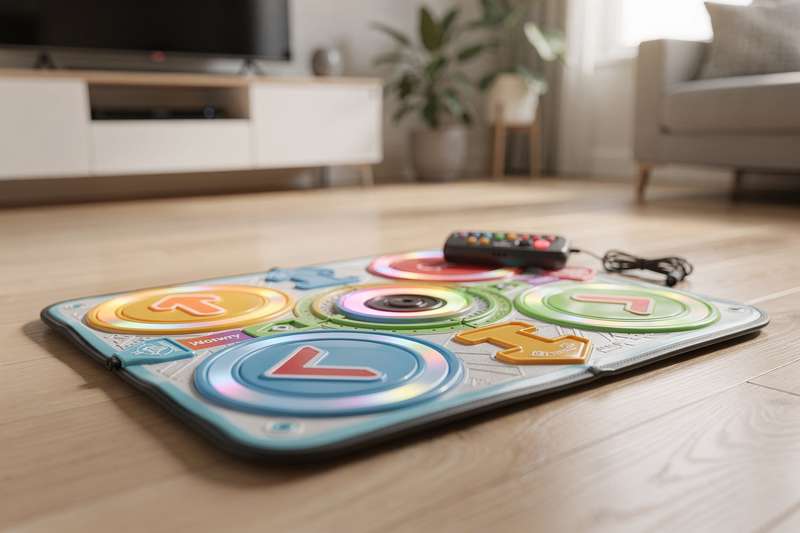
Picture this: it’s a Tuesday afternoon in October, the rain hasn’t let up since morning, and your children have exhausted every other option in the house. The YouTube dance video lasted four minutes before they started arguing about who was doing it right. The dance mat you bought two Christmases ago has three buttons that no longer register, and the loop of synthesised pop it plays has been seared into your memory against your will. What you actually need is something that lights up reliably when a child steps on it, keeps two kids occupied at the same time without requiring constant supervision, holds up to enthusiastic stomping for more than a few months, and doesn’t lose its novelty by the following Wednesday. You’ve looked at the listings on Amazon and been hit by dozens of near-identical products, all photographed from the same angle, all claiming to be the best. The differences between them are real, and they matter — this guide explains what those differences are and which mat is right for your specific situation.
How These Picks Were Made
The products in this guide were shortlisted by working through verified buyer review patterns from hundreds of real Amazon UK customer reports, looking for consistent signals in both positive and critical feedback. The criteria were straightforward: sensor responsiveness over time (not just out of the box), power source and battery life, usable play surface for one or two players, number of game modes, connectivity options (standalone, Bluetooth, or TV), volume control, build quality signals from longer-term reviewers, and ease of initial setup. Where products had a thin review count, that is noted clearly so you can weigh it accordingly. No zero-review products made the final shortlist, since real-world buyer experience is the most reliable guide available at the point of purchase.
Best Dance Mat for Two Players
If there are two children in the house who both want to dance at the same time — and there usually are, the moment one child gets something exciting — the maysida Rechargeable Dance Mat is the practical solution. Its footprint of 59 by 38 inches is significantly wider than a standard single-player mat, and that extra width is not a luxury — it is the difference between two kids dancing side by side with genuine space to move and two kids constantly elbowing each other while fighting over the centre. The two-player mode is explicitly designed for simultaneous use, so both players see their targets, score independently, and the game runs properly for both rather than one child awkwardly watching the other take their turn.
The rechargeable design is genuinely important here. A dance mat used by two children simultaneously will drain disposable batteries noticeably faster than a mat used by one child, and anyone who has had to make a mid-afternoon battery run during a school holiday will appreciate having a USB-rechargeable built-in cell instead. Charge it overnight, the children use it throughout the day, charge it again. The running cost difference over a year of regular use adds up more than most people expect when they buy.
The features built into this mat add meaningful replay value beyond the basic stepping mechanic. The piano mode is worth flagging specifically: it lets children use the light-up panels as a musical instrument rather than a step-game target, which tends to hook a different type of player — often a younger sibling who has not quite mastered the timing of step-following yet. The challenge game mode provides structured progression so a child who has mastered the basic modes has something to work towards, and the LED light coverage across the full mat surface means both players can see their targets clearly without squinting at opposite ends of the pad.
At 4.1 out of 5 stars across 543 reviews, this is the most extensively reviewed product in this shortlist. That volume of feedback gives you a reliable picture of how the mat performs over months of real use rather than just the first afternoon. The 4.1 average is honest rather than spectacular — a meaningful minority of buyers had issues — and the most consistent complaint in critical reviews points to the mat shifting on smooth hard floors during vigorous play. A rubber non-slip underlay placed beneath the mat resolves this. The other practical tradeoff: two children stomping on a large surface is audible through floors, so if you have downstairs neighbours or a bedroom directly below the play area, the noise level during peak sessions is worth planning for in advance.
For households with siblings, for birthday parties where multiple children want to participate, or simply for parents who know that any new toy immediately becomes twice as appealing the moment a sibling wants it, this is the mat with the footprint and the features to handle the reality of multiple-child use.
Best Budget Dance Mat
The AmyBenton Dance Mat for Girls holds the highest buyer satisfaction rating of any product in this guide — 4.4 out of 5 stars — which is worth noting even though its 32 reviews represent a smaller sample than some of the more established listings here. The pattern of what buyers are happy with is consistent: the wireless Bluetooth connectivity, the responsiveness of the light-up step panels, and five game modes that keep younger children engaged past the initial novelty period. At its price point, it offers more features than you would typically expect from this tier.
The Bluetooth pairing is the feature that most distinguishes this mat from similarly priced competitors. Being able to connect a phone or tablet and stream your child’s actual favourite playlist through the mat’s speaker rather than being locked into built-in loops is a bigger quality-of-life improvement than it sounds on paper. Built-in music on kids’ dance mats is almost universally short on variety — after an hour of use, the same thirty-second melody on repeat becomes a background irritant for any adult in the vicinity. Bluetooth sidesteps that problem entirely, and for children aged eight and above who have strong views about what music they want to dance to, it makes the mat significantly more appealing as a longer-term activity.
Five game modes provides genuine breadth at this price tier. You typically get a follow-the-light mode for beginners, a speed or memory challenge variation, and a free-play option, with additional modes layering in different patterns or timing requirements. That range covers children from early learners who need slow, clear prompts through to older kids who want a reaction-speed challenge, which extends the mat’s lifespan as a household fixture.
The honest caveat with fewer reviews is that long-term durability data is limited. Products with around 30 ratings have not yet been through six months of daily use across hundreds of households, so you are relying more on the initial satisfaction signal and less on the kind of “still going strong a year later” comments that appear in larger review pools. For a gift where you are uncertain whether the recipient will stick with dance mats, or where you want a capable starter mat without a premium investment, this is a sensible choice. For a child who is already a confirmed enthusiast and will use it daily, the mats with larger review bases give you better long-term durability confidence.
The “for Girls” marketing label is a product positioning choice rather than a functional limitation — the step game mechanics work identically regardless of who is playing. If you are shopping for a child who would prefer a different design aesthetic, that is worth factoring in, but the gameplay itself is completely neutral.
Best Rechargeable Dance Mat
The Light Up Dance Mat for Girls, Rechargeable Dance Pad with 6 Game Modes is the most well-rounded standalone option in this guide, sitting at 4.2 out of 5 stars from 337 buyers. That combination of a solid rating and a substantial review count gives you a reliable read on real-world performance. It offers six game modes, a built-in rechargeable battery, and a light-up arrow design — all the core features you want in a kids’ dance mat — without the complexity or cost of a TV-connected model.
The rechargeable battery matters more in practice than it appears in a product listing. Charging via USB keeps ongoing costs down and means the mat is always ready at the start of a play session rather than requiring a battery check and a trip to the drawer where you keep the AAs. For a mat that sees use several times a week — which is realistic during school holidays and colder months when children are indoors more — this is a real practical advantage. Buyers consistently note that the charge holds well through extended play sessions, which is the critical detail: a battery that depletes faster than the children’s energy would defeat the purpose entirely.
Six game modes offers more variety than most mats at this price tier. The typical spread covers a follow-the-arrow mode at different speed levels, a memory or pattern challenge, and a piano or free-play mode that lets children explore the mat’s sounds without following set prompts. That range means the mat has something different to offer as a child grows and their skills develop, extending the useful lifespan of the product well beyond what a one- or two-mode mat can manage.
The light-up arrows are the core interaction mechanism, and the brightness of the LEDs matters more than many parents realise when shopping. Dimly lit targets make the game harder to follow for younger children and reduce the spectacle that makes dance mats appealing in the first place. Buyers generally rate the light responsiveness positively here, and consistent positive comments about visibility suggest the LED implementation is solid across the board.
The main practical limitation that appears in critical reviews is the mat sliding on hard floors — a recurring theme across almost all dance mats rather than a flaw specific to this model. A rubber underlay underneath is the standard fix. The design aesthetic is feminine in its colour palette and styling, which is a consideration if you are shopping for a child with different preferences, though the gameplay itself is entirely neutral.
Best Dance Mat for TV Play
The Kids Dance Mat, Interactive Dance Game for TV, Gift for Girls Boys belongs to a different category of experience compared to the standalone mats above. By connecting to your television, it displays the game on a large screen — and that changes the fundamental nature of the activity. Instead of looking down at a light-up mat surface while your feet try to keep up, you look straight ahead at a full-screen display showing your cues, your score, and step feedback in real time. Anyone who has played a rhythm game at an arcade or on a games console will immediately recognise the format. It is the difference between a toy and a proper rhythm game, and that distinction matters to older players.
The numbers support the recommendation: 4.2 out of 5 stars from 292 reviewers is a solid, well-supported rating. The review volume is large enough to trust the average, and the satisfaction level is consistent across buyers who specifically wanted the TV-connected experience. Older children from around age eight, teenagers, and adults who want something they can engage with seriously rather than just dabble with tend to be the most satisfied purchasers of this type of product.
The large-screen display unlocks features that standalone mats simply cannot offer: a proper scoring system visible from a standing dance position without crouching down, more complex game modes that benefit from the visual space of a television, and the social dimension of a game the whole room can watch and get involved in. This is the mat that earns a place in a family game night rather than being left in a corner once the initial excitement fades.
The tradeoffs are practical ones. Setup requires a television input, the appropriate cabling, and enough floor space to position the mat at a comfortable viewing distance from the screen. Most UK living rooms accommodate this without difficulty, but it is worth thinking through your specific room layout before purchasing. You also need to consider where the mat will live between sessions — a mat that is awkward to set up each time tends to get used less, regardless of how well it performs when it is out.
The price reflects the step up in capability from a standalone mat. Whether that investment makes sense depends entirely on who is going to use it and how often. For a household with older children or adults who want a genuine rhythm gaming experience, this is exactly where to spend the money. For parents buying for very young children who will not engage with a TV-connected game for a few years yet, one of the simpler standalone mats is a better fit for now.
Best Dance Mat for Mixed Ages
The Dance mat game, suitable for children and adults, TV music dance mat game, for exercise and play, the best gift, suitable for boys and girls takes the TV-connected format and explicitly positions itself for adult use alongside children — a notably different pitch to the rest of the options in this guide. Most kids’ dance mats are sized and designed with a child’s footprint in mind; a mat that sets out to serve adults alongside children needs to be physically larger and built to absorb the force of heavier players stepping at pace. The TV connectivity brings the full large-screen gaming experience, and the exercise angle is worth taking at face value: for adults who find structured exercise repetitive, a proper dance mat session in front of the television can be an effective way to get moving without leaving the house.
The honest caveat upfront: this mat holds 3.8 out of 5 stars from 31 reviewers, which is the lowest rating and the second-thinnest review pool in this guide. Both facts matter and should factor into your decision. The 3.8 average reflects a broader spread of experiences — buyers who found setup smooth and gameplay engaging rated it highly, while buyers who encountered connection or sensor inconsistencies did not. At 31 reviews, the data pool is thin enough that the rating could shift noticeably in either direction as more buyers weigh in, so you are making a purchase decision with less certainty than a product backed by several hundred ratings.
Where this mat earns consideration is in households with a real mixed-age requirement. If you have children of different ages who all want to use the same mat, plus adults who want to join in rather than just watch, you need something designed for that full range. The TV connectivity serves the older players well, and the dual-audience design means adults do not feel cramped on a mat built around a seven-year-old’s feet. The pricing reflects the premium positioning of a multi-audience TV-connected product.
Go into this purchase with clear expectations. Read the most recent buyer reviews carefully before purchasing, pay particular attention to any recurring issues mentioned in lower-rated comments, and accept that a thin review base carries more uncertainty than a well-established listing. For households with a genuine mixed-age use case and an appetite for the TV-connected format, it is a reasonable option. For everyone else, the better-reviewed picks above will serve you more reliably and with less purchase risk.
What to Look for in a Dance Mat
- Power source: batteries versus rechargeable. Disposable AA battery mats are simple and work straight out of the box, but frequent use — especially during school holidays — can consume batteries surprisingly fast. Rechargeable mats cost slightly more upfront but remove the ongoing cost and the frustration of a mat going flat mid-session. If the mat is going to be a regular part of the household routine rather than an occasional novelty, rechargeable is worth paying for.
- Play surface dimensions. The listed size matters more than it appears in product photos. A mat that looks spacious in a listing image can feel uncomfortably cramped once a real child is dancing on it, particularly as they get older and their stride length increases. For a single player under about age seven, a mat in the 35 by 35-inch range is typically sufficient. For two players, or for children aged eight and above, look for something closer to 59 by 38 inches — the extra width changes how comfortably two people can use the mat simultaneously.
- Connectivity type. Standalone mats work the moment you switch them on, with no pairing or cables needed — ideal for younger children and for portability between rooms. Bluetooth adds the ability to stream music from a phone or tablet through the mat’s built-in speaker, which solves the repetitive factory-music problem. TV-connected mats display the game on a large screen for a proper rhythm-game experience; they suit older children, teenagers, and adults, but require a television input and a bit more setup.
- Game modes and replay value. A mat with a single mode will hold attention for a week, possibly two. Look for at least three distinct modes — ideally a mix of follow-the-arrow stepping, a speed or memory challenge, and a free-play or piano mode. More variety extends the lifespan of the mat as a child grows and their skills develop, which means better value over the months after the initial excitement settles.
- Sensor quality. This is the hardest specification to evaluate from a product listing alone, because manufacturers rarely provide meaningful technical detail about how their sensors actually work. Your best guide is the review pattern: consistent complaints about missed steps, non-responsive panels, or sensors failing within weeks are reliable warning signs. A mat with a strong rating across hundreds of reviews, where sensor issues appear only in a small minority of feedback, gives you reasonable confidence in the sensor implementation.
- Non-slip backing and floor compatibility. A dance mat that shifts on a hard floor mid-session is both a safety concern and an irritant. Most mats include some form of grip backing, but its effectiveness varies considerably by product and floor type. Regardless of what the manufacturer claims, placing a thin rubber non-slip underlay beneath the dance mat is sensible practice on laminate, hardwood, or tiled floors. On carpet, most mats grip naturally without any additional layer.
- Volume control. Kids’ dance mats are frequently louder than expected, and not every model offers a meaningful volume dial or the ability to reduce music volume independently of game sounds. A mat you can turn down to a reasonable level for evening use — without silencing it entirely — is a significant quality-of-life consideration. Check buyer reviews specifically for comments about volume controllability before purchasing; it is a detail that rarely appears prominently in product listings but comes up constantly in real-world feedback.
Verdict
For most families — parents buying for one or two children between roughly ages four and ten, wanting a mat that gets real use over months rather than weeks — the maysida Rechargeable Dance Mat is the strongest overall choice. Its 543-review base at 4.1 stars gives you the most reliable real-world data of any product here, the large double-player footprint handles the sibling situation that comes up in nearly every household with more than one child, and the rechargeable battery removes the battery-drain problem that wears parents down over time. It will not suit every scenario — if your child is under five and will be using it solo, a slightly smaller, simpler mat may be a better physical fit — but as an all-round recommendation for the typical family, the combination of review weight, practical size, and rechargeable convenience makes it the clear first choice.
If you are buying for a single child and want a compact standalone option with a strong track record, the Light Up Dance Mat for Girls, Rechargeable Dance Pad with 6 Game Modes at 4.2 stars from 337 reviewers is the close runner-up. And for older children, teenagers, or adults who want the full TV-connected rhythm game experience, the Kids Dance Mat, Interactive Dance Game for TV, Gift for Girls Boys is a different product serving a different use case — and it does so with a solid 292-review backing.
We were not paid to feature any specific product in this guide. All opinions are independent and based on publicly available specifications, verified buyer feedback patterns, and category research.
Quick Comparison Table


FAQ
What age is a dance mat suitable for?
Most electronic kids’ dance mats are designed for children aged three and upwards, with the typical sweet spot running from about four to ten years old. Very young children under three may find the concept of following light cues difficult to grasp, and the mat surface can feel large and overwhelming. TV-connected mats with more complex gameplay tend to suit ages eight and above and remain engaging for teenagers and adults, making them the better investment for older households.
Do dance mats need batteries?
It depends on the model. Many children’s dance mats run on disposable AA batteries — typically three or four cells — which is convenient initially but becomes a running cost with heavy use. Rechargeable models have a built-in battery charged via USB cable, which is more practical for daily use and removes the risk of the mat going flat mid-session. Always check the power source in the product listing before buying, since it affects ongoing cost and convenience significantly.
Will a dance mat scratch my floor?
Most dance mats have a soft or rubberised underside that should not scratch hard flooring under normal conditions. However, small particles of grit trapped between the mat and a hard floor can cause scratches if the mat shifts during play. The safest approach on laminate or hardwood floors is to place a thin rubber non-slip underlay beneath the dance mat regardless of the manufacturer’s grip claims — it protects the floor and stops the mat moving during energetic sessions.
Can two children use a dance mat at the same time?
Some dance mats are specifically designed for two simultaneous players, with a wider footprint and a dedicated two-player mode. Standard single-player mats — typically around 35 by 35 inches — are too narrow for comfortable dual use. If two-player use is a requirement, check the product dimensions carefully and confirm the listing explicitly mentions a two-player mode before purchasing.
How does a TV-connected dance mat work?
TV-connected dance mats plug into your television and display the game on the large screen rather than relying solely on light-up cues on the mat surface. You follow arrows and prompts on the TV display while dancing — the format used in classic rhythm arcade games. This suits older children, teenagers, and adults who want a more structured gaming experience with access to a wider range of songs and game modes than a standalone mat can offer.
How do I stop a dance mat from sliding during play?
The most reliable solution is to place a rubber non-slip underlay or grip rug mat beneath the dance mat before use. This works far more consistently than relying on the mat’s built-in grip pattern alone, which varies in effectiveness across different floor types and can become less reliable over time. On carpet, most dance mats grip naturally without any additional layer. On smooth laminate or polished hardwood, add the underlay from day one — especially with energetic young players who tend to stomp rather than step.