You’ve signed your kid up for their first handball session at the local sports centre, or maybe you’re a PE teacher trying to stock a school cupboard without blowing the budget, or perhaps you play recreationally on weekends and your club’s battered old balls have finally given up the ghost. Whatever the situation, you’ve typed “handball balls” into Amazon and been met with a bewildering mix of proper IHF-spec match balls, rubber playground balls, dodgeballs, and the occasional product that clearly belongs in a completely different category. Sorting through that noise takes time you don’t have.
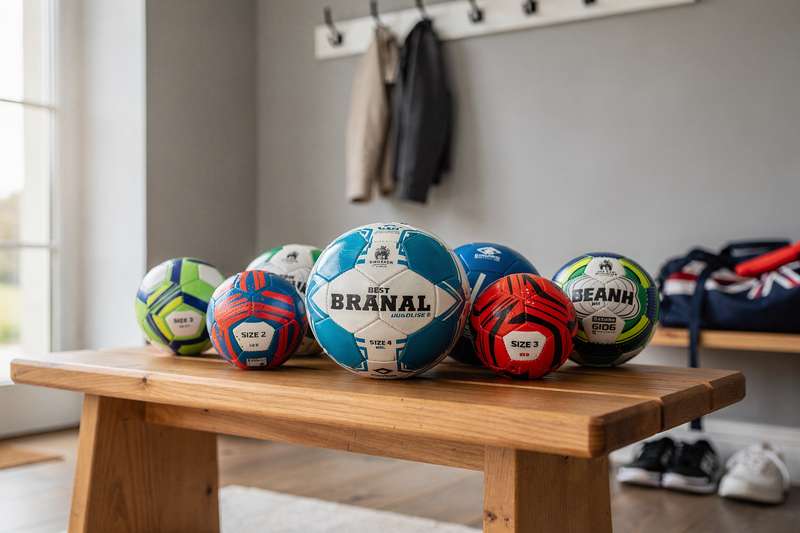
The tricky part with handball is that the word means two genuinely different things. In the UK, most people encounter team handball — the fast-paced indoor sport played with a 58–60 cm (size 3) ball for adult men, a 54–56 cm (size 2) ball for women and youth, and a smaller size 1 for young children. There’s also American-style handball, played by striking a rubber ball against a wall. Both types appear on Amazon, sometimes with little indication of which is which. Getting the wrong one is a frustrating waste of money. This guide cuts through the confusion and gives you five concrete picks for different scenarios, so you know exactly what you’re buying before you click.
How These Picks Were Evaluated
Every product in this guide was assessed against five core criteria: construction quality (rubber vs. hybrid leather vs. PVC), size grading and IHF compliance, grip texture and feel during play, verified buyer feedback patterns from real Amazon reviews, and suitability for the stated use case — training, match play, school PE, or recreational use. Where the review count is low, that’s flagged honestly rather than glossed over. Seller reputation and return policy reliability also factored in, particularly for higher-priced options. The goal was a short list covering the full range of realistic buyer scenarios, not an exhaustive catalogue of every listing on the platform.
Best Overall Training Ball: FORZA Training and Match Handballs
The FORZA Training and Match Handballs – Rubber Soft Touch Handball Balls Ideal for Kids, Men and Women is the pick that covers the widest range of everyday use cases, and it’s the one most UK buyers searching for a straightforward handball will want to start with. Available in multiple sizes (size 1 for young children, size 2 for women and youth, size 3 for adult men), it maps directly onto IHF size conventions, so you can order with confidence knowing it’s the right ball for your age group rather than guessing.
The construction is vulcanised rubber with a soft-touch surface finish — a combination that works well on sports hall floors where a completely hard rubber ball would bounce unpredictably off the court. The soft-touch coating also helps with grip, which matters enormously in handball where you’re catching fast passes and immediately releasing a shot. Buyers consistently note that the ball holds its shape well through repeated sessions and doesn’t go soft prematurely, which is a common failure mode with cheaper rubber sports balls.
With a 4.7/5 rating from 16 reviewers, the sample size is modest — this isn’t a ball with thousands of long-term user reviews — but the pattern across those reviews is coherent and positive. Club coaches in the UK have used this model for training drills, and the feedback on durability through regular weekly sessions is encouraging. It’s worth noting that this is a rubber ball rather than a hand-stitched leather or synthetic leather construction, which means it’s excellent for training but wouldn’t be used in a sanctioned IHF match. For school sessions, club training, and recreational games, though, that distinction rarely matters.
One area where it falls slightly short: the soft-touch surface can feel slightly tacky in very warm conditions, which some players find distracting. It’s also not the ideal choice if you need a ball for outdoor use on abrasive tarmac — the surface coating will degrade faster on rough outdoor surfaces than a plain rubber ball would. For indoor court use, which is the primary context for team handball in the UK, it performs very well.
Best for Professional Match Play: FORZA Elite HYB Match Handball
If you need a ball that steps up from training to genuine match conditions, the FORZA Elite HYB Match Handball — Premium Hand-Stitched Official Size Ball for Professional Indoor Games is the right direction. The HYB designation refers to a hybrid construction — hand-stitched panels over a rubber bladder — which gives it a feel closer to a traditional leather match ball without the full price premium of a top-tier competition ball.
The hand-stitching is a meaningful upgrade over moulded rubber construction. Stitched panels conform slightly to your hand during a catch, which experienced players notice immediately when switching from a moulded training ball. The bladder retains air well between sessions, and the panel grip is designed for indoor court play where rosin or grip spray is typically applied. It’s available in size 1, 2, and 3, so it covers everything from junior development squads to senior club matches.
The review count here is lower — 6 ratings averaging 4.0/5 — so you’re buying with less community data behind you. The lower average relative to the training ball reflects a couple of reports of quality consistency across units rather than a fundamental design problem. If you’re equipping a club and ordering several at once, inspecting the stitching quality on arrival is worth doing. This is not unusual with hand-stitched sports balls at this price point; variation exists in any hand-assembled product.
Where this ball genuinely shines is in match simulation training — sessions where you want players to feel something closer to the ball they’ll use in competition. The added grip and panel structure reward proper handball technique (wrist snap on shots, finger-spread on catches) in a way that a plain rubber ball doesn’t. It’s less appropriate as a general-purpose buy for someone who just wants a ball to knock around with, but for a club development squad or a PE department running a handball unit, it fills a real gap in the range.
Best High-Volume Pick for Schools and Clubs: Mic Playground Balls Kickballs
School PE departments and community clubs often need several balls at once, and the Mic Playground Balls Kickballs 8.5 Inch, Rainbow Playground Ball Set for Kids and Adults, Dodgeball Kick Balls Handball for Indoor & Outdoor is the best-supported option in the live catalogue by a significant margin — 580 verified reviews at 4.5/5 gives you a genuinely reliable signal of real-world performance.
These are 8.5-inch rubber playground balls rather than regulation IHF team handballs, so it’s worth being clear about context: they’re ideal for American-style handball against a wall, for general playground games, for dodgeball, for PE warm-up activities, and for younger children who aren’t yet ready for a full-size team handball. The rainbow colour set is a practical advantage in a school setting — different colours can be assigned to different groups or activities, making session management easier for a teacher running multiple games simultaneously.
The rubber construction is noticeably durable. Reviewers playing regularly on both indoor gym floors and outdoor tarmac report that the balls hold up well. The bounce is consistent and predictable, which is exactly what you want when teaching throwing and catching fundamentals to children. Grip is reasonable for a smooth rubber surface — not as textured as a purpose-made team handball, but adequate for the playground and gym contexts these are designed for.
The main limitation is one of category: if a parent or teacher is looking for a ball to use in a formal team handball session following IHF rules, this isn’t the right product. The 8.5-inch format doesn’t correspond to any IHF size, and the weight and balance differ from a proper handball. For everything else — recreational play, PE general sport sessions, children’s outdoor games, American handball practice — this set offers excellent value and the kind of review depth that gives you genuine purchase confidence.
Best for Younger Children and Primary PE: BOBOBARK 8.5 Inch Playground Balls
For younger children or primary school settings where safety and ease of use take priority over sport-specific precision, the BOBOBARK 8.5 Inch Playground Balls – Dodgeballs for Kids with Pump, Soft Kickball Set & Four Square Ball for Schools, PE, Gym, Indoor & Outdoor stands out for a practical reason: it comes with a pump included, which removes one of the most common post-purchase frustrations with inflatable balls.
The BOBOBARK set is rated 4.6/5 from 17 reviews — a smaller sample than the Mic set but a higher average, and the reviewer comments are specifically positive about the softness of the ball surface. For younger children who are still developing confidence around fast-moving balls, a softer feel significantly reduces the instinct to flinch or avoid the ball. That matters in a PE context where building confidence is as important as developing skill.
The included pump is a genuine practical advantage. Schools and clubs often have a general-purpose pump somewhere, but having one bundled with the balls means you can inflate and start playing immediately without a hunt through the equipment cupboard. The balls are also described as suitable for four square, kickball, and dodgeball — all activities that sit naturally alongside handball in a school PE unit on throwing and catching sports.
The trade-off relative to the Mic set is volume: the BOBOBARK listing covers fewer balls per purchase, so for a large class you may need multiple sets. The softer construction, while great for young children, also means these balls aren’t the right choice for older players or adults who want a proper rebound and challenge in their game. Think of this as the right buy for a Key Stage 1 or early Key Stage 2 PE context, not for a senior club training session.
Best Variant for Size 1 Junior Players: FORZA Training and Match Handballs (Size 1)
The FORZA Training and Match Handballs – Rubber Soft Touch Handball Balls Ideal for Kids, Men and Women in its size 1 configuration deserves specific attention for parents and coaches working with young players aged roughly 8 to 12. While the FORZA rubber handball appears across multiple ASINs in the range (each covering a different size), the size 1 variant is the one that matters most for junior development in the UK context, where team handball at junior level is growing in schools and local clubs.
Size 1 corresponds to a circumference of approximately 50–52 cm — noticeably smaller and lighter than the adult ball. For children in this age bracket, using an adult-size ball quickly becomes discouraging: it’s harder to grip, harder to catch one-handed, and the weight makes accurate throwing difficult for smaller arms. The size 1 ball removes those barriers and lets young players focus on the actual skills — footwork, positioning, passing accuracy, and shooting technique.
The soft-touch rubber surface on this size is the same as on the larger variants, so the grip characteristics that make the FORZA range popular with adult players translate to the junior version. The ball inflates to a consistent pressure and holds it reliably. The 4.7/5 rating (shared across the range’s 16 reviews) reflects consistent satisfaction across size variants.
One honest note: the FORZA range is produced by a UK-based sports equipment supplier with a track record in school and club supply, which means sizing and spec consistency across batches is generally reliable. That said, with only 16 reviews across the whole range, you’re not working with the same depth of community feedback as the Mic balls offer. For a parent buying one ball for a child, or a coach ordering a small set for a development squad, this is a sensible and well-specified choice. For a school wanting to order 20 balls in a single go, supplementing with the Mic set for sheer review confidence makes practical sense.
What to Look For When Buying a Handball Ball
- Size grading: IHF team handball uses three sizes — size 1 (50–52 cm circumference, for children up to approximately age 12), size 2 (54–56 cm, for women, girls aged 14+, and men aged 12–16), and size 3 (58–60 cm, for adult men). Always match the ball to the age group and gender of the players. Using the wrong size is one of the most common mistakes when ordering online.
- Construction type: Rubber moulded balls are the most common training option — durable, lower cost, and forgiving on indoor floors. Hand-stitched hybrid or synthetic leather balls offer better grip and a closer feel to competition conditions but cost more and require more careful maintenance. Full leather match balls are used at elite competition level and are rarely the right buy for recreational or development use.
- Surface texture and grip: Look for a textured or soft-touch surface rather than a completely smooth rubber finish. Grip matters significantly in handball, where you’re catching fast passes and immediately releasing shots — a slippery ball erodes both confidence and technique, especially for newer players.
- Indoor vs. outdoor use: Most team handball is played indoors on sports hall floors. Balls with soft-touch coatings perform well indoors but can degrade faster on abrasive outdoor surfaces like tarmac or concrete. If you need a ball for outdoor use, a plain rubber construction without a coating is generally more durable.
- Pump inclusion: Inflatable balls that don’t come with a pump require you to already have one — or to buy one separately. For school or club orders, this is rarely a problem, but for a single purchase, a bundled pump saves both cost and frustration. Check the listing carefully before ordering.
- Review depth: With sports balls specifically, a product with 400+ genuine reviews gives you a much stronger signal than one with 10–15. Low review counts aren’t automatically a red flag — some solid products are simply newer to market — but they do mean you’re taking more of a risk on consistency between units.
- Age and skill suitability: A softer, lighter ball is the right call for young children and beginners — it builds confidence and reduces the instinct to avoid fast-moving balls. As players develop, moving to a properly specified training ball with correct weight and grip teaches the mechanics of handball properly. Don’t default to the smallest or softest ball available if your players are ready for a step up.
Verdict
For most UK buyers — whether you’re a parent getting a child ready for school handball, a PE teacher stocking a cupboard, or a recreational player wanting a proper ball for a weekly session — the FORZA Training and Match Handball in the appropriate size is the strongest starting point. It’s correctly sized to IHF conventions, the rubber soft-touch construction is well-suited to UK sports hall floors, and the 4.7/5 rating across the range reflects consistent satisfaction. Order size 1 for juniors, size 2 for women and older youth, and size 3 for adult men.
If you need something with match-play feel and you’re running a development squad, add a few FORZA Elite HYB balls to the mix — the hand-stitched construction bridges the gap between training and competition conditions meaningfully. And if you’re a school PE department that needs volume and review reassurance in one purchase, the Mic Playground Ball set’s 580+ reviews make it the low-risk, high-confidence buy for general throwing and catching activities.
We were not paid to feature any specific product in this guide. All opinions are independent and based on publicly available specifications, verified buyer feedback patterns, and category research.
Quick Comparison Table


FAQ
What size handball ball do I need?
IHF team handball uses three sizes. Size 1 (circumference approximately 50–52 cm) is for children up to around age 12. Size 2 (54–56 cm) is for women, girls aged 14 and over, and boys aged 12–16. Size 3 (58–60 cm) is for adult men. Always match the ball to the correct age group — using the wrong size makes learning the sport significantly harder.
What is the difference between a training handball and a match handball?
Training handballs are typically rubber-moulded — durable, consistent, and lower cost. Match handballs use hand-stitched panels over a rubber bladder, giving better grip, a more responsive feel, and closer conformity to IHF competition standards. For club training, rubber balls are perfectly adequate. For competitive matches or high-level development sessions, a stitched match ball is worth the extra investment.
Can handball balls be used outdoors?
Most team handball is designed for indoor sports hall play, and balls with soft-touch surface coatings will degrade faster on abrasive outdoor surfaces like tarmac. If you need a ball for outdoor use, look for a plain rubber construction without a coating. The 8.5-inch rubber playground balls in this guide (the Mic and BOBOBARK options) are more appropriate for outdoor use than the IHF-spec training balls.
What is the difference between team handball and American handball?
Team handball (the Olympic sport) is played on a large indoor court with two teams of seven, using a large inflated ball thrown at a goal. American handball is a wall sport where one or two players strike a small rubber ball against a wall with their hand — no racquet. Both are called “handball” but require completely different balls. The IHF-spec balls in this guide are for team handball; the 8.5-inch rubber playground balls overlap with American handball and general recreational play.
How do I inflate a handball ball properly?
Use a standard sports ball pump with a needle adaptor — the same type used for footballs and basketballs. Most handball balls have a recommended pressure range (typically 0.3–0.9 bar for IHF balls, though this varies by ball type and manufacturer). Over-inflating makes the ball too hard and affects bounce; under-inflating makes it sluggish and harder to control. Check the ball’s surface or accompanying documentation for the recommended pressure if stated.
How long should a handball ball last with regular use?
A good rubber training handball used in weekly indoor sessions should last several years with reasonable care. The main failure modes are surface coating degradation (more common if used outdoors) and bladder leaks (usually from a faulty valve rather than the ball material itself). Hand-stitched match balls require more care — store them inflated to avoid panel distortion, and keep them away from damp conditions which can weaken stitching over time.