Picture this: you’ve just spent a weekend clearing overgrown hedges, raking up dead leaves, cutting back brambles, and finally sorting through three years’ worth of bank statements and old utility bills. The garden waste is piled up in an unstable heap near the fence, and the paperwork is stacked precariously on the kitchen table. You’ve already made four trips to the tip this month, your green bin is stuffed, and shredding a hundred sheets of paper is the kind of job that makes you feel like throwing the shredder itself onto the pile. Sound familiar?
A garden incinerator solves both problems in one go. Light it up, feed it your waste — whether garden debris, dry branches, cardboard, or confidential documents — and within an hour you’ve got a small pile of ash and an enormous sense of satisfaction. But picking the right one isn’t as simple as grabbing whatever shows up first on Amazon. Too small, and you’re doing ten burning sessions to clear what one larger bin would handle in one. Too flimsy, and it rusts through before the next summer. The wrong design and you’re fighting a badly ventilated fire that smokes more than it burns.
This guide cuts through all of that. You’ll get clear, honest picks for every situation — from a compact document burner that fits on a patio shelf, to a serious 90-litre drum capable of eating through a proper garden clear-out.
How We Evaluated These Picks
Choosing an incinerator for your garden isn’t just about capacity. For this guide, the evaluation focused on five core criteria: capacity relative to garden size, build quality and material thickness, ventilation design (which directly affects how well and how fast the bin burns), ease of assembly and storage, and verified buyer feedback from real purchasers on Amazon. Where review counts were substantial (over 150 reviews), those patterns revealed consistent strengths and honest recurring weaknesses — and both are reported here without sugar-coating. For products with fewer reviews, the focus shifted to verifiable specifications, build materials, and how the design compares to established benchmarks in the category. No product was included purely for novelty or because it looked good in photos.
Best for Document Destruction — Small Gardens
The KetoPlastics mini garden incinerator is the standout choice for anyone primarily dealing with paperwork and light garden waste in a smaller outdoor space. With 551 reviews and a 4.5/5 star rating, it has one of the strongest verified feedback records in this entire category on Amazon UK, and the consistent themes in those reviews point to something genuinely reliable rather than just popular.
The design follows a tried-and-tested format: galvanised steel construction, a chimney-style lid that funnels smoke upwards rather than billowing it sideways, three legs to keep the base off the ground (which both aids airflow and protects whatever surface it’s sitting on), and ventilation holes around the body to keep the fire drawing properly. That chimney lid is a detail worth paying attention to — it dramatically reduces the amount of smoke that drifts towards your face, your neighbours’ gardens, or your freshly washed laundry.
In terms of what it handles best: this is a document burner first and foremost. Feed it a stack of bank statements, old receipts, solicitor letters, or anything you don’t want going through a recycling skip, and it reduces them to fine ash efficiently. It also copes well with dry leaves, light garden trimmings, and small twigs. Where it reaches its natural limit is larger garden material — chunky branches, big quantities of grass cuttings, or anything damp. At that point you need a larger bin.
One thing buyers mention consistently is that the lid handle gets very hot during use, so you’ll want a pair of heat-resistant gloves nearby before you try to lift it mid-burn. Adding more material while it’s burning also takes a bit of technique — either opening the lid carefully or posting smaller items through the vents. These aren’t dealbreakers, but they’re worth knowing before your first use rather than discovering the hard way.
If your garden is compact, your storage space is limited, and your main goal is killing off sensitive paperwork without buying a shredder (or resurrecting one that jammed for the fifth time this year), this KetoPlastics model earns its position as the top-rated pick in this size class with genuine justification.
Best Compact Pick with a Clean Chimney Design
The KetoPlastics garden incinerator in this format is a close sibling to the smaller model above, but offers a slightly different configuration suited to users who want a bit more burning room without committing to a full-size 90-litre drum. At 162 reviews and a 4.4/5 star rating, it sits in a comfortable middle ground — enough real-world feedback to paint an accurate picture, and a strong enough score to suggest consistent build quality.
The galvanised steel body, chimney lid, and three-legged base are all present here too, and that’s not a lazy design repeat — it’s a format that works. The chimney forces combustion gases upward in a controlled column rather than letting smoke meander, which is a genuine quality-of-life advantage over open-top incinerators. If you or your neighbours are particularly sensitive to wood smoke, this directed exhaust is worth factoring into your decision.
Where this model fits the bill particularly well is for users who regularly burn quantities of material that are too much for the smallest bins but don’t justify a cavernous 90-litre drum. Think a medium-sized patio garden with a few raised beds — enough to generate a decent pile of cuttings and paper over the month, but not an estate that needs industrial capacity. It handles dry leaves, cardboard, documents, and small wood offcuts without complaint.
The tradeoffs are broadly similar to the smaller sibling: thin galvanised steel means you need to store it under cover when not in use, especially through winter, otherwise rust can take hold around the ventilation holes where moisture collects. The legs do a good job of keeping it stable, but in breezy conditions you should keep watch — any incinerator of this size can tip if caught by a gust, and an upturned burning bin in a dry garden is not a situation you want to manage.
Overall, if you already know the KetoPlastics chimney-style design appeals and want a bit more capacity than the entry-level model, this version gives you that step up without adding much complexity or cost.
Best Large Capacity Pick — Serious Garden Clear-Outs
The Draper incinerator is the pick for anyone who means business when they talk about garden waste disposal. With 671 reviews — the highest review count in this category on Amazon UK — and a solid 4.3/5 star rating, this is a product that an enormous number of UK gardeners have put to real use and come back to tell the truth about.
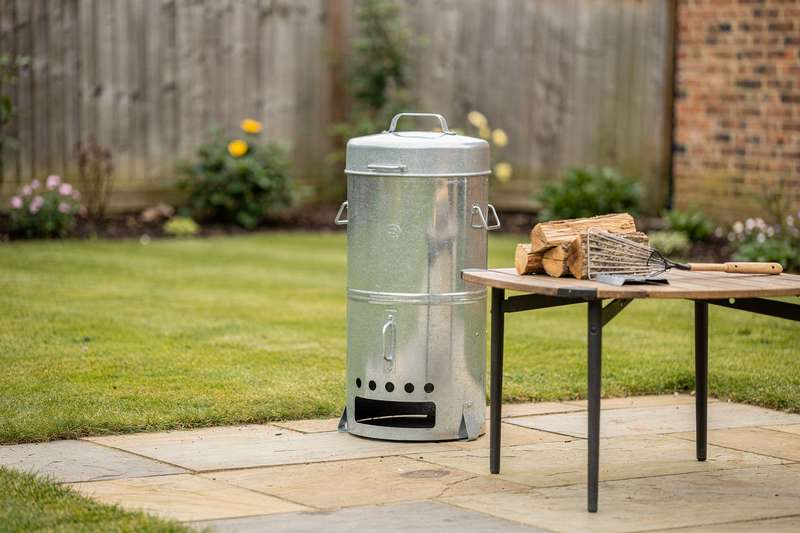
The Draper is a proper drum-style incinerator with serious capacity. Draper as a brand has long been associated with practical garden and workshop tools that prioritise function over aesthetics, and this incinerator is consistent with that identity. The drum construction is sturdy, the ventilation pattern is designed to sustain a proper burn rather than a smouldering mess, and the handles are built to survive the repeated heat cycles that come with regular use. The sheer volume of the burn chamber means this can handle branches, hedge trimmings, large quantities of leaves, cardboard boxes broken down flat, and significant volumes of paper — all in a single session rather than several.
The tradeoff with larger incinerators is weight and storage. A full-size drum is harder to shift around the garden, takes up more space in a shed or garage, and takes longer to cool down after use. If you have a small or medium garden and only burn a modest amount of waste a handful of times per year, the Draper is more tool than you need. But for gardeners with a larger plot, an allotment, or a habit of letting garden waste accumulate over weeks before tackling it in one go, the capacity here is a genuine advantage rather than excess.
Recurring buyer feedback highlights a few consistent points: assembly is straightforward and doesn’t require tools, the ventilation holes are effective but have sharp edges that you should be aware of when handling (leather gloves are advisable), and the thinner gauge steel means this really should be stored somewhere dry between uses to prevent rust accelerating. Some buyers also note that because it burns efficiently and hot, you need to be mindful of what’s nearby — position it well away from fences, overhanging branches, and any dry material that could catch a stray ember.
If you want a reliable, high-capacity incinerator from a brand with a genuine track record, and you’re not deterred by the storage footprint, the Draper is the straightforward answer.
Best Mid-Size Incinerator for Regular Use
The Trendi garden incinerator sits in a practical middle zone — 169 reviews and a 4.4/5 star rating, which is enough verified feedback to be meaningful without being a product that’s been on the market long enough to accumulate problems. Trendi has built a recognisable presence in the garden incinerator space on Amazon UK with several size variants, and this particular listing represents their core offering.
The drum-style steel construction follows the standard format for the category: galvanised body, ventilation holes distributed around the body and base to encourage airflow, handles on both sides for carrying once cooled, and an open-top design that makes it easy to load material without faff. The open top is a design choice worth understanding — it makes loading big armfuls of garden waste quick and simple, but it also means you get more smoke at nose level while loading and while burning, compared to a chimney-lid design. For outdoor use in a garden with space around it, this is rarely a problem. In a tight courtyard or directly adjacent to a neighbour’s window, it’s something to consider.
This size is well suited to regular, moderate garden maintenance sessions — the kind of burning you might do once a fortnight through autumn and spring. It copes comfortably with leaves, small to medium branches, cardboard, and documents, and doesn’t require you to chop everything into tiny pieces before loading. The capacity is enough to make a visible dent in a typical session’s worth of garden waste without the physical bulk of a full large drum.
On the downside, as with essentially all steel incinerators in this category, the galvanised coating is the first line of defence against rust, and it won’t last indefinitely if the bin lives outdoors through the winter months uncovered. Buyers who store it under a tarpaulin or in a shed between seasons consistently report better longevity than those who leave it out year-round. This is standard advice for the category, but the Trendi warrants it as much as any other.
For a gardener who burns regularly through the active gardening months and wants a mid-size drum that doesn’t demand a big footprint in storage, this Trendi model is a sensible, well-reviewed choice.
Best Small Incinerator with Premium Build Quality
The KetoPlastics incinerator in this configuration stands out from the crowd with a notably high 4.8/5 star rating — the highest of any product in this guide. At 24 reviews the sample size is modest, and that deserves an honest caveat: early buyer patterns can shift as more people purchase and use a product over time. But 4.8 stars from 24 reviewers with no obvious pattern of one-star outliers suggests something built with a bit more care than average.
This is a compact incinerator, and KetoPlastics has refined the chimney-and-three-legs format through multiple iterations — so this version likely benefits from those design improvements. The chimney lid remains one of the genuinely sensible features in the compact incinerator space: it controls where the smoke goes, it keeps embers contained within the burn chamber, and it reduces the risk of material escaping the bin in a breeze. For document destruction in particular, this containment matters — you don’t want half-burned paper fragments drifting into a neighbour’s garden or onto a dry lawn.
The tradeoffs here are the same as any small incinerator: this is not a tool for clearing a large garden, and anyone expecting to burn significant quantities of branches or bulk garden waste in a single session will be frustrated by the capacity. It’s designed for paperwork, dry leaves, small twigs, and light cuttings — burned in manageable batches rather than all at once. Used within those parameters, it appears to perform very well.
If you’re cautious about buying into a lower-reviewed product, the sensible approach is to check the reviews again in a few months as more buyers feed in their experiences. But if you specifically want a compact document-burning incinerator and the highest current average rating in this product set matters to you, this KetoPlastics variant is worth a serious look.
Best Open-Drum Option for Large Gardens
The Trendi incinerator in this larger open-drum configuration has 27 reviews and a 4.2/5 star rating — the lowest score among the picks in this guide, and worth explaining. A 4.2 average isn’t a bad product; in a category where build quality is inherently constrained by thin steel and the realities of heat cycling, it reflects a product that does the job but has some rough edges.
The appeal here is straightforward: if you need a large open-top drum for heavy garden clearing sessions and the Draper’s price point or availability gives you pause, this Trendi alternative is worth considering. The open-drum design prioritises loading ease and capacity over smoke containment — you can throw in big armfuls of prunings, bundles of dry grass, or broken-down cardboard without any restriction, and the fire can breathe freely. For big clear-out sessions in open gardens where smoke direction isn’t a concern, this works well.
The areas where the slightly lower rating shows up in buyer feedback tend to relate to the sharpness of cut edges on ventilation holes (a recurring category-wide issue, but worth emphasising here), the lightweight construction that can make the bin feel precarious in a breeze, and some variance in how well the handles are attached across different units. None of these are catastrophic, but they’re the kind of thing that pushes a 4.5-star product down to a 4.2 when they affect a meaningful portion of buyers.
Approach this as the budget-conscious large-capacity option in the Trendi range. If you want maximum volume, don’t mind spending a bit of time smoothing the sharp edges with a file before first use, and plan to bring it under cover between sessions, it earns its place. If any of those caveats feel like a dealbreaker, the Draper’s larger review count gives you more certainty about what you’re getting.
What to Look For When Buying a Garden Incinerator
- Capacity matched to your garden size: The single most important decision. A 15-litre compact bin handles documents and small quantities of light waste — anything beyond that and you’ll be burning in multiple frustrating sessions. A 90-litre drum suits medium to large gardens with regular significant waste output. Be honest about what you actually generate before defaulting to the largest option.
- Ventilation design: Ventilation holes drive burn quality. Bins with holes distributed both around the sides and across the base burn more efficiently than those with only base vents, because air can enter from multiple levels and sustain combustion throughout the load. Chimney-style lids add a further advantage by creating a draw that pulls fresh air in from below. If efficient, fast burning matters to you, prioritise bins with good all-round ventilation.
- Build material and gauge: All the products in this guide are galvanised steel, which is the right material for the job — it handles heat, it’s relatively lightweight, and the galvanised coating provides meaningful rust resistance. However, gauge varies. Thicker steel lasts longer, resists denting better, and handles repeated heat cycles more gracefully. If you plan to burn frequently and want the incinerator to last several years, favour heavier-gauge options and always store under cover when not in use.
- Handle quality and positioning: You will need to move a cooled incinerator around your garden. Riveted handles are generally more secure than welded ones, which can weaken under repeated heat stress. Check that handles are positioned sensibly for the height and weight of the drum — it sounds minor until you’re dragging a 90-litre bin across wet grass with one hand.
- Lid type and smoke management: Open-top incinerators are easier to load but produce more smoke at nose level. Chimney-lid designs channel smoke upward, which is more neighbour-friendly and more comfortable to stand next to. Consider your garden layout, proximity to neighbours, and whether you burn in enclosed or open spaces when making this call.
- Legal and safety considerations: Garden incinerators are legal to use in England and Wales, but you have a duty not to cause a statutory nuisance to neighbours. Burn dry material only — damp waste smokes heavily and burns poorly. Never burn treated wood, plastics, or garden waste mixed with domestic rubbish. Always have a bucket of water or a garden hose nearby, never leave a burning incinerator unattended, and check local authority guidelines if you live in a smoke control area.
- Storage requirements: Galvanised steel and moisture are not friends over the long term. Every product in this guide will last significantly longer if stored indoors or under waterproof cover between uses, especially through winter. If outdoor storage is your only option, a waterproof cover designed for the drum’s diameter is a worthwhile add-on purchase.
Verdict
For the majority of UK gardeners — a medium-sized garden, a mix of seasonal prunings and paperwork to dispose of, and a preference for something that just works without fuss — the Draper incinerator is the clearest recommendation. Its 671 reviews give you genuine confidence that the feedback picture is accurate, the build quality is consistent with Draper’s broader garden-tool reputation, and the capacity handles real garden clear-out sessions rather than fiddly batch-by-batch burning.
If your garden is small and documents are your primary concern, the KetoPlastics compact chimney model is the pick — 551 reviews and a 4.5-star average make it the most reliably reviewed compact option in the category, and the chimney design genuinely improves the burning experience over open-top alternatives at this size.
For anyone sitting between those two needs — regular burning, a medium garden, and a preference for a mid-size drum — the Trendi mid-size incinerator offers a well-reviewed middle ground. Whichever you choose, store it under cover between uses, burn dry material only, and keep a bucket of water nearby. The ash left behind makes an excellent soil amendment for the garden — so nothing goes entirely to waste.
We were not paid to feature any specific product in this guide. All opinions are independent and based on publicly available specifications, verified buyer feedback patterns, and category research.
Quick Comparison Table


FAQ
Are garden incinerators legal to use in the UK?
Yes, garden incinerators are legal to use in England and Wales, but you must not cause a statutory nuisance to neighbours through excessive smoke. If you live in a designated smoke control area, additional restrictions may apply, so it’s worth checking with your local authority before burning. Always burn dry material and avoid treated wood, plastics, or household waste.
What can I burn in a garden incinerator?
Dry garden waste — leaves, small branches, hedge trimmings, grass cuttings (once dry), and woody prunings — are all suitable. Cardboard and confidential paper documents are also commonly burned. Avoid anything damp (which produces heavy smoke), treated or painted wood, plastic, rubber, and garden waste mixed with kitchen or domestic rubbish, as burning these can release harmful fumes and may be illegal.
How do I stop my garden incinerator from rusting?
The most effective measure is storage. Bring your incinerator into a shed, garage, or under a waterproof cover whenever it’s not in use — especially over winter. Allow it to cool completely before covering it. If surface rust does appear around the ventilation holes, wire-brushing the affected area and applying a high-temperature metal paint can slow further deterioration.
How far from the fence should I position my garden incinerator?
As a general guide, keep the incinerator at least three to four metres from fences, walls, overhanging trees, and any dry vegetation. Position it on a non-combustible surface such as stone slabs or bare earth if possible, and always have a garden hose or bucket of water within reach. Wind direction matters too — burn when there’s minimal wind, and ensure any breeze carries smoke away from your home and your neighbours’.
Is a garden incinerator better than a shredder for destroying documents?
For outright security, burning is more thorough — ash cannot be reassembled, while shredded paper (particularly strip-cut shredding) can theoretically be reconstructed. Incinerators are also faster for large volumes, where a domestic shredder would overheat or jam. The practical trade-off is that shredders work indoors at any time of year regardless of weather, while burning requires dry conditions and awareness of local regulations.
What size garden incinerator do I need?
As a rough guide: a 15-litre compact model suits small gardens and document burning; a mid-size drum (around 40–60 litres) works well for regular seasonal use in medium gardens; a 90-litre bin is suited to larger plots with substantial waste output or periodic big clear-outs. It’s better to slightly overestimate your needs — a bin that’s too small means frustrating multiple sessions, while a larger bin used infrequently simply takes up a bit more storage space.