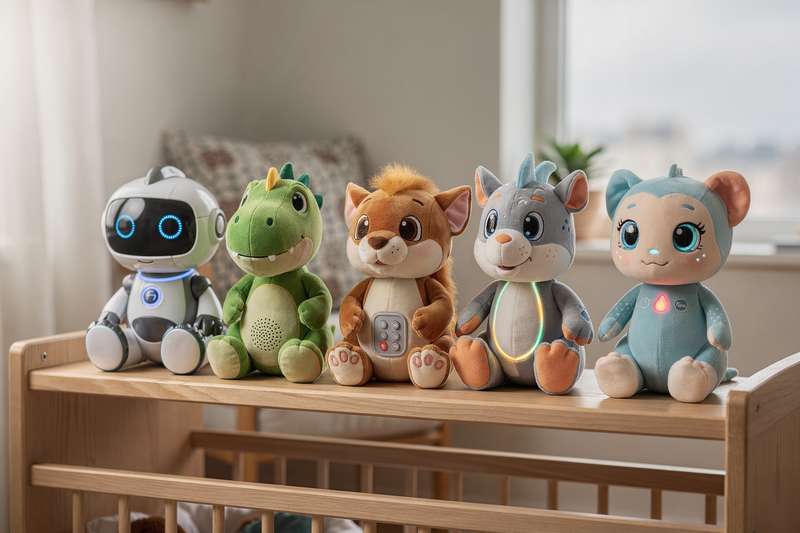
You’ve watched a child push past an entire shelf of motionless stuffed animals without stopping. Static plush toys — however appealing the packaging — struggle to hold attention for long once a child has experienced something that actually responds to them. Perhaps you bought a classic stuffed animal for a birthday and found it under the bed within a fortnight, the novelty of newness long gone. Or you ordered one of those novelty singing toys after seeing it on social media, only to find it arrived disappointingly flimsy, far louder than expected, or behaving quite differently from what the listing implied.
The market for plush interactive toy figures has expanded considerably: there are now soft toys that mimic your child’s voice and play it back, respond to touch with music or sound effects, deliver authentic phrases from a favourite animated character, or simulate the experience of caring for a responsive digital pet. The challenge is knowing which ones earn sustained attention beyond the first afternoon — and which ones are destined for the toy box by the end of the week. This guide covers five picks from the UK Amazon catalogue, spanning different types of interactivity, age ranges, and investment levels, so you can match the right toy to the right child rather than guessing.
How This Guide Was Put Together
These picks were drawn from the UK Amazon catalogue for plush interactive toy figures and assessed against a consistent set of criteria: the type of interaction on offer, the age range the toy actually suits, how robust the build quality appears from available evidence, and whether the interactivity is deep enough to sustain repeated play rather than burning out in a single session. Where UK buyer reviews existed, I worked through the feedback patterns — not just the headline star rating but what parents specifically describe appreciating, and what they flag as problems after a few weeks of daily use.
One limitation in this guide deserves upfront acknowledgement: two of the five picks carry no recorded UK buyer reviews at time of writing, and one more has only a small number. I have flagged this clearly in each relevant section, and the assessment for those picks rests on confirmed listing specifications, the reputation of the brand or licence involved, and category knowledge rather than aggregated buyer sentiment. This guide reflects that honestly rather than treating a star rating without reviews as equivalent to one backed by substantial buying experience.
Best Budget Crowd-Pleaser
The Dancing Cactus Plush Toy is the most comprehensively reviewed pick in this guide, with 208 UK ratings at an average of 4.0 out of 5 stars — and that review volume is the most important thing to note upfront. Two hundred and eight real buyers telling you what they experienced gives you a fundamentally more reliable picture of a product than a handful of perfect scores or a polished listing description. What that feedback broadly confirms is that this is a functional, engaging novelty toy that does what it says: it dances, it sings, and — most importantly — it repeats back what you say to it.
The voice-mimicking feature is what separates this from a plain musical soft toy, and it tends to produce the reaction parents describe as the biggest hit. Children find hearing their own voice played back to them funny, and that reaction drives repeated play sessions rather than a one-time novelty. The soft plush design means it also works as a regular stuffed toy during quieter moments, which extends its usefulness beyond the active interactive mode. Some versions in this category incorporate LED lights that activate during the dancing sequences, adding a visual element that holds the attention of younger children particularly well.
The target age range sits at roughly 18 months to five years. Below 18 months, the voice-repeating concept can confuse rather than amuse; above five, many children begin to find the core trick repetitive once the initial novelty fades. Within that window, it works well as a distraction toy — something parents frequently mention using during mealtimes, car journeys, and the post-nursery afternoon when energy is still high but screen time has been used up.
The 4.0-star average, rather than something higher, reflects that a meaningful minority of buyers have encountered issues. The most common complaints relate to build quality over time — the stitching and outer plush material are not at the same standard as more expensive licensed toys — and the voice-mimicking function needing a reasonably quiet environment to pick up speech clearly. In a loud kitchen or busy living room, the recorded audio can come out garbled, which some children find funnier and others find baffling. If the child in question is easily frustrated, this is worth bearing in mind before buying.
Check the current listing for battery requirements before purchasing — this type of toy typically runs on standard batteries that are not usually included in the box, so picking up a set at the same time avoids a lot of frustration. The compact size makes the Dancing Cactus practical to pack in a bag for outings, which adds value beyond the home. For a first interactive plush toy, or a gift where solid buyer evidence matters more than novelty appeal, this is the most confident pick in the guide.
Best for Babies and Sensory Play
The Interactive Music Plush Toy Touch Sensor Musical Stuffed Fruit Toy is aimed at the youngest end of the age range — babies from around six months through to toddlers of two or three years — and it operates on a fundamentally different principle from the other picks here. Where most interactive plush figures require a child to understand and enjoy voice mimicking or character phrases, this one works on pure touch-and-sound cause-and-effect: touch the toy and it responds with music or a sound. That simplicity is intentional and appropriate for very young children who are still building their understanding of how the world reacts to them.
For a baby in the six-to-eighteen-month range, the action-response loop this toy provides is exactly the kind of sensory play that benefits early development. Children at this stage are learning that their actions produce effects — that touching something changes what happens next. A toy that reliably responds to touch with a pleasing sound closes that loop in a clear, rewarding way. The fruit-shaped design (available in various shapes and colour combinations — check the listing for currently available options) is visually bright and sized to be manageable for small hands, which matters when a baby is still developing grip and coordination.
Honesty about the rating is important here: this listing sits at 3.6 out of 5 stars from 36 UK reviewers — the lowest rating of any pick in this guide. The feedback dragging the average down centres on audio quality (the sound output is described as tinny on some units) and some inconsistency in how reliably the touch sensor responds over time. These are real quality concerns, not minor niggles. If you are expecting the polish of an established toy brand’s sensory range, this pick may not meet that standard.
Worth noting: this product appears across several similar listings on Amazon UK under different ASINs, each covering a different shape or colour variant. The underlying product is essentially the same range. If you are comparing options, check the specific variant’s recent reviews rather than the overall rating alone, since experiences can vary between variants. I have used the listing with the most UK buyer feedback as the reference point for this pick.
Battery operation is standard for this type of toy, and surface cleaning is the almost certain guidance given the electronics inside. If you are buying for a baby who still mouths toys, confirm the care instructions in the current listing before purchasing and supervise play accordingly. For children over two, the interaction will feel too simple to hold interest for long. For its actual target audience — babies and young toddlers in sensory-focused play — it offers a functional, accessible entry point, with the candid caveat that build quality is modest.
Best for Bluey Fans
The Bluey Talking Plush Toy, 13 Inch Interactive Soft Toy with Sounds operates on a well-established principle in children’s toys: when a child is already attached to a character from television, a plush toy that sounds and looks like that character creates an immediate emotional connection that no generic novelty figure can replicate. Bluey — the Australian animated series about a Blue Heeler puppy family — has become one of the most-watched children’s programmes in the UK over recent years, and demand for officially licensed merchandise has grown alongside that popularity.
At 13 inches tall, this is a substantial companion toy rather than a small shelf collectible. The listing confirms it is super soft, which matters because a toy linked to a beloved character will almost certainly be carried around the house, taken on trips, and potentially slept with — it needs to be comfortable to hold as well as pleasing to interact with. The mechanic is press-to-activate: press the toy and it delivers phrases and sound effects drawn directly from the show. For a child who knows the series well, hearing those specific phrases from a soft toy in their hands lands quite differently from the same audio playing from a screen across the room.
Here is the caveat that requires plain stating: at the time of writing, this listing shows a 4.7-star rating but carries no recorded UK buyer reviews. That rating cannot be verified against actual UK buyer experiences — it may reflect data from other storefronts or be an artefact of how the listing is structured. You are not buying on the basis of a UK feedback trail. The confidence in this pick rests on the Bluey licence (well-managed, with officially licensed merchandise well-received across English-speaking markets), the confirmed listing specifications, and the character’s substantial UK fanbase rather than local buyer sentiment.
The risk is lower than it would be for a zero-review generic product, because official Bluey licensing sets a quality floor and the character has proven traction in the UK. That said, this lack of local buyer evidence is a real consideration, especially compared to the Dancing Cactus pick with its substantial review base. For a committed Bluey fan aged roughly three to seven, the character connection is the primary value — and for the right child, nothing else in this guide will match it for that specific appeal.
Before buying: check the current listing for battery type and whether they are included (AA batteries are typical for press-to-activate plush at this size, but always verify). Interactive plush with sound electronics inside is generally surface-clean only. If the child is noise-sensitive, look for any community feedback on whether the volume is adjustable or fixed — this is not always clear from the listing description alone, and it is worth knowing before the toy arrives.
Best Licensed Talking Figure
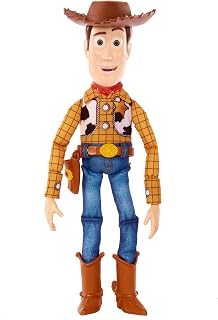
The Mattel Disney Pixar Toy Story Roundup Fun Woody Large Talking Posable Figure occupies different territory to the other picks here: it is a posable figure with fabric and plush elements rather than a pure soft stuffed animal. At 12 inches tall with 20 phrases, it is built for Toy Story fans who want a Woody that behaves and sounds like the character from the films rather than just a plush toy that happens to share the name.
Twenty phrases is a meaningful count in this format — enough variety to prevent the instant repetition that makes some talking toys grating within days of unwrapping. Mattel’s record with Disney Pixar licences tends toward strong character accuracy: voice detail and visual presentation that match the source material closely. The posable design means children can position Woody for imaginative play — directing scenes, setting up adventures alongside other figures — which extends the toy’s usefulness well beyond the novelty of the talking feature and supports longer, more varied play sessions over time.
As with the Bluey pick, I need to be clear: this listing carries a 4.5-star rating with no recorded UK buyer reviews at time of writing. That rating cannot be verified against UK buyer experience. The confidence here rests on Mattel’s established quality standards and the Disney Pixar licence rather than local feedback. Both zero-review picks in this guide are from major, established toy companies — Mattel in this case — which meaningfully reduces the risk compared to a zero-review listing from an unfamiliar seller.
This pick suits children aged roughly four to eight who are Toy Story fans and engage in story-driven, character-led imaginative play. It is a toy for children who will put Woody in charge of a living room rescue mission — not purely for those who want to press a button and hear a sound. It also holds appeal for older Toy Story collectors for whom the character detail and authenticity matter in their own right.
Note that this is primarily a posable figure with plush elements rather than a traditional soft toy. If the child needs something to hug or sleep with, the Dancing Cactus or Bluey picks are better suited to that need. Also confirm the current listing for battery requirements and whether they are included — a 12-inch talking figure arriving without batteries is a straightforward frustration to avoid with a quick check before ordering.
Best Electronic Pet Experience
The Interactive Electronic Pet Plush Toy carries a 5.0-star rating — the highest of any pick in this guide — and sits at the premium end of this guide’s price range. That combination sounds compelling, and it may well be justified. But that perfect score comes from only four UK reviewers, which is too small a sample to treat as a reliable quality signal. I am including this pick because the electronic pet format represents a genuinely distinct category within interactive plush figures — one that offers a different quality of interactivity — and that distinction matters for a specific type of buyer.
Electronic pet plush toys are designed to go beyond a single trigger point. Where a voice-mimicking cactus repeats what you say and a character plush plays a set of sounds when pressed, a well-executed electronic pet toy simulates an ongoing, responsive relationship. It reacts differently depending on how you engage with it — whether you stroke it, speak to it, or interact with it in varied ways — producing a range of responses that create a sense of something like personality rather than a predictable trigger-response loop. This format tends to suit children aged roughly five and above who are at the stage of nurturing and imaginative play rather than simply pressing buttons to hear sounds.
The listing on Amazon UK for this product is notably brief: “Interactive Electronic Pet Plush Toy, Plush Toy Gift for Kids, Mom.” This tells you relatively little about which animal the toy represents, exactly how the interactivity works, or what range of responses it produces. Before purchasing at this price point, I would strongly recommend reading the full product description and the currently available reviews to confirm the specific features match what you are looking for. The premium price relative to other picks here suggests a more developed product, but with only four reviews you are taking a meaningful leap of faith compared to options with a substantial feedback base.
The 5.0 from four reviews could reflect a strong product with early enthusiastic buyers — or simply a sample too small to be meaningful. If the review count has grown since this guide was published, check whether the additional feedback sustains the perfect score or reveals any consistent concerns. The electronic pet format, when well executed, provides the kind of sustained engagement that simpler interactive plush figures cannot, because the varied responses mean children do not exhaust all the interactions in a single afternoon. Whether this specific product reaches that standard is something the current listing and any new reviews will tell you more clearly than this guide can from its current data position.
Approach this pick as one to investigate carefully before buying rather than one to select on the star rating alone. At this price point, verifying the specific features match the child’s interests and play style before committing is sensible due diligence.
What to Look For When Buying Plush Interactive Toy Figures
Before settling on a purchase, these criteria are worth running through against any specific toy you are considering:
- Type of interaction offered: interactive plush toys divide into distinct categories — voice-repeating, phrase-based press toys, touch-sensor sensory toys, and electronic pet formats. These are meaningfully different experiences. A voice-mimicking toy and a touch-sensor baby toy are not interchangeable, and choosing the wrong type for the child’s age or temperament means the toy simply will not get used.
- Age appropriateness: manufacturer age recommendations on listings can be optimistic. As a practical guide: babies from around six months benefit from simple touch-and-sound sensory toys; children from 18 months to four years tend to respond well to voice mimicking and character sound toys; children five and above are generally ready for more complex electronic pet formats and posable figures with higher phrase counts.
- Volume level and whether it is adjustable: interactive plush can be surprisingly loud, and many products have no volume control at all. Check specifically whether the listing or reviews mention adjustable volume settings. For a noise-sensitive child or a small, quiet home, this often ends up being the detail that matters most in daily use — and it is rarely the first thing a listing highlights.
- Battery type and whether batteries are included: most interactive plush at this price point runs on standard AA or AAA batteries that are not included in the box. A smaller number of premium options use USB-rechargeable batteries. Check the listing before purchasing and factor in buying batteries at the same time — this avoids the most common gifting frustration in this entire category.
- Build quality and washability: soft toys get carried everywhere, dropped, and occasionally chewed. Electronics inside interactive plush typically make machine washing impossible — surface cleaning with a damp cloth is the standard approach. If washability matters (particularly for babies), check the care instructions in the listing specifically, and note that machine-washable interactive plush is rare precisely because the electronics and washing machines do not mix.
- Licensing and character authenticity: for character-based picks, official licences from established toy companies consistently produce better character accuracy than unlicensed alternatives — authentic voice recordings, correct visual detail, and the quality controls required by the licence holder. If a child will notice whether a character sounds and looks right, confirming the listing explicitly names the official brand is worth doing before you buy.
- Review volume alongside star rating: a 5.0 average from four reviews means far less than a 4.0 from two hundred. Look at how many people have reviewed the product, not just the score. Reading the three-star reviews in particular tends to give the most honest, balanced picture of a product’s real-world performance, since those reviewers are rarely either delighted fans or disappointed buyers with an axe to grind.
Verdict
For most UK readers buying a first interactive plush toy figure — whether as a birthday gift, a Christmas present, or simply a more engaging alternative to a static stuffed animal — the Dancing Cactus Plush Toy is the pick with the most reliable buyer evidence behind it. Two hundred and eight UK reviews at 4.0 stars gives a substantially more confident purchase signal than alternatives with minimal or no feedback, and the voice-mimicking feature consistently delivers repeated amusement for its target age group rather than wearing thin as a one-time novelty.
If the child in question is a committed Bluey or Toy Story fan, the character picks change the calculation considerably. The Bluey Talking Plush Toy, 13 Inch Interactive Soft Toy with Sounds and the Mattel Disney Pixar Toy Story Roundup Fun Woody Large Talking Posable Figure both bring character authenticity that no generic novelty toy can match. The absence of UK buyer reviews is a real caveat, but the brand pedigree behind both picks provides meaningful reassurance. For a child who loves those characters, the emotional connection is the primary value — and it is that connection which determines whether a toy gets used for months or sits on a shelf.
For babies under 18 months focused on sensory development, the Interactive Music Plush Toy Touch Sensor Musical Stuffed Fruit Toy fills a different need at an accessible price, with the candid caveat that build quality is modest and the rating reflects some buyer dissatisfaction. For parents drawn to a richer electronic pet experience at the premium end, the Interactive Electronic Pet Plush Toy is worth a closer look — but check the current listing and reviews carefully before purchasing given the thin feedback base.
We were not paid to feature any specific product in this guide. All opinions are independent and based on publicly available specifications, verified buyer feedback patterns, and category research.
Quick Comparison Table




FAQ
What age are plush interactive toy figures suitable for?
It depends on the type of interactivity on offer. Simple touch-and-sound sensory toys are appropriate from around six months. Voice-mimicking and character phrase toys tend to work best from 18 months to around five years. Electronic pet toys and posable talking figures with higher phrase counts generally suit children aged four to eight. Always check the manufacturer’s recommended age on the specific listing before buying.
Are interactive plush toys safe for babies?
Most interactive plush figures with electronics inside are not suitable for babies who are still mouthing objects and should not be used without supervision by very young children. Battery compartments and internal components create safety considerations for the under-12-months age group. If buying for a baby, look for toys specifically labelled safe for that age, confirm the battery compartment is securely sealed, and supervise all play sessions.
Do interactive plush toys come with batteries, and what type do they need?
Most interactive plush toys in this category run on standard AA or AAA batteries that are typically not included in the box — so factor in buying a set when you place your order. A smaller number of premium options use built-in rechargeable batteries topped up via USB. Check the specific product listing before purchasing to confirm which applies; this is the most common cause of post-gifting frustration in this category and easily avoided with a quick read of the listing details.
Can interactive plush toys be washed?
Machine washing is generally not possible because of the electronics inside. Surface cleaning with a damp cloth is the standard care guidance for interactive plush figures. If washability is a priority — particularly for babies or toddlers prone to mess — check the current listing for care instructions specifically, and note that choosing a machine-washable toy typically means choosing one without any electronics inside it.
How can I tell if a character interactive plush is officially licensed?
Look for a recognised toy brand name clearly stated in the listing (Mattel, Hasbro, ZURU, and similar), along with explicit mention of the official character licence. Officially licensed products use authentic voice recordings, accurate visual designs, and meet the quality standards required by the licence holder. If the brand name is absent or unclear and the price is notably below comparable officially licensed products, investigate further before buying.
What is the difference between a talking plush and an electronic pet toy?
A talking plush plays a fixed set of pre-recorded phrases when you press a specific trigger — the interaction is essentially one-directional and predictable. An electronic pet toy is designed to simulate a more dynamic relationship, responding differently to different types of interaction (being stroked, spoken to, handled in various ways) and producing varied reactions that build a greater sense of a responsive companion. Talking plush suits younger children who enjoy familiar voices and sounds; electronic pets tend to suit older children looking for something with more depth and variety to the interaction.