Picture the scene: you’ve finally tackled the pile of post that’s been accumulating on your kitchen worktop for the past few months. There are bank statements from three different accounts, payslips with your National Insurance number printed across the top, a handful of credit card applications you never filled in, two years’ worth of utility bills, NHS correspondence, and what appears to be a tax return from 2022. You fold the stack in half, drop it in the recycling bin, and spend the next fortnight slightly uneasy every time the bin lorry passes.
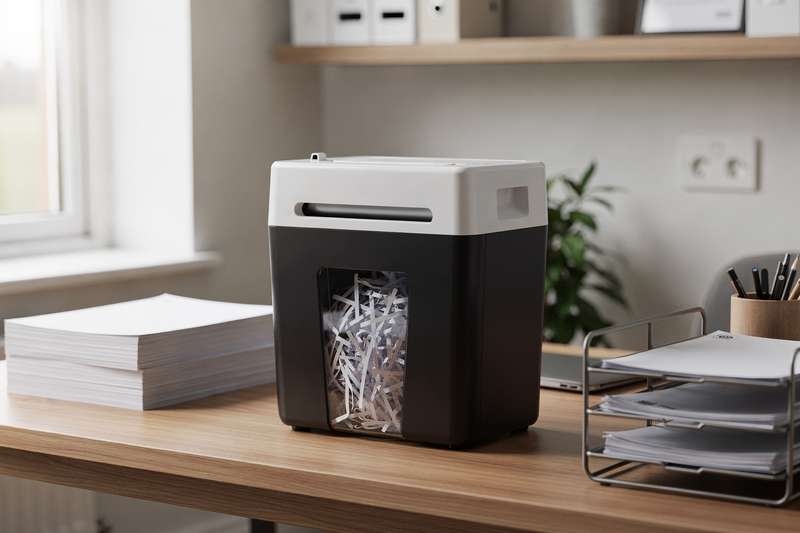
You’ve tried tearing documents by hand — effective enough for a single sheet, but utterly impractical for a thick stack. Shredding by hand is tedious, slow, and still not especially secure when the pieces are large enough to read. What you actually need is a paper shredder: a compact machine that sits in a corner of your study and turns sensitive documents into confetti on demand. The catch is that the market is full of machines that jam after three pages, fill up before you’ve finished a session, make enough noise to startle the cat, or cost far more than any household could justify. Finding the right one — the right security level, the right capacity, the right amount of motor for your actual usage pattern — takes a bit of knowing what to look for.
How We Chose These Picks
Selecting the picks for this guide came down to a few practical criteria. Shred type was the starting point — the difference between strip-cut, cross-cut, and micro-cut matters considerably for security, so strip-cut models were excluded entirely: they offer the weakest protection and aren’t worth buying when cross-cut alternatives exist at similar or lower prices. Sheet capacity came next: a personal desk shredder and a shared small-business machine have fundamentally different workloads, and the picks here span that range deliberately. Bin size, runtime before cool-down, noise levels, and the range of materials each machine handles — credit cards, staples, paper clips — were all considered as the real-world factors that determine whether a shredder is pleasant or frustrating to live with over time.
Where products carry published buyer reviews on Amazon UK, those review patterns — particularly on jam frequency, motor longevity, and noise — informed the assessment significantly. Three picks in this guide are newer listings with no published buyer reviews; in those cases, assessment draws on brand history, published specifications, and category knowledge, and each relevant section flags this clearly so you can weigh the uncertainty accordingly.
Best Overall Home Office Shredder
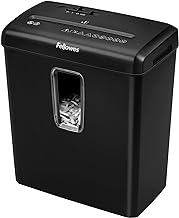
The Fellowes Powershred LX50 is the shredder most UK home-office users should start with — and the one that’s most likely to still be sitting in the corner of their study, doing exactly what it’s meant to do, several years from now. It holds the highest review score in this guide: 4.6 out of 5 from 883 Amazon UK buyers, which is meaningful validation in a category where jam-prone or short-lived machines are frustratingly common.
Nine sheets per pass is a genuine sweet spot for household use. It’s enough to process a small bundle of documents in a single feed without overloading the mechanism, and fast enough that you won’t spend twenty minutes working through a month’s worth of post one page at a time. The 17-litre bin is proportionate to that capacity — you’ll fill it over several sessions rather than halfway through one. Cross-cut shredding at P-4 security level is the appropriate choice for most household documents: the shredded output is small enough that reassembly is not a realistic threat, and it covers payslips, bank statements, utility bills, credit card offers, old receipts, and similar everyday paperwork comfortably.
The safety lock is one of those features that matters more than specification sheets suggest. It prevents the machine activating accidentally — important if children are nearby or if you temporarily leave documents stacked on top. Fellowes includes it on the LX50 as standard, and the machine also handles staples and paper clips alongside plain paper, saving the tedious step of removing every fastener before feeding a batch.
What it won’t do brilliantly: shredders at this capacity level are not quiet, and this one is no exception. Running it during a video call or in the same room as someone watching television will be noticeable. Extended shredding sessions need pacing too; this is a home shredder rather than a commercial workhorse, and treating it as the latter will shorten its life. Both of those are fair caveats for the category broadly, not specific failures of this model — and the 883 reviewers have relatively few complaints along those lines, which suggests real-world performance aligns with the specification.
The Fellowes LX50 doesn’t attempt to be more than it is: a reliable, well-built machine for the document volumes a home or home office generates week to week. For that buyer — which describes the majority of people looking at this guide — it’s the sensible, well-evidenced starting point.
Best for High-Volume and Auto-Feed Shredding
The Bonsaii 100-Sheet Auto-Feed Micro-Cut Heavy Duty Shredder for Home Office is for a specific type of buyer: someone with a significant backlog of documents to clear, a regular high-volume shredding workload, or a low tolerance for standing at a machine hand-feeding a dozen sheets at a time. Its 601 Amazon UK reviews average 4.4 out of 5 — a solid score for a machine making real claims about bulk auto-feed capability.
The auto-feed mechanism changes the shredding experience fundamentally. Load up to 100 sheets into the tray, press start, and the machine works through the stack while you get on with something else entirely. For anyone who has spent an afternoon manually feeding documents into a standard home shredder, the appeal is immediately obvious. The 601 verified buyers include people using it for exactly the kind of end-of-year document clearout that would otherwise consume half a working day, and the review pattern suggests the auto-feed mechanism performs consistently rather than being a marketing claim that disappoints under real-world loads.
Micro-cut shredding is the second significant feature. Rather than the diamond-shaped pieces produced by a cross-cut machine, micro-cut creates tiny particles that are effectively irrecoverable under normal conditions. If you’re a freelancer, sole trader, or small business shredding client documents, contracts, anything with NI numbers, or files containing financial account credentials, micro-cut is the more appropriate security level. Getting it combined with auto-feed throughput in a single machine is the particular value of this pick.
The honest tradeoffs: this is physically a larger machine than any compact home shredder and needs floor space rather than a shelf. Auto-feed works best with standard A4 sheets in clean condition — staples, paper clips, oddly sized documents, or thick card typically need the separate manual feed slot rather than the auto-feed tray. While the motor is heavy-duty by home-shredder standards, it still isn’t designed for truly continuous operation without rest periods, so pace longer sessions accordingly.
If the Fellowes LX50 is the right shredder for steady, occasional home use, the Bonsaii auto-feed is the tool for systematic document clearances. It costs more, takes up more room, and is hard to justify if you shred a handful of documents every few weeks — but for the buyer with a genuine volume need or a regular bulk workload, it offers a different capability level entirely.
Best Budget Pick
The Amazon Basics Cross Cut Paper Shredder, 6 Sheets, with its 14-litre transparent-window bin, is the answer for buyers who want functional document security without spending much. It carries 519 Amazon UK reviews and a 4.5 out of 5 rating — solid validation for a budget-category product, and notably, those buyers have experience of using it through real shredding sessions, not just unboxing it.
Six sheets per pass is the honest ceiling. Feed more than that consistently and you’ll encounter jams; feed it steadily in small batches and it handles standard home shredding without complaint. It takes credit cards alongside standard A4 paper — useful for disposing of old loyalty cards, expired bank cards, and the store cards you signed up for at a checkout years ago. The 14-litre bin is adequate for the throughput of a six-sheet machine, and the transparent window lets you check fill level without lifting anything — a practical convenience that’s worth looking for on any compact machine.
The cross-cut output is P-4 security, consistent with the other cross-cut picks in this guide. For the documents most people need to dispose of — post with personal details, bank correspondence, utility bills, payslips — that’s the appropriate level. You don’t need micro-cut for a quarterly bank statement, and paying for it when you shred infrequently doesn’t represent sensible value.
Where it falls short: runtime between cool-down periods is shorter than heavier-duty machines, so extended clearout sessions require patience. It’s not built for staples or paper clips — remove those before feeding, or accept occasional jams. Build quality is functional rather than robust; this isn’t a machine designed to run for a decade, and it doesn’t pretend to be. For light use, though, it’ll serve you reliably for years without significant drama.
For the buyer who shreds a handful of documents every few weeks, has limited desk or floor space, and wants basic reassurance that their sensitive paperwork isn’t readable in the recycling bin, this does exactly what it needs to. It’s a sensible, low-risk entry point — particularly if you’re not yet sure how often you’ll actually reach for a shredder.
Best for Personal Desk Use
The Fellowes Powershred FS-6C is a compact 6-sheet cross-cut shredder with a 15-litre bin, designed for individual home use. Before going further: this listing currently carries no published buyer reviews on Amazon UK, so this assessment draws on Fellowes’ established brand track record and the FS-6C’s published specifications rather than aggregated owner experience — factor that into your decision accordingly.
That brand track record carries real weight. Fellowes has been making shredders long enough that their entry-level models typically deliver better motor reliability and build consistency than generic alternatives at a comparable price tier. The FS-6C covers the same basic territory as the Amazon Basics pick above — six sheets, cross-cut, suited to occasional personal use — but with a brand that has UK customer service infrastructure behind it and a history of standing behind their products post-sale. For buyers who’ve had poor experiences with budget brands failing early, that difference has practical value even when the specification on paper looks similar.
The 15-litre bin is a marginal step up from the Amazon Basics’ 14 litres — not a transformative difference, but slightly fewer emptying trips over a month’s regular use. The machine’s footprint is compact enough to sit alongside a monitor on a home desk rather than requiring a dedicated floor position, which suits the personal-use framing well. It shares the same practical constraints as any six-sheet machine: feed documents in small batches, remove staples and paper clips before feeding, and don’t expect it to double as a high-volume workhorse.
The right context for the FS-6C is a desk that opens once or twice a month when the post arrives with something worth shredding. For that rhythm of use, it should serve reliably. The caveat about missing reviews bears repeating: without verified buyer data to reference, this pick rests on brand inference. If that uncertainty makes you hesitate, the Amazon Basics 6-sheet (519 reviews) and the Fellowes LX50 (883 reviews) are better-evidenced options at adjacent capacity levels. The FS-6C is the right call for Fellowes loyalists or buyers who specifically want a compact personal machine from a known manufacturer and are comfortable working with less review data.
Best for Security-Focused Users
The Vidateco 18 Sheet Micro Cut Heavy Duty Paper Shredder for Home Office addresses a specific gap: micro-cut security at a sheet capacity — 18 sheets — more typically associated with medium-office machines than personal or home models. Like the Fellowes FS-6C above, this listing carries no published buyer reviews on Amazon UK, and this assessment is based on specifications and category knowledge accordingly.
The case for micro-cut becomes most compelling when the documents in question go beyond standard household post. If you regularly shred anything containing National Insurance numbers, passport copies, medical records, legal correspondence, or detailed financial account credentials, the diamond-shaped output of a cross-cut machine may not offer complete peace of mind. Micro-cut particles — typically just a few millimetres in each dimension — make reconstruction practically impossible under realistic conditions, which is why this security level is used for professional and confidential document disposal.
Eighteen sheets per pass at micro-cut security is the particularly useful combination here. A home worker or sole trader handling sensitive client materials can process a meaningful bundle in each feed rather than hand-counting six sheets at a time, as they would with a standard personal machine. The heavy-duty designation suggests a longer duty cycle — appropriate if you’re working through end-of-week document batches in a single session — though this is harder to verify without buyer feedback to draw on. Treat manufacturer runtime claims with appropriate scepticism and check current product specifications before purchasing.
Vidateco is less established in the UK shredder market than Fellowes or Bonsaii, which is a legitimate factor when there’s no track record of long-term reliability to point to. The absence of published reviews means no collective owner experience on jam frequency or real-world build quality. This is a pick for a specific need: if you want micro-cut security above the standard six-sheet tier and can’t justify the size or cost of the Bonsaii auto-feed, this addresses that gap — but approach with realistic expectations. Check for updated reviews before purchasing, as a listing that currently shows none may have accumulated buyer feedback by the time you read this.
Best for Small Business or Shared Office Use
The Bonsaii 18-Sheet Cross-Cut Heavy Duty Paper Shredder is aimed at a scenario the other picks in this guide don’t quite cover: a shredder handling multiple people’s documents across a working week, or a small business that generates considerably more paper than a typical household. This listing also carries no published buyer reviews on Amazon UK at present, and the assessment reflects that honestly.
Bonsaii as a brand has more evidenced presence in the UK shredder market than some of the less-established names here — their 100-sheet auto-feed model carries 601 verified Amazon UK reviews, providing indirect but reasonable confidence in their manufacturing quality even on a model without its own review record. The 18-sheet cross-cut capacity is the primary reason to consider this over the Fellowes LX50: if you regularly process large bundles of documents, feeding 18 sheets at a time rather than nine roughly halves the number of passes required for any given volume. Across a week of shared office use, that difference accumulates noticeably.
Cross-cut at this capacity level delivers P-4 security — the standard for business document disposal in most environments. For invoices, delivery notes, client correspondence, internal records, and the bulk of everyday business paperwork, P-4 is entirely proportionate. If your work involves fields where higher security applies — medical records, legal documents, detailed financial data — the micro-cut options in this guide are the better fit.
A machine in this capacity class is physically larger than any compact home shredder and designed to sit on the floor beside a desk rather than on a desktop. Plan for dedicated floor space accordingly. The heavy-duty motor designation suggests a longer duty cycle than home models — relevant if the machine might run several times across a working day — though manufacturer runtime claims should be verified against current product specifications when purchasing, rather than taken at face value.
If your shredding volume is firmly at household scale, the Fellowes LX50 is the better-matched and better-evidenced choice. The Bonsaii 18-sheet makes sense when you’ve genuinely outgrown a nine-sheet home machine, or when multiple people in the same space are regularly contributing to a shared shredding pile.
What to Look for When Buying a Paper Shredder
- Shred type and security level: Strip-cut is the weakest option and easiest to partially reverse — avoid it for anything sensitive. Cross-cut (DIN P-4) produces small diamond-shaped pieces appropriate for most household and business document disposal. Micro-cut (P-5 or P-6) goes further, creating particles so small that reconstruction is effectively impossible; choose it for documents containing National Insurance numbers, passport details, medical information, or financial account credentials.
- Sheet capacity: This determines how many sheets you can feed in a single pass. Six sheets suits occasional personal use; nine to twelve sheets is the practical range for regular home-office shredding without constant interruption; 18 sheets and above serves small businesses or shared office environments. Auto-feed capacity — 50 to 100 sheets loaded at once — is a separate category for bulk, hands-off processing.
- Bin size: Larger bins mean fewer trips to empty. A 14-litre bin works adequately for a compact personal machine; 17 litres suits a nine-sheet model more comfortably; anything above 20 litres starts to justify itself for heavier use. A transparent window that lets you check fill level at a glance is a small but worthwhile detail to look for.
- Runtime and cool-down: Most home shredders require a rest after several minutes of sustained use. If you regularly process large batches in a single session, look for heavy-duty models with longer rated duty cycles. Pushing a motor consistently beyond its rating will shorten its working life considerably.
- Material compatibility: Beyond standard A4 paper, useful capabilities include credit cards, staples, and paper clips. Not all machines handle all of these — confirm the specification before assuming. Feeding staples through an incompatible machine is one of the most reliable ways to cause a jam or damage the cutting mechanism.
- Noise level: Shredders are not quiet. Most home models operate at roughly the level of a busy conversation or a running dishwasher. If your office is adjacent to a bedroom, shared living space, or regular video calls, paying attention to noise ratings in the specification is worthwhile before buying.
- Safety features: Auto-reverse for jam clearing makes a real difference to everyday usability — jams happen even in well-maintained machines, and auto-reverse clears them without manual disassembly. A safety lock that prevents accidental activation is useful in homes with children, who tend to find feed slots instinctively interesting.
Our Verdict
For most UK home and home-office buyers, the Fellowes Powershred LX50 is the right starting point. Its 883-review track record at 4.6 out of 5 gives you real confidence in the purchase; the nine-sheet capacity and 17-litre bin cover everyday household shredding without constant interruptions; and Fellowes as a brand has the UK customer service infrastructure to back it up if something goes wrong. It handles the occasional shredding session and the more determined quarterly clearout with equal reliability, and it doesn’t demand a significant premium over less-proven alternatives.
If budget is the deciding factor, the Amazon Basics 6-Sheet Cross-Cut is a well-validated fallback — 519 reviews confirm it does the job for light, occasional use, and it’s a sensible entry point before you know how often you’ll actually reach for a shredder. At the opposite end of the capacity range, the Bonsaii 100-Sheet Auto-Feed Micro-Cut is the upgrade for buyers who’ve outgrown the hand-feed format — combining bulk throughput with micro-cut security in a machine that works largely unsupervised. That’s a substantially different capability level, and worth the additional investment when volume and security requirements genuinely demand it.
This guide was researched and written independently. We were not paid to feature any specific product. All opinions are based on publicly available specifications, verified buyer feedback patterns, and category research.
Quick Comparison Table



FAQ
What is the difference between cross-cut and micro-cut shredders?
Cross-cut shredders (DIN P-4) slice documents into small diamond-shaped pieces that can’t practically be reassembled by hand. Micro-cut shredders (P-5 or P-6) go further, reducing paper to tiny particles that make reconstruction effectively impossible under realistic conditions. For most household document disposal, cross-cut is sufficient; micro-cut is worth choosing if you regularly shred documents containing National Insurance numbers, passport details, medical records, or financial account credentials.
How many sheets do I actually need for home use?
For most households, a six to nine-sheet capacity is perfectly adequate. Six sheets handles the occasional bank statement or payslip without issue; nine sheets lets you process small bundles more quickly and suits regular monthly shredding sessions better. Higher capacities — 18 sheets and above — make more sense for small businesses or shared office environments than for domestic use.
Can paper shredders handle credit cards and staples?
Many home shredders accept credit cards — useful for disposing of expired bank cards, loyalty cards, and store cards. Staple compatibility varies by model; some handle them without issue while others are likely to jam or sustain blade damage if fed staples regularly. Always check the manufacturer’s specification before feeding stapled documents, and remove paper clips as a routine step since these cause jams in most home machines.
How long can I run a home shredder continuously?
Most home shredders have a continuous runtime of between five and twenty minutes before requiring a cool-down period, with the exact duration depending on motor size and the load being fed through. Exceeding the rated duty cycle regularly will shorten the motor’s life. Heavy-duty and auto-feed machines typically have longer rated runtimes. If you regularly do extended shredding sessions, look for the duty cycle in the specification — it’s one of the more meaningful practical differences between basic and higher-capacity models.
Is a paper shredder worth buying for home use in the UK?
Yes, for most households. A significant volume of sensitive personal information still arrives by post — bank statements, payslips, utility bills with account numbers, HMRC correspondence, NHS letters — and placing these in the recycling unshredded is a genuine identity theft risk. A decent home shredder provides straightforward, low-effort protection against document theft, and it’s one of the simpler pieces of home-security kit you can buy.
What does the P-4 security rating mean on a paper shredder?
The P-rating is part of the DIN 66399 standard that classifies shredders by the size of their output particles. P-4 is the level produced by most cross-cut home shredders, meaning particles no larger than 160mm² — small enough that reading a shredded document is not practically possible. P-5 and P-6 are micro-cut levels with significantly smaller particles, typically used for highly confidential documents. For standard household and small business use, P-4 is the appropriate minimum to look for.