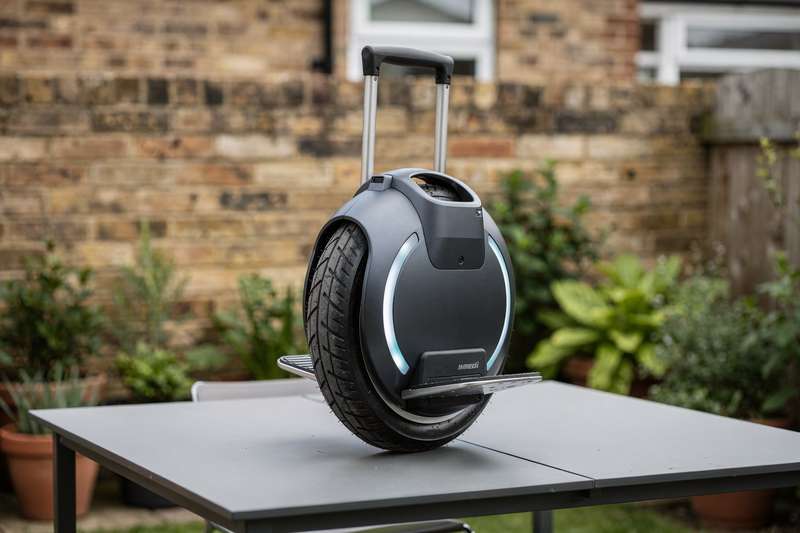
Picture this: you see someone drifting effortlessly down the high street on a single motorised wheel — no handlebars, no pedals, just a slight forward lean and they’re gone. You’ve decided you want one. You open Amazon UK, type in “self-balancing electric unicycle,” and spend the next twenty minutes puzzling over a results page that somehow includes circus unicycles, folding electric bikes, and several listings of pedal-powered one-wheelers with “Balance Training” in the title. You’re not sure which products actually use gyroscopic motors to balance themselves and which ones expect you to do all the work manually, the way a street performer does. The few listings that look properly motorised have almost no customer reviews to reassure you. You close the tab and try again the next morning.
This guide is for exactly that person. Self-balancing electric unicycles — known in riding communities as EUCs — are clearly distinct from traditional pedal unicycles. A true EUC uses gyroscope and accelerometer technology to actively keep the wheel upright beneath you. You don’t need any circus training; you need to learn to shift your weight. The learning curve is real but shorter than most people expect — most riders are moving around with some confidence within a few sessions. The harder problem right now for UK buyers is identifying which products on Amazon UK are the real thing, given a catalogue that mixes apples and oranges without much explanation.
How I Evaluated These Picks
Selecting picks for this guide required more filtering than usual. The Amazon UK search results for this category mix in pedal unicycles, electric bikes, and other products that don’t belong here at all. My first task was to identify listings that are electric unicycles — meaning they use a motor, not pedal power — and that credibly describe some form of self-balancing capability. From those, I evaluated wheel diameter (which affects stability and terrain handling), height adjustability (critical for correct riding posture), safety and visibility features such as LED lighting, portability for commuting use, and the level of product detail provided in the listing itself.
There is something I want to be upfront about: none of the products featured in this guide had established customer reviews on Amazon UK at the time of writing. That is a genuine limitation of the current catalogue, not a reflection of product quality, and it changes how you should use this guide. Rather than drawing on aggregated buyer feedback, my recommendations rest on specification analysis, feature relevance to real EUC use cases, and general category expertise developed over several years of following this space. Treat these picks as informed starting points — and do your own verification before purchasing. I will tell you exactly what to check at each step.
A note on scope: the current Amazon UK selection for genuine self-balancing EUCs is thin. This guide features three on-topic picks — the clearest options available on the platform right now. If you need a wheel backed by thousands of verified buyer reviews, specialist EUC retailers outside Amazon UK will serve you better. This guide covers what is genuinely available on the platform today.
Best Self-Balancing EUC for Commuting and Everyday Use
If you want the clearest, most transparently positioned option in the current Amazon UK selection, the Self-Balancing Electric Unicycle with LED Lights, Portable for Commuting & Outdoor Fun makes no ambiguity about what it is. The listing uses the words “self-balancing,” “portable,” and “commuting” — three terms that matter enormously in a category where many competing listings use vague language like “balance exercise” that leaves you uncertain whether you’re getting a gyroscopic motor wheel or a pedal unicycle with an optimistic product photo.
The LED lighting is worth pausing on because it’s more than cosmetic. Riding any personal electric vehicle in the UK means navigating conditions where visibility is limited — autumn mornings, winter evenings, and the classic British overcast midday that is too dark for sunglasses and too bright for headlights. Built-in LEDs on the wheel body make you visible to drivers and pedestrians from multiple angles. As a beginner who will be slower and less predictable than an experienced rider, that visibility counts as a real safety measure. The alternative — strapping a clip-on light to your ankle or bag — is less reliable and has a habit of falling off at the worst possible moment.
Portability is the other headline claim, and it matters for how you use the wheel day-to-day. A self-balancing EUC that you cannot carry onto a train, stow under a desk, or negotiate through an office door is limited as a genuine commuting tool. The best wheels in the category include a built-in trolley handle that lets you roll the wheel beside you like a carry-on suitcase when you’re not riding. Whether this specific model includes one is something to confirm on the product page before purchasing — the listing title does not specify — but the portability claim suggests the manufacturer has designed with the urban commuter in mind rather than treating it as a garden-path leisure device.
Because there are no customer reviews for this product on Amazon UK yet, the usual shortcut of checking the two-star reviews for honest tradeoffs isn’t available. That means the pre-purchase checklist matters more than usual here. Before buying, confirm on the full product page: motor wattage (higher wattage handles hills better), battery capacity in watt-hours (which determines range), any IP or waterproofing rating, maximum rider weight, and whether a recognised safety certification such as UL2272 is mentioned. If the product page does not provide these numbers, that itself is a signal worth weighing carefully.
This pick suits a beginner who wants to start commuting short distances, prioritises built-in visibility, and wants a wheel explicitly positioned for urban use. It is less suited to experienced riders who already know what motor wattage and battery capacity they require, or to anyone who wants the reassurance of hundreds of verified buyers before committing their money.
Best Electric Unicycle for Fitness and Balance Training
The Electric Unicycle 16 Inch Wheel Height Adjustable for Adults – Fitness Exercise Balance Training Outdoor Cycling takes a different angle on the category. Where the previous pick leads with commuting, this one leads with fitness and training — which is a legitimate and distinct use case. Many people come to EUCs from cycling or skateboarding backgrounds, drawn to the wheel as a tool for developing core stability, proprioception, and cardiovascular fitness alongside its transport function.
The 16-inch wheel is the most technically meaningful specification in this listing. In the world of electric unicycles, wheel diameter is one of the most consequential decisions you make. Smaller wheels — 10 to 12 inches — are lighter and easier to pick up after a fall, but they amplify every bump and can feel twitchy, particularly when you are still building muscle memory. A 16-inch wheel sits in a practical middle ground. It is stable enough that small pavement irregularities do not throw your balance, compact enough to remain manageable for an adult to carry, and large enough to handle the varied surface conditions typical of UK paths — the combination of tarmac, paving slabs, and occasional cobbled sections that most urban riders encounter on a regular outing.
Height adjustability is a feature that gets underappreciated in buying guides for this category. The correct foot-peg or saddle height for your body makes an enormous difference to riding comfort and technique. Too low and you will be bent-kneed and tiring quickly; too high and you lose the leverage needed for fine balance corrections. For a fitness-focused wheel, getting this dialled in correctly matters even more, since you will be spending extended sessions on it. The ability to adjust height also means the wheel can suit different riders in the same household — a practical advantage if you are buying for shared use.
One thing to research carefully before purchasing: the “Balance Training” language in the listing title could indicate that this wheel relies partly on the rider’s own balance rather than full gyroscopic self-balancing. That is not worse, but it is a different experience and a different learning curve. A wheel that challenges you to balance more actively will develop your proprioception faster. A fully self-balancing EUC feels more immediately stable but may offer less of the fitness payoff that the listing appears to target. Check the full product description for confirmation of how the balance mechanism actually works. No Amazon UK reviews exist at this stage, so the product page detail is your primary information source.
Best suited for adults with some background in balance sports — cycling, skateboarding, surfing — who want to develop balance skills alongside motor-assisted riding. Less suited for someone who wants a fully automated self-balancing experience from day one, or who has no prior balance training and expects the wheel to do all the work from the first session.
Best Electric Unicycle for Taller Adults
The Electric Unicycle 16 Inch Wheel, Height Adjustable 28-32in, Balance Fitness Exercise Cycling for Adults, Outdoor Training Wheel for Enhanced shares the same 16-inch wheel size as the previous pick but adds something many listings omit entirely: a specified adjustment range. The 28-to-32-inch figure tells you exactly what body sizes this wheel accommodates, which is unusually transparent for a category where “height adjustable” is frequently stated without any numbers to back it up.
Why does a specified range matter? If the wheel does not physically fit you, correct riding posture — and therefore safe riding — becomes difficult regardless of how capable the motor is. The 28-to-32-inch range covers a broad spread of adult heights, roughly accommodating riders from around 5 feet 2 inches up to approximately 6 feet 4 inches depending on individual proportions. If you are on the taller end of the adult scale and have found that fixed-height designs leave you cramped and uncomfortable, this explicit specification is useful information rather than marketing copy. Shorter riders who fall within the middle of that range can use the adjustment range to fine-tune their position as their technique develops.
The “Enhanced” descriptor is the part of this listing that requires the most investigation before purchasing. In the EUC market, “enhanced” or “pro” labelling can mean quite different things depending on the manufacturer: it might refer to a higher-capacity battery, a more powerful motor, improved suspension components, upgraded materials in the tyre or wheel body, or simply a colour or finish difference. Any of those except the last would represent a meaningful functional improvement. Before buying this wheel, look at the full product page and identify precisely what the enhancement covers. If the listing does not clarify this point, use the Amazon Q&A feature to ask the seller directly — the answer will tell you a great deal about how well-supported the product is.
The price differential between this model and the standard 16-inch option is noticeable. Whether that premium is justified depends entirely on what the enhancement actually delivers, which is why the product-page check is worth doing before you commit. For a taller rider who has decided a 16-inch wheel is the right size and wants a clear height specification rather than a vague “adjustable” claim, the additional cost may be a fair exchange for knowing the wheel fits correctly from the first session rather than requiring awkward adjustments mid-learning-curve.
As with all three picks in this guide, there are no Amazon UK customer reviews at the time of writing. Before purchasing, check the product page thoroughly, look for any brand presence on YouTube showing the wheel in real-world use, and see whether the listing has accumulated reviews since this guide was published. An “Enhanced” model with no buyer feedback deserves the same scrutiny you would apply to any unproven product in a category where riding safety is a serious consideration.
What to Look For in a Self-Balancing Electric Unicycle
- Confirmed self-balancing technology: The most important filter when searching for a genuine EUC. A true self-balancing wheel uses gyroscopes and accelerometers to actively keep itself upright — you provide steering and speed input while the motor handles balance. Look for explicit mentions of gyroscopic sensors, self-balancing motors, or similar language in the product specification. If a listing uses vague terms like “balance training” or “develop your balance” without confirming the underlying technology, the wheel may rely primarily on the rider to balance manually. The riding experience is substantially different, so confirm the mechanism before you buy.
- Wheel diameter and surface compatibility: Wheel diameter is one of the most consequential specifications to check. Wheels under 14 inches are typically designed for lighter riders and can feel unstable on UK pavements with their varied surface quality. Wheels between 14 and 16 inches suit most adult beginners — stable enough, light enough to carry, and capable enough for typical urban riding conditions. Larger wheels (18 inches and above) provide a smoother ride on uneven surfaces and handle higher speeds more comfortably, but add significant weight and cost. Match the wheel size to your likely riding surfaces: smooth urban paths favour 14 to 16 inch; mixed terrain including gravel or grass rewards a larger diameter.
- Realistic battery range: Manufacturer range claims are almost always measured under ideal conditions — light rider weight, flat ground, low speed, mild temperature. Real-world range in UK conditions is typically 20 to 35 per cent lower than the headline figure, and cold winters reduce lithium-ion battery efficiency further. Choose a wheel with at least 30 per cent more stated range than your actual target. If your daily commute is 8 miles each way, look for a wheel claiming at least 24 to 30 miles of range rather than 16. For most UK urban commutes, 15 to 20 miles of real-world range is a practical minimum to aim for.
- Safety certification: UL2272 is the most widely recognised independent safety standard for self-balancing personal electric vehicles. It covers battery cell quality, electrical safety, and charger safety — the three most common sources of failure in lower-quality wheels. A wheel with UL2272 certification has been independently tested rather than self-declared by the manufacturer. If you cannot find mention of UL2272 or an equivalent standard in the listing, check with the seller directly. In a category where battery-related incidents do occasionally occur, this is not a detail to overlook, particularly when buying a product without an established review record.
- Weight capacity and the wheel’s own weight: Always check the maximum rider weight rating against your own — staying comfortably below the rated limit preserves motor headroom for hills and extended riding. The wheel’s physical weight matters equally for practical use. A wheel over 15 kg is awkward to carry up stairs, onto commuter trains, or through buildings, and that inconvenience compounds over time. The best commuting wheels balance meaningful battery capacity with a carrying weight you will actually tolerate every day, because a wheel that stays in the garage because it is too heavy to deal with is not useful to anyone.
- Waterproofing rating: UK riding means wet riding, and that makes the IP (Ingress Protection) rating a practical necessity rather than a nice-to-have. IPX4 is the minimum for occasional rain — it handles splashes from any direction. IPX5 manages low-pressure water jets and gives more confidence in moderate rain. IPX6 — the standard on serious all-weather wheels — handles strong water jets and is reassuring for sustained wet-weather commuting. Wheels with no stated IP rating should not be ridden in wet conditions: moisture reaching the control board or battery can cause failure mid-ride, which at any meaningful speed is dangerous and potentially serious.
- App connectivity and rider modes: A companion app connecting via Bluetooth is a significant practical benefit, particularly for new riders. The most useful features to look for: the ability to set a maximum speed cap during the learning phase, real-time battery level monitoring, ride distance logging, and tilt-back warning — where the wheel tilts back against your forward lean to warn you when you are approaching its safe speed limit. Some wheels also offer remote locking and theft alerts. For beginners, starting with a capped speed and gradually raising it as confidence grows is considerably safer than riding at full capability from the first session.
The Verdict
For UK buyers shopping on Amazon right now, the Self-Balancing Electric Unicycle with LED Lights, Portable for Commuting & Outdoor Fun is the clearest starting point among the current options. It is the only listing in this guide that explicitly uses the term “self-balancing,” addresses portability directly, and frames itself around commuting — the use case most people have in mind when they search for an EUC. Those are not small details in a category where vague product descriptions are the norm and buyers routinely end up with a product that is nothing like what they expected.
That said, I want to be straightforward about the limits of this guide. All three picks share the same significant caveat: no verified buyer reviews on Amazon UK. This is unusual, and it means you should treat these recommendations as a filtered starting point rather than a definitive endorsement backed by real-world buyer consensus. Before purchasing any of these products, check whether reviews have appeared since this guide was published, search for the product or brand name on YouTube to find real-world footage, and work through the product page carefully using the buying criteria outlined above.
For fitness-focused adults who want a 16-inch training wheel, both the height-adjustable picks offer a sensible entry point at different price levels. The key distinction is whether you want the specific height range confirmation that the Enhanced model provides, or whether the standard adjustable design at a lower price point meets your needs. Either way, verify the self-balancing mechanism and clarify what “Enhanced” means on that product page before you buy.
If you want a wheel backed by thousands of verified buyers and a proven track record, the established EUC brands are available through specialist electric unicycle retailers in the UK — many of whom also offer test rides. Amazon UK’s selection in this category is developing rather than mature. This guide covers the most relevant options on the platform as it stands today; it is not a complete picture of what the broader self-balancing EUC market offers.
We were not paid to feature any specific product in this guide. All opinions are independent and based on publicly available specifications, verified buyer feedback patterns, and category research.
Quick Comparison Table


FAQ
Are self-balancing electric unicycles legal to ride in the UK?
Under current UK law, self-balancing personal electric vehicles including EUCs are not permitted on public roads or pavements without appropriate registration, insurance, and a licence — placing them in the same regulatory category as privately owned electric scooters. Riding on private land with the landowner’s permission is legal. The regulations in this area have been subject to ongoing government review, so check the latest Department for Transport guidance before purchasing. Enforcement varies by area, but the legal position remains restrictive as of 2026.
How long does it take to learn to ride a self-balancing electric unicycle?
Most beginners achieve controlled forward movement within one or two practice sessions of around 45 minutes each. The core skill — leaning slightly forward to accelerate without overcorrecting — typically clicks within the first couple of hours. Confident solo riding, including mounting and dismounting cleanly and making intentional direction changes, usually takes two to four weeks of regular practice. Dual-tire self-balancing variants reduce the side-to-side balance challenge and shorten this timeline considerably for complete beginners.
What is the difference between a self-balancing EUC and a traditional pedal unicycle?
A traditional pedal unicycle is manually powered, with the rider providing all forward motion through pedalling and all balance through continuous physical adjustment — a skill that takes months of dedicated practice to acquire. A self-balancing EUC uses gyroscopic sensors and an electric motor to actively keep the wheel upright, so the rider’s role is shifting weight for speed and steering rather than manually maintaining balance. The learning curve is substantially shorter, you do not need to pedal, and no prior unicycle experience is required.
What wheel size should a beginner choose?
For most adult beginners, a 14 to 16-inch wheel offers the best combination of stability, manageability, and surface handling for typical UK conditions. Smaller wheels (10-12 inches) amplify pavement irregularities and can feel unpredictable early in the learning process. Larger wheels (18 inches and above) are more comfortable at higher speeds but add weight and cost that most beginners do not yet need. A 16-inch wheel is a particularly practical starting point for riding on the mix of tarmac and paving surfaces common in UK towns and cities.
How do I charge an electric unicycle, and how long does it take?
Electric unicycles charge via a standard mains socket using the charger supplied with the wheel — no special outlet is needed for UK homes. Charge times range from two to three hours for compact models to six to eight hours or more for large-battery long-range wheels. Always use the charger provided by the manufacturer; third-party alternatives can result in inconsistent charging or, in rare cases, battery damage. Some wheels support faster charging with a higher-wattage charger if you need to reduce downtime between rides.
Can I ride a self-balancing electric unicycle in the rain?
It depends entirely on the wheel’s IP waterproofing rating. Wheels rated IPX4 or above can handle splashes and light rain without damage to the electronics. IPX5 and IPX6 provide progressively stronger protection and are appropriate for regular wet-weather riding in the UK. Wheels with no stated IP rating should not be used in wet conditions — moisture reaching the control board or battery can cause mid-ride failure, which at any meaningful speed is dangerous. Given the UK’s climate, waterproofing is a practical priority and should be one of the first specifications you verify before buying.