You’ve loaded your first pouch through the laminator, heard it emerge from the other side, and peeled back the result only to find a milky fog, a string of air bubbles, or — worst of all — edges that sealed to themselves before the document was even inside. If you laminate regularly, whether you’re a teacher protecting classroom resources, a home user preserving photographs, or an office worker producing ID badges and reference cards, you already know the pouch matters as much as the machine. Choose the wrong micron thickness and the finished document flops uselessly in your hand. Go too cheap on clarity and the text underneath is barely legible. Buy a pouch with a narrow sealed border and the corners delaminate within a fortnight. The UK market offers dozens of options at various specifications and pack sizes, which makes picking the right product genuinely confusing. This guide focuses on six specific A4 thermal laminating pouches suited to different budgets and use cases, so you can make a considered choice and stop wasting film on disappointing results.
How We Evaluated These Laminating Pouches
Selecting the right laminating pouch starts with the specification, not the packaging. For each pick in this guide, we assessed micron thickness, which determines rigidity and longevity once laminated, alongside gloss finish quality, sealed-border width, pack size relative to price tier, and compatibility with standard hot-pouch thermal laminators. Two of the six products carry substantial verified buyer feedback, with over 440 ratings each, so those picks also reflect real-world satisfaction patterns drawn from public review data. For the remaining four, which either had limited review data or were newly listed at the time of research, recommendations rest on published specifications and the established track record of the brands involved. All six options are A4-format thermal pouches suitable for home, classroom, and office use.
Best Overall Laminating Pouches
If you want a laminating pouch that holds up on a classroom wall through a full academic year, or survives repeated daily handling at a service desk or information point, the Binding Bazaar A4 Laminating Pouches, Gloss Finish, 150 Micron, 100 Laminating Sheets is the best-evidenced option in this selection. With over 500 verified buyer ratings at 4.7 stars, it carries more review weight than any other product here, which gives you meaningful confidence before the pouch touches your machine.
The 150-micron specification is the number to focus on. At this thickness, the finished document has genuine rigidity — it won’t flop when picked up, and the corners won’t curl as the laminate cools after leaving the machine. This roughly corresponds to the 5-mil rating used on US laminating products, and it sits at the sweet spot for anything you handle frequently: flashcards, menu inserts, reference charts, and classroom display materials. The gloss finish produces vivid, high-contrast results that make colour photographs and printed graphics look sharp, and the 100-sheet pack means you won’t be reordering within the first week.
Buyer feedback patterns point to strong optical clarity across the range — very few complaints about fogging or persistent bubbles when the laminator is set to the correct temperature. The sealed border is wide enough to provide a secure edge without swallowing too much of the document’s margin, which matters when laminating items with text or graphics close to the edge. One thing to flag: 150-micron pouches are noticeably stiffer than thinner alternatives once cooled. For flat display materials and wall charts, that rigidity is exactly what you want. But if you need the finished piece to bend or roll, this thickness will crack at the fold.
The gloss surface shows fingerprints more readily than matte, so if your laminated item will be picked up and put down dozens of times a day — such as pupil-facing activity cards — factor that in. As with every A4 thermal pouch regardless of brand, your laminator should be fully preheated before the first sheet goes in. Starting too soon is the single most common cause of uneven sealing, and no pouch can compensate for a machine that hasn’t reached operating temperature.
For the widest range of everyday laminating tasks, this is the pack you’ll reach for most often. The combination of 150-micron rigidity, confirmed buyer satisfaction across 500-plus ratings, and a sensible sheet count makes it the natural starting point for most buyers, whether you’re doing occasional home projects or high-volume classroom work.
Best Budget Pick
If you laminate in significant volumes and need to keep costs down without sacrificing usable quality, the A4 Laminating Pouches – 120 Sheets, 100 Micron, Gloss Finish, Waterproof, Durable, Trimmable, Wipeable offers 120 pouches per pack at a lower price tier while still carrying 442 verified ratings at 4.5 stars — strong enough to confirm this isn’t a race-to-the-bottom situation.
The 100-micron thickness sits below the 150-micron recommendation above, which means the finished laminate is noticeably more flexible. This isn’t a weakness if your application suits it — desk labels, luggage tags, bookmarks, and document inserts all work well at this thickness — but for large A4 wall charts or materials that need to stand upright in a display holder, the lighter film won’t produce the board-like rigidity of a heavier pouch. The 3mm sealed border is a notable positive in this price tier: narrower borders delaminate at the edges over time, particularly at the corners of heavily used items, and a defined 3mm margin gives a meaningfully more durable finish.
The trimmable and wipeable description has real practical value. Wipeable means dry-erase markers work on the gloss surface without leaving permanent marks, which is useful for classroom resources you want to reuse — laminate the activity sheet once, use it with multiple groups, and wipe clean between sessions. Trimmable means you can cut right up to the document edge without the seal splitting, which matters for items with narrow margins or irregular dimensions. The 120-sheet count also gives you more coverage than most 100-sheet alternatives in the budget tier.
The main tradeoff at 100 microns is slightly reduced optical clarity compared to thicker options. The difference is minor for text-heavy documents, but if you’re laminating photographs or high-quality graphics where sharpness is essential, the step up to 150 microns is worth considering. The generic-style listing title — no clear brand name visible — makes cross-referencing with other product lines harder, but the 442-rating review base is a reasonable proxy for satisfaction over time and across a range of home and office laminators.
This is the pack for teachers who need to run 50 or 60 sheets at once, small business owners producing batches of menus or price lists, or anyone who laminates regularly and needs the per-sheet cost to stay low. It’s not the pick for premium display materials, but it’s a dependable workhorse for everyday volume use.
Best for Everyday Home Use
The Deskit Laminating Pouches A4, Gloss, 150 Microns, 120 Sheets offers the same 150-micron specification as the top pick in this guide but with 120 sheets per pack rather than 100, making it an appealing option if you prefer a slightly larger supply for ongoing home projects. It’s worth being straightforward: this listing had limited verified buyer data at the time of research, so this recommendation rests on the specification and Deskit’s established presence in the UK stationery market rather than a large pool of aggregated user feedback.
At 150 microns, you get the same sturdy, rigid feel as the Binding Bazaar pick. This is the thickness for laminating children’s artwork you want to preserve for years, emergency contact sheets that go on the fridge, recipe cards that live on the kitchen worktop, and household reference documents that get handled every few weeks. Most standard home laminators, including budget models commonly available in the UK, process 150-micron pouches without difficulty, so compatibility shouldn’t be an issue for the majority of home setups.
The extra 20 sheets per pack is more useful in practice than it sounds. Home laminating tends to happen in sessions — a batch of school resources one afternoon, a set of craft labels another weekend — and having a larger initial supply means you’re less likely to run out mid-project and have to wait for a reorder. The gloss finish delivers vivid colour reproduction for photographs and printed materials, and the clear and durable positioning is consistent with what the 150-micron specification would lead you to expect.
The primary caveat is the absence of a substantial public review trail. That makes it harder to verify how optical clarity holds up across a range of home laminator models, or whether there are edge-sealing quirks that only emerge after extended use. If that uncertainty puts you off, the Binding Bazaar pick — backed by 500-plus ratings at the same micron thickness — is the safer option. But if the 150-micron spec and the larger sheet count are both appealing, Deskit has an established catalogue in this category and is a credible choice at this specification.
This is a sensible pick for the home user who laminates once or twice a month, values having a reasonable stock on hand, and doesn’t want to pay a premium for a well-known brand when the specification already covers the core requirement.
Best for Schools and Offices
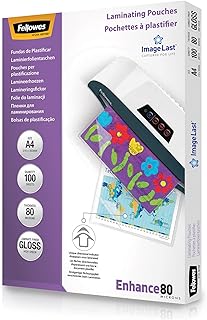
For school print rooms, business administration offices, or anyone who values buying from a brand with established product support and a long presence in the UK market, the Fellowes A4 Laminating Pouches – 100 Pack Gloss Finish is the natural starting point. Fellowes has been one of the dominant names in UK office and education laminating equipment and consumables for decades, and their pouches are engineered to work correctly with their own machines as well as most other standard brands on the market.
This is the entry-level Fellowes pouch — a 100-sheet gloss pack positioned for general home, school, and office use across standard laminating tasks. The specification sits in the practical range for everyday document protection: suitable for notices, student handouts, photo displays, and reference materials that will be pinned to walls or kept in folders. One thing Fellowes consistently gets right is manufacturing consistency — pouches are reliably uniform in border dimensions and film thickness across the pack, which reduces the chance of encountering a sub-standard sheet that causes a jam or produces an uneven seal mid-session.
There’s a practical benefit to choosing Fellowes that goes beyond the pouch specification itself. If your school or office runs Fellowes laminators — among the most commonly found machines in UK educational settings and SME workplaces — using Fellowes pouches removes compatibility guesswork entirely. The film is calibrated for their roller systems, meaning you’re less likely to encounter the temperature and pressure mismatches that occasionally arise when mixing pouch brands with different machine types. That reliability matters when you have a queue of documents to process and can’t afford time troubleshooting a jammed machine.
As with the other Fellowes entries in this guide, this listing had limited verified buyer data at the time of writing, so the recommendation is based primarily on brand track record and specification rather than a large aggregated pool of user feedback. This product is positioned as a standard-use option rather than a premium one — if the board-like rigidity of a 160-micron pouch is what you need for high-traffic displays, the heavier Fellowes option covered in the next section is the upgrade worth considering. But for day-to-day school and office laminating where reliability and brand consistency matter, this is a dependable choice.
If you already run Fellowes equipment and want a reliable, brand-matched supply for everyday tasks without over-speccing, this 100-pack covers the requirements cleanly.
Best for Heavy-Duty Projects
When a document needs to survive years rather than months — reference signage staying on a wall through multiple academic years, ID cards that live in wallets and get handled daily, or laminated guides for outdoor professional use — the Fellowes Laminating Pouches A4, Gloss Finish – 100 Sheets – 160 Micron (2 x 80 Micron) is the step up you need. At 160 microns total, each side contributing 80 microns of film, this is the thickest option in this guide and produces a noticeably rigid, near card-like finish that holds its shape under physical stress.
Understanding the 160-micron specification helps set expectations correctly. In US product terminology, this corresponds approximately to a 6-mil rating — meaningfully thicker than the standard 3-mil or 5-mil equivalents used by most everyday pouches. The finished document resists bending, denting, and surface scratching far better than thinner alternatives. The Image Last Direction feature in the product description refers to Fellowes engineering the pouch to be fed through the laminator with a consistent orientation, which promotes even heat distribution and reduces the risk of bubble formation — particularly relevant when laminating photographic content or full-coverage colour prints where any imperfection in the seal is immediately visible.
The right applications for this level of thickness are worth considering carefully. Staff ID badges that go in and out of lanyards daily. Customer-facing instruction cards at a service counter touched by dozens of people each day. Weekly rota charts handled by multiple team members. Menu boards in a hospitality or café setting. Laminated maps and reference sheets for outdoor fieldwork. Dry-erase compatibility is an additional benefit at this thickness — the rigid surface accepts whiteboard markers cleanly and wipes down without the document flexing or the corners lifting, which is a known issue with thinner pouches when pressure is applied during cleaning.
There are two tradeoffs worth knowing before ordering. First, not every home or entry-level laminator handles 160-micron pouches cleanly — check your machine’s specification to confirm its maximum micron rating. Most machines rated for 3 to 5 mil laminating will manage 160 microns, but some entry-level models run at lower roller pressure, which can cause thick pouches to jam or produce an uneven seal on the first pass. Second, as with other lower-review-count products in this guide, the recommendation rests on the Fellowes engineering reputation and the physics of the thicker specification rather than a large pool of recent verified user reports.
If longevity is the non-negotiable requirement — you need the finished result to still look professional in three years’ time — this is the pick. The higher per-sheet cost reflects the additional material, but you’ll replace or reprint far less often, which adds up quickly for permanent signage or items where reprinting is inconvenient or costly.
Best Flexible Laminating Pouches
Not every laminated document benefits from being rigid. Bookmarks, flexible ID lanyard inserts, notices that need to be rolled for posting, and items that slot into soft folders or wallets all benefit from a pouch that can flex without the film cracking or the seal separating at the crease. The Fellowes Apex A4 Laminating Pouches, Glossy Finish – 100 Sheets – Super-Flex is the only product in this selection with a Super-Flex formulation and is specifically engineered for applications where the finished laminate will bend regularly as part of normal use.
The Super-Flex designation describes a film compound designed to flex under mechanical stress rather than crack or separate at the fold. The Apex line sits in the mid-range thickness bracket, providing sufficient protection for documents that will be referenced frequently, without the board-like stiffness you get from 150- or 160-micron standard options. The gloss finish is consistent with the rest of the Fellowes range, producing clean colour reproduction and a professional appearance. Like most standard Fellowes pouches, the Apex range is designed to be compatible with their own laminators and with most other common hot-laminating machines on the UK market.
The practical scenarios where this specification matters become clear quickly. A classroom countdown chart that gets rolled up and stored in a tube between terms. A service technician’s checklist card that folds into a breast pocket multiple times a day. A recipe card propped against a jar on a kitchen worktop, bent slightly backwards under its own weight. A travel document sleeve that gets crumpled into a bag and smoothed out at passport control. Standard laminating pouches crack at the fold in all of these situations, eventually exposing the document edges to moisture and general wear. Super-Flex pouches hold together through this kind of repeated mechanical stress.
The tradeoff of increased flexibility is reduced rigidity compared to thicker options. For a wall display that stays pinned in one position and is rarely handled, the stiffness of a 150-micron pouch actually produces a more finished look. This product works best when flexibility is a genuine requirement, not a secondary consideration. As with the other Fellowes entries in this guide, this listing had limited verified buyer data at the time of research — the case for including it rests on its clear specification differentiation from standard-rigidity pouches and Fellowes’ long experience in the laminating category.
A practical approach if you have varied laminating needs: keep a box of standard 150-micron pouches for wall displays, printed signs, and reference charts, and reach for the Super-Flex when you know the finished item will be folded, rolled, or flexed in regular use. Matching the pouch to the application consistently produces better results than using one type for everything.
What to Look For When Buying Laminating Pouches
- Micron thickness: This is the single most important specification. Pouches at 80–100 microns produce a flexible finish suited to documents that don’t need to maintain a rigid shape; 150 microns is the standard choice for classroom resources, wall charts, and office reference materials; 160 microns and above produces near-card rigidity for long-lasting, heavily used items. For reference, the US mil rating converts at approximately 25.4 microns per mil, so 3 mil is roughly 75 microns and 5 mil roughly 125 microns, though manufacturers don’t always round consistently.
- Gloss vs matte finish: Gloss produces vivid, high-contrast colours and wipes clean easily with dry-erase markers. Matte eliminates glare, which is valuable for documents displayed under bright overhead lighting or read in environments with strong natural light. All six picks in this guide are gloss; if matte is a priority for your use case, look for it explicitly in the product listing before buying.
- Pack size and per-sheet value: Home users doing occasional projects are well served by 100-sheet packs. If you laminate frequently — classroom teaching, small-business print runs — look for 120-sheet packs or multipacks that reduce reordering frequency. Compare per-sheet cost across pack sizes rather than total price alone, as the larger pack is often significantly cheaper per sheet.
- Border width: The sealed border, the strip of film bonded around the document edge, should be at least 3mm wide for a reliable, long-lasting seal. Narrower borders delaminate over time, particularly at the corners of items handled often. Look for this specified in the product listing before ordering if durability matters to you.
- Laminator compatibility: Most thermal pouches work with any standard hot-pouch laminator. However, thicker pouches, particularly 160 microns and above, require a machine with sufficient roller pressure and the correct temperature range. Check your laminator’s manual for its maximum supported micron rating before ordering heavy-duty pouches, as using pouches beyond the machine’s rating can cause jams and uneven sealing.
- Optical clarity: Look for crystal clear or high clarity in the product description, and check review patterns for mentions of fogging, yellowing, or persistent bubbles. These issues are often caused by incorrect laminator temperature as much as pouch quality — always preheat fully and run a test sheet at the recommended temperature setting before processing a large batch.
- Hot vs cold pouches: All six picks in this guide are thermal hot-laminating pouches that require a heat-activated machine. Cold or self-sealing pouches are a separate product type that don’t need a laminator but require greater care to apply without trapping air bubbles. Make sure you’re buying the type that matches your equipment before ordering.
Verdict
For the majority of buyers — whether you’re a teacher working through stacks of classroom resources, a home user preserving artwork and family documents, or an office administrator producing reference materials on a regular basis — the Binding Bazaar A4 Laminating Pouches, Gloss Finish, 150 Micron is the strongest starting point in this selection. It combines a robust 150-micron specification with the widest verified buyer base here — over 500 ratings at 4.7 stars — providing meaningful reassurance when you’re buying a consumable where consistency across the whole pack matters as much as any individual result.
If volume is the overriding factor and the budget is under pressure, the 120-sheet 100-micron pack is the alternative worth comparing alongside it. You trade a little rigidity for more sheets and a lower per-sheet cost, and its 442 verified ratings confirm it performs reliably for everyday use across a range of laminators.
For permanently displayed signage or items that need to remain professional-looking for years, the Fellowes 160 Micron option adds meaningful longevity that thinner pouches can’t match. And for documents that need to flex — bookmarks, pocket-sized reference cards, lanyard inserts — the Fellowes Apex Super-Flex is the only pick here specifically engineered for that requirement.
When in doubt, start with the Binding Bazaar at 150 microns. It covers the broadest range of real-world laminating needs without compromise, and the review base provides confidence before you’ve had the chance to try it yourself.
This guide was produced independently. We were not paid to feature any specific product. All opinions are based on publicly available specifications, verified buyer feedback patterns where available, and category research into the UK laminating consumables market.
Quick Comparison Table




FAQ
What micron thickness should I choose for everyday laminating?
For most everyday tasks — classroom resources, office notices, home documents and photographs — 150 microns is the most practical choice, giving a rigid and durable finish without stressing a standard home laminator. If the finished item needs to flex, such as bookmarks or folded reference cards, 100 microns is better suited. For items that must withstand heavy daily handling over years, consider 160 microns or above.
Can I use any laminating pouches with my laminator?
Most standard hot-pouch laminators accept pouches from any manufacturer, provided the micron thickness is within the machine’s specified range. Budget home laminators typically handle up to 150–160 microns, but always check your machine’s manual before ordering heavier-duty pouches. Compatibility problems are most common when the pouch is significantly thicker than the machine’s rated maximum, which can cause jams or uneven sealing.
Why are my laminated documents coming out with air bubbles?
The most common cause is feeding the pouch into the laminator before it has fully reached operating temperature — always wait for the ready indicator before starting. Pushing the pouch from behind rather than letting the machine pull it through is another frequent cause. If bubbles persist despite correct technique, the laminator may be running slightly cool, or the pouches may have been stored in a damp environment. Keep unused pouches flat and dry between sessions.
What’s the difference between gloss and matte laminating pouches?
Gloss pouches produce a shiny, high-contrast finish that makes colours and photographs look vivid, and the surface is easy to wipe clean with dry-erase markers. Matte pouches produce a flat, non-reflective finish that reduces glare significantly — useful for documents displayed under bright overhead lighting or in environments with strong natural light. For most general purposes, gloss is the standard choice; matte is worth seeking out specifically when glare is a known issue.
Can I use dry-erase markers on laminated documents?
Yes — a gloss-finish laminated surface accepts most standard dry-erase markers and wipes clean without leaving permanent marks, as long as you use a dry or damp cloth rather than a solvent-based cleaner. This makes laminating particularly useful for reusable classroom activity sheets and reference cards that get wiped and reused repeatedly. Matte-finish pouches are generally less suitable for dry-erase use because the textured surface can retain traces of ink even after wiping.
How should I store unused laminating pouches?
Store pouches flat in a cool, dry place away from direct sunlight and heat sources such as radiators or sunny windowsills. Exposure to moisture can cause the adhesive layers to partially activate before use, making sheets stick together or produce poor results through the laminator. Keep unused pouches in their original packaging, or in an airtight container if the pack has been opened, to protect them between laminating sessions.