Your bowling ball used to hit the pocket consistently, carrying pins it should sweep away. Lately it slides through the back end like the coverstock has forgotten what grip feels like. You’ve been wiping it with a towel between shots — the right instinct — but surface wiping only removes what’s sitting on top. The lane oil that has penetrated the coverstock over hundreds of games stays embedded, compressing the ball’s reactive surface and dulling the response that made it effective when new.
Or maybe your issue is at the pool table. The billiard or snooker balls that came with your table have yellowed in the high-contact zones and developed a chalky film that transfers marks to the cloth. They no longer roll as predictably as they did, and the cloth is looking worn earlier than it should. Ball surface neglect is rarely dramatic — it creeps in gradually — but by the time you notice the problem, it has already been affecting your game for a while.
Proper ball polishers exist specifically for these scenarios. Whether you’re a league bowler managing your coverstock reaction or a snooker club secretary dealing with a full set that needs consistent maintenance, the right polisher makes a measurable difference to performance and equipment longevity. This guide covers the most relevant options on Amazon UK right now, for both bowling and billiard contexts, with honest assessments of what each one actually delivers.
How We Chose These Picks
Ball polishing sits in a product category covering two quite different sports and several distinct ball materials. Bowling balls — reactive resin, urethane, or polyester — need surface restoration and oil-residue removal from a textured coverstock. Billiard and snooker balls, typically phenolic resin or polyester, need chalk and grime cleared while maintaining a high-gloss finish. A solution that works brilliantly for one type isn’t necessarily appropriate for the other, which is why a blanket “best ball polisher” recommendation doesn’t exist.
The selection criteria here prioritised four factors: ball-type compatibility, the polishing mechanism involved (mechanical, automatic, or accessory-based), the weight of real buyer feedback available at the time of research, and practical value for typical UK club players and home users. Where a product had a substantial review base, patterns in that feedback shaped the assessment directly. Where review histories were thin or absent — and several picks in this guide fall into that category — this is stated plainly, with analysis relying on design-led reasoning rather than buyer validation. No product is presented as more thoroughly vetted than it actually is. Only four genuinely on-topic ball polishing products were available in the live product data; rather than pad the guide with off-topic strays, four honest sections follow.
Best Overall Bowling Ball Polisher
The bowlingball.com Giant Bowling Ball Polisher Cleaner See Saw is the standout choice in this guide, supported by nearly 500 verified buyer reviews at a 4.7-star rating — the kind of track record that carries real weight in a niche category where most products have very limited feedback. When a specialist bowling retailer puts their own name on a piece of equipment, there is significant reputational commitment behind that decision, and the review patterns here confirm the confidence is warranted.
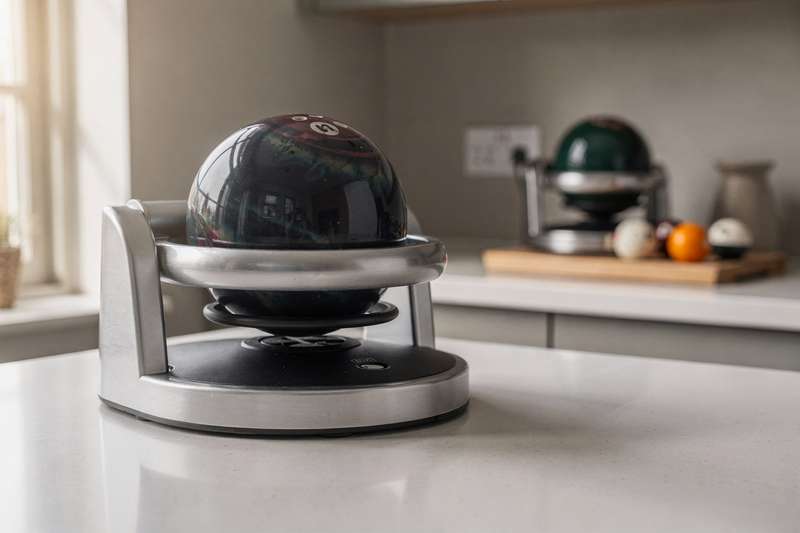
The “See Saw” mechanism is what distinguishes this from simpler approaches. The ball rests in a cradle with polishing elements on either side, and the unit rocks back and forth through the cleaning cycle. This rocking motion achieves consistent contact across the full curved surface of the ball without requiring you to constantly reposition or apply uneven manual pressure. Anyone who has tried hand-polishing a bowling ball with a cloth knows how difficult it is to cover the entire spherical surface evenly — this design addresses that problem mechanically rather than leaving it to technique.
For reactive resin balls specifically, that coverage consistency matters. Reactive resin coverstocks are porous by design — that porosity is what creates friction against the lane and enables the ball to change direction at the back end. Over time, lane oil fills those pores, reducing the ball’s responsiveness. Regular surface polishing doesn’t extract deep oil (that requires a professional ball rejuvenation service), but it removes surface contamination and restores the texture that makes the ball perform as intended. Consistent polishing every 25 to 50 games is effective, practical maintenance that every bowler in regular league play should be doing.
This polisher suits the regular UK league bowler who wants to maintain their ball at home between pro shop visits. It handles standard ten-pin bowling balls comfortably — the “Giant” in the name suggests it accommodates the full range of adult ball weights without adjustment. The operating principle is uncomplicated: place the ball, run the cycle, retrieve a polished ball. There is no steep learning curve and no specialist knowledge required to use it effectively from day one.
The tradeoffs worth knowing: this is a surface polisher, not a deep-cleaning solution. A ball heavily oil-saturated throughout the coverstock after years of heavy play will still need professional resurfacing — the See Saw doesn’t substitute for that. The machine provides the mechanical action; you’ll want to use a dedicated bowling ball polish or cleaner with it for best results. That said, for regular maintenance of a ball in active use, the combination of a reliable seesaw mechanism and nearly 500 reviews of buyer validation makes this the most dependable pick in this selection. For any UK bowler stepping up from ad-hoc cloth wiping to a structured maintenance routine, this is the natural starting point.
Best for Snooker and Pool Ball Sets
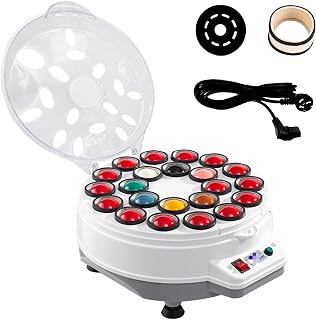
The 22-Ball Automatic Billiard Ball Cleaner Polisher Machine is built for a specific purpose: cleaning and polishing a complete snooker or billiard set in a single automated cycle. The 22-ball capacity maps exactly to a full snooker set — fifteen reds, six colours, and a cue ball — so you process the whole set simultaneously without needing to run multiple batches. For anyone managing a club table where balls are used daily and need regular maintenance, that efficiency is a tangible operational advantage.
Automatic billiard ball cleaning machines operate on different principles to the bowling-focused options in this guide. Billiard and snooker balls don’t absorb oil the way bowling balls do — their primary maintenance challenge is chalk dust, accumulated grime, and the gradual dulling or yellowing caused by extended use and sometimes UV exposure. A machine like this typically uses polishing elements inside individual ball ports, rotating each ball against cleaning surfaces to remove contamination and restore surface gloss. The automatic operation removes the manual effort: load the set, start the machine, and retrieve polished balls once the cycle completes.
For pool hall managers, snooker club organisers, or dedicated home players with a full snooker set, the efficiency case is clear. Hand-polishing 22 balls consistently takes time and produces variable results between individual balls depending on how much pressure you apply and how tired your arms get. Running the full set through an automatic machine delivers uniform treatment across every ball. If cleaning happens before every session or on a regular weekly schedule, the time savings across a full season of play are considerable.
The honest caveat here is significant: at the time of this research, this machine had only one buyer review on Amazon UK — a five-star rating, but a single data point. That is a very thin evidence base. This doesn’t necessarily mean the product underdelivers — it may be a newer listing or a niche purchase with limited UK sales history — but committing to a premium-priced automatic machine based on one review means accepting genuine uncertainty about long-term reliability, polishing pad durability, and what customer support looks like if something goes wrong. Go in with that awareness rather than the confidence you’d place in a product backed by hundreds of verified buyers.
Who should consider it? Snooker and pool clubs where ball cleaning is a regular operational task and the efficiency of full-set processing genuinely justifies the outlay. Serious home players who own a quality phenolic snooker set, use it frequently, and want a hands-off maintenance solution. Those who only clean their balls occasionally would be better served starting with a lower-cost manual approach and upgrading if their needs change. This machine is designed for billiard and snooker balls specifically — do not attempt to use it with ten-pin bowling balls, which are larger, heavier, and require a completely different approach.
Best Compact Single-Ball Polisher
The BSI Strike-a-Shine Ball Polisher comes from BSI — Ball Surface Innovations — a brand with a specific focus on bowling ball care products. At a budget price point with a compact format, it’s the most accessible option in this guide for bowlers who want a dedicated polishing product without committing to a mechanical machine.
This is a hand-applied polisher rather than an automated device. For bowlers who prefer a manual approach — because they want direct control over where and how much product they apply, because they travel between venues and need something that fits inside a ball bag, or simply because they don’t yet need a machine — a quality hand polisher applied consistently produces genuine results. The key distinction between a specialist product like this and reaching for a generic household cleaner is formulation: bowling ball polishes are engineered for the specific resin and urethane materials used in modern coverstocks. Generic polishes and car care waxes can leave residues in the surface pores that alter lane reaction and may be difficult to remove completely once embedded.
Using a hand polisher involves applying the product to the ball surface with a microfibre cloth or foam applicator pad, working it in using circular motions across the full surface, allowing it to haze slightly, then buffing off with a clean cloth. The technique is broadly similar to hand-polishing automotive paintwork, though the formula is specific to bowling ball materials rather than car clear coat. This approach gives you control that a mechanical polisher doesn’t — you can target scuffed or dulled areas with more attention, vary the application depending on the condition of different parts of the surface, and see exactly what you’re doing at every stage.
The compact format is a practical advantage for many bowlers. A small polisher fits in a ball bag alongside shoes and gloves, travels to the lanes without any additional effort, and can be applied in a few minutes before or after a session. For bowlers who move between venues or play at centres without on-site pro shops, that portability is often more useful in practice than a stationary machine sitting at home.
The caveat to state clearly: the BSI Strike-a-Shine has only one buyer review on Amazon UK at the time of this research — five stars, but a single data point. BSI is an established name in bowling ball care in the North American market, and the product concept is well-grounded in specialist knowledge, but UK buyer validation is essentially absent. If verified social proof matters to your decision, the bowlingball.com See Saw with its 490-plus reviews provides far greater confidence. This pick suits bowlers comfortable with a lower-data purchase in exchange for a lower price and portability — a reasonable bet on a credible specialist brand, just not one backed by a broad body of UK buyer experience yet.
Best Budget Accessory Kit for Bowling Ball Care
The Sewroro Bowling Ball Polisher Set is the most straightforward option in this selection: a dedicated microfibre care towel and a polyester storage bag, designed specifically for bowling ball maintenance. Full transparency upfront — this product has no buyer reviews on Amazon UK at the time of this research. The assessment here is based entirely on what the product description offers and category knowledge about bowling ball care accessories, not buyer experience. Factor that in when weighing it against the reviewed options above.
The central item is a dedicated 8-inch microfibre care towel sized for bowling ball use. Quality microfibre is worth using for ball care rather than a generic cotton cloth or household rag because the ultra-fine fibres lift and trap surface oil, chalk, and lane conditioner residue rather than smearing contamination from one part of the ball to another. For bowling specifically, wiping your ball with a clean microfibre cloth between shots removes surface oil before it has time to penetrate the coverstock — and a thorough wipe-down immediately after each session, while the ball is still warm from play, removes more contamination than leaving it to cool first. These habits, done consistently with the right cloth, extend the intervals between full polish sessions and slow the rate at which the coverstock becomes oil-saturated.
The machine washable description is a practical detail worth taking seriously. A bowling ball towel accumulates lane oil, chalk, and conditioner with every session, and a cloth used repeatedly without washing gradually becomes a contamination source rather than a cleaning tool — spreading old grime back across the ball instead of removing fresh deposits. Machine washing it regularly (a cool wash without fabric softener, which clogs microfibre fibres and reduces their effectiveness) keeps it functioning properly. Being able to throw it in the washing machine rather than attempting to hand-wash it thoroughly makes it far more likely you’ll actually wash it often enough to matter.
The polyester storage bag is a small but useful organisational touch. Keeping a dedicated ball care towel in its own bag prevents it from picking up debris from the rest of your kit — particularly important if your ball bag also contains shoes, wrist supports, or other items that shed fibres or hold moisture. A damp post-session towel contained in its own pouch doesn’t risk contaminating the rest of your kit between uses.
Who is this for? Newer bowlers building a first proper maintenance routine who want affordable basics before investing in a dedicated polishing product or machine. Players who already own a bowling ball polish but have been using a substandard applicator cloth. Those who want a supplementary care towel to pair with the bowlingball.com See Saw or a hand-applied polish — both benefit from a clean, properly sized microfibre companion. As a standalone solution for a ball in serious regular use, a microfibre towel won’t substitute for periodic polishing, but as the accessory that makes whatever else you’re doing more effective, it’s a sensible low-cost addition to any maintenance kit.
What to Look for in a Ball Polisher
- Ball type compatibility: Bowling balls and billiard or snooker balls are different objects with different sizes, weights, materials, and surface requirements. Always confirm a polisher is designed for your specific ball type before buying. A machine built for snooker balls will not accommodate a ten-pin bowling ball, and product formulas for one material may not suit another.
- Polishing mechanism — manual versus automatic: Manual solutions give you direct control and require minimal equipment. Automatic machines deliver consistent, repeatable results with less physical effort but cost more upfront and need periodic maintenance of their polishing elements. High-volume users — clubs, pro shops, league organisers — tend to benefit most from automation. Home players with one or two balls often do well with a quality manual approach applied consistently.
- Surface-appropriate formulation: If your polisher uses a chemical component — a liquid, spray, or cream — verify it’s formulated for your ball’s specific material. Reactive resin, urethane, polyester, and phenolic resin each have different surface characteristics. Generic household polishes and car care products can leave residues that alter ball performance or damage surface coatings over time. Specialist formulas from bowling and billiard brands are the safer choice.
- Replacement parts availability: Mechanical polishers use pads, rings, or felt elements that wear over time. Before committing to a machine, check whether replacement pads are available from the manufacturer and at what cost. A machine where consumable parts are unavailable or prohibitively expensive has a limited useful service life regardless of its initial build quality.
- Capacity and batch size: If you’re maintaining a full billiard or snooker set, how many balls a machine handles per cycle directly affects cleaning time. A 22-ball machine processes a full snooker set in one go; smaller machines require multiple batches. For ten-pin bowling, most players have one or two balls, making single-ball capacity entirely sufficient.
- Review volume and recency: In this relatively specialised category, review counts vary dramatically — from a single data point to several hundred. A high rating from a broad review base is meaningfully more informative than a perfect rating from one or two reviewers. Weight the evidence proportionally, and look for patterns in buyer comments rather than just the headline star score.
- Portability for venue use: If you want to polish at the lanes between sessions rather than only at home, size matters. A compact hand-applied polisher fits in a ball bag; a seesaw machine or automatic unit stays at home or in the club. Consider your typical usage pattern before deciding between portable and stationary options.
Verdict
For most UK bowlers reading this guide, the bowlingball.com Giant Bowling Ball Polisher Cleaner See Saw is the clear recommendation. Nearly 500 buyer reviews at 4.7 stars, a specialist brand with real reputational skin in the game, and a seesaw mechanism that addresses the trickiest aspect of ball polishing — consistent coverage across a fully spherical surface — all point to the same conclusion. Whether you bowl weekly in a league or monthly for social play, this makes regular coverstock maintenance practical without requiring professional assistance every time.
For the snooker or pool context, the 22-Ball Automatic Billiard Ball Cleaner Polisher Machine fills a genuine gap — full-set automated cleaning in a single cycle, precisely matched to a snooker set. The limited review history is a real consideration, so approach it with proportionate expectations about the uncertainty involved rather than the confidence you’d extend to a heavily verified product.
Budget-conscious bowlers building a first maintenance routine can start with the Sewroro microfibre kit as a care foundation and the BSI Strike-a-Shine as the cleaning product — low cost, low complexity, and easy to upgrade when you’re ready to invest in a machine. Ball maintenance doesn’t need to be expensive to be effective; consistency of application matters more than the sophistication of the tool.
This guide was produced independently. No manufacturer or retailer paid for inclusion or influenced the assessments here. All opinions are independent and based on publicly available specifications, buyer feedback patterns where available, and category knowledge about ball surface maintenance.
Quick Comparison Table




FAQ
How often should you polish a bowling ball?
Most bowling coaches and pro shop operators recommend a surface polish every 25 to 50 games, depending on how regularly you play and the oil conditions you typically bowl on. Heavy oil patterns accelerate surface contamination. Alongside periodic polishing, wiping the ball down with a clean microfibre cloth between shots and immediately after every session helps slow surface degradation between fuller cleaning cycles.
Can you use car wax or household polish on a bowling ball?
It is not recommended. Car waxes and household polishes are formulated for surfaces like automotive clear coat or furniture lacquer, not the reactive resin and urethane coverstocks used in modern bowling balls. Applied to a bowling ball, they can fill the surface pores that create friction against the lane, altering the ball’s reaction in ways that are difficult to reverse. Products specifically formulated for bowling ball surfaces are the more effective and safer choice.
What is the difference between cleaning and polishing a billiard or snooker ball?
Cleaning removes chalk residue, grime, and surface contamination that builds up during play. Polishing goes further — restoring the high-gloss surface finish and addressing minor dulling or light surface marks. For routine upkeep, a thorough clean after each session is sufficient. Polishing is worth doing monthly or whenever balls have visibly lost their gloss, or when you notice them transferring more chalk marks to the cloth than usual.
Can polishing restore heavily yellowed billiard or snooker balls?
Surface polishing can improve mild discolouration caused by chalk and grime buildup. Deep yellowing from UV exposure or long-term oxidation of the resin is more resistant — specialist restorer products or professional ball restoration services tend to produce better results for heavily affected sets. If a set is particularly old or far gone, full replacement may ultimately be more practical than attempting restoration.
Is a machine polisher worth the investment for a home bowling setup?
For most home bowlers with one or two balls, a manual approach — a dedicated bowling ball polish applied with a clean microfibre cloth using consistent technique — is entirely adequate and far more affordable than a machine. Mechanical polishers make most practical sense when you are cleaning multiple balls frequently, as in a club or coaching context, or if you value the consistency and hands-off convenience of automated operation enough to justify the additional outlay.
Does polishing a bowling ball affect its eligibility for competitive play?
Polishing changes the surface finish of a bowling ball, which can affect its approved surface grit rating. Competitive bowling organisations including the USBC and the British Tenpin Bowling Association (BTBA) have regulations about surface finish for sanctioned play. If you compete in official events, check the current rules before polishing — a ball with an incorrect surface finish can be flagged during pre-competition equipment checks. For social bowling and non-sanctioned leagues, this is generally not a concern.