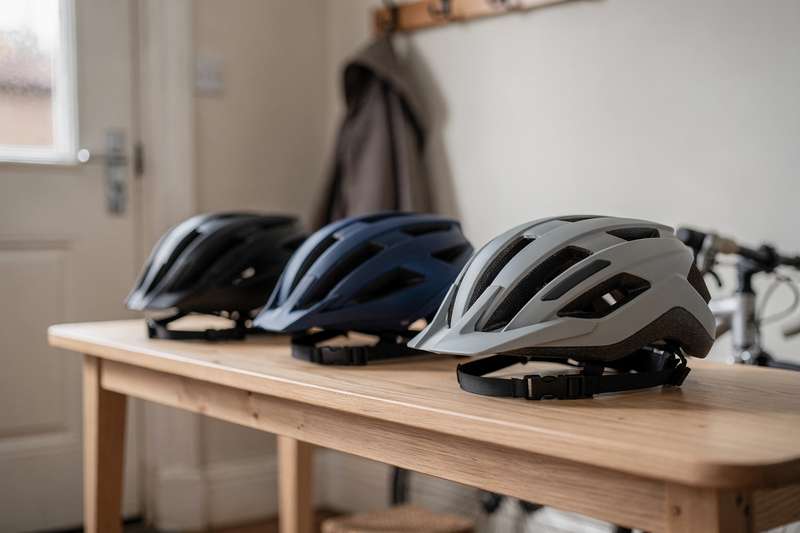
Picture this: it is late September, the evenings are drawing in, and you are cycling home through suburban streets after finally committing to using the bike instead of the car. Your helmet is an old hard-shell thing that has been knocked around in the garage for four years. The foam liner is compressed, the buckle sticks, and there is no rear light on it, which means you are essentially invisible to following traffic. You want something better: something that fits properly, ventilates on warmer days, perhaps has a built-in LED so you do not have to faff with clip-on lights, and will not fall apart after one season.
When you search Amazon UK, though, you hit a wall of near-identical-looking helmets, all boasting 18 vents and adjustable sizing and ultra-light construction in their descriptions, varying in price and listing quality. It is not easy to tell the useful ones from the ones that arrive feeling flimsy and fit nothing like the description. This guide is here to solve that problem. Whether you commute through town, ride weekend gravel paths, or tackle proper MTB trails, the five picks below represent the best the current UK Amazon market offers across different rider types.
How These Helmets Were Evaluated
This guide covers adult cycling helmets currently available on Amazon UK, assessed against the criteria that matter most to everyday UK riders: vent count and airflow design, fit range and retention system quality, integrated LED lighting, stated weight, and visor provision for trail and mixed-terrain use. Review patterns from verified buyers were a primary input for four of the five picks here. The fifth is a newer listing with no published buyer reviews at the time of writing, which is flagged clearly in that section. Head size range also informed selection, since a helmet fitting only 56 to 60cm excludes a significant portion of adult riders.
Best Overall Bike Helmet
The Bike Helmet, Cycle Helmets Adult with LED Light takes the top spot here by achieving something that sounds simple but is rarely done well in this price segment. With 4.8 stars from 90 verified reviewers, it carries the highest star rating of any helmet in this guide, and the feedback is notably consistent. Riders praise the fit, the quality of the rear LED light, and how light the helmet feels during longer rides.
This helmet targets adult commuters and recreational road cyclists who want one less thing to think about before heading out. The integrated LED light sits at the rear and is visible to following traffic, which matters enormously for UK riders in autumn and winter when dusk arrives before 5pm. Rather than relying on a clip-on tail light that can fall off mid-ride or run down its own battery separately, having the light built into the helmet means it is always present the moment you put the lid on. That reliability on daily commutes is something small in theory and significant in practice.
The adjustable sizing covers 56 to 60cm, fitting a medium-to-large adult head comfortably. The rear dial retention system lets you fine-tune the fit without tools, which you will appreciate when you are rushing out in the morning or adjusting partway through a ride. The 14-vent configuration is solid for commuting pace. On a moderate-effort ride, airflow is adequate and you will not overheat. Riders who push hard on fast club runs or race-pace training may notice the difference compared to 18-vent options, but for typical commuting speeds and leisure rides, 14 vents does the job well.
The honest tradeoffs: the fit range of 56 to 60cm will not suit riders with larger heads. If you measure over 60cm, look at the 57 to 62cm options reviewed later in this guide. There is also no detachable visor, so if you are trail riding through variable sun and shade, a visor-equipped model is more appropriate. The integrated LED, while practical, is not as powerful as a dedicated rear light, so in very low-light rural conditions a separate rear light is still worth using alongside it. For its target use case, though, the verified buyer feedback speaks clearly. If you are buying one cycling helmet to cover commuting, park rides, and occasional weekend outings, start here.
Best Featherweight Cycling Helmet
If you have ever arrived at work with a red pressure band across your forehead and sweat-soaked hair, weight and ventilation are what you will be searching for in your next helmet. The Bike Helmet Adult with Light, Cycle Helmet 57-62cm addresses both: it weighs in at 230g, genuinely light for a helmet in this market segment, and packs in 18 vents for noticeably better airflow than the average commuter lid delivers.
With 4.5 stars across 266 reviews, this is the most-reviewed helmet in this guide. That volume of verified buyer feedback builds confidence in ways that smaller review samples cannot: patterns emerge around durability, how the fit holds up after weeks of use, and whether the integrated LED light continues functioning reliably. The dominant themes here are comfort on extended rides and effective ventilation on warmer days, which are exactly what you would hope for from a 230g, 18-vent design. Buyers who cycle year-round particularly appreciate the combination of low weight and reliable airflow.
The fit covers 57 to 62cm, a more generous range than many budget helmets, and suits riders who have struggled with 56 to 60cm lids in the past. The low-profile design sits snugly without the bobblehead effect you sometimes get with bulkier options. An integrated rear LED is included, making it suitable for early-morning or evening commuting. The removable visor is a practical addition: it provides sun protection on trail rides and light rain cover during commutes, and you can detach it on open-road rides where you would rather not deal with the drag and slight visual restriction it creates at speed.
Where it falls short: the visor is functional rather than especially robust, and for serious off-road trail riding you will want something with a more trail-specific build. The 57 to 62cm range starts at 57cm rather than 56cm, so double-check your head measurement if you are near that lower boundary. A handful of reviews note that the internal padding could be more substantial for comfort on multi-hour rides. For a daily cycling helmet that balances weight, ventilation, and versatility, backed by the largest verified review base in this guide, this is a strong choice for regular commuters and recreational cyclists across a wide range of conditions.
Best Bike Helmet for MTB and Trail Riding
For riders who spend time on gravel paths, forest trails, or proper mountain bike terrain, a standard road-style helmet falls short in a few key ways. The Favoto Mountain Bike Helmet for Adult Commute & Off-Road Cycling is built with trail riding in mind: it features a pronounced sun peak that deflects low-hanging branches, shields your eyes from glare mid-descent, and offers some face protection when conditions get muddy or dusty on technical routes.
This helmet holds 4.6 stars from 266 verified reviewers, placing it as the second-highest rated option in this guide. The Favoto brand has clearly thought about the details that trail riders notice: the magnetic buckle is a standout feature that makes fastening and releasing the chin strap a smooth, one-handed process. After a long, hot trail session when you are tired and just want the helmet off quickly, not fumbling with a traditional clip buckle is a small but well-appreciated detail. Buyers across the review base mention both the buckle system and the purpose-built visor as highlights of day-to-day use.
The MTB-oriented design includes slightly more protective coverage around the sides and rear compared to a pure road commuter helmet, which matters when you are riding technical terrain where the risk of making contact with something hard is realistic. The visor is built for trail use rather than being the lightweight clip-on type found on commuter helmets, and it holds position through varied conditions without noticeable flex or rattling. For riders who commute mid-week and want to use the same helmet on weekend trail sessions, this dual-purpose design avoids having to buy two separate lids.
The limitation to be clear about: this is a cross-country MTB style helmet, not a full-coverage enduro or downhill design. It does not provide the extended rear-head protection that dedicated DH helmets offer. If you are riding aggressive technical descents with significant drop exposure or bike park runs, a full-face or extended-coverage helmet is more appropriate. For trail riders, gravel cyclists, and commuters who want a helmet that performs on both the daily ride to work and the weekend trail session, this Favoto is a well-reviewed and practical choice.
Best Bike Helmet for Urban Commuters
Urban cycling in the UK often involves stop-start traffic, variable weather, and routes that are more pothole navigation than smooth tarmac. The Cycle Helmet with Light, Lightweight Adults Bike Helmet is positioned directly at the everyday city or town rider: the built-in rear light is functional for dawn and dusk commuting, the 18 vents maintain adequate airflow at the moderate pace of urban cycling, and the 57 to 62cm size range accommodates a broad range of adult head sizes.
With 4.5 stars from 121 reviewers, the feedback is consistent with a reliable workhorse commuter helmet. Buyers describe it as comfortable for regular wear, with the LED light cited repeatedly as a practical asset for riders who do not want the extra step of attaching a separate tail light each morning. The mountain and road dual-positioning in the product name reflects real versatility: this works equally well for a city commuter and a rider who heads out on country lanes at the weekend, with the same helmet covering both without meaningful compromise.
The adjustable strap system and rear dial retention make setting up the fit straightforward, even for first-time helmet buyers who have not gone through this process before. You measure your head, set the dial to match, adjust the chin straps, and you are done. The lightweight build means you are not straining your neck if you keep the helmet on briefly after locking up your bike, which matters more than it sounds on repeated daily use where small annoyances compound over time.
The honest comparison to draw: this helmet overlaps significantly in specifications with the featherweight pick reviewed above. Both cover 57 to 62cm, both offer 18 vents and an integrated LED. The key differences are that the featherweight pick has a larger verified review base (266 versus 121 reviews) and a specifically stated 230g weight. If you want the most review-backed option of the two, the featherweight pick edges ahead. If this Cycle Helmet with Light is better priced at the time you are shopping, it is a comparable and well-reviewed alternative with the same core feature set. For riders whose heads measure under 57cm, the 56 to 60cm Best Overall pick is the correct fit.
Best High-Vent Option for Road Cyclists
A note upfront: the Favoto Bike Helmet for Adult Commute & Road Cycling, Lightweight 27-Vent shows no verified buyer reviews at the time this guide was written. The 4.4 rating on the listing carries less evidential weight as a result, and the evidence base here is thinner than for the other four picks. This pick is included because it fills a genuine gap in the selection: a road cycling-focused helmet with 27 vents, the highest vent count of any helmet in this guide. Weigh the absence of verified reviews accordingly when deciding whether it suits your situation.
The 27-vent count is the headline for a clear reason. Road cyclists and faster commuters generating higher effort outputs will notice a real difference in airflow compared to 14 or 18-vent options. If you are covering 20 or more miles on a road route and riding at pace, proper ventilation separates an enjoyable ride from an uncomfortable one. A higher vent count on a road-focused helmet is specifically engineered around forward motion at speed: vents are positioned to create front-to-rear airflow as you lean into a road cycling position and move through the air at pace.
The Favoto brand provides some indirect confidence in quality here. The MTB variant reviewed above holds 4.6 stars from 266 verified reviews, suggesting a consistent approach to materials and build quality. The road cycling focus of this particular model reflects a different brief from the MTB version: less emphasis on a protective visor or magnetic buckle system, more emphasis on maximising the airflow that sustains comfortable high-effort riding. The commute and road cycling dual-positioning means it covers both the rider wanting a ventilated option for daily cycling and the one training at higher intensities on longer road routes.
The tradeoffs are clear. No verified reviews means accepting a degree of uncertainty on quality and long-term durability. If you want the certainty of real-world feedback, the Favoto MTB model reviewed above or the featherweight 230g pick are both better-evidenced options. This road-focused Favoto suits road cyclists who specifically need the highest vent count in this selection and are comfortable being among the first to generate its verified review base. Worth bookmarking and revisiting once reviews accumulate on the listing.
What to Look for in a Bike Helmet
With dozens of helmets available at similar price points, these are the factors worth understanding before you buy:
- Safety certification: For cycling helmets in the UK, the standard to look for is EN 1078, which covers impact protection for cyclists. This is the baseline expectation for helmets sold in the UK market. Check the physical product packaging on arrival for certification marks rather than relying solely on listing text, as listings can be inconsistent.
- Vent count and placement: More vents can improve airflow, but placement matters as much as count. Road helmets benefit from front-to-rear channels that create through-flow at pace. Commuter helmets do not need as aggressive a ventilation system since riding speeds are lower. MTB helmets often trade some ventilation for additional side and rear coverage. As a rough guide, 14 to 18 vents suits commuting and recreational riding; above 20 is typically aimed at faster road riding.
- Fit range and retention system: Most helmets use a rear dial retention system that adjusts an internal cradle. Always check the stated head circumference range before purchasing. A helmet rated for 56 to 60cm will not adjust correctly to a 63cm head regardless of dial setting. Measure your head with a soft tape at its widest point, usually just above the eyebrows, before you search.
- Integrated rear lighting: For UK commuters, a built-in LED at the rear adds meaningful safety value. Visibility to following traffic is in place the moment you put the helmet on, without a separate clip-on light to attach, forget, or manage on a different charge cycle. Check whether the light is USB-rechargeable or uses replaceable batteries, as USB recharging is more convenient for daily use.
- Visor provision: A sun peak is useful for trail riding, gravel routes, and commuting in variable sun or light rain. For pure road cycling at speed, a visor can create drag and restrict sightlines slightly. Many helmets offer removable visors that give you flexibility to use them when needed and remove them when you would rather not. If you ride across different terrain types, a removable visor is more versatile than a fixed one.
- Weight: Helmets in the 230 to 280g range are considered light for everyday cycling. Beyond 300g, weight becomes perceptible on longer rides. If you are commuting daily or covering multi-hour routes, seeking out a lighter helmet is a quality-of-life improvement that compounds over time.
- Replacement timeline: Replace your helmet after any significant impact, even with no visible damage, as internal foam may have compressed in ways that reduce future protection. As a general guideline, replacing every five years or so makes sense since materials degrade and standards evolve. Budget for eventual replacement when making your initial purchase decision.
Verdict
For the majority of UK adult cyclists, the Bike Helmet, Cycle Helmets Adult with LED Light is the clear starting point. It carries the highest star rating in this guide at 4.8 stars, the reviewer consensus is positive, and the integrated LED rear light makes it a safer option for UK riding conditions where dusk arrives early for much of the year. For a commuter or recreational cyclist who wants one reliable, well-reviewed helmet that handles the majority of UK riding situations, this is the right pick.
If you spend meaningful time on trails or gravel routes, the Favoto Mountain Bike Helmet for Adult Commute & Off-Road Cycling is the stronger choice: the magnetic buckle and purpose-built MTB visor make it more trail-appropriate, and 4.6 stars from 266 reviews gives it a well-evidenced backing. For lightweight ventilation as your top priority, the 230g featherweight pick has the most verified reviews in this guide at 266 and suits riders who generate more heat at pace. Road cyclists wanting maximum airflow should bookmark the 27-vent Favoto road model and check back as its review base develops before committing.
We were not paid to feature any specific product in this guide. All opinions are independent and based on publicly available specifications, verified buyer feedback patterns, and category research.
Quick Comparison Table


FAQ
How often should I replace my cycling helmet?
Replace your helmet after any significant impact, even if there is no visible damage. The internal foam structure may have absorbed energy in ways that reduce its effectiveness in a future impact. As a general guideline, replacing every five years is sensible, as materials degrade and safety standards continue to improve. If your helmet has been stored in extreme heat, such as a hot car boot over multiple summers, consider replacing it sooner.
What size bike helmet do I need?
Measure the circumference of your head at its widest point, typically just above your eyebrows and around the back where the helmet sits. Use a soft measuring tape and note the result in centimetres. Match this against the size range of your chosen helmet: a 58cm head fits a 57 to 62cm helmet but not a 56 to 60cm one. If you fall between sizes, choose the one where the rear retention dial gives you a snug, stable fit without pressure points.
What safety standard should a bike helmet meet in the UK?
The primary standard to look for on cycling helmets in the UK is EN 1078, which covers impact protection for cyclists and skateboarders. This is the baseline expectation for helmets sold in the UK market. Check the physical product packaging on arrival rather than relying solely on listing text, as packaging displays actual certification markings. If a helmet makes no mention of any certification, investigate before purchasing.
Is an integrated LED light on a bike helmet worth it?
For UK commuters cycling in autumn and winter, yes. An integrated rear LED means your visibility to following traffic is always in place when you put the helmet on, without a separate light to attach, forget, or charge independently. Most integrated helmet lights are not as powerful as dedicated rear lights, so if you regularly ride in very low-light rural conditions, pairing the helmet LED with a dedicated rear light is still recommended. For urban and suburban commuting in mixed-light conditions, the built-in LED is a practical safety benefit.
What is the difference between a mountain bike helmet and a road cycling helmet?
Mountain bike helmets typically have extended coverage at the rear and sides, a pronounced visor to deflect branches and shield against sun and debris, and a more robust overall build for trail conditions. Road cycling helmets prioritise ventilation and aerodynamics, with more vents, a sleeker profile, and minimal or no visor. Commuter helmets sit between the two: reasonable ventilation, often with an optional visor, and a profile that works on both road and light trail without being specifically optimised for either.
Can I use one helmet for both commuting and mountain biking?
For light trail riding and gravel routes, a well-designed MTB-style commuter helmet can serve both uses reasonably well. The point at which this compromise breaks down is at the serious end of trail riding: for technical descents, drops, or bike park runs, an MTB-specific helmet with extended rear coverage or a full-face helmet offers meaningfully better protection. For moderate trails and gravel combined with daily commuting, a dual-purpose helmet is a practical solution that avoids buying two separate lids.