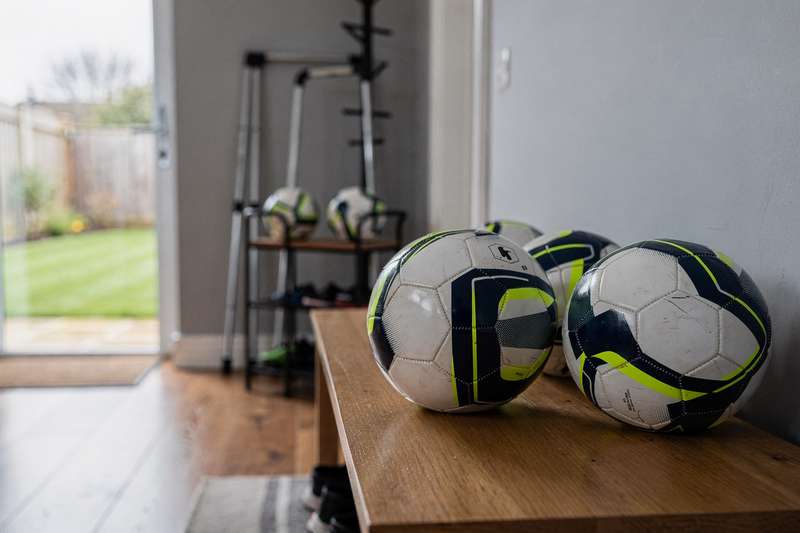
You’ve just convinced the lads to meet at the park on Sunday. The goals are up, the bibs are sorted — and then someone pulls out that sad, over-inflated leather lump that’s been rattling around the boot of a car since 2018. It wobbles when you strike it, skids unpredictably on the damp grass, and by the second half your passing is all over the place. The ball isn’t just a prop; it is the game. A poorly constructed football will fight you on every touch — stiff on cold mornings, shapeless on wet pitches, and deflated by half-time.
Whether you’re coaching a junior team, smashing volleys in training five nights a week, or just want a decent ball that survives the back garden and the school playground without falling apart after a fortnight, choosing the wrong one wastes both money and effort. The UK market is packed with options ranging from budget foam offerings through to premium match balls that cost as much as a decent set of shin pads. This guide cuts through the noise and gives you five specific, well-matched picks for the most common scenarios.
How We Evaluated These Picks
To narrow the field, we assessed each ball across five criteria that genuinely matter day-to-day: construction quality (panel bonding technology, bladder type, and casing material), shape retention after repeated use, grip and touch across different weather conditions, size and weight compliance (FIFA and national body standards), and real-world buyer feedback patterns drawn from verified Amazon UK reviews. Where a ball carries an official licence — Premier League, UEFA, FIFA World Cup — we also checked whether that licensing reflects actual performance-spec design choices or is purely cosmetic. Balls with zero reviews were included only where the manufacturer pedigree or product line gave sufficient confidence. Price tiers are described as budget, mid-range, or premium rather than specific figures, since prices shift regularly on Amazon.
Best Budget Training Ball: adidas Unisex FIFA World Cup 26 Trionda Training Ball
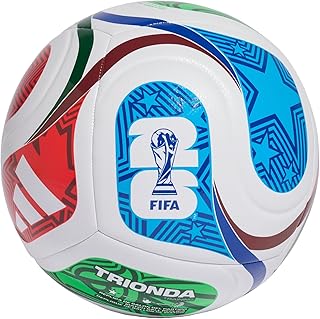
If you want the most ball for your money for regular park or training-ground use, the adidas Unisex FIFA World Cup 26 Trionda Training Ball is the standout choice in the budget-to-mid tier, and its 4.4-star rating across nearly 980 Amazon UK reviews gives that assessment some serious backing. This is the training replica of the official ball being used at the FIFA World Cup 2026, which means the panel layout and aerodynamic profile mirror what professionals train with — an uncommon benefit at this price point.
The Trionda’s casing uses a machine-stitched thermoplastic polyurethane (TPU) cover. TPU is significantly more weather-resistant than traditional polyurethane, holds its shape after repeated striking, and doesn’t absorb water the way cheaper PVC shells do on a wet November morning. The bladder is butyl rubber, which is the right choice for a training ball: butyl retains air far longer than latex, meaning you’re not pumping up before every session. For coaches who look after a bag full of balls, this practicality matters enormously.
In terms of touch, the textured panel surface gives you feedback and grip that you simply don’t expect from a ball in this price bracket. Passing and first-touch drills feel natural — the ball doesn’t skid off the foot the way very cheap PVC balls do. Strike it cleanly and the flight is predictable, which is what you want when working on shooting accuracy. The World Cup branding and colourway are also genuinely distinctive, so it doesn’t get mixed up on a crowded training pitch.
The honest tradeoff here is that this is a training ball, not a match ball. The panel bonding won’t survive if it’s used on abrasive tarmac or concrete multiple times a week, and the construction doesn’t meet the performance specs of thermally bonded premium match balls. It’s also worth noting it arrives deflated — standard practice for shipping but worth having a pump to hand. For grass-surface training and recreational five-a-side, though, this is one of the smartest buys on the list.
Best Premium Match Ball: PUMA Orbita Cup Premier League 2025/26 Football
The PUMA Orbita Cup Premier League 2025/26 Football is the official match ball of the Premier League season, and at 4.4 stars from over 310 reviews on Amazon UK, it’s clearly finding its audience among serious players and football fans who want more than a novelty item. This is the ball you want if you’re playing organised league football or want a training ball that genuinely replicates the match-day experience at grassroots and semi-professional level.
What sets the Orbita apart from standard training balls is its thermally bonded panel construction. Unlike machine-stitched balls where the seams are raised, thermally bonded panels are fused together, creating a completely smooth, seamless surface. This directly affects flight characteristics — the ball travels more truly through the air and doesn’t develop the wobble that stitched balls can at pace. The 20-panel design also distributes strike force more evenly, which gives it that satisfying, responsive pop when you volley it cleanly.
The latex bladder in the Orbita is tuned for match-level responsiveness and energy return, giving it a livelier feel than butyl alternatives. That said, latex bladders do lose air a little faster than butyl, so you’ll want to check pressure before sessions more routinely. The outer casing is premium polyurethane, which feels soft and grippy even in cold, damp conditions — a genuine test of any ball’s quality in the UK.
The Premier League official licensing here isn’t just a sticker on a cheap shell. The Orbita is the actual match ball used at Premier League grounds, so the feel and flight characteristics are the real deal. It’s priced at the higher end of what you’d expect for a training/match ball, which means it’s best used on grass surfaces and not left bouncing off concrete walls. If you’re coaching a grassroots team and want the squad to train with a ball that behaves exactly like the one they’ll see on match day, this is the most authentic option on the list.
Best Durable Training Ball: Mitre Impel Evo Football
The Mitre Impel Evo Football is the most reviewed ball on this list with over 560 Amazon UK ratings averaging 4.6 stars — and that kind of sustained positive feedback from a large sample is difficult to argue with. Mitre is a long-established British brand with deep roots in grassroots and school football, and the Impel Evo is their answer to the question: what’s the best ball for heavy, mixed-surface use?
The defining feature is Mitre’s Hyperseam Technology. Rather than conventional stitching where thread loops sit proud of the panel surface, Hyperseam bonds the panels with a reinforced internal seam that creates a near-smooth exterior. This improves consistency of touch and reduces the likelihood of the ball absorbing water at the seams — a significant advantage when you’re training through autumn and winter on muddy pitches. Reviewers consistently comment on how well this ball holds its shape across months of regular use, which is exactly what a school PE department or a junior football club needs.
The casing is TPU over a polyester wound construction, and the butyl bladder is appropriately specified for a training ball: reliable, long-lived, and low-maintenance. You won’t be hunting for a pump every week. The panel geometry gives it decent flight characteristics — nothing as refined as a thermally bonded match ball, but far more predictable than budget PVC offerings.
Where the Impel Evo does slightly less well is in premium touch and feel. At this tier, there’s a slight stiffness in cold weather compared to higher-end balls, and the surface isn’t as grippy for techniques like backspin chips or driven swervers. It’s built for reliability and longevity, not for replicating the soft, responsive feel of an elite match ball. For clubs running sessions three or four times a week with a bag full of balls that will get kicked around, left in the rain, and occasionally booted onto a school roof, this is the pragmatic choice.
Best for Young Players and Casual Kickabouts: Nike Pl Nk Academy-Fa23 Football Ball
The Nike Pl Nk Academy-Fa23 Football Ball carries the Premier League licence and has earned a 4.4-star rating from 138 Amazon UK reviewers, which suggests a solid product without the volume of feedback the Mitre has accumulated. Nike’s Academy range has been a consistent performer for recreational and junior play, and this Premier League-branded version adds visual appeal that younger players genuinely respond to.
The ball uses Nike’s machine-stitched TPU construction, which is robust enough for regular park and playground use. The rubber bladder offers reasonable air retention for casual play, though it’s slightly less consistent than butyl over extended periods. Where this ball genuinely earns its place is in the overall feel: Nike tunes its Academy balls to feel softer and more responsive than their specification might suggest, and young players and beginners find it easier to control than stiffer budget alternatives. First touches feel forgiving, and the ball doesn’t have the skittish, hard-to-read flight that cheap PVC balls produce.
The Premier League branding is authentically replicated rather than generic football graphics, which matters when you’re buying this as a gift or for a young fan who cares about playing with a ball that looks like the real thing. The colourways are bold and visible in low-light conditions, practical for those early-evening five-a-side sessions in autumn when pitches aren’t well-lit.
The honest limitation here is that the Academy-Fa23 is positioned as a training and recreational ball, not a match ball. The construction doesn’t have the performance refinement of the Orbita or the heavy-duty durability testing of the Mitre Impel Evo. It’s the right pick for a parent buying a quality ball for a child who plays several times a week, or for a group of friends who want something better than a supermarket own-brand without spending on a premium match ball.
Best Licensed Collectible and Training Ball: Hy-Pro UEFA Champions League Football
The Hy-Pro UEFA Champions League Football occupies an interesting space: it’s officially licensed by UEFA, comes in size 5, and is marketed as suitable for training, matchplay, and as a collectible item. For football fans who also actually want to use the ball they’re buying, this is worth considering — particularly as a gift for a child or teenager who follows the Champions League closely.
Hy-Pro has been producing licensed sports merchandise for decades and the Champions League ball here is machine-stitched with a durable synthetic casing. The construction is honest for its tier — this isn’t a performance match ball chasing aerodynamic precision, but it is a properly inflated, correctly weighted ball that you can take to the park and use for passing drills, shooting practice, and casual play without it embarrassing itself. The Champions League star-ball design is immediately recognisable and accurately reproduced, which gives it genuine appeal as both a usable football and a display item.
It’s worth being transparent: this product has no current verified reviews on Amazon UK despite being listed. The manufacturer’s track record with licensed products is established, and UEFA’s licensing requirements mean the ball meets basic quality and size standards — but if you rely heavily on review volume to make decisions, this is a consideration. For a reviewed alternative at a similar tier, the adidas Trionda or the Mitre Impel Evo are safer bets. Where the Hy-Pro makes sense is for a gift where the visual appeal of the UEFA Champions League branding is as important as the performance, and where the recipient wants something they can both display and actually kick around.
The ball is not suited for serious training on abrasive surfaces or for competitive match use. Think of it as a quality recreational ball with genuine licensed branding — better than a cheap novelty item, but not competing with the Orbita or the Trionda for pure performance value.
What to Look For When Buying a Football
- Size and weight compliance: Standard adult footballs are size 5. Children aged 8–12 should use size 4, and under-8s size 3. A ball that’s the wrong size will negatively affect technique development, particularly for younger players. If a ball claims FIFA or national body approval (such as FA or UEFA compliance), it has been independently tested to meet those dimensions and weight ranges.
- Bladder material: Butyl bladders retain air significantly longer than latex and require less frequent pumping — the right choice for training balls, school balls, and any ball used frequently. Latex bladders offer slightly better energy return and a livelier feel, making them preferable for match balls where performance is prioritised over convenience.
- Panel construction method: Machine-stitched panels are standard on training and recreational balls — durable and cost-effective. Thermally bonded (seamless) panels are found on premium match balls; the smooth surface creates more consistent flight characteristics and better water resistance. Hand-stitched balls sit between the two in performance and price.
- Casing material: TPU (thermoplastic polyurethane) is the most common casing material for quality training balls — weather-resistant, durable, and offers good surface grip. PVC is cheaper but absorbs water and becomes heavy in wet conditions. Premium polyurethane is softer and more responsive, used on top-tier match balls.
- Surface type: Consider where the ball will primarily be used. Grass-surface training balls can use softer casings; if the ball will regularly hit tarmac, concrete playground surfaces, or astroturf, you need a ball with a more abrasion-resistant shell. Using a premium match ball on rough surfaces will significantly shorten its life.
- Official licensing: FA, FIFA, UEFA, and Premier League licences all require balls to meet minimum construction and performance standards before approval. Licensed balls tend to be more reliably constructed than unlicensed alternatives at the same price point. That said, licensing alone doesn’t guarantee high performance — check whether the licence covers a training ball or a match ball specification.
- Review volume and pattern: A ball with 500+ reviews at 4.5 stars tells you something meaningful. A ball with 12 reviews at 5 stars tells you very little. Look for patterns in negative reviews too — consistent mentions of seam splitting, rapid deflation, or shape loss after a few sessions are warning signs regardless of the star average.
Verdict
For most UK readers — whether that’s a parent buying for a child, a recreational player who trains once or twice a week, or someone coaching a grassroots junior team — the adidas Unisex FIFA World Cup 26 Trionda Training Ball is the pick that makes the most practical sense. Its combination of TPU construction, butyl bladder, World Cup branding, and nearly 1,000 positive Amazon UK reviews puts it in a rare sweet spot: genuinely good performance, genuine brand quality, and a price point that doesn’t sting when it eventually wears out from regular use.
If you play organised league football or coach at grassroots level and want the squad training on the exact feel of a Premier League match ball, upgrade to the PUMA Orbita Cup Premier League 2025/26 Football. For heavy multi-surface training where longevity and resilience matter more than premium touch, the Mitre Impel Evo Football is the workhorse choice. Pick the ball that matches where and how often you actually play — that’s the decision that determines whether you’re happy with it six months from now.
We were not paid to feature any specific product in this guide. All opinions are independent and based on publicly available specifications, verified buyer feedback patterns, and category research.
Quick Comparison Table




FAQ
What size football should I buy for an adult?
Adults and players aged 13 and over should use a size 5 football — this is the standard used in all professional and amateur adult competitions. Size 5 balls are also the format used in Premier League, Champions League, and FIFA World Cup matches, so all of the reviewed balls in this guide are size 5 unless otherwise specified.
What’s the difference between a training ball and a match ball?
Training balls are built for durability and consistency across hundreds of sessions. They typically use machine-stitched panels, butyl bladders, and TPU casings that hold up on varied surfaces. Match balls prioritise performance characteristics — thermally bonded seamless panels, latex bladders for responsiveness, and premium polyurethane casings. Using a match ball for daily training on rough surfaces will degrade it quickly; using a training ball in a competitive match is fine for grassroots level.
How often should I pump up a football?
A well-made ball with a butyl bladder should hold its pressure for several weeks of regular use. Latex bladder balls need checking more frequently — ideally before each session. The correct pressure range is printed on the ball itself (usually between 0.6 and 1.1 bar / 8.7–16 PSI). Playing with an over- or under-inflated ball affects flight, touch, and over time can distort the ball’s shape.
Are licensed Premier League and Champions League balls worth the extra cost?
Official licensing from bodies like UEFA, FIFA, or the Premier League requires the ball to meet construction and performance standards — so licensed balls are generally more reliably made than unlicensed alternatives at a similar price. However, the premium isn’t always justified purely for recreational use. If the licensing is on a match ball like the PUMA Orbita, the performance difference is real. If it’s on a training or merchandise ball, the main benefit is the accurate branding rather than the performance specification.
Can I use the same football on astroturf and grass?
You can, but abrasive surfaces like 3G or 4G astroturf will wear through a TPU or polyurethane casing faster than grass. Balls used regularly on artificial surfaces benefit from a tougher, more abrasion-resistant shell. Avoid using premium match balls with soft PU casings on artificial pitches regularly — save those for grass. If you train predominantly on astroturf, prioritise a durable training ball over a premium match ball regardless of budget.
What does butyl bladder mean and why does it matter?
The bladder is the inner air chamber of the football. Butyl rubber holds air far more effectively than latex, meaning balls with butyl bladders maintain pressure significantly longer between pumping sessions. This makes them the practical choice for training balls that get heavy use. Latex bladders offer better energy return — the ball springs back from impact more lively — which is why elite match balls use latex despite the trade-off in air retention.