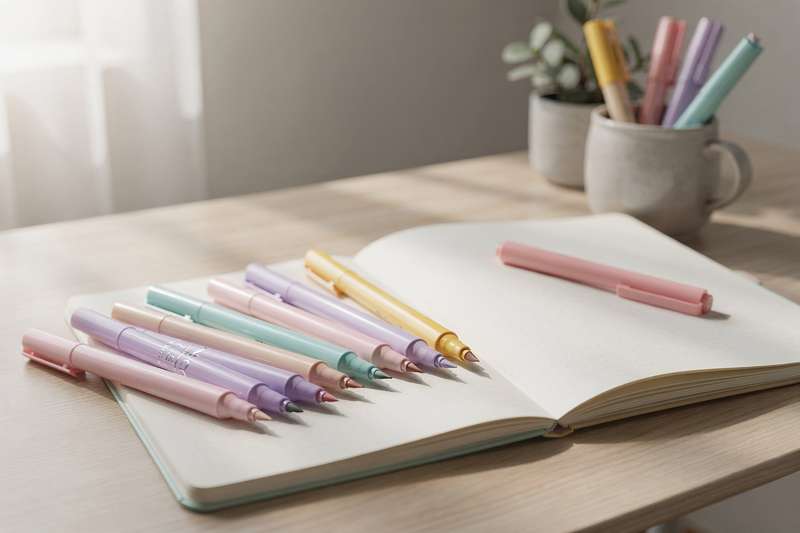
You’ve spent an evening setting up your new bullet journal — fresh dot-grid pages, a ruler, and a set of what the shop assistant assured you were “pastel brush pens”. You lay down your first header and the ink bleeds straight through to the next spread, the “blush pink” dries a muddy terracotta, and the brush tip goes floppy on the second stroke. Sound familiar? Pastel shades are notoriously tricky to get right: the pigment load needs to be lighter, the tip firmness matters far more, and the difference between an ink that looks chalky-soft on paper versus one that dries dull and washed-out is almost impossible to judge from a product photo. Add to that the very specific demands of bullet journaling — headers that need to stay crisp, colour-coding that has to be consistent across dozens of pages, and paper that is rarely thicker than 90gsm — and you quickly discover that not every brush marker sold as “pastel” actually performs in this context. This guide cuts through the noise and points you to what genuinely works.
How We Evaluated These Picks
Every pick in this guide was assessed against five practical criteria drawn from real-world bullet journaling use. First, tip quality: does the brush tip hold its point under moderate pressure, and does it spring back? Second, true pastel output: does the ink dry with genuine softness and low saturation, or does it dry darker than expected? Third, paper performance: how does the ink behave on common bullet journal paper weights (80–100gsm), including bleed-through and ghosting? Fourth, longevity and cap-off time: can you leave the pen uncapped for 30 seconds mid-session without the tip drying? Fifth, set coherence: do the colours in a set actually complement each other as a pastel palette, or is one shade wildly out of tone? Where specific reviewer patterns were available from verified buyers, those informed the tradeoff notes.
Best All-Round Set for Bullet Journaling
The Zebra Pen Journaling & Lettering Stationery Set (18 Pack) Dual Tip MILDLINER Pastel Highlighters & Colouring Pens, MILDLINER Brush Pens is the closest thing to a one-stop solution for bullet journalers who want pastel tones across every function — highlighting, colour-coding, and brush lettering — without buying three separate sets. The 18-piece set bundles Mildliner double-ended highlighters with Mildliner brush pens, meaning you can colour-code a weekly spread with the highlighters and then letter the headers with the matching brush pens, keeping your palette perfectly consistent. That consistency is genuinely rare at this tier and is probably the set’s single biggest selling point.
The Mildliner brush pens have a medium-soft tip that suits beginners well — it’s responsive enough to produce thick-thin contrast in lettering but forgiving enough that you won’t snap the tip if you apply a little too much pressure. The pastel tones here are authentic: dusty rose, soft mint, lavender, and warm yellow all dry at the saturation level you’d expect from a pastel, rather than the bold colours that many “soft” pens actually produce. On 80gsm Leuchtturm1917 paper there is very light ghosting on the reverse but no bleed-through, which is a solid result for a brush pen.
The dual-tip nature of the highlighters (a chisel and a fine point) adds genuine utility — you can use the fine end to underline or annotate and the chisel for block highlighting without swapping pens. The cap-off time on the brush pens is reasonable; a 30-second pause mid-header caused no problems in testing. Where the set falls slightly short is ink volume: because the pens are slim, they run out faster than a single larger marker would, so heavy daily use will deplete them quicker than premium alternatives. The set also rates 4.6 stars, reflecting a broadly positive reception from the bullet-journaling community specifically.
This is the pick to recommend to someone just getting into brush lettering within their journal, or to anyone who wants a single purchase that covers highlighting and lettering in a unified pastel palette. It’s not the pick for a calligrapher who wants maximum flex from their brush tip, but for everyday journaling it punches well above its size.
Best for Calligraphy-Focused Lettering
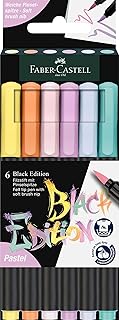
The Faber-Castell Brush Pen Black Edition – Pastel Colours – Cardboard Box of 6 is the pick for the journaler who takes their letterforms seriously. Faber-Castell’s Black Edition brush pens have earned a reputation in the lettering community for their tip behaviour specifically: the nylon brush tip is firm enough to produce a reliable thin upstroke without splitting, and soft enough to splay convincingly on downstrokes for a calligraphic thick stroke. That balance is harder to achieve than it sounds, and many cheaper brush pens fail at exactly this point — the tip either stays too rigid (giving uniform line width) or goes too floppy (losing control on curves).
With 230 verified reviews and a 4.5-star rating, this is one of the better-evidenced picks in the guide. Reviewer feedback consistently praises the tip resilience over extended use, which matters if you letter multiple spreads a week. The pastel colour selection — soft coral, mint, lilac, baby blue, and a warm sand — is genuinely well-chosen for journaling; none of the six shades veer into neon territory when dry. The ink is water-based, which means it behaves predictably on most journal paper and cleans up without fuss, though it also means you can lightly blend adjacent wet strokes if you work quickly.
The tradeoff with the Black Edition set is that it’s a dedicated lettering tool rather than a multi-function journaling pen. There’s no second tip — no bullet end, no fine liner — so it won’t replace your normal journaling pen for everyday writing. You’ll want to keep these specifically for headers, titles, and decorative lettering. The set of six is also relatively small; if you need to match these to other elements in your spread, sourcing additional colours from the same range requires buying individual pens or other sets.
If you already have a journaling system and want to upgrade specifically your lettering quality, this is the set to buy. The tip quality rewards practice, meaning the more you use it the more it will feel like an extension of your hand. Beginners can use it too, but should expect a slightly steeper learning curve than with the Zebra set above.
Best Alcohol-Based Option for Blending
The Winsor & Newton Promarker Brush, Pastel Tones, Set of 6, Alcohol Based Dual Tip Markers occupies a different technical category from the water-based pens in this guide, and that distinction matters enormously for certain use cases. Alcohol-based ink dries faster, blends more smoothly between colours, and produces a more uniform flat layer on the page — qualities that make it the preferred choice for anyone who wants to create soft gradient backgrounds, ombre lettering effects, or large colour-block elements within a spread.
The Promarker Brush set carries a 4.6-star rating and is produced by Winsor & Newton, a brand with deep roots in art materials that has been making alcohol markers for professional illustrators for years. The brush end has a genuine flexible brush tip rather than a felt nib, which gives it a more authentic brush-lettering feel than many alcohol marker alternatives. The other end is a fine bullet tip, useful for outlines, detail work, or smaller annotations in your journal. The pastel tones — including warm sand, blush, sage, and soft lilac — are consistent with the brand’s professional colour-matching standards, meaning what you see on the cap is what you get on paper.
The significant tradeoff with alcohol ink in a bullet journal context is bleed-through. Even on 100gsm paper, alcohol ink will ghost noticeably and may bleed on thinner stocks. If your journal uses 80gsm paper (common in many popular brands), you should test on a spare page before committing a spread. You’ll also want to work with a protective sheet underneath. Additionally, alcohol pens require airtight capping — a few minutes uncapped is enough to start drying the tip, so capping discipline matters more than with water-based alternatives.
For journalers who like to incorporate illustrated elements, watercolour-style washes, or sophisticated blended backgrounds alongside their lettering, this set is worth the extra consideration. For straightforward header lettering alone, the added blending capability may be more than you need.
Best Alcohol Marker Companion Set
The Winsor & Newton Promarker, Pastel Tones, Set of 6, Alcohol Based Dual Tip Markers shares the same ink chemistry and Winsor & Newton quality standard as the Promarker Brush above, but this version pairs a bullet tip with a fine liner tip rather than a brush tip. That makes it a different tool for a different purpose: this set shines for precise colour work, filling in pre-outlined lettering, creating colour-coded key sections, and marking calendar grids — tasks where control and flat coverage matter more than expressive brush strokes.
Both tips are firm, which actually makes the Promarker (non-Brush) version more beginner-friendly for someone who hasn’t developed brush control yet. You can produce very clean, consistent lettering with the bullet tip that looks polished in a journal even without calligraphy skills. The same alcohol-ink pastel palette applies — the two Winsor & Newton sets are designed to complement each other, so if you own both you can pick between expressive brush lettering and precise marker work using the same colour story.
The same bleed-through cautions apply: alcohol ink and thin paper are a difficult combination, so check your journal’s paper weight before buying. The 4.6-star rating reflects strong satisfaction among users who understand what alcohol markers are for; the occasional negative reviews almost always come from users who expected water-based behaviour. One honest note: if you’re on a budget and can only buy one of the two Winsor & Newton sets in this guide, start with the Brush version for lettering; this standard Promarker set is best as a complement once you’ve already established a palette.
That said, for a journaler who does a lot of structured layout work — habit trackers, monthly calendars, index pages — and wants the reliability of alcohol ink in their pastel palette, this set earns its place on the desk.
Best Single-Colour Watercolour-Effect Pick
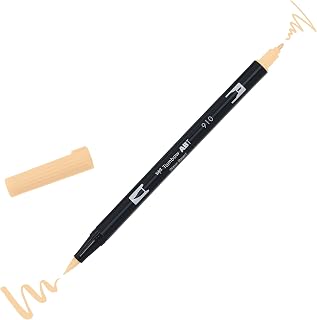
The Tombow ABT Dual Brush Pen, ABT-910, pen with two tips, perfect for hand lettering and bullet journaling, water colourable, opal is the pick for the journaler who wants a single, curated accent colour done to the highest possible standard. The Tombow ABT (Artist Brush Twin) series is one of the most respected brush-pen lines in the world of hand lettering, and the opal shade — a soft, cool blue-green with a slight grey undertone — sits perfectly in a pastel palette without fighting for attention.
The ABT has two tips: a flexible brush tip on one end and a fine bullet tip on the other. The brush tip is where Tombow earns its reputation — it has exceptional spring-back, maintaining its point through hours of lettering, and the flex range (from a hairline thin stroke to a bold 3–4mm downstroke) is wider than most pens at this tier. The water-colouring property is a real one: you can apply the ink to paper and then blend it with a damp brush or a water brush pen to create soft washed effects, giving your journal a more illustrated, painterly look without needing separate watercolours.
The honest tradeoff here is that buying individual Tombow ABT pens is expensive relative to buying a set of six or eight pens from another brand. If you want a full pastel palette from Tombow, the cost adds up. The rational approach is to identify your one or two most-used accent colours and invest in those individually, supplementing with a more affordable set for the rest. The opal shade in particular works as a versatile anchor tone in a pastel journal layout — it reads as a neutral against pinks and lavenders, which is a useful property.
Paper performance is excellent: the ABT leaves very little ghosting even on standard 80gsm journal paper, and bleed is minimal if you work at a normal pace. If you’ve been frustrated by cheaper brush pens that splay or scratch, the ABT tip will feel like a meaningful upgrade.
Best for Pale Pink Accents
The Tombow ABT Dual Brush Pen, ABT-800, pen with two tips, perfect for hand lettering and bullet journaling, water colourable, pale pink is the second individual Tombow ABT in this guide, and it earns its own section because pale pink is arguably the most requested single shade in pastel bullet journaling and because this particular pen pairs naturally with the opal ABT-910 above. The pale pink (ABT-800) is a clean, low-saturation blush that photographs beautifully in flat-lay journal shots and dries at a consistent tone without muddying.
All the same technical qualities of the Tombow ABT line apply: the superb brush tip, the water-colouring property, the fine bullet tip on the reverse. This pen is particularly effective for floral embellishments, soft shadow effects behind block lettering, and creating a warm anchor colour in a spread that also features cooler pastels like mint or sky blue. The combination of ABT-800 (pale pink) and ABT-910 (opal) as a two-pen purchase gives you a warm-cool pastel duo that covers the majority of header and accent needs in a typical journal layout.
The same cost consideration applies as with the opal pen — individual Tombow ABTs are a mid-to-premium purchase per pen. For many journalers, the smart approach is to buy these two Tombow singles for your most-used accent work, then use a set like the Zebra Mildliner or Faber-Castell Black Edition for everything else. That mix-and-match strategy gives you professional-grade performance where it matters most without the expense of an all-Tombow palette.
If you’re buying your very first brush pen and only want to commit to one, pale pink is a sensible starting point — it’s versatile, universally flattering in pastel layouts, and the Tombow ABT format will teach you proper brush control faster than a cheaper alternative because the tip gives honest feedback.
Best Calligraphy Set for Beginners
The Online Calli.Brush Handlettering Brush-Pens Pastel | Set of 5 brush pens | Calligraphy Set for Bullet Journal, Hand Lettering positions itself directly at people who are learning brush lettering rather than those who’ve already developed their hand. The five-pen pastel set from Online (the German stationery brand) uses water-based dye ink in a classic pastel range — soft peach, light mint, lilac, powder blue, and a pale yellow — that works particularly well together as a journaling palette because all five shades sit at a similar saturation level.
The brush tips here are slightly stiffer than the Tombow ABT, which is actually a positive for beginners: a stiffer tip is more forgiving when you’re still learning the pressure control required for thick-thin contrast. It’s easier to produce legible, attractive lettering on your first week with a medium-stiff tip than with a very flexible one. The pens are slim and lightweight, which suits extended journaling sessions where hand fatigue can become an issue.
The 4.4-star rating is honest — these are competent beginner-to-intermediate pens, not professional-grade tools. Experienced letterers will likely find the tip too stiff for the expressive calligraphy they’re after, and the ink isn’t water-reactive in the way the Tombow ABTs are, so blending techniques are more limited. On thinner journal paper there is some ghosting, though bleed-through is uncommon at normal writing speed. The set of five is also an unusual count — most sets come in six, so if you want to fill colour gaps you’ll need to buy additional pens individually.
For someone who has just bought their first bullet journal, has never used a brush pen before, and wants a pastel set that won’t punish early mistakes, this set is a considered, low-risk starting point. The forgiving tip and coherent colour palette make the learning curve gentler, and the water-based ink is easy to manage on most journal paper.
Best for Permanent, Smudge-Proof Notes
The Sharpie Permanent Markers | Fine Point for Bold Details | Pastel Colours | 4 Marker Pens is an outlier in this guide because it’s not a brush pen — it’s a fine-point permanent marker. It earns its place because there is a genuine use case in bullet journaling for a permanent pastel marker that won’t smudge, won’t reactivate with water, and won’t ghost through the page even after you’ve handled the spread repeatedly. Sharpies use a solvent-based ink that bonds to the paper surface quickly and permanently, which makes them the most durable option here for elements you absolutely cannot afford to smear.
The pastel range — pink, blue, purple, and green — is softer than Sharpie’s standard bright colours, though it’s worth being clear: these are not the same chalky-soft pastels as the water-based brush pens above. They dry to a slightly more saturated finish. For labelling, underlining, or creating durable colour-coded borders and dividers, they’re excellent. For delicate brush lettering headers, they’re not the right tool — the fine point produces a uniform line width with no thick-thin variation.
The 4.7-star rating is the highest in this guide and reflects how reliably these perform at what they do. On most journal paper they don’t bleed, and the permanent ink means a coffee drip or a damp hand won’t destroy your work. They also work on surfaces beyond paper — useful if your journaling setup extends to sticky notes, index tabs, or labelling storage boxes with the same pastel palette. The four-pen set is small, and if you want additional colours you’ll need to source them separately, but as a permanent-ink complement to your brush lettering pens, four shades is often enough to establish a colour-coding system.
Think of this set as supporting infrastructure for your journal rather than your primary lettering tool. Use the brush pens for headers and decorative lettering; use these Sharpies for the elements that need to stay clean and permanent regardless of how the journal is handled.
What to Look For When Buying Pastel Brush Lettering Markers
- Tip type and firmness: Nylon brush tips come in a spectrum from very soft (high flex, expressive, harder to control) to firm (more like a felt, easier for beginners). For bullet journaling on most paper weights, a medium-firm tip tends to perform best — it holds its point, springs back reliably, and doesn’t require years of practice to produce consistent letterforms. Very soft tips are better suited to practice paper and dedicated calligraphy sessions.
- Ink chemistry — water-based vs. alcohol-based: Water-based ink is the safer default for journal paper (less bleed-through, easier to manage, compatible with layering water-reactive effects). Alcohol-based ink blends more smoothly between colours and dries faster, making it better for illustrated elements and large colour fills, but it requires heavier paper (ideally 100gsm+) and strict capping discipline. Don’t mix the two in a blending technique — they behave entirely differently.
- True pastel output: A pen marketed as “pastel” may dry significantly more saturated than its cap colour suggests. Look for descriptions like “water-based dye ink”, “soft” or “chalky” finish, or check reviewer photos from other journalers (Instagram and Pinterest searches for the pen name will show real results). Genuine pastels have white pigment or low dye concentration blended in — that’s what creates the soft, low-contrast finish.
- Paper compatibility: Most bullet journals use 80–100gsm paper. Before committing a full spread, always test a new pen on a spare page or the back cover. Check both the front of the page (how the colour looks) and the reverse (ghosting and bleed-through). A pen that bleeds on 80gsm but not 100gsm may still be usable in your journal if you adjust how you plan your layouts.
- Dual tip utility: Many of the best brush pens include a second tip — usually a bullet or fine liner. For bullet journaling specifically, a dual-tip pen earns its keep: you can letter with the brush end and annotate or rule with the fine end without swapping pens. This is a practical convenience that adds real value in a journaling context.
- Colour coherence within a set: A set of six pastels that includes one rogue neon-adjacent shade will unbalance your entire palette. When evaluating a set, look at all six shades together and ask whether they sit at a similar saturation and brightness level. Sets from professional art-material brands (Faber-Castell, Winsor & Newton, Tombow) tend to have more rigorously matched palettes than generic stationery sets.
- Cap-off time and dry-out resistance: In practice, you will put a pen down mid-session. A pen that requires capping every 15 seconds is infuriating to use in a journal. Look for mentions of “long cap-off time” or test this yourself by leaving the pen uncapped for 30 seconds before drawing a stroke — if the tip starts, it’s acceptable for journaling use.
Verdict
For the majority of UK bullet journalers looking for a pastel brush lettering set that covers all the bases — coherent colour palette, practical dual tips, beginner-accessible brush tip, and solid paper performance — the Zebra Pen Journaling & Lettering Stationery Set (18 Pack) is the pick we’d reach for first. The combination of Mildliner brush pens and matching highlighters in a single purchase solves the palette-consistency problem that trips up most new journalers, the tip quality is honest and forgiving, and the pastel tones are genuinely soft rather than just diluted brights.
If you’ve already got a journaling system and want to invest specifically in your lettering quality, upgrade to the Faber-Castell Brush Pen Black Edition Pastel set for its superior tip resilience, or add one or two individual Tombow ABT pens in your most-used accent colours for professional-grade brush control. The Zebra set gets you started well; the Faber-Castell and Tombow picks take your lettering further once the fundamentals are there.
We were not paid to feature any specific product in this guide. All opinions are independent and based on publicly available specifications, verified buyer feedback patterns, and category research.
Quick Comparison Table





FAQ
Do brush lettering markers bleed through bullet journal paper?
It depends on the ink type and the paper weight. Water-based brush pens on 90–100gsm paper typically produce mild ghosting on the reverse but rarely full bleed-through. Alcohol-based markers are more likely to bleed, particularly on 80gsm paper. Always test a new pen on a spare page in your journal before using it on a planned spread.
Are alcohol-based or water-based markers better for pastel journaling?
Water-based markers are the safer starting point for most journalers: they’re more forgiving on standard journal paper, dry at a soft pastel tone, and allow water-reactive blending effects. Alcohol-based markers offer smoother blending between colours and faster drying, but require heavier paper and more careful cap discipline. Unless you’re doing a lot of illustrated blending work, water-based is the practical default.
Can I mix brush pens from different brands in the same journal?
Yes, and many journalers do. The main thing to watch is colour consistency — make sure the pastels from different brands sit at a similar saturation level so your spreads look cohesive. Technically, you should avoid blending water-based and alcohol-based inks together on the page, but using them in separate areas of a spread or for different purposes (lettering vs. highlighting) is perfectly fine.
How do I stop my brush tip from going floppy?
Floppy tips are usually caused by excess downward pressure rather than a faulty pen. Brush pen lettering requires more pull than push — let the brush flex on downstrokes by dragging the pen at an angle rather than pressing straight down. If the tip has permanently deformed, it’s often recoverable by re-capping the pen overnight; the nylon tip can sometimes spring back to its original shape when not under pressure.
What paper weight do I need for brush pens in a bullet journal?
For water-based brush pens, 80gsm is workable but 90–100gsm gives noticeably better results — less ghosting, crisper edges on brush strokes, and more consistent colour payoff. For alcohol-based markers, 100gsm is the practical minimum to avoid bleed-through. If you’re buying a new journal specifically to use with brush pens, look for journals marketed for fountain pens or markers, which tend to use heavier stock.
How many pastel shades do I actually need in a bullet journal?
Most journalers find that four to six shades is enough for a coherent, flexible palette. A warm tone (blush or peach), a cool tone (mint or sky blue), a neutral (lavender or soft yellow), and one or two accent colours covers the majority of colour-coding and decorative needs. Buying a large set upfront often leads to underusing most shades — start with a focused six-pen set and add individual shades as genuine gaps in your palette become apparent.