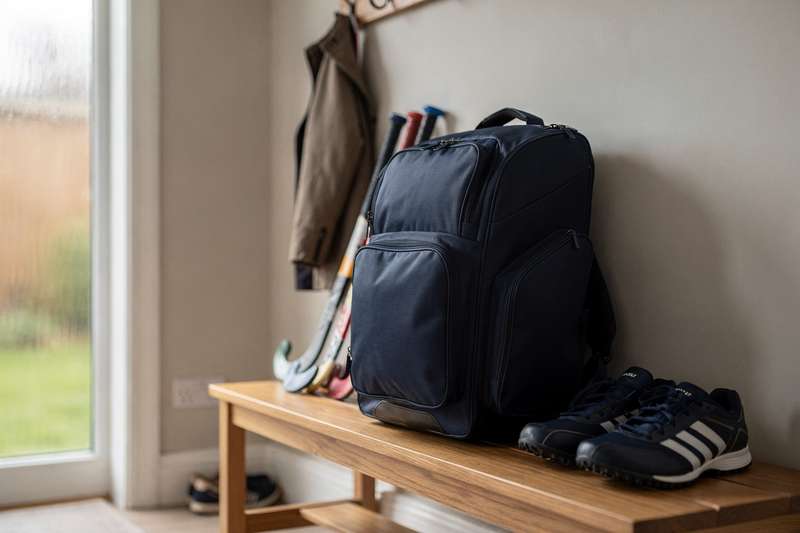
You’ve just finished a muddy Tuesday evening training session, your kit is bundled under one arm, your stick is tucked under the other, and you’re fumbling with your car keys in the rain. Sound familiar? For field hockey players at clubs across the UK — from grassroots juniors in Surrey to veteran ladies’ club players in Yorkshire — the humble hockey bag is one of those purchases that either quietly makes your life easier or quietly drives you to distraction every single week. Yet so many players buy the wrong one, or worse, try to make do with an old gym bag that was never designed for hockey at all.
The problems stack up fast. A bag that’s too small means you’re forever leaving shin pads behind or cramming your stick in at an awkward angle. A bag with no ventilation turns into a biohazard by Thursday. One without a dedicated stick sleeve means your carbon-fibre stick rattles around loose and ends up scratched. And if you play regularly in the UK winter, waterproofing quickly stops being a luxury and becomes a survival tool. This guide cuts through the noise and focuses specifically on field hockey bags — the ones built for the actual kit you carry to park pitches and leisure centre astros across Britain.
How We Evaluated These Picks
Every bag on this list was assessed against the specific demands of UK club hockey — not ice hockey, not American team sports, not gym use. The criteria were: how well the bag handles a full field hockey kit (stick, shin guards, mouth guard, boots, astro turf shoes, gloves, and gum shield pouch); whether ventilation is adequate to stop kit festering between sessions; how robust the zips and stitching are given the battering bags take on the sideline; whether the bag is practical for carrying by hand, over the shoulder, or as a backpack; and what verified buyers in the UK are actually saying in their reviews. We also considered how appropriate each bag is for different player types — juniors, adults, those who need stick-only storage, and those who carry everything including the kitchen sink.
Where review counts are low, that’s noted honestly. The field hockey bag category on Amazon UK is smaller than, say, football or cricket — so some solid products simply haven’t accumulated hundreds of reviews yet. That’s a limitation of the data, not the product.
Best All-Round Field Hockey Bag
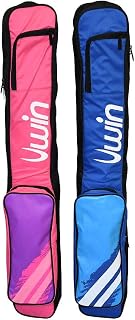
The Uwin Hockey Bag is the most versatile option in this guide and the one that best reflects what most UK club players actually need. It holds multiple sticks in a dedicated sleeve, has extra zip pockets for smaller items, and comes with a carry strap — meaning you can sling it over your shoulder rather than hugging it to your chest. With 94 verified ratings and a score of 4.6 out of 5, this is easily the most-reviewed field hockey bag in the live data, and the feedback pattern is consistent: players mention it holds everything comfortably and that the build quality holds up through a full season.
What separates this bag from basic alternatives is the multi-stick capacity. If you’re someone who brings a primary stick and a spare — common among players who take their hockey seriously — you’re not just buying a carry bag, you’re buying peace of mind that your second stick isn’t rolling around loose in the back of an estate car. The extra pockets are useful for keeping small items like shin guard stays, grip tape, or a snack from disappearing into the main compartment.
The carry strap does its job, though if you’re also hauling boots and a full change of kit, your shoulder will feel it after a long walk from the car park. There’s no backpack harness system, which is a genuine limitation for junior players or anyone with a long trek to the pitch. That said, for most adult players driving to home games and occasional aways, this is a practical and well-priced bag that holds up to regular use.
It’s available in blue and pink colourways, which means both male and female players can find a version that doesn’t feel like a hand-me-down. The Uwin bag is the one to start with if you want a single bag that covers the full base of field hockey kit carrying — sticks included — without overcomplicating the decision.
Best Budget Stick Bag
The GRAYS G50 Hockey Stick Bag (Black/Pink) is the pick for players who want a dedicated stick-focused bag rather than a full kit carrier. With 42 reviews averaging 4.3 out of 5, this is a well-tested product from one of the most trusted names in UK field hockey. GRAYS has been making hockey equipment since the 1800s, and their kit bags reflect that heritage — practical, properly proportioned for actual hockey sticks, and built to a quality you wouldn’t expect at this price tier.
This bag is designed specifically to carry sticks safely. If you’ve ever tried to fit a 36-inch hockey stick into a generic sports bag or a backpack, you’ll know it either doesn’t fit, or it fits so awkwardly that something always catches on the zip. The G50 solves this by giving the stick its own protected space. For players who travel light — especially juniors who are dropped off at training and just need their stick, shin guards, and mouth guard — this is a smart, focused choice.
The Black/Pink colourway is the most-reviewed variant in the live data. If you prefer a different look, the GRAYS G50 Hockey Stick Bag (Black/Blue) is the same bag in a Blue colourway with 26 reviews at an even higher 4.8 out of 5 — suggesting players are happy with both versions. For the purposes of this guide, we’re treating the Pink and Blue variants as different colourways of the same product line; if you want the stick bag with the highest individual rating, go for the Black/Blue version. But both are solid.
Where the G50 is limited is straightforward: it’s a stick bag, not a full-kit bag. If you also need to carry boots, shin pads, gloves, and a gum shield, you’ll need a second bag alongside it. For many players, this is actually fine — they already have a sports holdall for the rest — but if you want one bag for everything, look at the Uwin or a Kookaburra option instead. For what it is — a properly designed, brand-name stick bag at an accessible price — the G50 earns its position.
Best Budget Stick Bag (Black/Blue Colourway)
The GRAYS G50 Hockey Stick Bag (Black/Blue) is, as noted above, a colour variant of the same G50 model. At 4.8 out of 5 from 26 reviewers, this colourway actually outperforms the Pink version on rating — which may reflect its appeal to a slightly broader buyer base. If you’re buying for a male player, a club where Blue/Black is a kit colour, or simply prefer the look, this is the version to go for.
The practical reality of both G50 variants is the same: you get a properly sized stick sleeve from a brand that understands field hockey dimensions, solid zips, and the GRAYS name behind it should anything go wrong. Reviewers frequently mention gifting this bag to juniors who are starting out at club hockey — it’s proportioned correctly for junior sticks too, which is a detail that matters when cheaper alternatives are often sized for adult sticks only.
The bag isn’t padded in the manner of a dedicated stick case, so it won’t protect a carbon stick from serious impact. If you’re transporting expensive composite sticks in luggage for an overseas tour, look for a hardshell case. But for weekly training and matchday use — car boot, changing room floor, sideline — the G50 is more than adequate. It’s a clean, straightforward product that does exactly what it says.
Best Lightweight Everyday Carry
The Kookaburra Octane Hockey Bag positions itself as a slim, lightweight option designed for players who carry only the essentials. With 27 reviews at 4.3 out of 5, it’s the most-reviewed Kookaburra bag in the live data, and buyer feedback highlights that it’s genuinely smaller and lighter than most field hockey bags — which is either a feature or a drawback depending on how much kit you haul.
Kookaburra, like GRAYS, is a well-established name in field hockey. Their Octane bag reflects a design philosophy of stripping away bulk: you get what you need and nothing you don’t. For a player who cycles or uses public transport to get to training — scenarios that are genuinely common in UK club hockey — a lighter, more compact bag is a practical advantage that a large holdall simply can’t offer.
The trade-off is obvious but worth spelling out clearly: if your kit includes a full set of shin guards, goalkeeper gloves, two pairs of astros, and a full change of clothing, this bag will not close. It’s designed for the essentials — stick, shin pads, mouth guard, gloves — and it delivers on that. Think of it as the everyday training bag you grab when you’re going straight from work to a midweek session, not the bag you pack for a two-day tournament.
Ventilation on slim bags is generally adequate for shorter storage periods, but as with all sports bags, getting your kit out and airing it after training is still the right habit regardless of what you carry it in. The Octane is a well-made, affordable option for players who’ve already decided they don’t need to carry everything every time — and there are more of those players than the hockey bag industry tends to cater for.
Note: a second colour variant of the Kookaburra Octane (ASIN B0FHHW1Q3D) also appears in the live data with the same review count and rating. That variant’s slightly different listing price reflects a different colourway — both are the same bag. For this section we’re directing you to the primary listing; check both if colour matters to you.
Best for Style-Conscious Players
The Kookaburra Vex Hockey Bag – Marine/Pink is the pick for players who want their kit bag to stand out on the sideline. It carries a 5.0 rating from 2 reviewers — so take that perfect score with appropriate caution, as that’s not enough volume to draw firm conclusions — but it comes from a credible brand with a well-established field hockey heritage, and the Marine/Pink colourway has genuine visual appeal that other bags in this category don’t offer.
The Vex sits between the Octane and a full kit holdall in terms of capacity. Kookaburra describes it as a compact storage bag, which means it’s larger than the Octane but still prioritises portability over maximum capacity. For juniors playing their first season of club hockey who haven’t yet accumulated the layers of kit that veteran players carry, this is a well-proportioned starting point — and the colourway makes it easy to spot in a changing room full of generic black bags.
Honestly, with only 2 reviews, recommending this bag with the same confidence as the Uwin or GRAYS G50 wouldn’t be fair. What you’re buying here is the Kookaburra brand quality applied to a fresh product line — if you’ve used Kookaburra kit before and trust the brand, that’s a reasonable basis for confidence. If you want to play it safe and buy something with a longer track record, go for the Octane instead.
That said, this bag has no right colourway competitor in this guide — Marine/Pink is distinctive in a category that’s awash with black and grey. If aesthetics matter to you (and for junior players especially, they often do), this is the one.
Best for Players Who Want Maximum Capacity
The Kookaburra Vex Hockey Bag (in its primary colourway) carries the same 5.0 rating from 1 reviewer — again, a very small sample size that needs to be treated honestly. It’s listed separately from the Marine/Pink variant above and appears to be the standard colourway version of the same Vex model. With only one review, this is the pick for players who specifically want that Vex model in a different colourway from the Marine/Pink option, or who find the primary listing at a more attractive price.
The practical case for any Kookaburra Vex bag is the same: it’s a field hockey-specific product from an established brand that understands the sport. The capacity sits above the Octane, making it a reasonable step up for players who found the Octane too tight but don’t need the full multi-pocket carry capacity of the Uwin. Think of it as a middle ground — compact enough to carry comfortably on public transport, spacious enough to fit kit for a full match without forcing the zip.
The single-review limitation is the honest caveat here. If you’re comfortable buying a new product from a brand you already trust, this is a reasonable purchase. If you want to buy with the confidence of dozens of verified reviews, the Uwin or the GRAYS G50 are safer choices. But the Kookaburra name in field hockey carries real weight — this isn’t an unknown brand taking a punt on a new design.
What to Look For When Buying a Hockey Bag
- Stick compatibility: Check whether the bag has a dedicated stick sleeve or is long enough to accommodate your stick length (typically 36–37 inches for an adult stick). A bag that doesn’t fit your stick properly means it either hangs out of the top or has to go in a separate carrier every time.
- Capacity for your actual kit: Be honest about what you carry. Beginners may just need room for shin pads, a mouth guard, and a stick. Club players doing home and away fixtures need room for two pairs of shoes (astros and cleats or trainers), kit, gloves, shin guards, and a change of clothes. Junior players often carry less — but parents carrying kit for multiple children need more. Choose accordingly.
- Ventilation: Wet hockey kit left in an unventilated bag quickly starts to smell, and in colder UK conditions, it won’t dry between Tuesday training and Saturday’s match. Look for mesh panels or ventilated sections that allow airflow. Even the best ventilation doesn’t replace laying kit out to dry after use, but it does meaningfully slow the process of the bag becoming unpleasant.
- Carry options: Different scenarios call for different carry styles. A shoulder strap is fine for short walks from the car. Players commuting by train or cycling to training will benefit from a backpack-style harness. A carry handle is useful for lifting the bag in and out of a car boot. Ideally, your bag has at least two of these options.
- Zip and seam quality: Field hockey bags live a tough life — dragged across changing room floors, thrown on wet sidelines, stuffed into car boots. Cheap zips fail first. Look for bags from brands that specifically design field hockey equipment (GRAYS, Kookaburra, Uwin are all represented here) rather than generic sports bags where the hockey compatibility is incidental.
- Water resistance: UK pitches are wet. UK sidelines are wetter. A bag that soaks through after five minutes in the rain will leave your kit damp before you’ve even put it on. This doesn’t mean you need a waterproof bag — but some degree of water resistance on the main body material is sensible for the British climate.
- Brand reliability and warranty: Bags from established field hockey brands like GRAYS and Kookaburra are generally easier to get support from if something goes wrong. For a bag you intend to use weekly for years, this matters more than it does for a one-off purchase.
Verdict
For the majority of UK club hockey players — adults playing at a local or regional level, carrying a full set of kit to weekly training and weekend matches — the Uwin Hockey Bag is the most practical and well-tested choice in this guide. It has the highest review count by a significant margin (94 verified ratings), a strong 4.6 average, dedicated stick capacity, extra pockets for small items, and a carry strap. It covers the real requirements of the sport rather than being a generic holdall repurposed for hockey.
If your priority is a stick-focused bag from a heritage field hockey brand, the GRAYS G50 in either colour is the most straightforward option — particularly for juniors or players who already have a suitable holdall for their clothing and footwear. If you’re a lighter traveller who commutes to training and wants something genuinely slim and packable, the Kookaburra Octane makes a sensible case. But for all-round daily use, the Uwin is the starting point.
We were not paid to feature any specific product in this guide. All opinions are independent and based on publicly available specifications, verified buyer feedback patterns, and category research.
Quick Comparison Table



FAQ
What size hockey bag do I need for a full set of field hockey kit?
Most adult field hockey players find a bag in the 50–70 litre range sufficient for a full matchday kit — shin guards, shoes, gloves, mouth guard, and a change of clothes. If you’re also carrying two pairs of footwear or kit for a touring weekend, you’ll want towards the larger end of that range. Junior players generally need less, but parents managing kit for two children may need a larger holdall altogether.
Can I use an ice hockey bag for field hockey?
Technically yes, but it’s rarely ideal. Ice hockey bags are designed around skates, shoulder pads, and helmets — they’re often very large and heavy, and the internal organisation doesn’t suit field hockey kit. You’ll also find that ice hockey-specific bags often look out of place and feel over-engineered for what field hockey players actually carry. A bag designed specifically for field hockey will fit your stick better and usually has more appropriate internal pockets for the kit you use.
How do I stop my hockey bag from smelling?
The most effective step is to take your kit out of the bag immediately after training or a match and lay it flat to air dry — never leave damp kit sealed inside a bag overnight. A mesh laundry bag inside your hockey bag can help you air smaller items (gloves, shin guards) more easily. Some players use sports deodoriser sprays inside the bag itself. Choosing a bag with ventilation panels helps, but it doesn’t substitute for airing kit properly.
Are Kookaburra hockey bags good quality?
Kookaburra is one of the most established names in field hockey equipment globally, and their bags reflect that pedigree — they’re designed specifically for the sport rather than repurposed from a general sports range. The Octane and Vex models available on Amazon UK are relatively new lines, so review volumes are still building, but the brand’s track record in sticks, balls, and protective equipment gives reasonable grounds for confidence in their bag range.
Is a stick bag or a full kit bag better for a junior player?
It depends on how much kit the junior carries independently. Very young juniors (under-10s at grassroots hockey) often travel light and a dedicated stick bag like the GRAYS G50 may be all they need, with a parent carrying the rest. Older juniors playing regular fixtures — under-14 and up — typically benefit from a full kit bag like the Uwin that can carry everything they need independently. If in doubt, a kit bag with a stick sleeve is more future-proof as the junior advances and accumulates more equipment.
What’s the difference between a hockey bag and a regular sports holdall?
The key difference is stick compatibility. Field hockey sticks are 35–37 inches long, and most general-purpose holdalls don’t have a sleeve or sufficient length to carry a stick securely without it poking out awkwardly. Hockey-specific bags are also shaped and compartmentalised to separate wet or muddy items (boots, shin guards) from kit, and they’re built to withstand the specific abuse of sideline and changing room use. If budget is very tight, a long holdall can work short-term, but a proper hockey bag quickly proves its value.