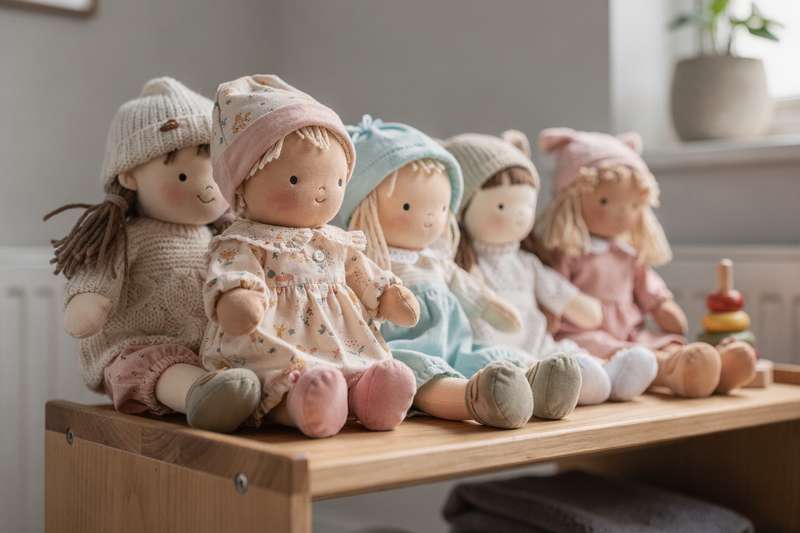
You’ve already done the sensible thing: you avoided the hard plastic doll with the rigid arms that your child immediately dropped and never picked up again. You’ve tried the novelty singing toy that ran through its battery in a week and became a source of household irritation. Now you’re here, staring at a screen full of soft dolls, wondering which one will actually become your child’s cherished companion — the one that gets dragged everywhere, tucked into bed every night, and genuinely loved rather than just tolerated. That search is harder than it sounds.
Soft dolls occupy a deceptively broad category. At one end you have simple cuddly ragdolls sized for a newborn’s hands; at the other, interactive plush babies with sounds, feeding accessories, and outfits. The wrong pick doesn’t just go unplayed with — it can frustrate a toddler who wanted something they could dress, or overwhelm a baby who just wanted something soft to hold. And because soft dolls often get chewed, dragged through mud, and shoved into washing machines, material quality and washability matter in a way they rarely do for shelf-display toys.
This guide works through seven distinct picks available on amazon.co.uk right now, covering everything from classic nurturing babies with interactive sounds to Montessori-style dressing toys and plush unicorn-doll hybrids. Each one is genuinely different — different age targets, different play patterns, different price tiers. By the end, you should have a clear idea of which one fits your child, your budget, and your laundry tolerance.
How We Chose These Picks
The picks in this guide were evaluated against five criteria: age-appropriateness (manufacturer guidance versus realistic developmental fit), material quality and washability (softness of fill, fabric type, and whether the listing confirms machine-washability), play value longevity (whether the toy grows with the child or quickly exhausts its appeal), safety profile (absence of small parts for younger age groups, secure stitching, non-toxic materials), and verified buyer feedback patterns — where available, we reviewed ratings and written feedback from UK buyers to identify recurring complaints and genuine strengths. Products with zero reviews were assessed on specifications and brand reputation alone, and that is noted where relevant. We only included products that are genuinely soft-bodied or soft-filled; hard-bodied dolls with merely a cloth torso were excluded.
Best Interactive Nurturing Doll: John Adams Tiny Tears Teeny Baby (with Sounds)
The John Adams Tiny Tears Teeny Baby with 16 interactive sounds is the go-to pick if you want a soft doll that does something beyond simply existing. Tiny Tears is genuinely one of the most recognisable doll brands in the UK — it has been in British toy boxes for decades — and this 30cm version brings that heritage into a format sized right for toddlers aged around 10 months and upwards.
The doll’s body is soft and squishable, which makes it genuinely huggable rather than just nominally plush. What distinguishes this version from its sibling listing (more on that below) is the 16 interactive sounds: crying, giggling, cooing, and feeding cues that respond to how your child interacts with the doll. For children aged roughly 18 months to four years, this kind of reactive feedback is genuinely captivating — it turns the doll from a passive object into something that feels like it needs care. That nurturing loop — feed it, hear it coo, put it to sleep — is exactly the kind of role-play that supports early social-emotional development.
With 661 verified reviews and a rating of 4.6 out of 5, this is one of the most confidently backed picks in this guide. Buyers consistently praise the sound quality (it’s not tinny or jarring), the doll’s size (compact enough for small hands but substantial enough to feel like a proper baby), and the build quality of the body. The most common complaint is that the sound activation can be slightly inconsistent — occasionally a squeeze doesn’t trigger the expected response — but this appears to be a minor frustration rather than a widespread fault.
One thing to be aware of: because this version includes electronic components for the sound function, you’ll want to check the washing instructions carefully before any full submersion. Spot cleaning is the safer route for the sound-enabled version, which is a genuine tradeoff compared to the simpler ragdoll picks in this guide. If your child is a heavy drooler or a dedicated mud-magnet, that’s worth factoring in. But for a child who will love the interactivity and treat the doll with slightly more care, this is a strong, well-established choice.
Best Simple Nurturing Baby (Budget-Friendly): John Adams Tiny Tears Teeny Baby (Classic)
If the sound-enabled version sounds like more complexity than you need — or if your child is younger and you’d rather avoid batteries entirely — the John Adams Tiny Tears Teeny Baby (classic soft-bodied version) gives you the same huggable 30cm Tiny Tears experience without the electronic layer. Same trusted brand, same soft body, same age guidance of 10 months and up — but stripped back to pure tactile play.
At 661 reviews and a 4.6-star rating (shared with its sound-enabled sibling, as these are variants in the same product family), buyer confidence is just as high. This version tends to appeal to parents who want something uncomplicated: a soft, well-proportioned baby doll that a very young child can carry, cuddle, and incorporate into early imaginative play without needing any prompting from beeps or coos. There’s something to be said for a doll that’s entirely driven by the child’s imagination rather than by pre-programmed responses.
Because there are no electronic components, this version is also more straightforward to clean — always check the specific care label, but the absence of circuitry removes one of the main barriers to a proper wash. For parents who know their toddler will be taking this doll on muddy walks, to beach trips, or to nursery and back, that practical advantage is real. It also makes a slightly lower-key gift — ideal if you’re buying for a baby shower or a first birthday where you’re not sure how toy-forward the parents want to go.
The tradeoff is simple: if your child is the kind of toddler who responds brilliantly to cause-and-effect toys and needs something to sustain interest beyond the first week, the sound-enabled version will hold attention longer. But if you want a classic, tactile companion doll that a child can project onto completely, this no-frills version is a solid, trustworthy pick.
Best for Big Sister Gifting: 35cm Best Big Sister Sophie Soft Cuddly Plush Doll
The 35cm Best Big Sister Sophie Soft Cuddly Plush Doll occupies a slightly different niche from the other picks here — it’s designed as much as a transition gift as it is a play doll. When a new sibling arrives, older children often feel displaced, and a doll framed around the idea of being a “big sister” can genuinely ease that adjustment. It’s a thoughtful angle that many parents specifically seek out.
At 35cm, Sophie is larger than the Tiny Tears options, which gives her a more substantial, huggable presence. The soft cuddly plush construction is designed for comfort first — this is a doll you’d want to sleep with as much as play with. The pink colourway and rag-doll aesthetic give it a classic, appealing look that sits comfortably in the broader tradition of British soft dolls. With 52 reviews and a 4.7-star rating, early buyer feedback is positive, though the relatively lower review count means there’s less data to draw firm conclusions from compared to the Tiny Tears picks.
Buyers who have purchased this specifically as a “new baby” gift for older siblings report that children received it well — the named framing (“Big Sister Sophie”) makes it feel personal and intentional rather than a generic consolation prize. That said, as a pure play doll divorced from the gifting context, it’s a straightforward cuddly companion rather than a toy with deep interactive or educational features. If you’re buying for a child who already has plenty of dolls and you want something functionally new, the Montessori dressing doll or the unicorn doll further down this guide might be more stimulating. But as a heartfelt, well-made gift for a specific occasion, Sophie earns her place.
Best Montessori Fine Motor Doll: hahaland 2-in-1 Montessori Dressing Doll
The hahaland 2-in-1 Montessori Dressing Doll takes a genuinely different approach to what a soft doll can be. Rather than focusing on cuddle-ability or nurturing play, this is an educational toy at heart — a cloth unicorn and dinosaur buddy designed specifically to help children aged one to three develop fine motor skills through zips, buttons, and fastenings built into the doll’s body and clothing.
With 991 reviews and a 4.7-star rating, this is one of the most confidently reviewed products in this guide, and the feedback tells a consistent story: parents love that children engage with the fastening challenges rather than abandoning the toy after five minutes, and the soft construction means it doubles as a cuddly companion when the educational play is done. The 2-in-1 format — unicorn on one side, dinosaur on the other — also gives it replay value that a single-character doll doesn’t have.
The Montessori framing is genuine here: fine motor development at this age (roughly 12 months to 36 months) is genuinely supported by practice with zips, buttons, and poppers, and embedding that practice in a character toy makes it feel like play rather than an exercise. That’s a real advantage over standalone fine motor skill boards, which children often treat as puzzles to complete once and then ignore.
The tradeoff is that this isn’t a classic nurturing doll — it won’t scratch the itch for a child who wants to put a baby to sleep or feed it a bottle. And the unicorn/dinosaur aesthetic, while charming for many children, is very different from a realistic baby doll, so it won’t suit every parent’s vision of what a first doll should look like. But for parents who want developmental value alongside cuddly comfort, this is one of the most thoughtfully designed options in this guide.
Best Dress-Up Plush Doll: hahaland Unicorns Toys for Girls Ballerina Doll
The hahaland Unicorns Toys for Girls Ballerina Doll Plush Toys with 3 Outfits & Cloud Bag targets an older age group than most of the other picks here — this one is aimed at children aged three and up, and the more complex dressing element reflects that. You get a soft unicorn-themed doll, three complete outfit changes, and a cloud-shaped bag to store the accessories, which immediately positions this as a gift with perceived value well above its price point.
At 991 reviews and 4.7 stars — again a strongly reviewed product — buyer feedback highlights the outfit quality as a genuine strength. The clothes are soft, fiddly enough to be satisfying for small hands to manage but not so small as to be a choking risk (for the stated age group), and the range of outfits means children can engage in extended dress-up sequences rather than dressing the doll once and moving on. The cloud bag is a nice practical touch: it keeps accessories together, which parents tend to appreciate enormously when they’re vacuuming up tiny accessories at 10pm.
The unicorn aesthetic is committed throughout — this isn’t a generic doll that happens to have a unicorn outfit; the character itself is unicorn-themed, which will delight children in that specific phase of unicorn enthusiasm (which, as many parents know, can last years). If your child is not particularly into unicorns, the aesthetic may feel limiting. And as with the Montessori dressing doll from the same brand, the fantasy-character framing means this doesn’t replicate the nurturing-baby experience of the Tiny Tears or Annabell picks.
For a third birthday gift, a Christmas present, or a reward for a child who already has a nurturing baby doll and wants something different, this is a genuinely strong option with clear play longevity.
Best Classic Ragdoll: Adorable Plush Soft Baby Girl Dolls Cuddly Ragdoll Princess Doll
The Adorable Plush Soft Baby Girl Dolls Cuddly Ragdoll Princess Doll with Removable Dress Hat sits firmly in the traditional ragdoll tradition — soft-filled body, embroidered or stitched facial features, removable dress and hat, and a gentle, old-fashioned aesthetic that many parents find appealing precisely because it doesn’t shout or flash or sing. With 245 reviews and a 4.7-star rating, this has built a solid reputation among buyers looking for exactly this kind of uncomplicated classic.
The removable dress and hat are a meaningful feature at this level: they introduce gentle dress-up play without the complexity of multiple outfits and accessories, making this suitable for a slightly younger age group than the hahaland ballerina doll. The doll is described as a sleeping/cuddling companion as much as an active play toy, and buyers confirm this — many note that it became a bedtime comfort object, which is arguably the highest praise a soft doll can receive.
The main consideration here is that “adorable plush” type listings without a strong brand name can vary in consistent quality across production runs. The review pattern for this product is positive, but with 245 reviews rather than 600-plus, the data pool is smaller. Most complaints, where they appear, relate to the removable clothing being slightly tricky to put back on — which is a feature of nearly all dolls with clothing rather than a specific fault. The doll itself — the body, fill, and facial features — attracts consistent praise for softness and appearance.
If you’re looking for a timeless-looking ragdoll gift that a child can cuddle, sleep with, and gradually learn to dress, and you don’t need interactivity or educational framing, this is the most classically styled pick in the guide.
Best Premium Soft Baby Doll: Baby Annabell Anna Soft 36cm Baby Doll
The Baby Annabell Anna Soft 36cm Baby Doll with Sleeping Eyes is the premium choice in this guide, and it earns that positioning through the details. Baby Annabell is a well-established brand in the UK baby doll market — known for realistic proportions, quality soft bodies, and accessories that feel considered rather than thrown in. This version comes with a bottle, hat, and romper, and features closing eyes that respond when the doll is laid down to sleep.
At 67 reviews and a 4.8-star rating, this is the newest product in the guide with the fewest reviews — but that 4.8 average from its early buyers is the highest rating of any pick here, and it comes from a brand with a long track record. The sleeping eyes feature is worth highlighting: for a toddler who wants to genuinely put their baby “to bed,” a doll whose eyes close when laid down adds a layer of realism that dramatically extends the bedtime role-play scenario. It’s a small mechanical detail with a disproportionately large impact on imaginative play.
The 36cm size puts it in the same territory as a realistic newborn, which makes it feel appropriately baby-like for nurturing play. The included bottle and romper are well-made — they don’t feel like afterthoughts — and the hat gives the doll a complete, gift-ready presentation out of the box. This is the pick you’d choose if you’re buying for a child who is genuinely invested in baby role-play and will notice and care about the realistic details.
The tradeoffs are real: this sits at a higher price point than the Tiny Tears classic or the ragdoll picks, and the relatively small review count means there’s less community data to validate long-term durability. The sleeping eyes mechanism, while delightful, is also an additional moving part — something to check periodically. For a child who will adore the realism and a parent who wants a gift that feels considered and premium, though, Baby Annabell is the standout pick for nurturing play.
What to Look for When Buying a Soft Doll
- Age-appropriate size and safety: Newborns and young babies need very small, lightweight dolls with no detachable parts whatsoever — no button eyes, no removable clothing, no accessories. As children approach 18 months to two years, slightly larger dolls with simple removable clothing become appropriate. Always check the manufacturer’s age guidance and look specifically for safety marks on UK/EU sold products.
- Washability: Soft dolls get messy. Before buying, confirm whether the doll is machine-washable (and at what temperature), surface-clean only, or has electronic components that prevent wet cleaning. A doll that can’t be properly washed will either become unhygienic or get retired early.
- Fill and fabric quality: The fill should be dense enough that the doll holds its shape after repeated hugging, but soft enough to remain genuinely cuddly. Cheap filling compresses and clumps over time. Fabric should be smooth, non-scratchy, and free of loose threads that could present a hazard for very young children.
- Interactive features versus simplicity: Sounds, closing eyes, and feeding functions can extend play value significantly for toddlers aged 18 months to four years — but they add cost, require batteries, and complicate washing. For babies under 12 months, simple and tactile is almost always better than interactive.
- Representation and diversity: A child benefits from having dolls that reflect both their own appearance and the diversity of the world around them. When choosing, consider skin tone, hair type, and character design — many of the best soft doll ranges offer multiple versions with different appearances.
- Play style fit: Match the doll type to how your child actually plays. A child who loves dress-up needs a doll with outfits. A child who nurtures everything needs a realistic baby with accessories. A child who just wants something soft to sleep with needs a simple, beautifully made companion. Buying the wrong type — however high quality — means the doll gets ignored.
- Brand and warranty: Established UK brands like John Adams (Tiny Tears) and Baby Annabell carry weight because they have genuine after-sales support and consistent quality control. That matters when you’re buying a toy that will be handled hard every day for months or years.
Verdict
For most UK parents buying a first soft doll for a child aged roughly 12 months to three years, the John Adams Tiny Tears Teeny Baby with 16 interactive sounds is the most satisfying all-round pick. It combines the credibility of one of the UK’s most trusted doll brands with a soft, genuinely cuddly body and interactive sounds that sustain toddler engagement well beyond the first afternoon. The 4.6-star rating from 661 buyers is not a fluke — it reflects a product that reliably delivers on its promise.
If interactivity isn’t what you need — perhaps you’re buying for a baby under 12 months, or you want something completely washable — the classic Tiny Tears Teeny Baby or the ragdoll princess doll are the next-strongest choices. For older children aged three-plus who want dress-up play, the hahaland ballerina doll with its three outfits is the most feature-rich option at a mid-range price. And if budget allows and your child is genuinely invested in nurturing play, the Baby Annabell Anna with her sleeping eyes is the premium pick that will be remembered.
We were not paid to feature any specific product in this guide. All opinions are independent and based on publicly available specifications, verified buyer feedback patterns, and category research.
Quick Comparison Table


FAQ
What age are soft dolls suitable for?
Most soft dolls without any detachable parts or small accessories are suitable from birth, as long as they meet relevant safety standards. Dolls with removable clothing, accessories, or electronic components are generally recommended for children aged 10 months and older, with the manufacturer’s age guidance being the most reliable starting point. Always check for any choking-hazard warnings if you have a child under three years old.
Can soft dolls go in the washing machine?
Many soft ragdolls and plush dolls can be machine-washed on a gentle or delicate cycle at 30°C, but this varies significantly between products — always check the care label first. Dolls with electronic sound components (like the interactive Tiny Tears version) should not be submerged; spot cleaning is the recommended approach for those. Dolls with closing-eye mechanisms should also be cleaned carefully to avoid water damage to the mechanism.
What’s the difference between a ragdoll and a soft baby doll?
A ragdoll is typically a flat or lightly stuffed cloth doll with a traditional, simplified appearance — often with embroidered features and fabric hair. A soft baby doll is more realistically proportioned, designed to resemble an actual infant, and may include features like closing eyes, soft vinyl head and hands, or accessories like bottles and clothing. Ragdolls tend to suit younger children and comfort-focused play; soft baby dolls suit nurturing role-play from around 18 months upwards.
Are soft dolls good for boys?
Yes — nurturing play with dolls supports empathy and social development in all children, regardless of gender. Many soft dolls are marketed in gender-neutral ways, and character dolls (like the unicorn/dinosaur Montessori doll) appeal broadly. The key is choosing a doll your child will connect with, whether that’s a realistic baby, a fantasy character, or a simple cuddly companion.
How do I know if a soft doll is safe for my baby?
Look for the CE or UKCA safety mark on the packaging, which confirms the product has been assessed to relevant toy safety standards for the UK market. Check that there are no button eyes, loose decorations, or detachable small parts if buying for a child under three. Avoid dolls with very long hair (a tangle and ingestion risk for babies) or hard internal frames that could cause injury if chewed or sat upon.
What size soft doll is best for a toddler?
For babies and younger toddlers (under 18 months), a doll in the 20cm–30cm range is ideal — small enough to be carried and manipulated with small hands. As children grow into the two-to-four-year range, they tend to engage more confidently with 30cm–40cm dolls that feel more like “real babies” to hold and carry. Very large dolls (over 45cm) can overwhelm younger children, though older children often enjoy the grandeur of a bigger companion.